
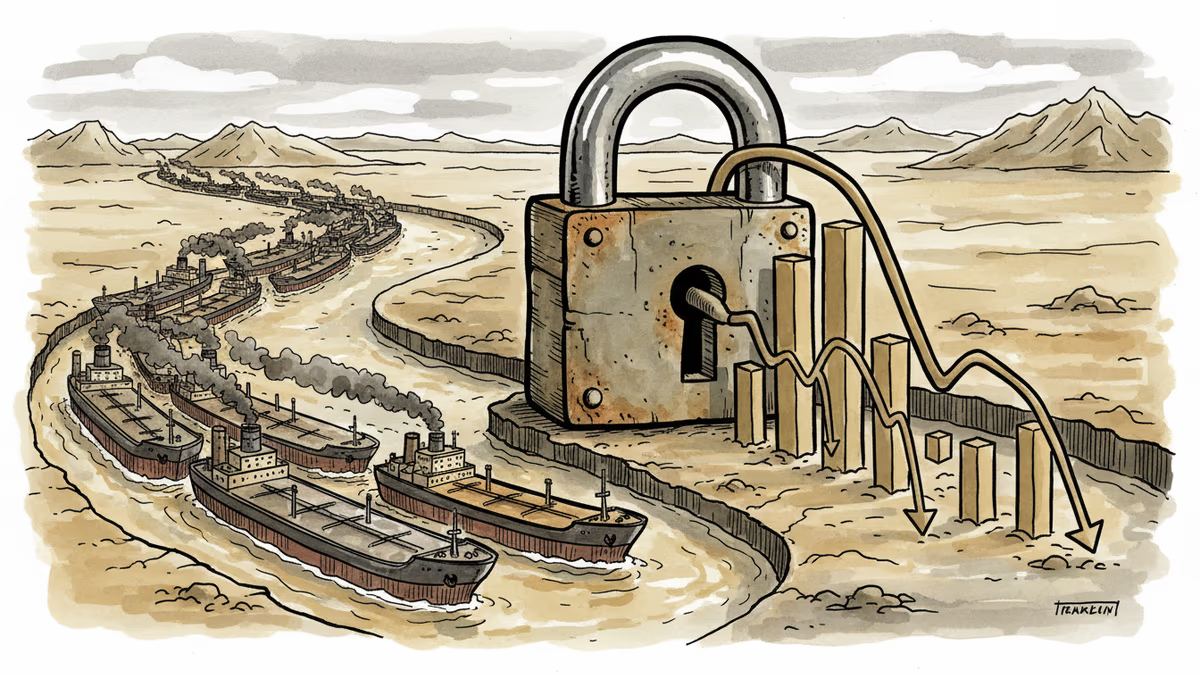
The Strait That Could Break Rich Economies
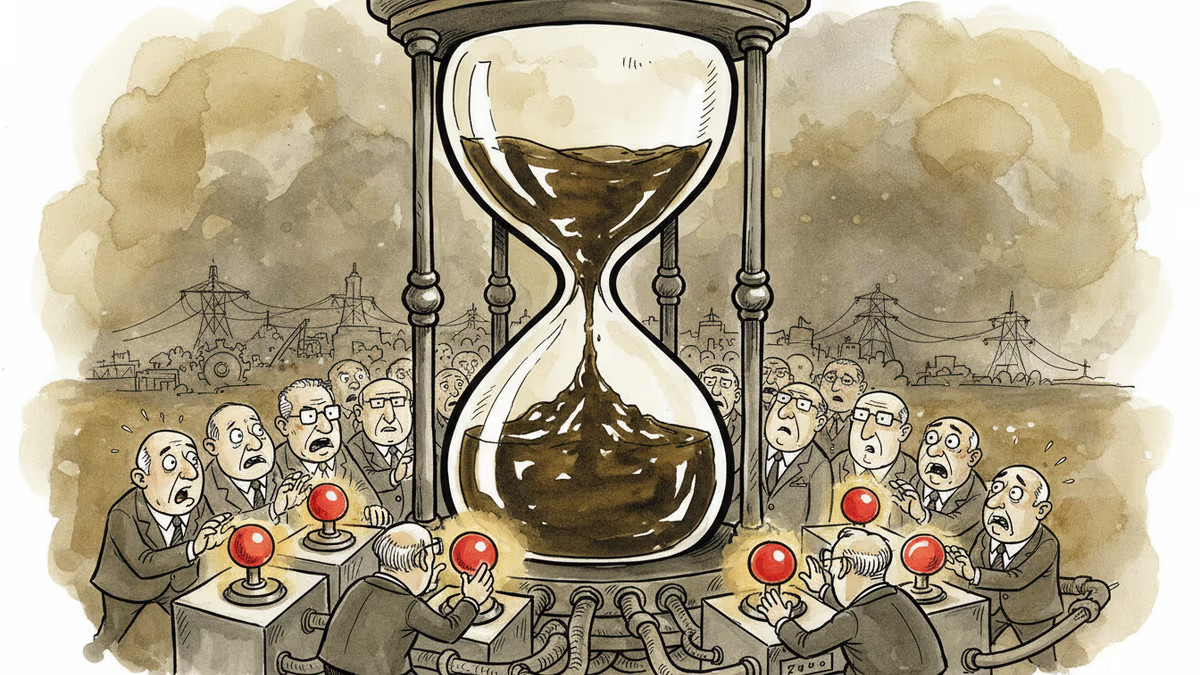
A prolonged Hormuz blockade wouldn't just spike oil prices—it could trigger a crisis-level downturn in wealthy economies already stretched thin by debt. Here's why the rich world is more exposed than it looks.
What if the world's most important 33 kilometers of water simply closed? Not for a day—but for weeks or months?
That question is no longer purely hypothetical. With Iran-U.S. nuclear talks stalled and regional military tensions climbing again, the Strait of Hormuz blockade scenario has moved back onto the desks of energy traders, central bankers, and defense planners alike. And the uncomfortable answer to that question is this: the countries least prepared for the fallout may be the wealthiest ones.
What's Actually at Stake
The Strait of Hormuz, wedged between Iran and Oman, is the world's single most critical energy chokepoint. Roughly 20% of global crude oil and 17% of liquefied natural gas transits this passage every day—most of it bound for Europe, Japan, South Korea, and increasingly, India.
Iran has brandished the closure threat repeatedly over the decades, but the structural reality hasn't changed: if the strait shuts, Saudi Arabia, Iraq, the UAE, and Kuwait lose their primary export artery almost overnight. Bypass options exist—Saudi Arabia's East-West Pipeline can handle around 5 million barrels per day, and the UAE has its own Abu Dhabi crude line—but combined, they cover less than half of current Hormuz throughput. There is no quick fix.
A short blockade—days, perhaps a week—gets priced in and absorbed. The scenario that keeps economists awake is a sustained closure: four weeks, eight weeks, longer. That's where the calculus changes entirely.
The Numbers Behind the Shock
When Russia invaded Ukraine in early 2022, oil briefly touched $130 a barrel. Russian exports represented roughly 10% of global supply. A Hormuz blockade would remove roughly twice that volume from the market. Some analysts put a credible short-term price ceiling at $150–$200 per barrel under a sustained closure scenario—territory the world has never actually entered.

At those levels, the transmission mechanism is fast and brutal. Jet fuel, diesel, plastics feedstocks, fertilizers—virtually every supply chain has an energy cost buried somewhere inside it. Consumer prices don't just rise; they rise in ways that are politically explosive, because food and transport are the first to feel it.
For central banks, this creates a trap. The Federal Reserve, the ECB, and the Bank of England have spent the better part of three years trying to bring inflation down without breaking their economies. A supply-driven oil shock reignites inflation while simultaneously crushing growth—the stagflation combination that monetary policy is almost uniquely ill-equipped to handle. Raise rates to fight inflation, and you accelerate the recession. Cut rates to support growth, and you let inflation run. There is no clean move.
Why Wealthy Economies Are Surprisingly Exposed
Here's the counterintuitive part. The U.S. has genuine energy resilience thanks to shale production—it's now a net oil exporter. But Europe, Japan, and South Korea remain deeply dependent on Middle Eastern supply. And even the U.S. isn't insulated from global price shocks; oil is a globally priced commodity.
More importantly, the financial architecture of rich economies has changed. After years of near-zero interest rates followed by an aggressive hiking cycle, household and corporate balance sheets in advanced economies are carrying historically heavy debt loads. U.S. household debt has crossed $17 trillion. European corporate refinancing risk has been quietly accumulating. When you combine an energy price spike with elevated debt service costs, the margin for error shrinks dramatically.
Emerging markets, paradoxically, may weather certain scenarios better. India is aggressively diversifying its energy sourcing. Gulf states obviously have their own reserves. Some commodity exporters in Latin America and Africa would actually benefit from higher oil prices. A global energy crisis does not distribute pain evenly—and the distribution in this scenario skews toward the economies that consider themselves most stable.
Who Wins, Who Loses
The stakeholder map is worth mapping clearly. Energy majors—ExxonMobil, Shell, BP—would see windfall revenues in the short term, even as their own logistics costs rise. Defense contractors with naval and energy-security exposure would likely see increased order flows. Renewables developers would receive a sudden, forceful argument for energy independence that no amount of lobbying could manufacture.
On the losing side: airlines, petrochemicals, automotive manufacturers, and any consumer-facing business with thin margins and high logistics costs. Emerging market governments that subsidize fuel domestically would face fiscal pressure almost immediately. And bond markets in heavily indebted advanced economies would face the uncomfortable question of whether their central banks can credibly fight inflation while holding fragile growth together.
For investors, the historical playbook—long energy, short discretionary consumer—applies in the early phase. But a prolonged shock eventually becomes a demand destruction story, which collapses the same energy trade that looked profitable at the start.
This content is AI-generated based on source articles. While we strive for accuracy, errors may occur. We recommend verifying with the original source.
Related Articles
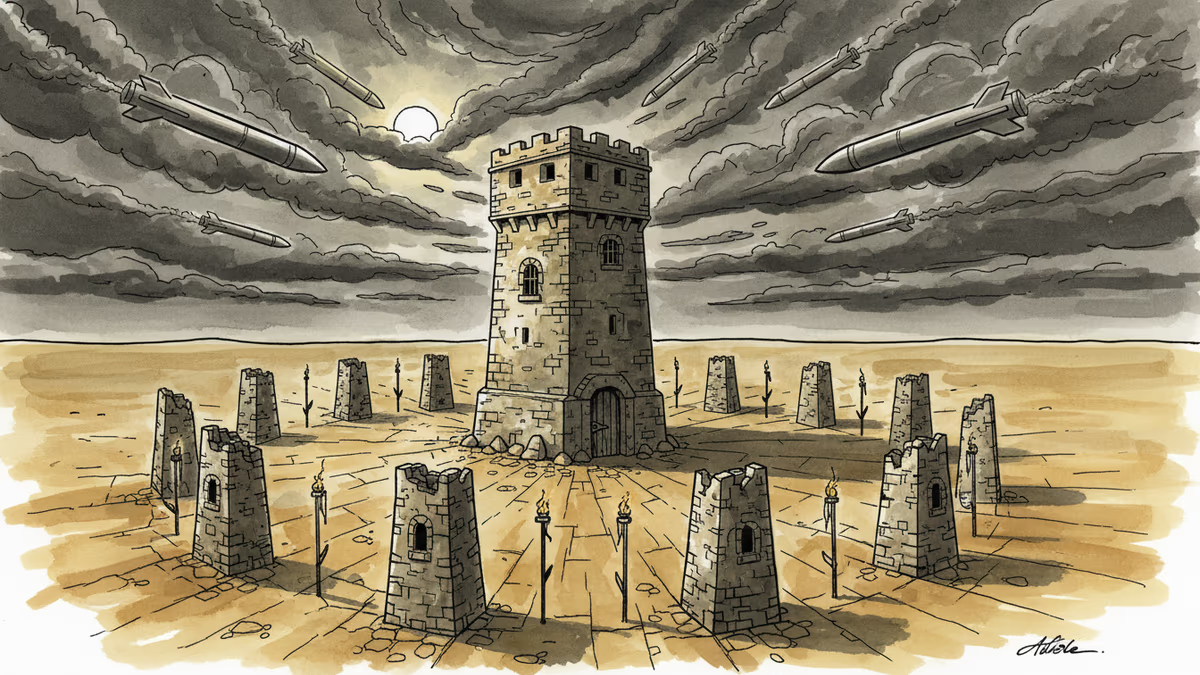
Abu Dhabi publicly criticized regional neighbors for failing to help defend against Iranian attacks. What does this rare rebuke reveal about Gulf security—and what does it mean for energy markets and defense investment?
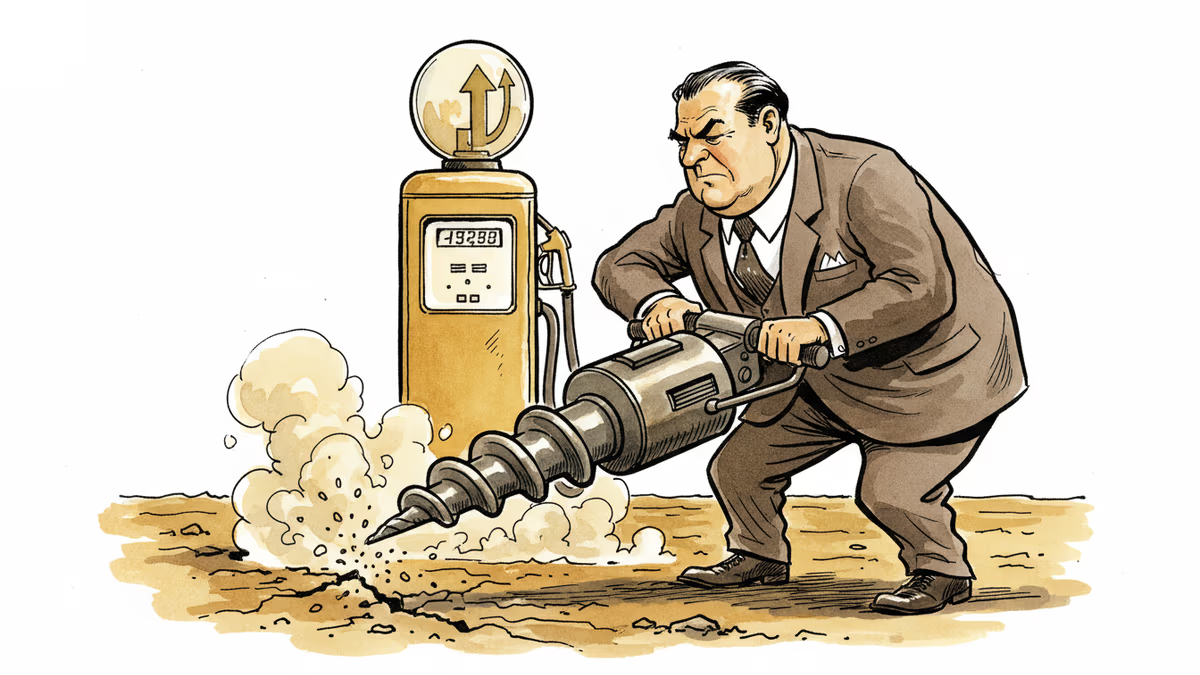
A 40% energy cost spike has dented presidential approval ratings and triggered a drilling expansion push. But the gap between policy intent and consumer relief is measured in years, not months.
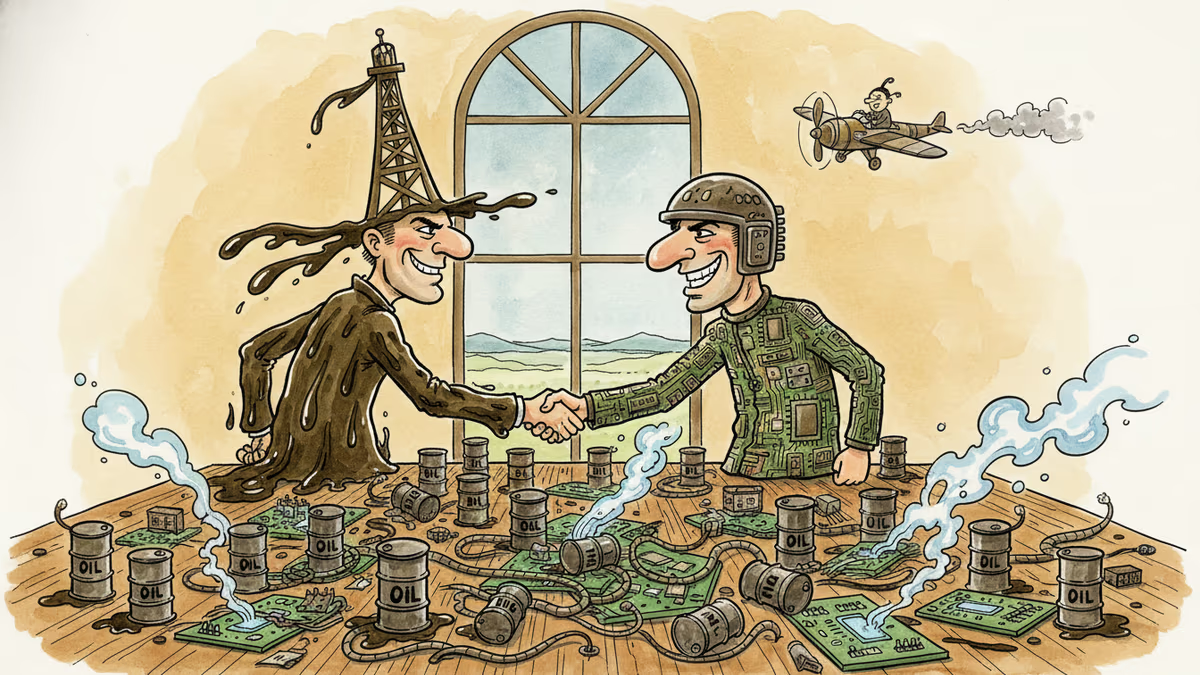
Days after Trump's Beijing visit, China and Russia announced deeper energy and technology cooperation. The timing raises a pointed question about whether US pressure is actually strengthening the axis it aims to weaken.
Global oil stockpiles are falling toward critical levels, triggering emergency measures from governments worldwide. What this means for energy prices, inflation, and your bottom line.
Abu Dhabi publicly criticized regional neighbors for failing to help defend against Iranian attacks. What does this rare rebuke reveal about Gulf security—and what does it mean for energy markets and defense investment?
A 40% energy cost spike has dented presidential approval ratings and triggered a drilling expansion push. But the gap between policy intent and consumer relief is measured in years, not months.
Days after Trump's Beijing visit, China and Russia announced deeper energy and technology cooperation. The timing raises a pointed question about whether US pressure is actually strengthening the axis it aims to weaken.
Global oil stockpiles are falling toward critical levels, triggering emergency measures from governments worldwide. What this means for energy prices, inflation, and your bottom line.
Thoughts
Share your thoughts on this article
Sign in to join the conversation