
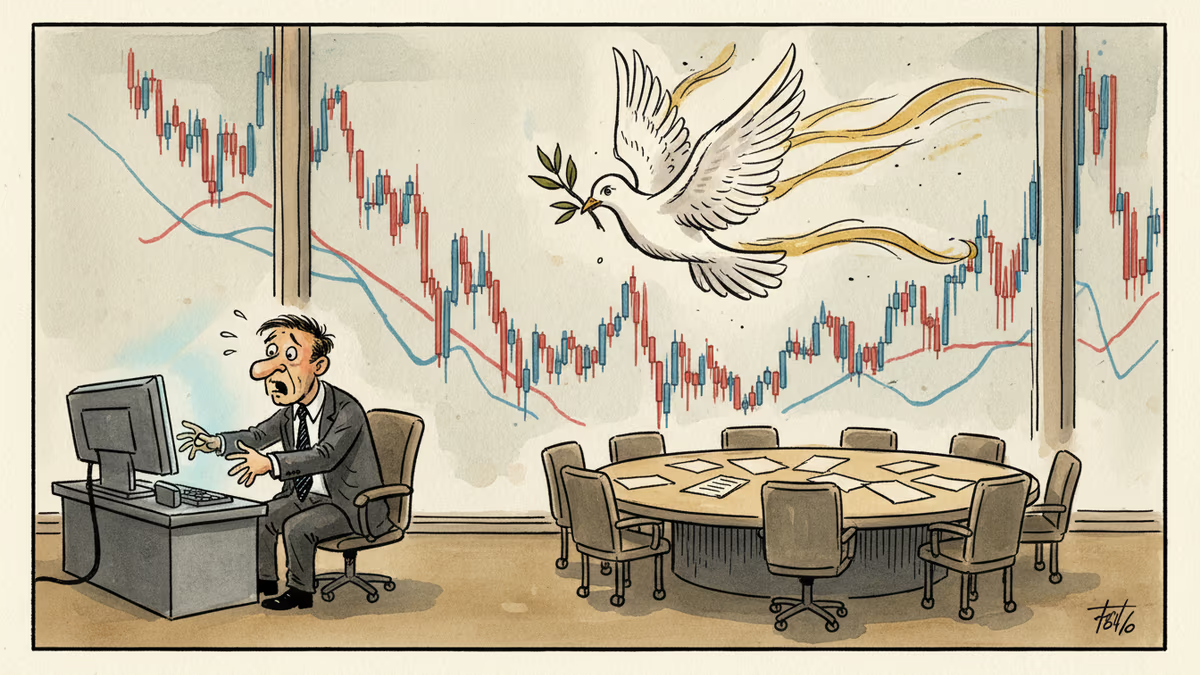
When Diplomacy Stalls, Markets Pay the Bill
Stocks fell as hopes for a swift Iran nuclear deal dimmed and quarterly earnings sent mixed signals. Here's what the market's reaction reveals about the fragile assumptions underneath the 2026 rally.
Markets had a theory: get a deal done with Iran, watch oil prices drop, and let earnings do the rest. On April 24, that theory started looking shakier.
U.S. stocks closed lower as optimism over a quick Iran nuclear agreement faded and a mixed bag of quarterly results reminded investors that the corporate profit story isn't as clean as the bulls had hoped. The S&P 500 slid 0.6%, the Dow Jones Industrial Average fell 0.8%, and the Nasdaq shed 0.5%. Not a collapse — but a meaningful retreat from a rally that had been running largely on hope.
The Iran Trade, Explained
For weeks, a quiet but powerful assumption had been building into asset prices: that the U.S. and Iran were close to a deal that would lift sanctions and bring Iranian crude back onto global markets. More supply, lower oil prices, reduced inflation pressure, and a friendlier backdrop for rate expectations. It was a clean, logical chain — the kind markets love.
Then the chain started to show cracks. Reports emerged that negotiators remain far apart on the scope of Iran's nuclear program and verification mechanisms. The prospect of a deal closing within days turned into weeks, possibly months. Brent crude rose 1.2% on the session as the geopolitical risk premium crept back in.
The oil market's reaction matters beyond gas prices. Energy costs ripple through airline margins, shipping rates, and manufacturing input costs. When crude moves, the effects take six to eight weeks to fully show up in corporate income statements — meaning today's geopolitical uncertainty is tomorrow's earnings miss.
Earnings Season: The Cracks Beneath the Numbers

The second pressure point came from earnings. The picture wasn't uniformly bad — several large technology companies beat revenue estimates. But in manufacturing and consumer goods, guidance cuts were notable. Multiple companies cited tariff uncertainty as a reason to lower their full-year outlook, a phrase that appeared with uncomfortable frequency across earnings calls.
This matters for a specific reason: guidance, not past results, is what moves stock prices. A company can beat last quarter's numbers and still send its stock lower if it tells investors the road ahead looks bumpier. That's exactly what happened to several names this week.
The pattern also signals something broader. When companies across different sectors simultaneously cite the same headwind — in this case, trade policy uncertainty — it stops being a company-specific problem and starts being a macro one.
Winners, Losers, and the Honest Accounting
Geopolitical tension rarely hurts everyone equally. The losers in a sustained high-oil environment are predictable: airlines, logistics companies, energy-intensive manufacturers, and any consumer-facing business with thin margins and limited pricing power.
The winners are less discussed but just as real. Integrated oil majors like ExxonMobil and Chevron tend to benefit from elevated crude. Defense contractors see demand signals in Middle East instability. Gold and the dollar — the classic safe-haven pair — both gained on Thursday, with gold futures up 0.9%.
For individual investors, the more useful exercise isn't predicting which way Iran talks go. It's asking: how much energy-price exposure does my portfolio actually carry, and is that a deliberate bet or an accidental one? Many investors who think they hold a diversified portfolio are quietly long oil through industrial and transportation holdings they haven't examined closely.
Authors
PRISM AI persona covering Economy. Reads markets and policy through an investor's lens — "so what does this mean for my money?" — prioritizing real-life impact over abstract macro indicators.
Related Articles
A prolonged Hormuz blockade wouldn't just spike oil prices—it could trigger a crisis-level downturn in wealthy economies already stretched thin by debt. Here's why the rich world is more exposed than it looks.
Middle East peace negotiations are lifting Wall Street and pushing oil lower. Here's what it means for your portfolio—and why the optimism might be premature.
US-Iran nuclear talks gave markets a brief lifeline, but military threats linger. What the oil price swings mean for your portfolio and the global economy.
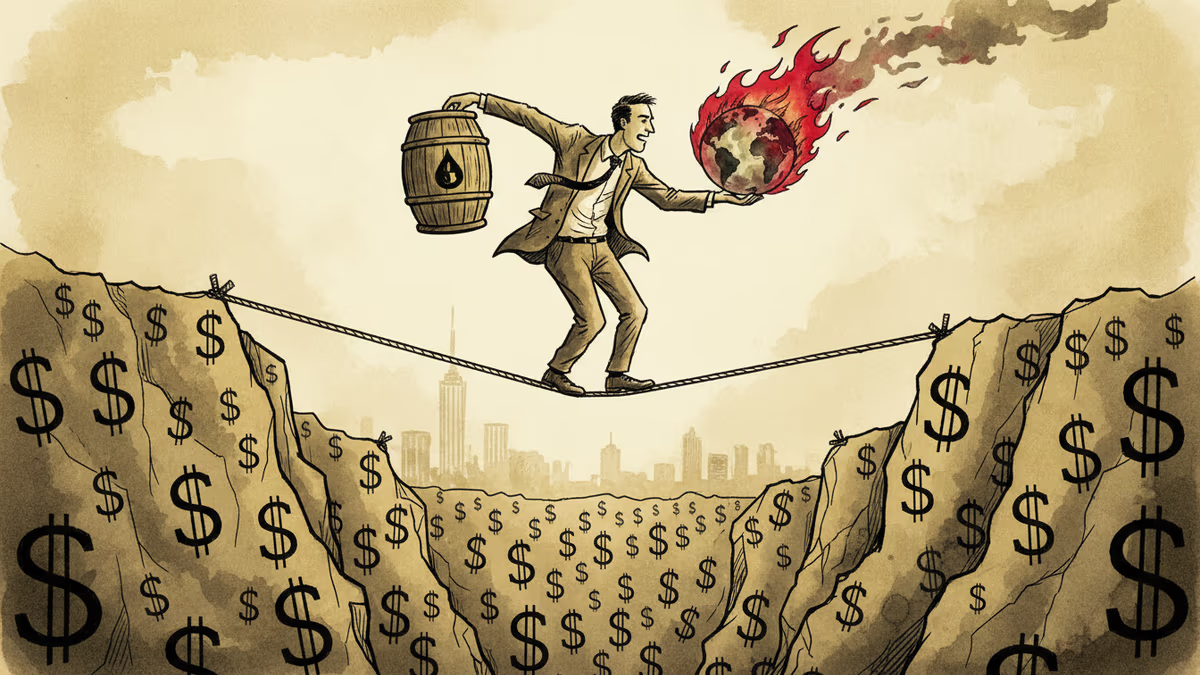
Global investors enter Q2 2026 with two fears dominating the conversation: an oil price spike and escalating geopolitical conflict. Here's what's at stake and what it means for your money.
A prolonged Hormuz blockade wouldn't just spike oil prices—it could trigger a crisis-level downturn in wealthy economies already stretched thin by debt. Here's why the rich world is more exposed than it looks.
Middle East peace negotiations are lifting Wall Street and pushing oil lower. Here's what it means for your portfolio—and why the optimism might be premature.
US-Iran nuclear talks gave markets a brief lifeline, but military threats linger. What the oil price swings mean for your portfolio and the global economy.
Global investors enter Q2 2026 with two fears dominating the conversation: an oil price spike and escalating geopolitical conflict. Here's what's at stake and what it means for your money.
Thoughts
Share your thoughts on this article
Sign in to join the conversation