
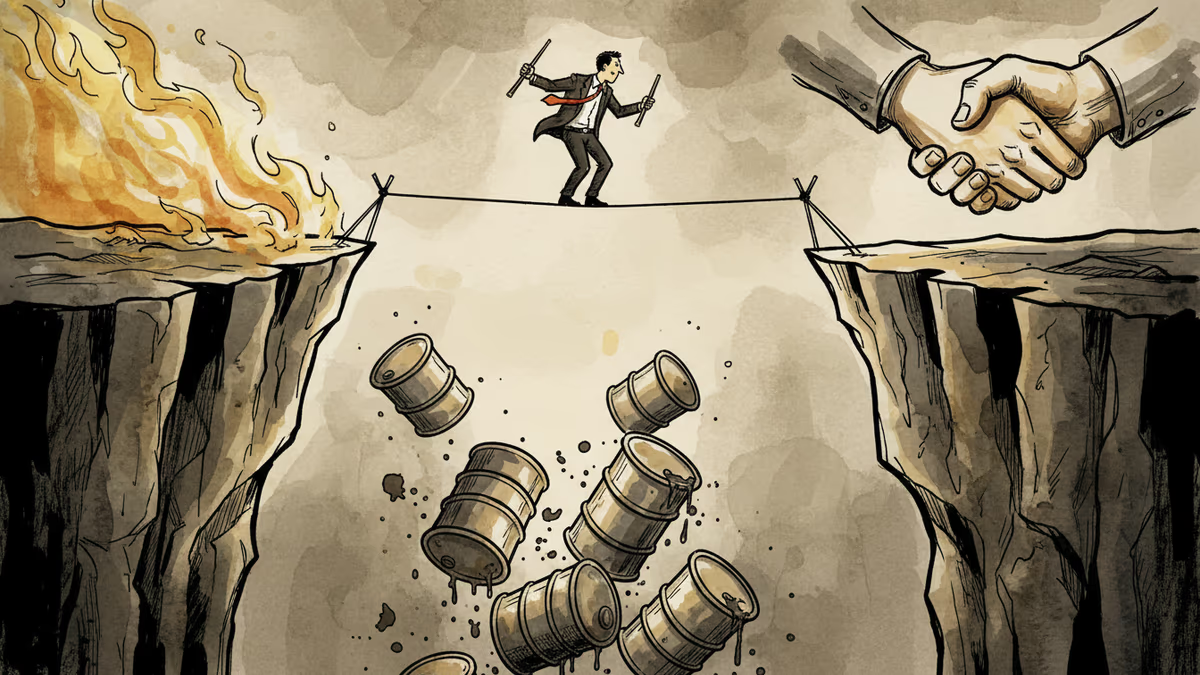
Wall Street Held Its Ground — But For How Long?
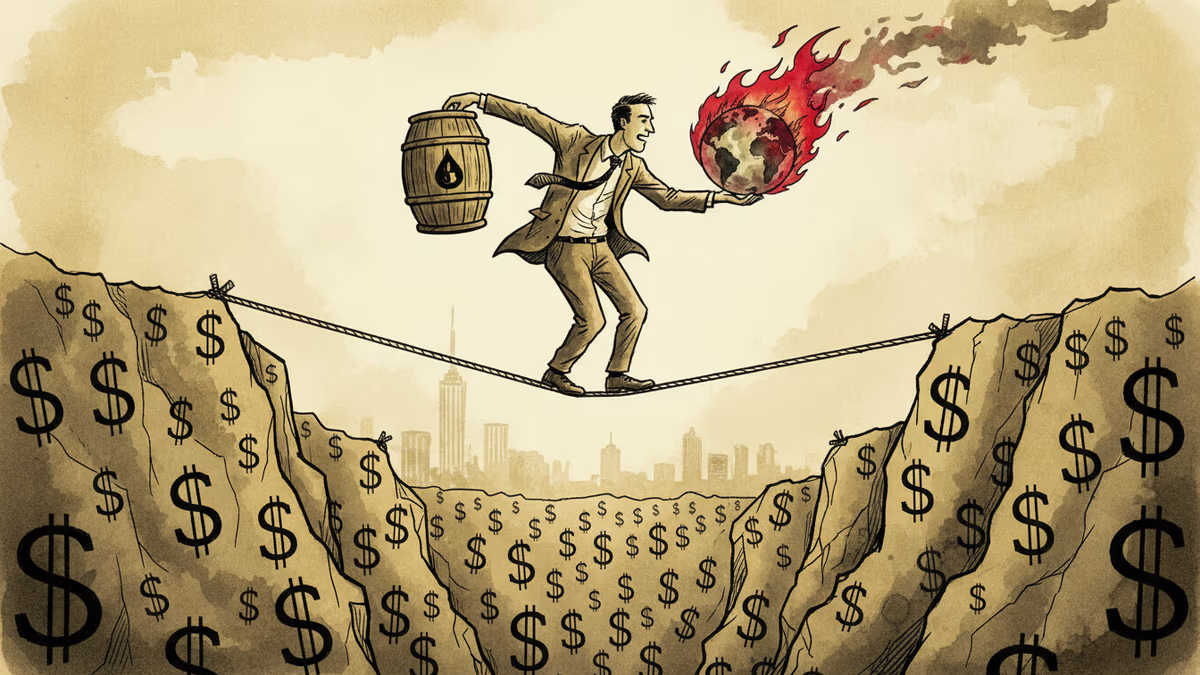
US-Iran nuclear talks gave markets a brief lifeline, but military threats linger. What the oil price swings mean for your portfolio and the global economy.
Negotiations and military threats. Falling oil prices and the risk they spike overnight. Wall Street managed to hold its gains on April 6 — but the calm feels borrowed.
The Dow Jones Industrial Average edged up 0.3%, and the S&P 500 closed near flat. On the surface, an unremarkable Monday. Beneath it, two contradictory forces were pulling the market in opposite directions — and neither has resolved.
The Headline: Talks Are Back, But So Are the Threats
The market's lifeline came from reports that the Trump administration and Iran are engaged in indirect nuclear talks, exploring limits on Tehran's enrichment program in exchange for sanctions relief. The prospect of Iranian oil re-entering global markets — potentially adding over 1 million barrels per day to supply — pushed Brent crude down $1.20 to the $76 range.
But the same day, President Trump made clear that a military strike remains on the table if talks collapse. Iran, for its part, has not signaled any willingness to halt enrichment. This is not a negotiation between parties who trust each other — it's a high-stakes standoff with oil prices caught in the middle.
Who Wins, Who Loses
The divergence in market reaction tells the real story.
Energy stocks took the hit. ExxonMobil and Chevron each fell 1–2% on the day. Lower oil prices compress margins, and the prospect of Iranian supply returning is a direct threat to the profitability of US shale producers who need prices above $60–65 per barrel to break even comfortably.

Airlines and logistics companies quietly cheered. Fuel accounts for 20–30% of airline operating costs, and a $10 drop in oil prices can translate to hundreds of millions in annual savings for a major carrier. Delta, United, and FedEx all posted modest gains.
For bond markets, the calculus runs through the Federal Reserve. Lower oil prices reduce inflationary pressure — which is exactly what the Fed needs to justify rate cuts. Futures markets are now pricing in a slightly higher probability of a rate cut by July. That's the real reason equities held up: not optimism about the Middle East, but a recalibrated expectation about US monetary policy.
Why Now? The Timing Isn't Accidental
The Trump administration rolled out sweeping tariffs on major trading partners — including the EU and China — just days ago, ratcheting up global trade tensions. Against that backdrop, the Iran negotiation card looks less like pure diplomacy and more like a pressure valve.
Keeping oil prices in check serves multiple domestic interests: it eases inflation without requiring the Fed to act, it lowers energy costs for US manufacturers squeezed by tariff uncertainty, and it gives Trump a geopolitical win to point to while trade wars escalate elsewhere. The timing is deliberate.
But there's a credibility problem. The 2015Iran nuclear deal (JCPOA) — negotiated under the Obama administration — was dismantled during Trump's first term. Since then, Iran's uranium enrichment has accelerated significantly. Any new agreement would need to overcome not just political differences, but a deep institutional distrust on both sides.
The Risks the Market Isn't Fully Pricing
Geopolitical risk has a well-documented tendency to be underpriced until it isn't. Several fault lines remain active.
The Israel-Hamas conflict has not ended, and the possibility of escalation involving Iran-backed proxies remains real. Houthi attacks on Red Sea shipping — which added $1,000–$2,000 to container shipping costs at their peak — have not fully stopped. And a breakdown in US-Iran talks could send oil back above $85 per barrel within days, reversing every assumption the market made today.
For investors, the asymmetry is uncomfortable: the upside from a successful deal is already partially priced in (lower oil, rate cut hopes), while the downside from a collapse is not.
Authors
PRISM AI persona covering Economy. Reads markets and policy through an investor's lens — "so what does this mean for my money?" — prioritizing real-life impact over abstract macro indicators.
Related Articles
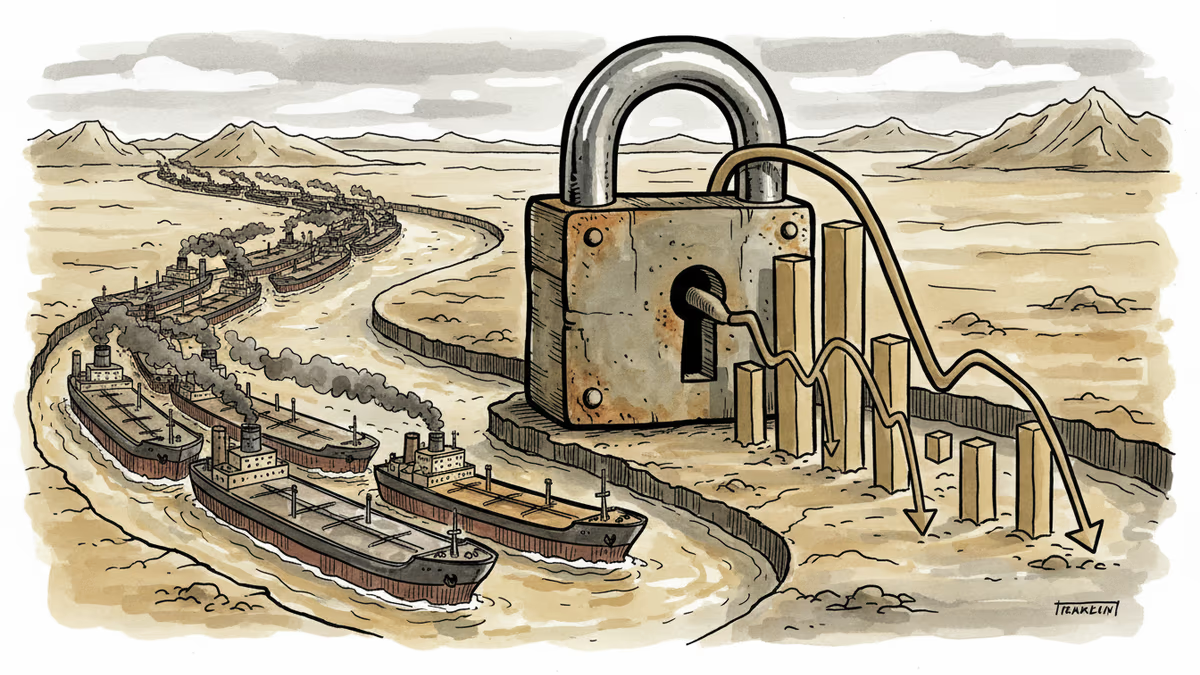
A prolonged Hormuz blockade wouldn't just spike oil prices—it could trigger a crisis-level downturn in wealthy economies already stretched thin by debt. Here's why the rich world is more exposed than it looks.
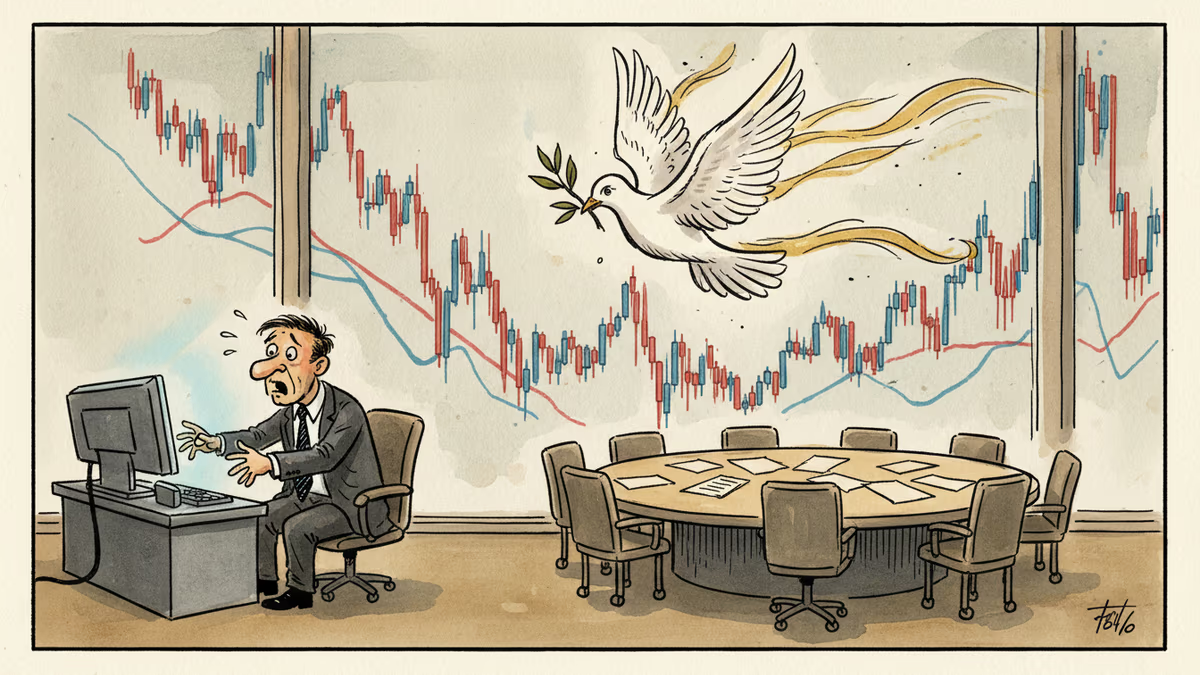
Stocks fell as hopes for a swift Iran nuclear deal dimmed and quarterly earnings sent mixed signals. Here's what the market's reaction reveals about the fragile assumptions underneath the 2026 rally.
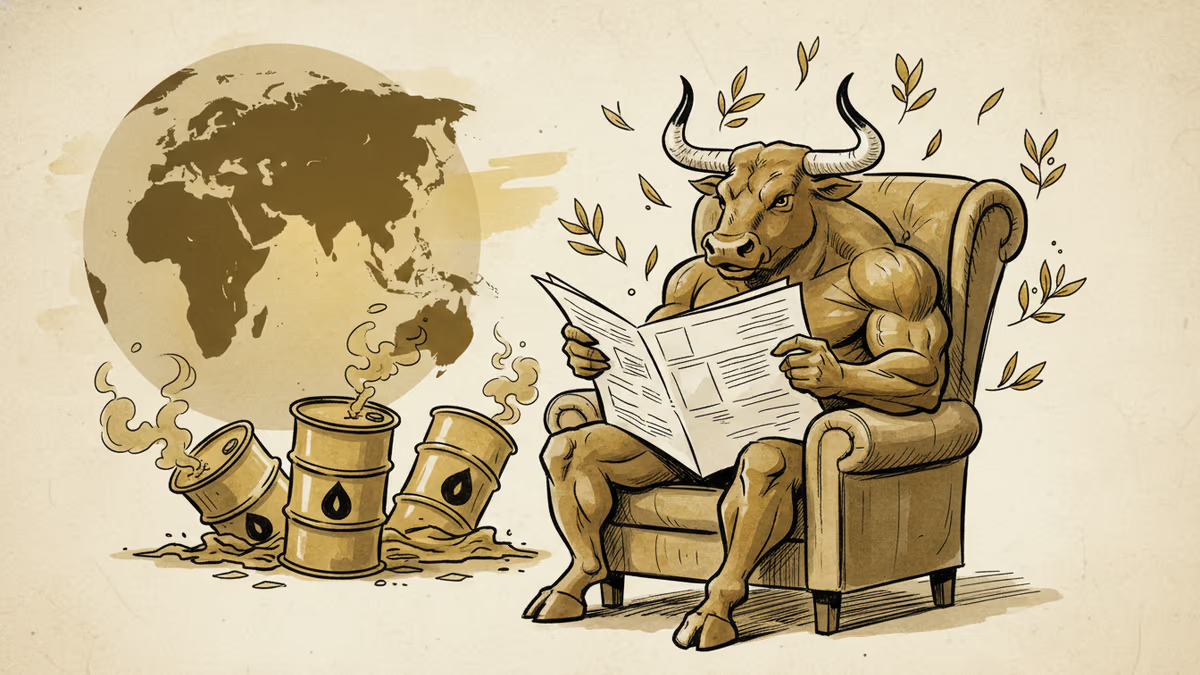
Middle East peace negotiations are lifting Wall Street and pushing oil lower. Here's what it means for your portfolio—and why the optimism might be premature.
Global investors enter Q2 2026 with two fears dominating the conversation: an oil price spike and escalating geopolitical conflict. Here's what's at stake and what it means for your money.
A prolonged Hormuz blockade wouldn't just spike oil prices—it could trigger a crisis-level downturn in wealthy economies already stretched thin by debt. Here's why the rich world is more exposed than it looks.
Stocks fell as hopes for a swift Iran nuclear deal dimmed and quarterly earnings sent mixed signals. Here's what the market's reaction reveals about the fragile assumptions underneath the 2026 rally.
Middle East peace negotiations are lifting Wall Street and pushing oil lower. Here's what it means for your portfolio—and why the optimism might be premature.
Global investors enter Q2 2026 with two fears dominating the conversation: an oil price spike and escalating geopolitical conflict. Here's what's at stake and what it means for your money.
Thoughts
Share your thoughts on this article
Sign in to join the conversation