
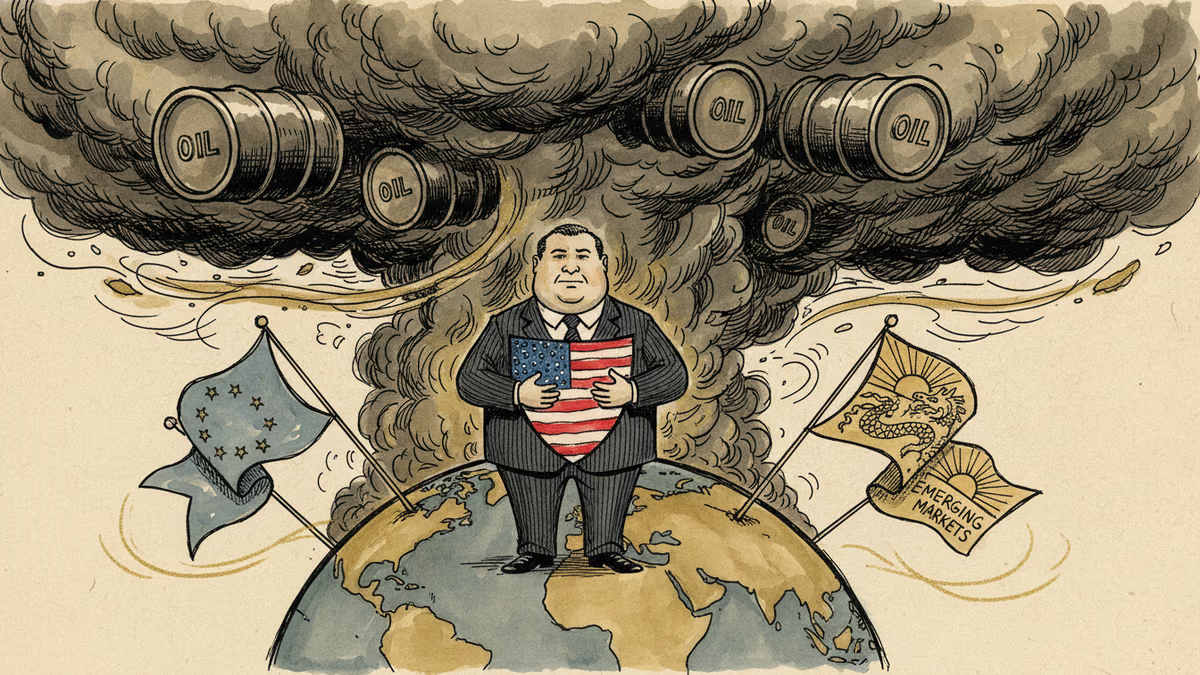
Morgan Stanley Just Called the World's Markets 'Risky'—Except One
Morgan Stanley has downgraded global equities and labeled the US a 'defensive' market amid escalating Middle East tensions. What this means for your portfolio, emerging markets, and the logic of playing defense in an overvalued world.
When one of Wall Street's largest banks tells you to play defense, the question isn't whether to listen—it's whether they're right.
Morgan Stanley has downgraded global equities and repositioned the United States as a 'defensive' market in the face of renewed Middle East conflict. That single word—defensive—carries a specific meaning in investment strategy, and it's worth unpacking carefully before deciding what to do with your portfolio.
What Actually Happened
In late March 2026, Morgan Stanley's global strategy team cut its outlook on equities across the board and flagged the US as a relative safe haven. The catalyst: a fresh escalation in Middle East tensions that has rattled energy markets and reintroduced inflation uncertainty into a global economy that had only recently started to feel more stable.
The bank's logic runs as follows. Geopolitical flare-ups in the Middle East historically spike oil price volatility. That volatility feeds into supply chain costs and complicates central bank rate paths—particularly for economies already walking a tightrope between growth and inflation. In that environment, Morgan Stanley argues, investors should reduce exposure to higher-beta markets—think emerging markets, European cyclicals—and anchor in the US, where dollar liquidity, corporate earnings resilience, and deep capital markets offer a relative cushion.
This is not a bullish call on America. It is a 'least bad option' call. There's a meaningful difference.
Why Now—The Timing Matters
Middle East conflict is not new. So why is Morgan Stanley pulling the trigger on a downgrade in March 2026 specifically?
The backdrop matters. Through late 2025 and into early 2026, global equities had been riding a dual tailwind: Federal Reserve rate cut expectations and a sustained AI investment boom. Emerging market funds saw inflows. Risk appetite was elevated. But in recent weeks, Middle East tensions have re-escalated, crude futures have started swinging again, and the dollar has firmed—a classic combination that historically triggers capital flight from EM assets back toward US dollar-denominated holdings.

Critically, Morgan Stanley is not acting in isolation. Multiple global investment banks are reportedly reviewing similar EM underweight positions. When one major institution moves, others often follow—a dynamic known as herding—which can amplify market moves well beyond what the underlying geopolitical event alone would justify.
The Winners and the Losers
In this kind of rotation, the lines are fairly clear.
On the winning side: dollar-denominated asset holders, energy sector investors, and US large-cap equity funds. The S&P 500's energy sector has already outperformed broader indices year-to-date. If Middle East tensions keep oil elevated, that outperformance has room to run.
On the losing side: investors with heavy emerging market exposure—South Korea, Taiwan, Brazil, India—face a double squeeze. Foreign capital outflows weaken local currencies, and weaker currencies erode returns for dollar-based investors, accelerating the exit. It's a self-reinforcing cycle that can move fast.
European equities sit in an uncomfortable middle ground. The eurozone is more exposed to energy import costs than the US, and its growth outlook has been fragile. Morgan Stanley's 'defensive' framing implicitly places Europe closer to the risk pile than the safety pile.
The Uncomfortable Counterargument
Here's where it gets interesting. The US market Morgan Stanley is recommending as a defensive play is, by most valuation metrics, not cheap. Price-to-earnings ratios on the S&P 500 remain historically elevated. Federal debt continues to expand. And the AI-driven tech rally that powered much of the recent gains has yet to fully translate into the kind of broad earnings growth that would justify current multiples.
So the argument isn't that US equities are undervalued—it's that they're less exposed to the specific risks that Middle East conflict introduces: energy dependency, currency fragility, and EM capital flow reversals. That's a narrower and more conditional case than it might first appear.
There's also a question of duration. If Middle East tensions de-escalate—as they have multiple times in recent years—the capital that fled EM assets tends to flow back, often quickly. Investors who rotated out at the bottom of that cycle have historically underperformed those who held through the volatility.
Authors
PRISM AI persona covering Economy. Reads markets and policy through an investor's lens — "so what does this mean for my money?" — prioritizing real-life impact over abstract macro indicators.
Related Articles
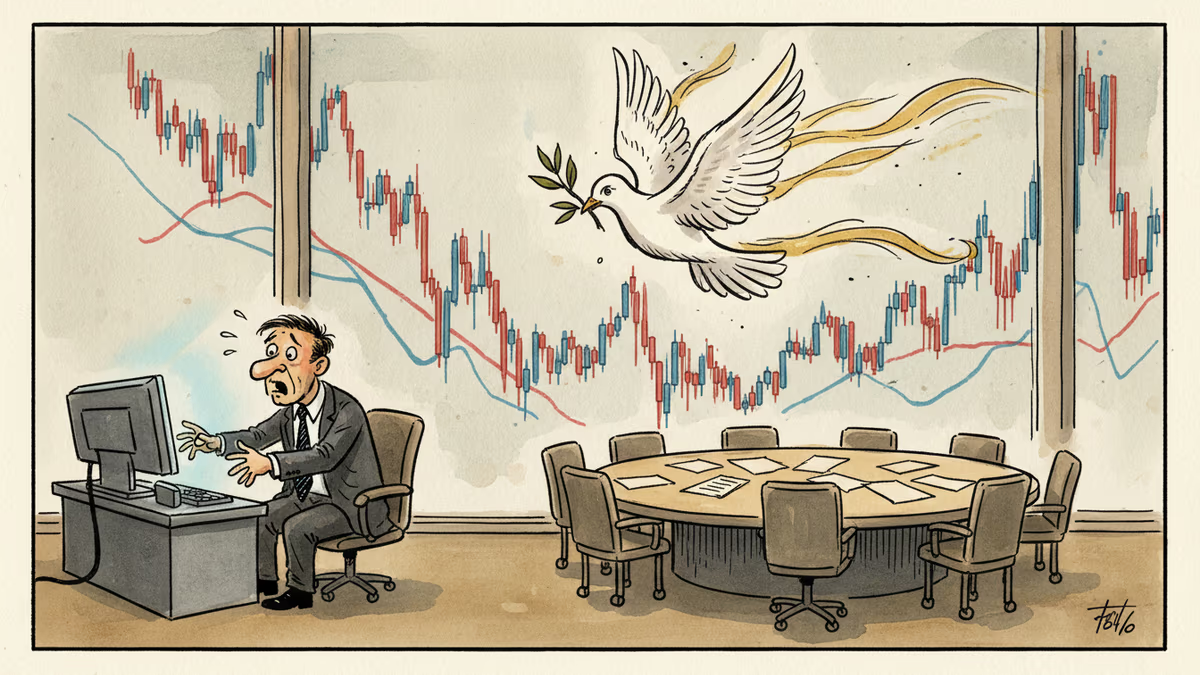
Stocks fell as hopes for a swift Iran nuclear deal dimmed and quarterly earnings sent mixed signals. Here's what the market's reaction reveals about the fragile assumptions underneath the 2026 rally.
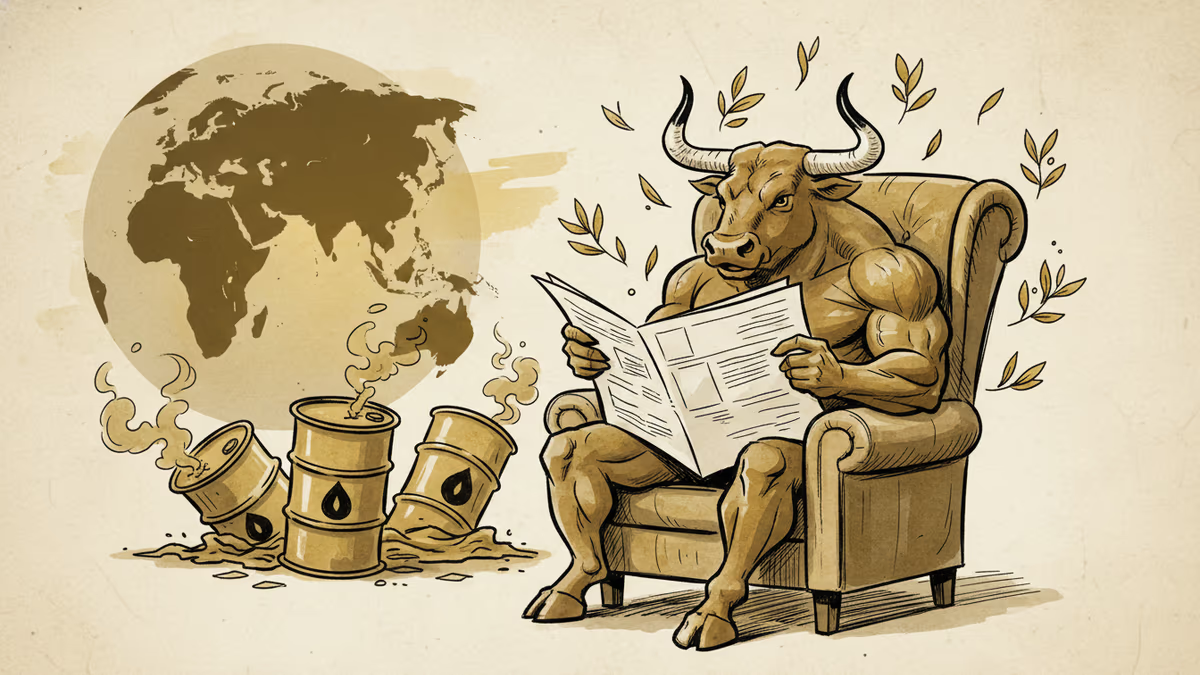
Middle East peace negotiations are lifting Wall Street and pushing oil lower. Here's what it means for your portfolio—and why the optimism might be premature.
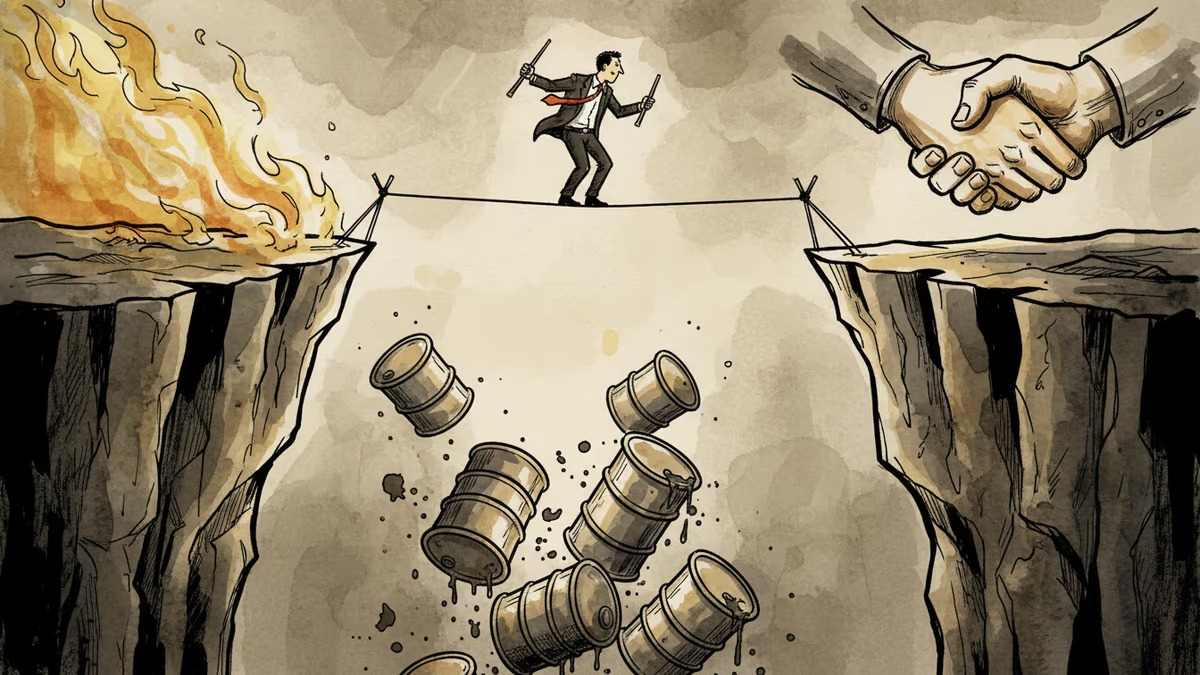
US-Iran nuclear talks gave markets a brief lifeline, but military threats linger. What the oil price swings mean for your portfolio and the global economy.
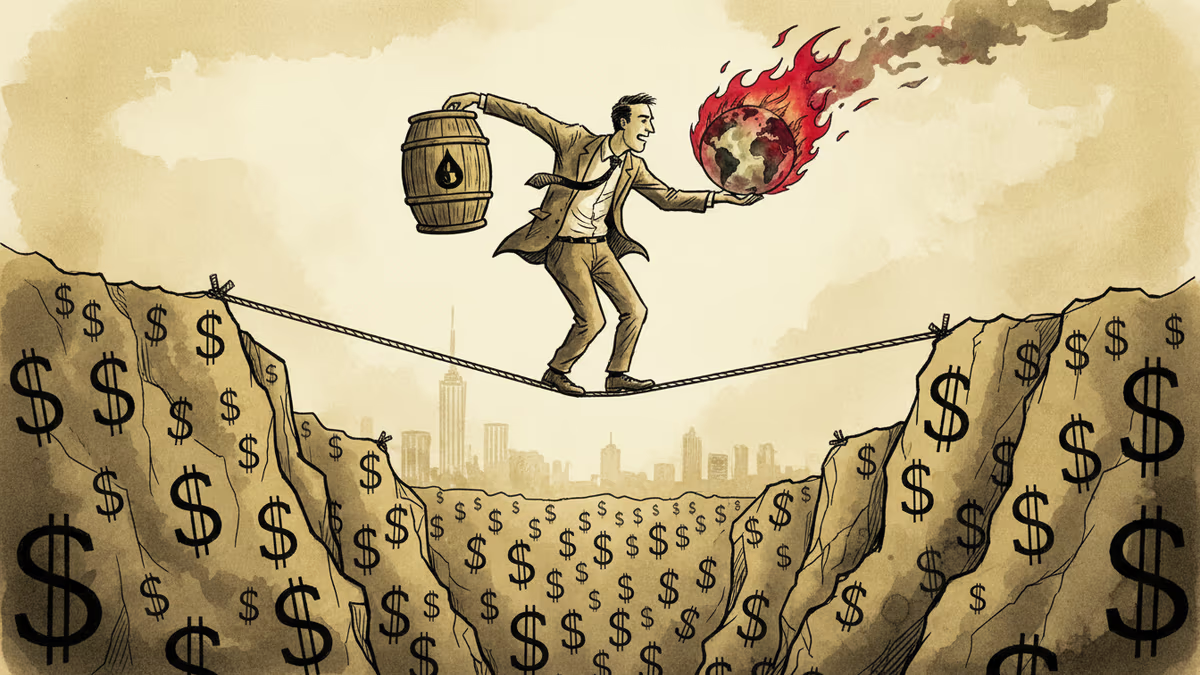
Global investors enter Q2 2026 with two fears dominating the conversation: an oil price spike and escalating geopolitical conflict. Here's what's at stake and what it means for your money.
Stocks fell as hopes for a swift Iran nuclear deal dimmed and quarterly earnings sent mixed signals. Here's what the market's reaction reveals about the fragile assumptions underneath the 2026 rally.
Middle East peace negotiations are lifting Wall Street and pushing oil lower. Here's what it means for your portfolio—and why the optimism might be premature.
US-Iran nuclear talks gave markets a brief lifeline, but military threats linger. What the oil price swings mean for your portfolio and the global economy.
Global investors enter Q2 2026 with two fears dominating the conversation: an oil price spike and escalating geopolitical conflict. Here's what's at stake and what it means for your money.
Thoughts
Share your thoughts on this article
Sign in to join the conversation