
Oil at $114, Treasuries Falling — Read the Room
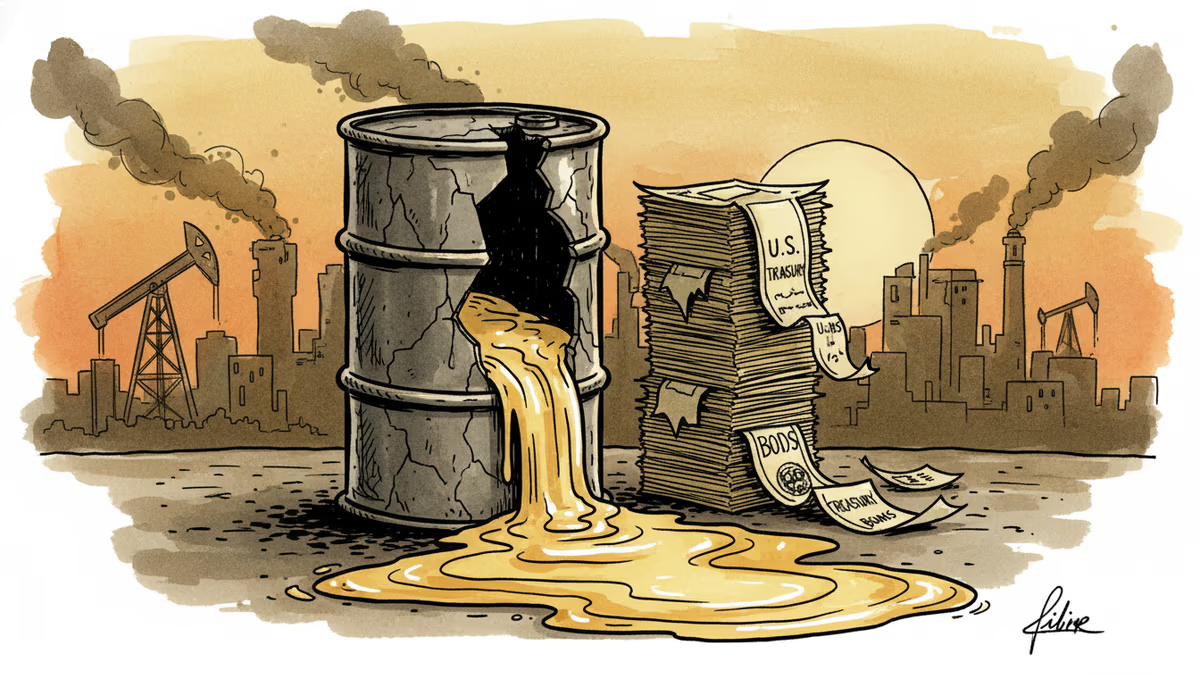
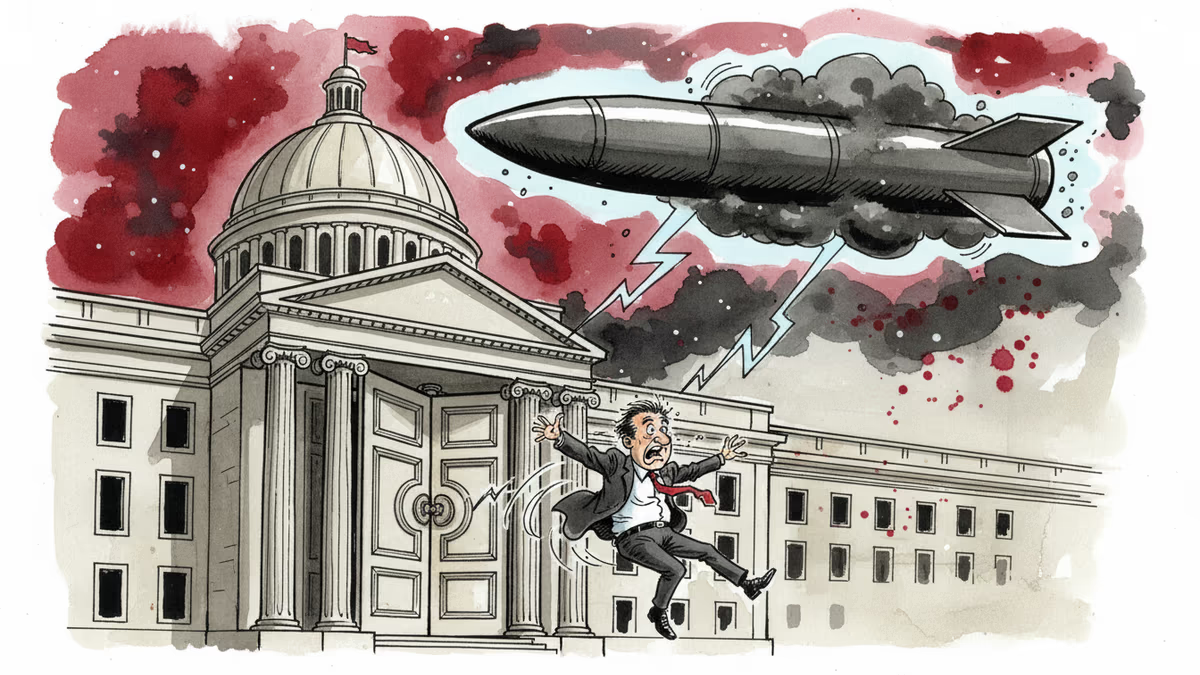
Oil surged to $114 a barrel as Middle East conflict deepened, while U.S. Treasuries sold off simultaneously — a rare combination that markets read as a stagflation warning signal.
When oil and Treasuries fall apart at the same time, the market isn't just scared — it's pricing in something worse than fear.
Brent crude surged to $114 per barrel as conflict in the Middle East intensified, breaching a threshold not seen since the immediate aftermath of Russia's invasion of Ukraine in 2022. Simultaneously, U.S. Treasury prices dropped sharply, pushing yields higher. That combination — oil up, bonds down — broke the standard crisis playbook and sent a message that traders have been quietly dreading: stagflation may be back on the table.
What Happened, and Why It Matters
The $114 print on oil is jarring enough on its own. But the simultaneous sell-off in U.S. Treasuries is what makes this moment different. In a typical geopolitical shock, investors flee to the safety of government bonds. Yields fall, prices rise. That's the script.
This time, the script didn't run. Investors sold both. That tells you they're not just worried about a supply disruption — they're worried about what comes after: a sustained inflationary shock that central banks can't easily counter without crushing growth. Goldman Sachs and JPMorgan analysts have flagged this scenario in recent months, but it remained theoretical. It's less theoretical now.
OPEC+ has been running a production cut strategy since late 2022, which means there's limited spare capacity to cushion a supply shock. The cartel's output buffer — once a reliable pressure valve — has been deliberately narrowed. If Middle East infrastructure is disrupted, the math gets uncomfortable fast.
Winners, Losers, and Your Portfolio

The divergence in outcomes across sectors is already sharp.
Energy majors — ExxonMobil, Chevron, Shell, BP — are the obvious near-term beneficiaries. So are national oil companies in the Gulf. Saudi Aramco's revenues move roughly $1.5 billion for every dollar change in oil prices. At $114, the windfall is substantial.
The losers are more numerous. Airlines are the most exposed: jet fuel accounts for roughly 25–30% of operating costs at carriers like Delta, United, and Lufthansa. A sustained oil price at this level could erase projected full-year profits for several mid-size carriers. Shipping and logistics firms face similar margin compression, which eventually passes through to consumer prices.
For bond investors, the picture is more nuanced and arguably more troubling. The 10-year Treasury yield rising during a geopolitical crisis suggests investors are pricing in persistent inflation rather than seeking safety. That reprices virtually every asset class — equities on discounted cash flow models, real estate, corporate credit. A sustained yield spike here is not a bond market problem; it's an everything problem.
| Asset Class | Immediate Impact | Key Risk |
|---|---|---|
| Oil & Gas Equities | Strong upside | Reversal if conflict de-escalates |
| Airlines | Fuel cost spike | Margin erosion, fare hikes |
| U.S. Treasuries | Price decline, yield rise | Stagflation repricing |
| Emerging Market FX | Depreciation pressure | Dollar strengthening, capital outflows |
| Consumer Goods | Input cost inflation | Demand destruction |
The Bigger Frame: This Isn't 2022 Redux
The instinct is to compare this to the 2022 oil shock. The surface similarities are real — a geopolitical trigger, a rapid price spike, a bond sell-off. But the context has shifted in ways that matter.
In 2022, central banks still had room to hike aggressively. The Federal Reserve went from near-zero to over 5% in roughly 18 months. That medicine was painful, but it was available. Today, rates are already elevated, consumer balance sheets have been under pressure for two years, and the political tolerance for another inflationary episode — in the U.S., Europe, and across emerging markets — is considerably lower.
There's also the question of dollar credibility. The simultaneous sell-off in Treasuries raises an uncomfortable question that's been circulating in fixed income circles for months: is the U.S. fiscal trajectory — with deficits running above $1.8 trillion annually — beginning to erode the safe-haven status of dollar assets? One data point doesn't confirm a trend. But it adds to a pattern that investors are watching.
This content is AI-generated based on source articles. While we strive for accuracy, errors may occur. We recommend verifying with the original source.
Related Articles
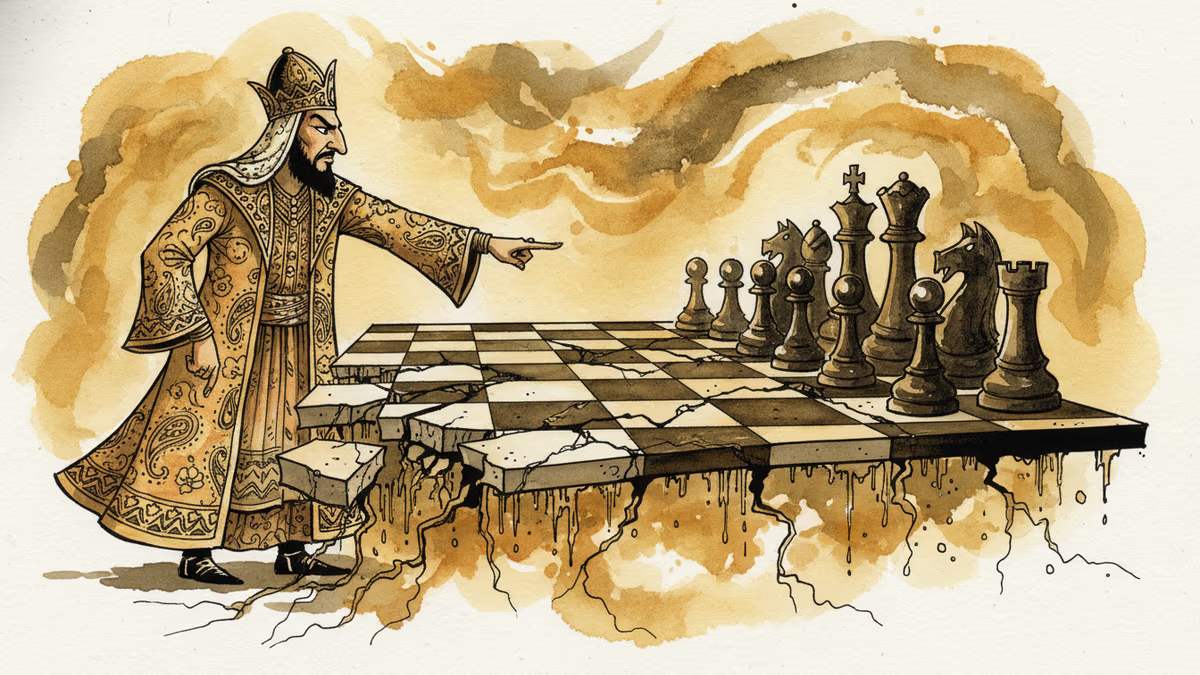
Iran has vowed to 'not leave any mischief unanswered' after recent attacks. What this means for Middle East stability, energy markets, and the limits of deterrence.
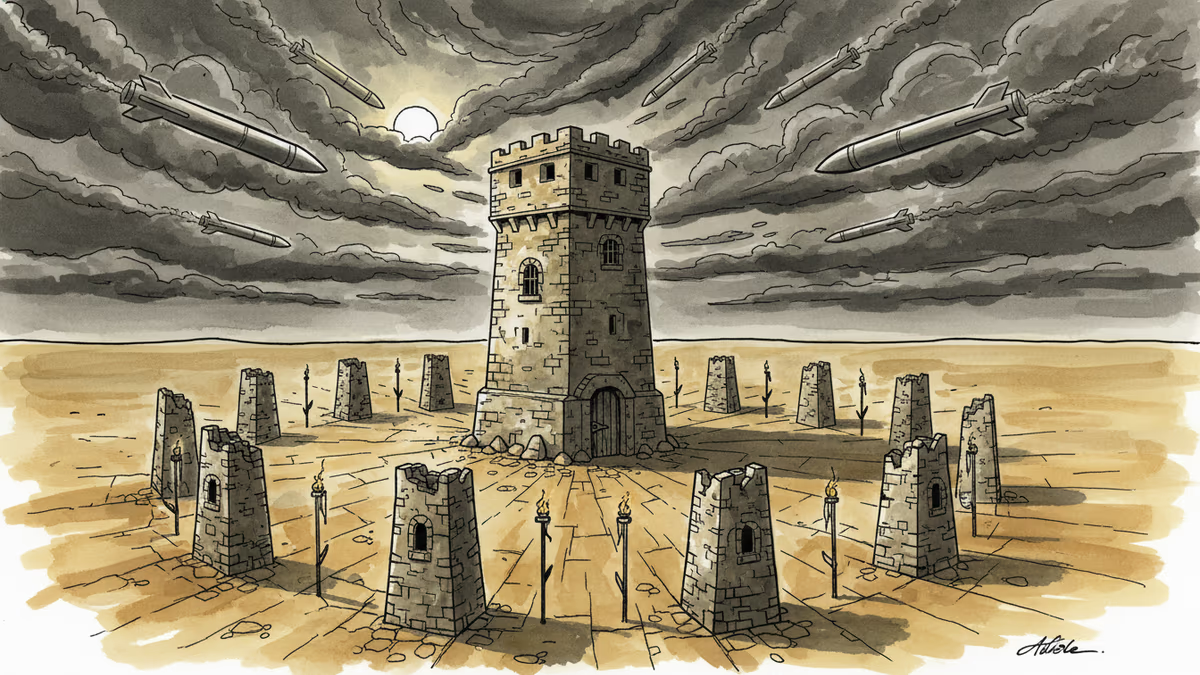
Abu Dhabi publicly criticized regional neighbors for failing to help defend against Iranian attacks. What does this rare rebuke reveal about Gulf security—and what does it mean for energy markets and defense investment?
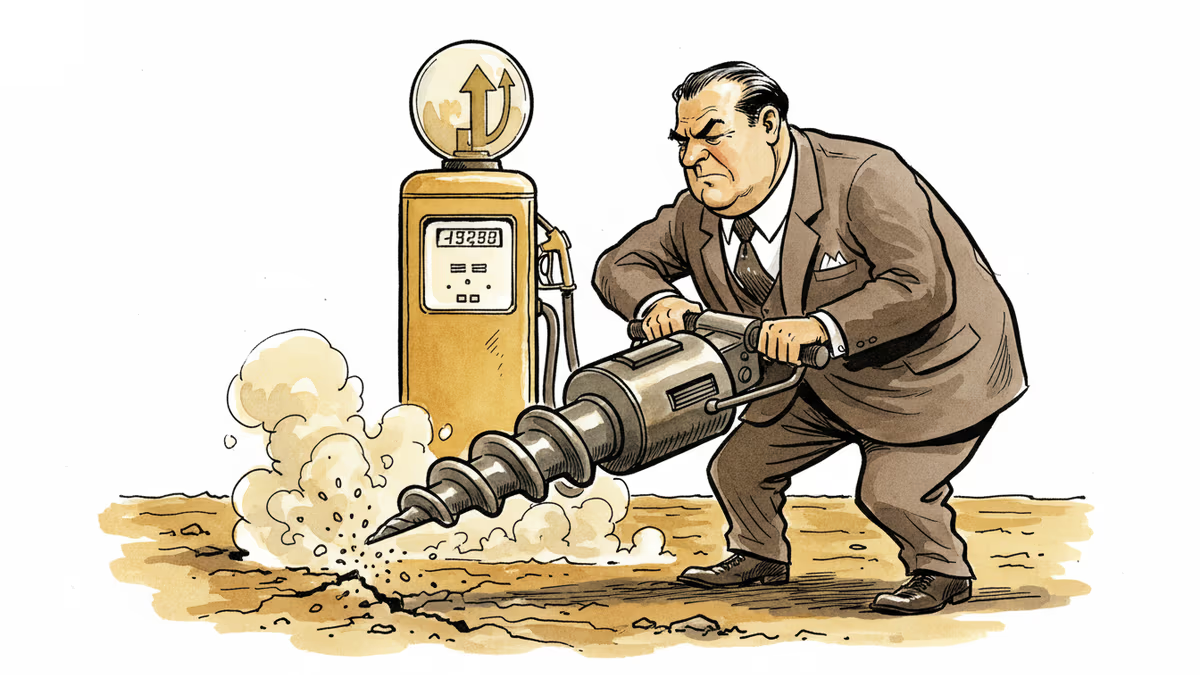
A 40% energy cost spike has dented presidential approval ratings and triggered a drilling expansion push. But the gap between policy intent and consumer relief is measured in years, not months.
Mike Waltz exits as Trump weighs resuming strikes on Iran. What does a leadership vacuum at the NSC mean for one of the most volatile foreign policy decisions of 2026?
Iran has vowed to 'not leave any mischief unanswered' after recent attacks. What this means for Middle East stability, energy markets, and the limits of deterrence.
Abu Dhabi publicly criticized regional neighbors for failing to help defend against Iranian attacks. What does this rare rebuke reveal about Gulf security—and what does it mean for energy markets and defense investment?
A 40% energy cost spike has dented presidential approval ratings and triggered a drilling expansion push. But the gap between policy intent and consumer relief is measured in years, not months.
Mike Waltz exits as Trump weighs resuming strikes on Iran. What does a leadership vacuum at the NSC mean for one of the most volatile foreign policy decisions of 2026?
Thoughts
Share your thoughts on this article
Sign in to join the conversation