
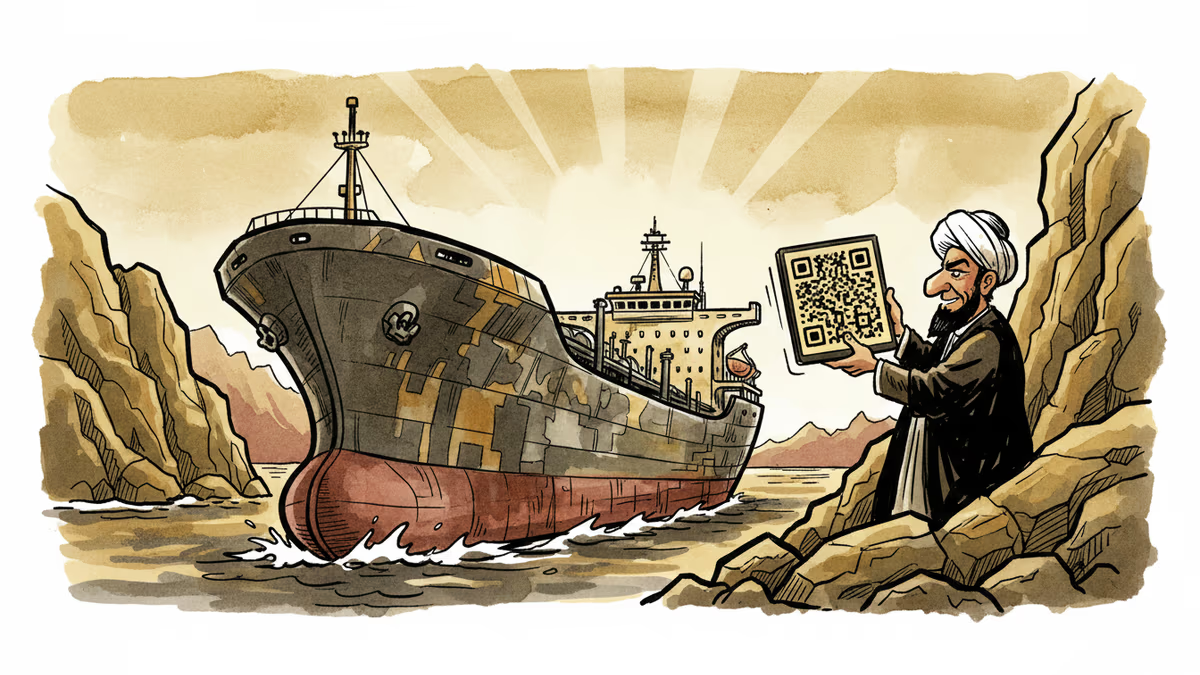
Iran Wants Bitcoin Tolls in the World's Most Critical Strait
Iran's economy ministry is drafting a plan to collect shipping fees in bitcoin from vessels transiting the Strait of Hormuz — a move that reframes sanctions evasion as financial infrastructure.
One-fifth of the world's oil supply flows through a 33-kilometer chokepoint. Iran now wants to be paid in bitcoin to let it pass.
Fars News Agency, a state-linked Iranian outlet, reported that the country's economy ministry has been developing a plan to manage shipping through the Strait of Hormuz with payments denominated in bitcoin. No official policy announcement has been made. No timeline has been set. But the report — brief as it was — landed with unusual weight in shipping, crypto, and geopolitical circles, because it sits at the intersection of three major fault lines reshaping the global order.
The Logic: When SWIFT Is a Weapon, Bitcoin Is the Exit
Iran has been effectively cut off from the SWIFT international payments network under U.S.-led sanctions. Dollar transactions are blocked. Euro settlements require elaborate workarounds. The architecture of modern global finance has been deliberately weaponized against Tehran — and it has largely worked.
Bitcoin's appeal in this context isn't ideological. It's structural. No central bank controls it. No SWIFT node can block it. OFAC — the U.S. Treasury's Office of Foreign Assets Control — has no kill switch. For a government that needs to generate revenue from one of its most valuable strategic assets, a censorship-resistant payment rail is an obvious tool to reach for.
This isn't Iran's first move in this direction. Since 2021, Tehran has officially permitted bitcoin mining and has experimented with using mined crypto to pay for imports, explicitly framing it as a sanctions workaround. The Hormuz toll plan is a logical extension of that experiment — scaling it from import payments to transit fees on a waterway that handles roughly 17 million barrels of oil per day.
The Chokepoint and the Dilemma It Creates
The Strait of Hormuz is where the Persian Gulf narrows to roughly 33 kilometers at its tightest point. Saudi Arabia, Iraq, Kuwait, the UAE, and Qatar all depend on it for the vast majority of their oil exports. Japan gets around 80% of its crude oil imports through it. South Korea, India, China — all heavily exposed.
If Iran were to formalize a bitcoin toll system, shipping companies would face a stark choice: pay in bitcoin and risk OFAC sanctions violations that could cut them off from U.S. financial markets, U.S. port access, and U.S.-linked insurance; or refuse and potentially face delays, harassment, or seizure in one of the world's most contested waterways. Iran has seized foreign-flagged vessels before — at least a dozen incidents since 2019 alone.

For major carriers like Maersk, MSC, and COSCO, neither option is clean. Their legal and compliance teams would face a genuinely novel problem: a state actor demanding payment in an asset class that most institutional frameworks haven't fully resolved.
What Makes This Different from Past Hormuz Threats
Iran has threatened to close the Strait of Hormuz many times. Markets have shrugged, mostly because actual closure would be an act of war — triggering U.S. Fifth Fleet response and cutting off Iran's own remaining oil export revenue. The threat has always been more useful as rhetoric than as operational reality.
The bitcoin toll plan is structurally different. It doesn't require military confrontation. It doesn't close the strait. It simply redefines the terms of passage in a way that existing sanctions architecture struggles to intercept. It's less a threat and more a quiet institutional maneuver — one that, if it gained traction, would force Western governments to either extend sanctions enforcement into crypto infrastructure or watch a meaningful workaround take hold.
There are real obstacles. Bitcoin's price volatility makes it a poor store of value for a government that needs predictable revenue. Stablecoins would be more practical, but the major issuers — Tether, Circle — operate under U.S. regulatory influence. International maritime law's right of innocent passage also complicates any attempt to enforce mandatory tolls. And Fars News reported a plan under development, not a policy in force.
But the direction of travel matters as much as the destination.
The Bigger Pattern
This isn't an isolated Iranian experiment. Russia pivoted to ruble and yuan payments for energy after 2022 sanctions. China has been quietly expanding CIPS — its Cross-Border Interbank Payment System — as an alternative to SWIFT. Venezuela, North Korea, and others have used crypto to varying degrees to move value outside the dollar system.
What's emerging is a patchwork of parallel financial infrastructure, built precisely in the gaps that Western sanctions leave open. Bitcoin isn't replacing the dollar system — but it's becoming a tool in the toolkit of states that have been excluded from it.
For crypto markets, the implications cut both ways. State adoption of bitcoin as a geopolitical instrument adds a layer of legitimacy to the asset class — but it also invites a harder regulatory crackdown from Washington. If bitcoin becomes visibly associated with sanctions evasion at scale, the political appetite for stricter on-ramp controls in the U.S. and EU grows considerably.
This content is AI-generated based on source articles. While we strive for accuracy, errors may occur. We recommend verifying with the original source.
Related Articles
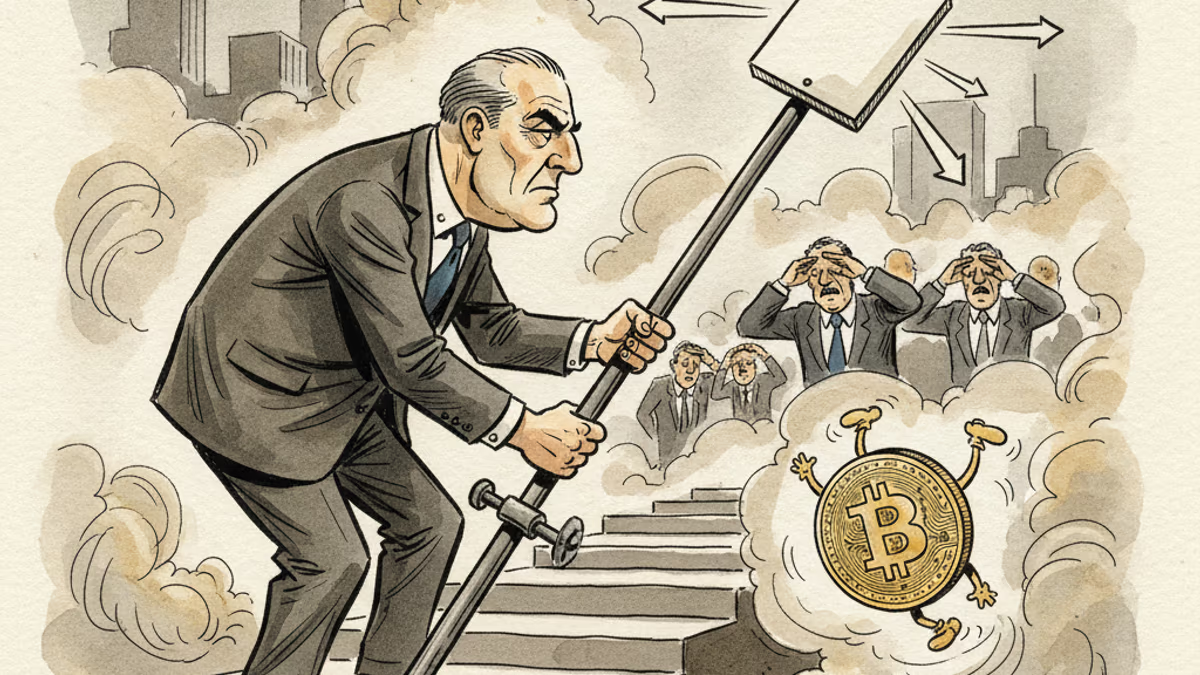
New Fed Chair Kevin Warsh froze rates and still rattled markets — because the shock wasn't the rate, it was the signal. Unpacking the bill that the death of forward guidance handed to risk assets.
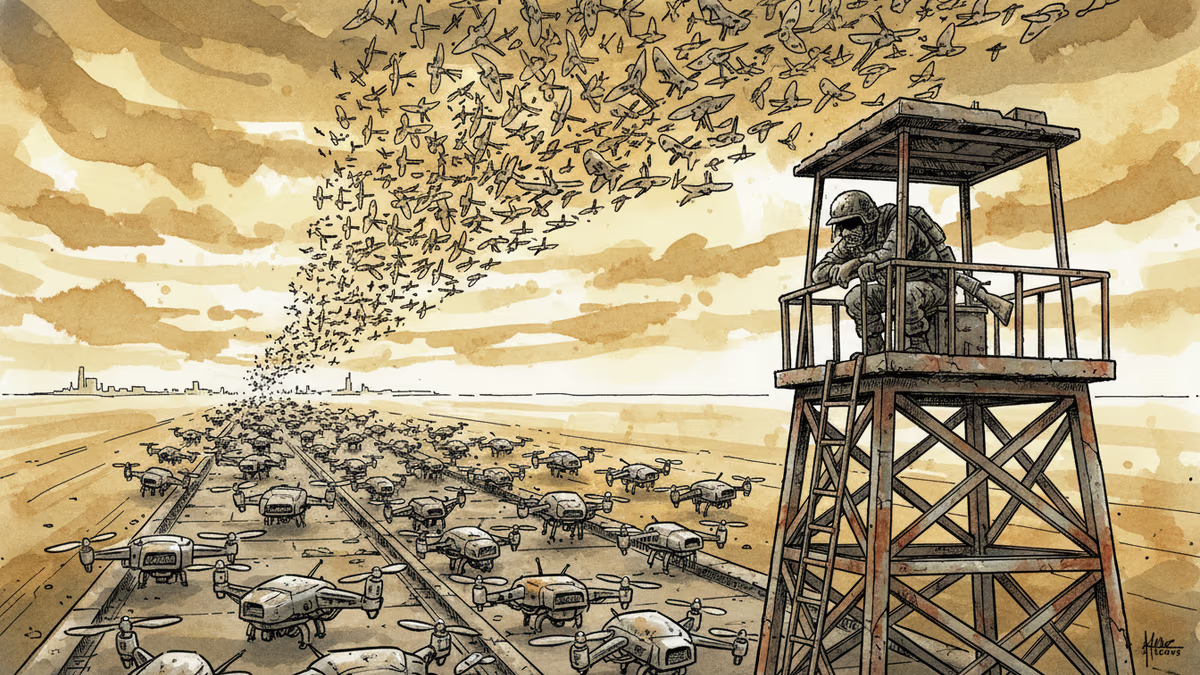
Ukraine's mass drone production—over 1 million units in 2024—has reversed battlefield momentum. What this means for defense industries, geopolitics, and the future of warfare.
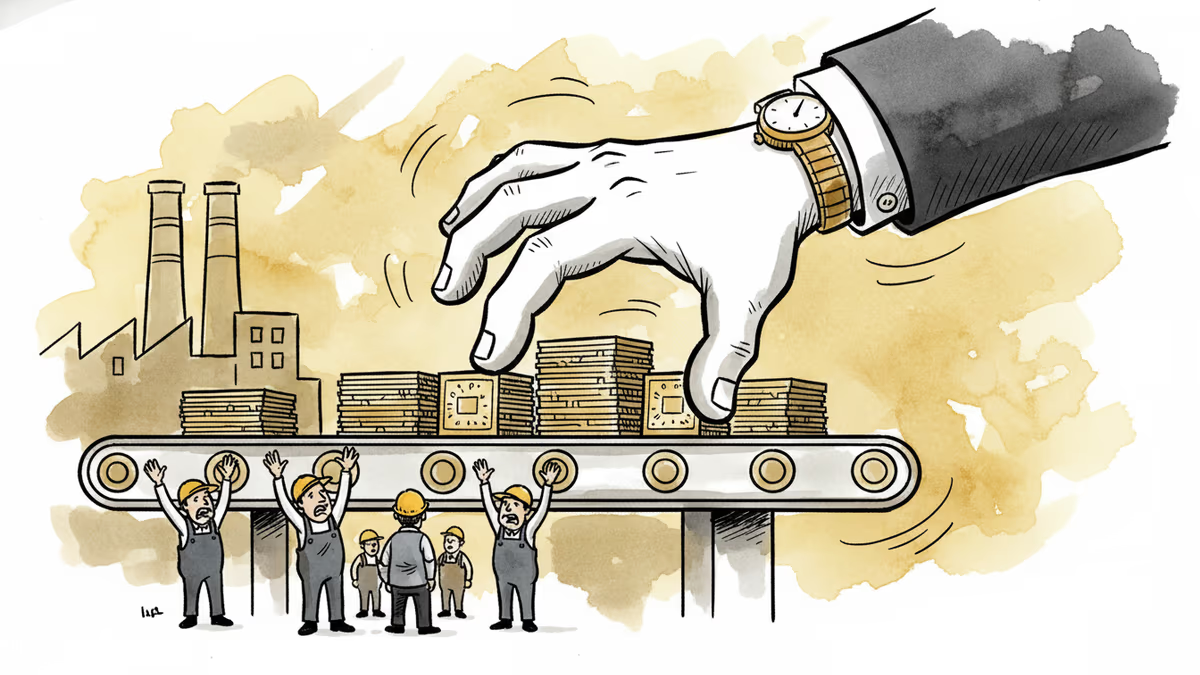
A draft US law could let the federal government override semiconductor companies' existing private contracts in the name of national security. Here's what's at stake for the industry.

Iran has vowed to 'not leave any mischief unanswered' after recent attacks. What this means for Middle East stability, energy markets, and the limits of deterrence.
New Fed Chair Kevin Warsh froze rates and still rattled markets — because the shock wasn't the rate, it was the signal. Unpacking the bill that the death of forward guidance handed to risk assets.
Ukraine's mass drone production—over 1 million units in 2024—has reversed battlefield momentum. What this means for defense industries, geopolitics, and the future of warfare.
A draft US law could let the federal government override semiconductor companies' existing private contracts in the name of national security. Here's what's at stake for the industry.
Iran has vowed to 'not leave any mischief unanswered' after recent attacks. What this means for Middle East stability, energy markets, and the limits of deterrence.
Thoughts
Share your thoughts on this article
Sign in to join the conversation