

The Ghost of Twitter: Why X's Legal Battle Reveals a Billion-Dollar Rebranding Blunder
X's legal fight over the 'Twitter' trademark is more than a lawsuit—it's a public admission of a costly, self-inflicted rebranding blunder by Elon Musk.
The Lede: A Self-Inflicted Wound
X Corp's frantic update to its Terms of Service, explicitly re-staking its claim to the 'Twitter' trademark, is far more than a routine legal maneuver. It’s a public admission of a critical, self-inflicted wound. This isn't just a defense against an opportunistic startup; it’s a direct consequence of a chaotic and legally careless rebranding strategy, exposing the immense, lingering value of a brand Elon Musk tried to discard overnight.
Why It Matters: The High Cost of Haste
For business leaders and brand strategists, this is a live, high-stakes case study in how not to execute a corporate rebrand. Musk's public declaration to “bid adieu to the twitter brand” wasn't just a tweet; it became legal ammunition for challengers claiming trademark abandonment. This situation reveals a critical truth many are ignoring:
- Brand equity is a tangible, legal asset. It cannot be casually dismissed without creating vulnerabilities. The name 'Twitter' and the verb 'to tweet' possess decades of cultural and search equity that 'X' has yet to earn.
- 'Move fast and break things' crumbles against trademark law. The tech ethos of rapid iteration is a poor match for the deliberate, precedent-based world of intellectual property. This oversight has now forced X into a defensive, reactive position.
- It creates a fractured brand identity. X is now forced to legally tether itself to the very name it sought to escape, creating massive confusion for users, advertisers, and the market. It wants the future of 'X' but can't let go of the value of 'Twitter'.

The Analysis: A Legal Playbook Turned Against Itself
Vultures with an Insider's Map
Don't mistake 'Operation Bluebird' for a typical startup. The involvement of Stephen Coates, a former trademark lawyer for Twitter itself, is the smoking gun. This isn't a speculative gamble; it's a calculated legal strike executed by someone who understands the company's IP portfolio and potential weaknesses intimately. They identified a gap between Musk's public declarations and X Corp's legal actions and are exploiting it with precision. Their goal is almost certainly not to build a rival network, but to force a lucrative settlement by holding a billion-dollar brand name hostage.
The Billion-Dollar Contradiction
The core conflict is that Musk’s ambition for 'X' as an “everything app” is at odds with the specific, powerful identity of 'Twitter'. By attempting to jettison the latter, he inadvertently devalued his asset and opened the door for this challenge. Now, by adding 'Twitter' back into its official terms, X is admitting it cannot fully sever the connection. This legal backpedaling is a tacit acknowledgment that the blue bird's ghost still holds immense power and, crucially, monetary value. The company is trying to have it both ways: build a new brand while clinging to the legal protections of the old one.
PRISM's Take
X will almost certainly win this legal fight, but the victory will be a hollow one. The real story isn't the outcome of the lawsuit, but the strategic blunder it represents. This episode lays bare the profound disconnect between visionary ambition and the granular realities of corporate governance and brand management. Musk's attempt to erase a globally recognized brand by sheer force of will has backfired, forcing his own company to publicly reaffirm the value of what he sought to destroy. The ghost of Twitter will haunt X's brand strategy for years, and this legal skirmish is just the first, costly reminder that you can't tweet your way around intellectual property law.
Authors
Related Articles
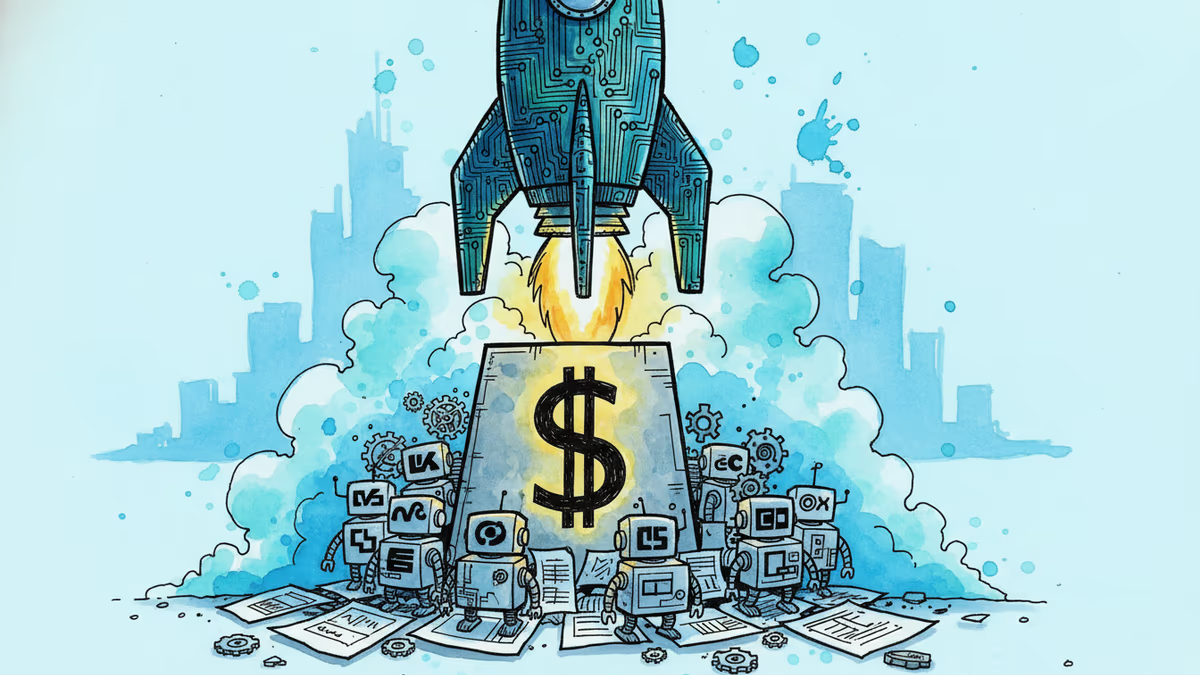
SpaceX's IPO filing puts AI at the center, claiming a $26.5 trillion market opportunity. But can Grok compete with OpenAI and Anthropic for enterprise customers?
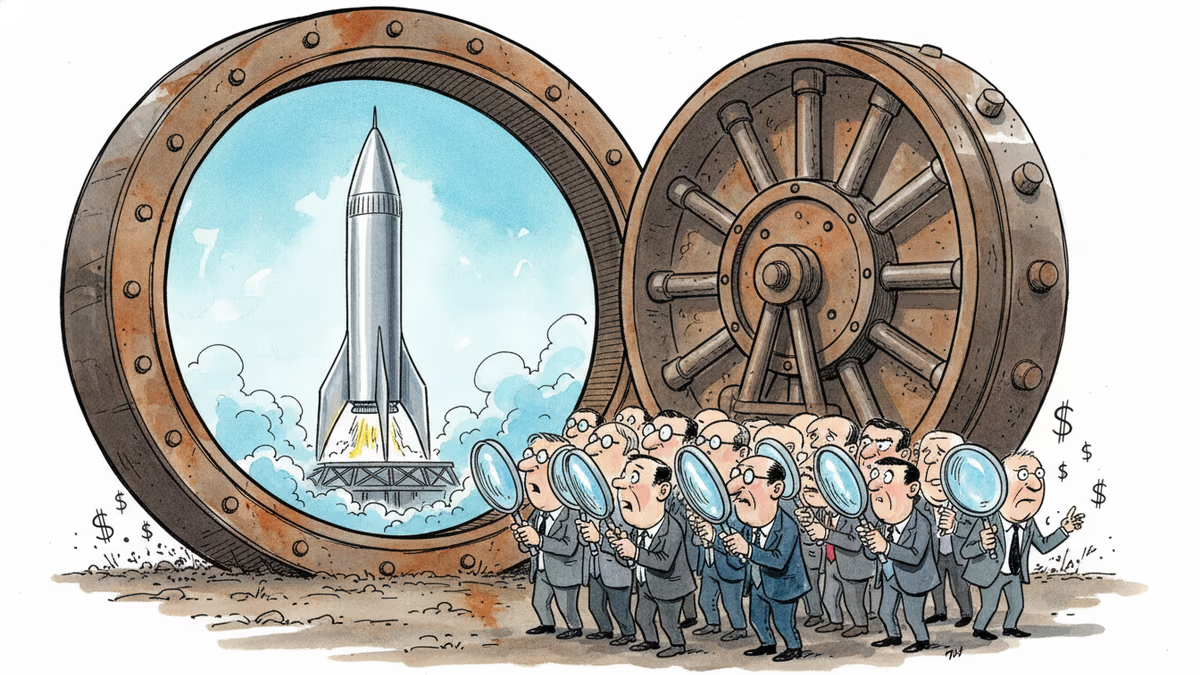
SpaceX filed a nearly 400-page S-1 with the SEC, targeting an IPO as early as June 12. Here's what the filing reveals—and what it doesn't.
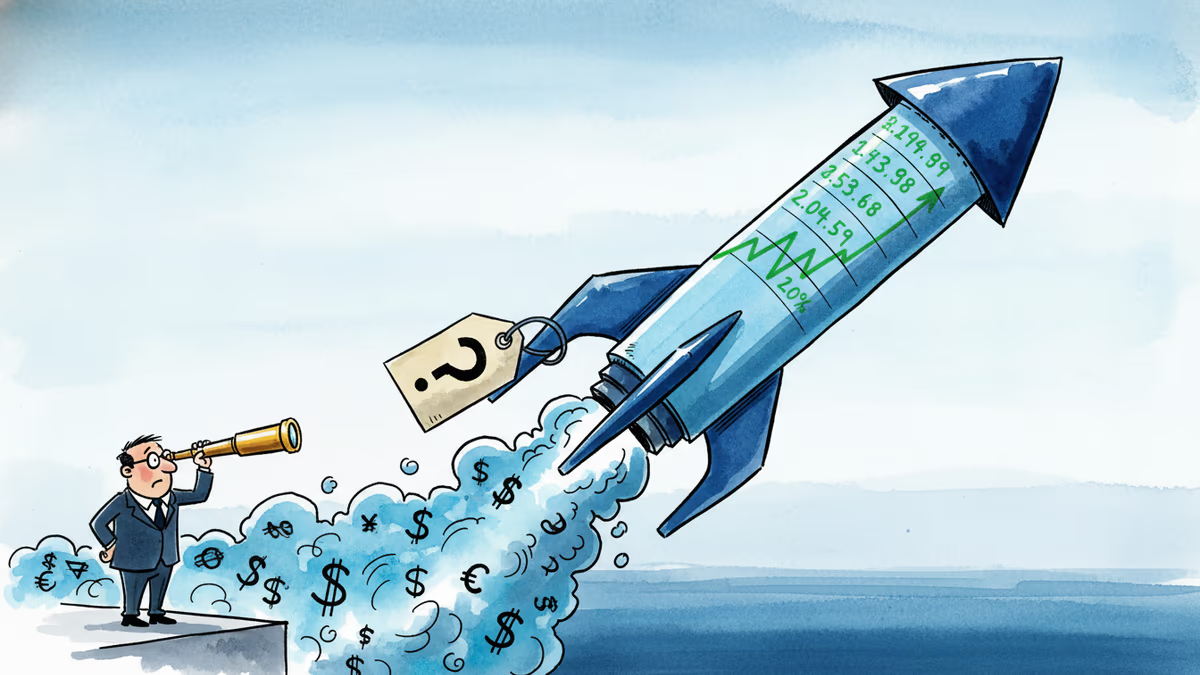
SpaceX has filed its S-1 with the SEC, targeting the Nasdaq under ticker SPCX. With $18.67B in revenue but a $4.9B loss, the IPO forces investors to answer one hard question.
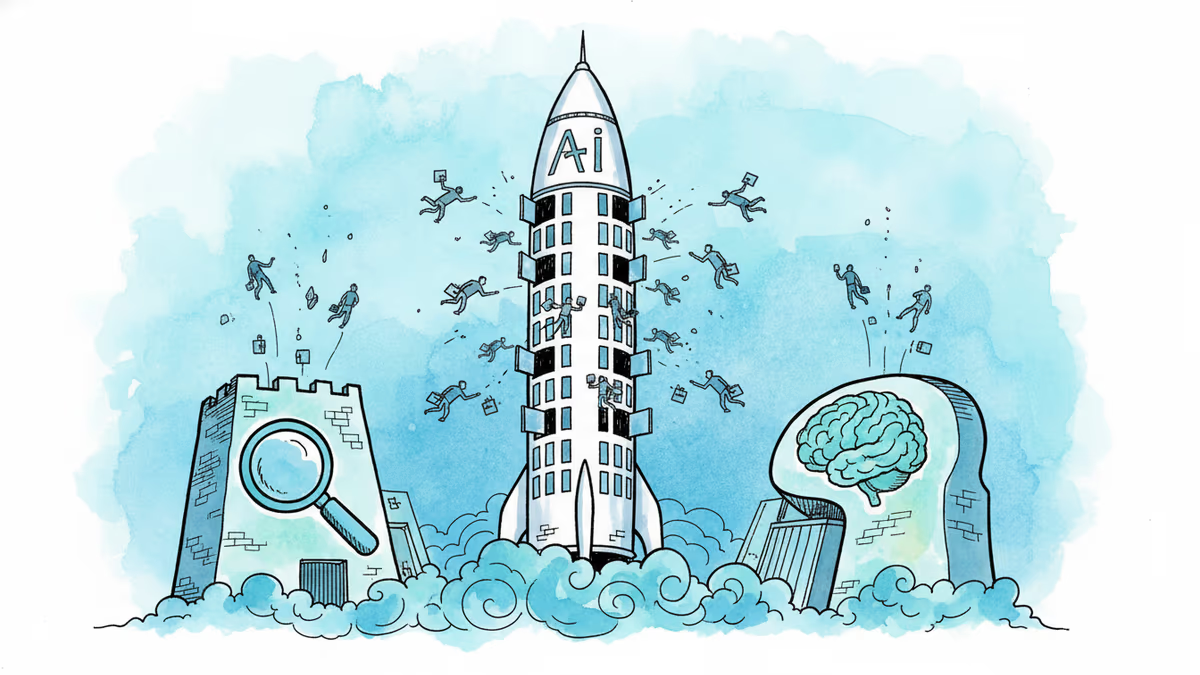
Over 50 researchers and engineers have left SpaceXAI since February's merger. With the pre-training team nearly gutted, questions mount about whether Musk's AI ambitions can survive his management style.
SpaceX's IPO filing puts AI at the center, claiming a $26.5 trillion market opportunity. But can Grok compete with OpenAI and Anthropic for enterprise customers?
SpaceX filed a nearly 400-page S-1 with the SEC, targeting an IPO as early as June 12. Here's what the filing reveals—and what it doesn't.
SpaceX has filed its S-1 with the SEC, targeting the Nasdaq under ticker SPCX. With $18.67B in revenue but a $4.9B loss, the IPO forces investors to answer one hard question.
Over 50 researchers and engineers have left SpaceXAI since February's merger. With the pre-training team nearly gutted, questions mount about whether Musk's AI ambitions can survive his management style.
Thoughts
Share your thoughts on this article
Sign in to join the conversation