
Tesla Invests $2B in xAI Despite Shareholder Opposition
Tesla invested $2 billion in Elon Musk's xAI despite shareholders rejecting the proposal last year. The move highlights corporate governance tensions and Musk's expanding AI empire.
Tesla shareholders made their position clear last November: they voted against investing in Elon Musk's AI company xAI. But Tesla went ahead anyway, revealing Wednesday it invested $2 billion in the startup behind the Grok chatbot.
When Shareholder Democracy Meets CEO Vision
The November vote seemed to favor the investment at first glance: 1.06 billion votes in favor versus 916.3 million opposed. But Tesla's bylaws count abstentions as "no" votes, effectively rejecting the non-binding measure.
Tesla proceeded regardless, offering a justification tied to its "Master Plan Part IV" strategy. The company argues that Tesla builds "AI into the physical world" while xAI develops "leading digital AI products" like Grok. Together, they claim, these create synergies worth $2 billion of shareholder money.
The investment came as part of xAI's massive $20 billion Series E funding round announced three weeks ago. Other investors include Valor Equity Partners, Fidelity, and the Qatar Investment Authority, with Nvidia and Cisco as strategic backers.
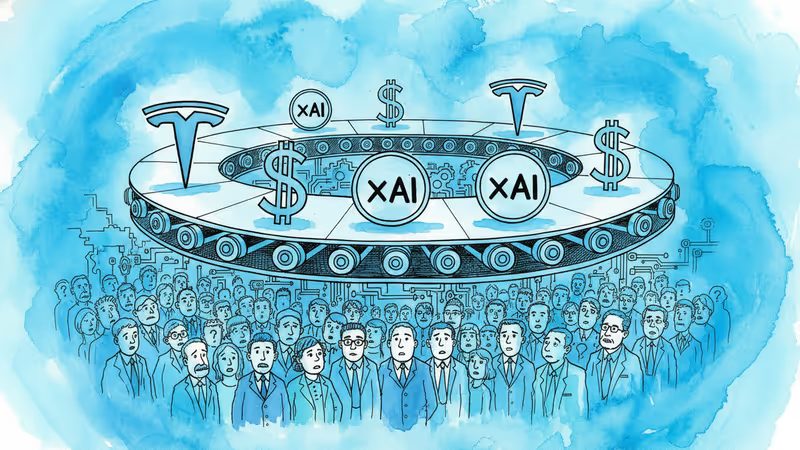
The Circular Empire Problem
This deal epitomizes what critics call Musk's "circular" business structure. Tesla (where Musk is CEO) invests in xAI (which Musk owns), which also controls X (Musk's social media platform). It's a web of interconnected companies all orbiting the same individual.

For Tesla shareholders, this raises uncomfortable questions. Their investment in an electric vehicle company is now funding an AI chatbot that competes with OpenAI, Google, and Anthropic. Meanwhile, Tesla's own profits fell 46% last year despite beating Wall Street estimates on revenue.
Physical Meets Digital AI
Tesla's defense centers on AI convergence. The company is developing Optimus humanoid robots, autonomous semis, and self-driving capabilities—all "physical AI." Meanwhile, xAI focuses on large language models and digital AI services.
The companies signed a "framework agreement" to "evaluate potential AI collaborations." Tesla believes this will "enhance Tesla's ability to develop and deploy AI products and services into the physical world at scale."
But investors might wonder: couldn't Tesla develop these capabilities internally? Or partner with established AI companies without the ownership complications?
The Governance Precedent
This move sets a concerning precedent for corporate governance. If a CEO can override shareholder opposition by citing "strategic vision," what power do investors actually hold? The situation becomes more complex when the CEO has cult-like following and the company's stock price often moves on his social media posts.
Tesla isn't the first company to face this dilemma, but few cases involve such direct financial flows between a CEO's various ventures. The investment closes in Q1, making it a fait accompli regardless of ongoing shareholder concerns.
Authors
Related Articles
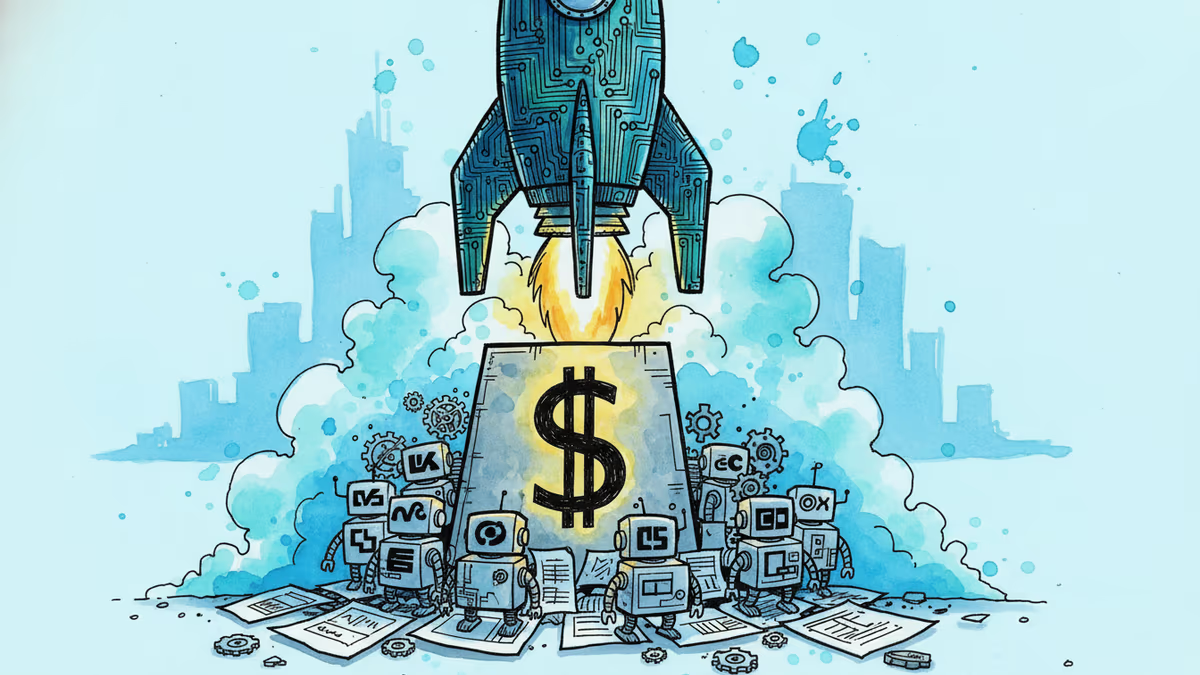
SpaceX's IPO filing puts AI at the center, claiming a $26.5 trillion market opportunity. But can Grok compete with OpenAI and Anthropic for enterprise customers?
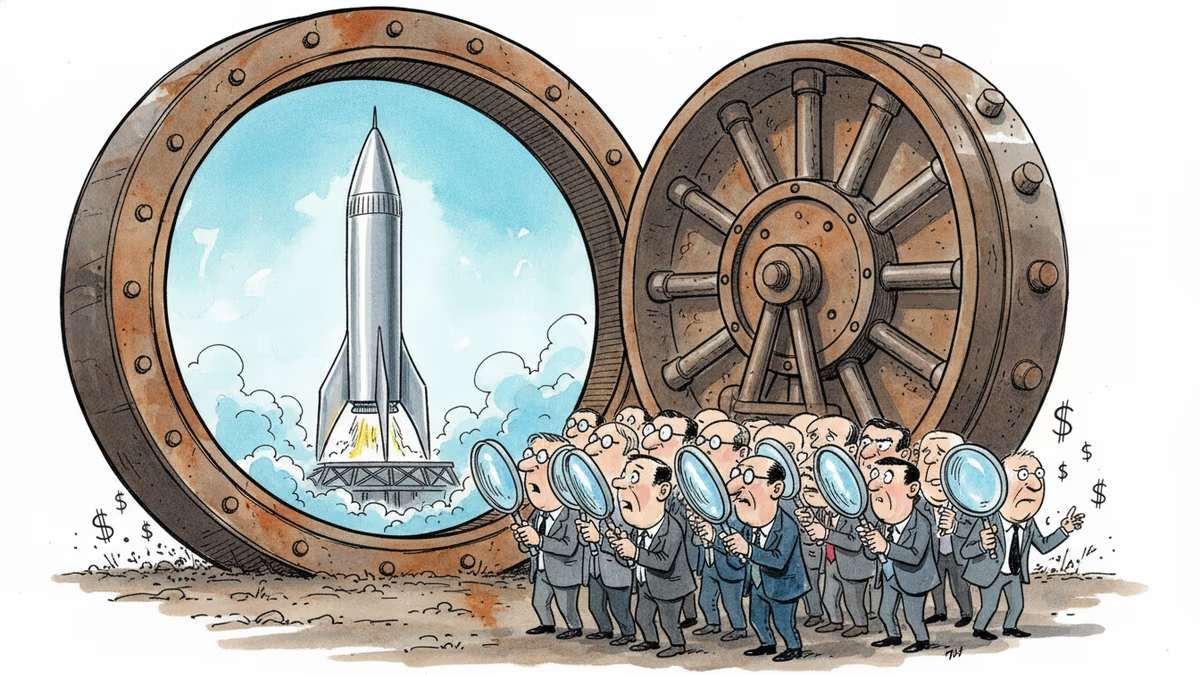
SpaceX filed a nearly 400-page S-1 with the SEC, targeting an IPO as early as June 12. Here's what the filing reveals—and what it doesn't.
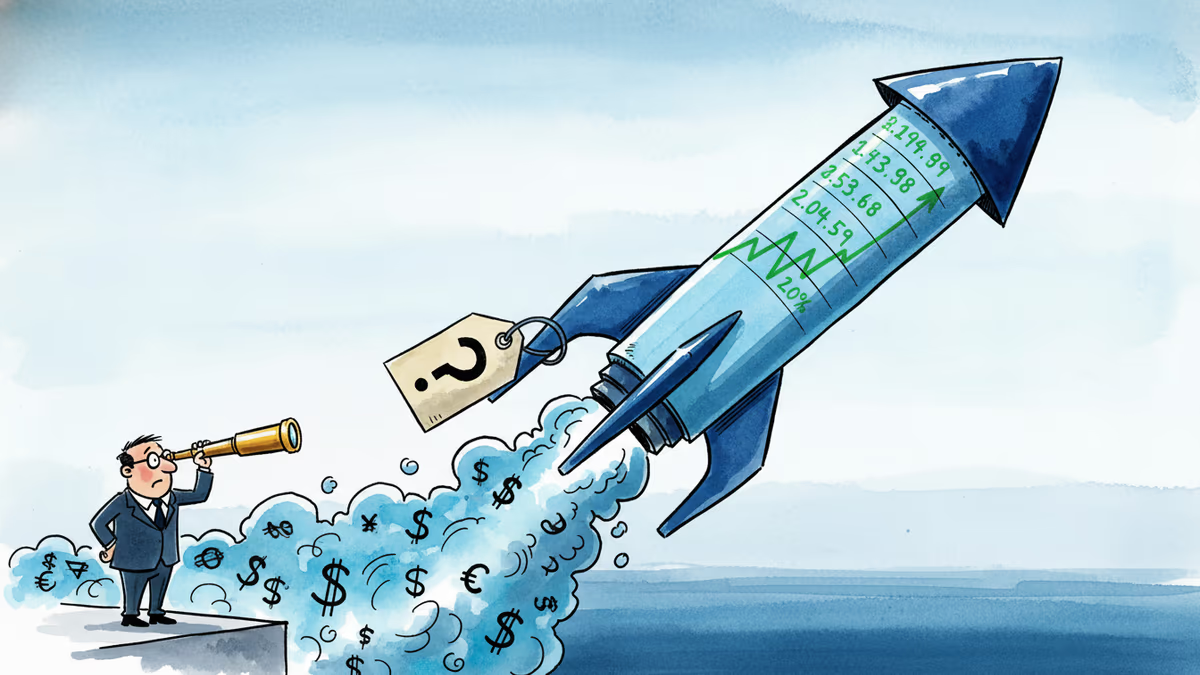
SpaceX has filed its S-1 with the SEC, targeting the Nasdaq under ticker SPCX. With $18.67B in revenue but a $4.9B loss, the IPO forces investors to answer one hard question.
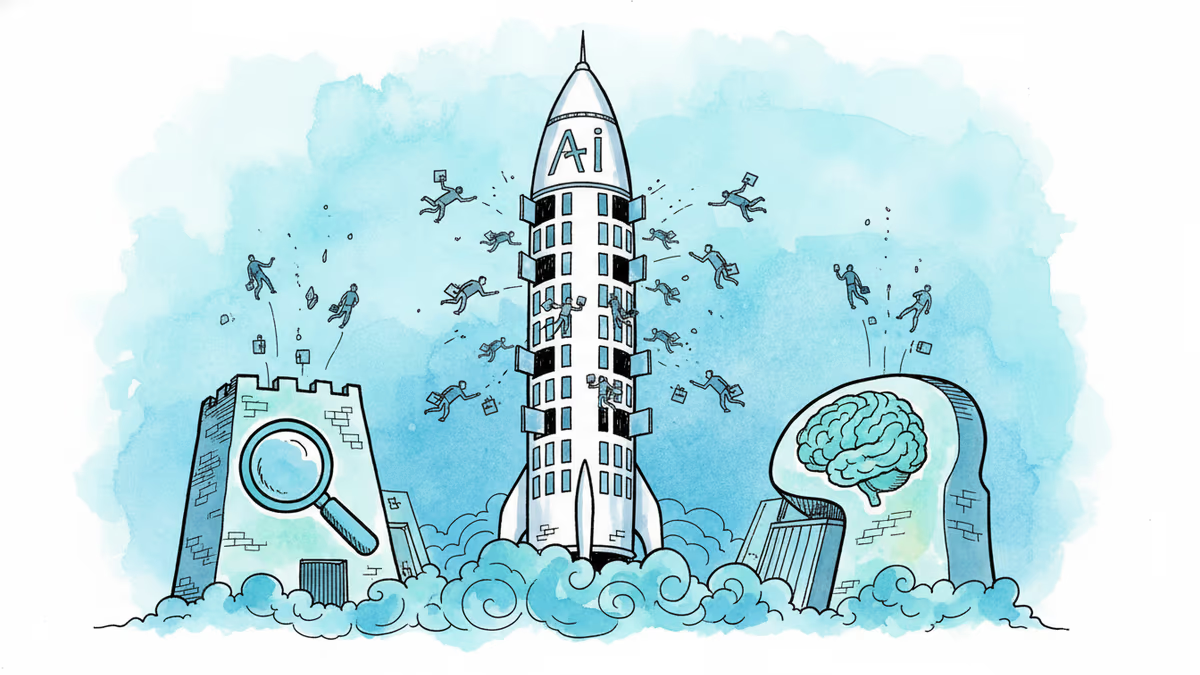
Over 50 researchers and engineers have left SpaceXAI since February's merger. With the pre-training team nearly gutted, questions mount about whether Musk's AI ambitions can survive his management style.
SpaceX's IPO filing puts AI at the center, claiming a $26.5 trillion market opportunity. But can Grok compete with OpenAI and Anthropic for enterprise customers?
SpaceX filed a nearly 400-page S-1 with the SEC, targeting an IPO as early as June 12. Here's what the filing reveals—and what it doesn't.
SpaceX has filed its S-1 with the SEC, targeting the Nasdaq under ticker SPCX. With $18.67B in revenue but a $4.9B loss, the IPO forces investors to answer one hard question.
Over 50 researchers and engineers have left SpaceXAI since February's merger. With the pre-training team nearly gutted, questions mount about whether Musk's AI ambitions can survive his management style.
Thoughts
Share your thoughts on this article
Sign in to join the conversation