
Tesla Kills Model S and X to Make Room for Robots
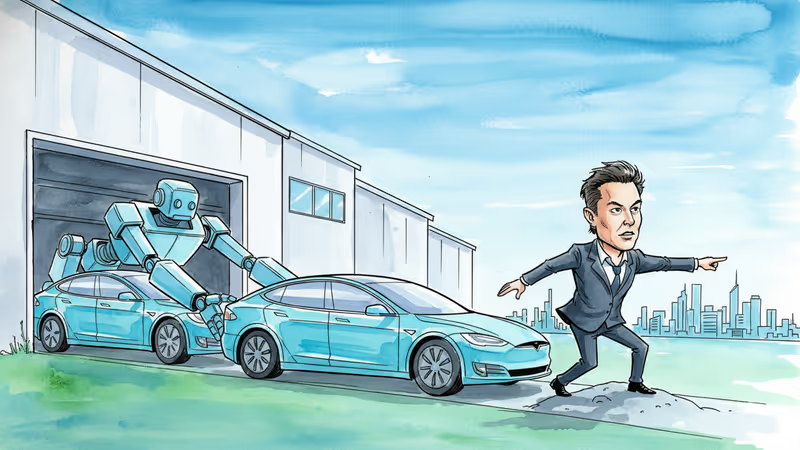
Tesla will discontinue its Model S sedan and Model X SUV in Q2 2026 to free up factory space for Optimus humanoid robot production, Elon Musk announced.
Two flagship models that defined Tesla's luxury ambitions are heading to the automotive graveyard. Elon Musk announced today that the company will discontinue the Model S and Model X in Q2 2026 to make factory space for something entirely different: humanoid robots.
From Cars to 'Bots
"It's time to basically bring the Model S and X programs to an end with an honorable discharge," Musk told investors, "because we're really moving into a future that is based on autonomy." The Fremont factory space currently building these vehicles will be repurposed for Optimus robot production.
The decision marks a dramatic pivot for Tesla. The 2012Model S was the vehicle that proved electric cars could be desirable, not just practical. The Model X, with its distinctive falcon-wing doors, showed Tesla's flair for the dramatic. But both models have seen sales decline significantly in recent years as Tesla focused on the mass-market Model 3 and Model Y.
The Robot Bet

Musk's bet on Optimus represents perhaps the boldest strategic shift in automotive history. He's essentially saying that Tesla's future lies not in making better cars, but in creating artificial workers. The company has positioned the humanoid robot as potentially "the most significant product ever of any kind."
Yet questions remain. Optimus prototypes are still clunky and limited. Commercial viability is years away, if ever. Meanwhile, the Model S and Model X, despite declining sales, still generate meaningful revenue and maintain Tesla's presence in the luxury segment.
Market Implications
This creates opportunities for competitors. Lucid Air, BMW iX, and Mercedes EQS could capture luxury EV buyers who might have considered Tesla. The move also signals to investors that Tesla views itself fundamentally as a robotics and AI company, not an automaker.
But there's risk in abandoning proven products for unproven technology. Tesla is betting its factory capacity on a product that doesn't yet work reliably, while giving up market share in segments it helped create.
Authors
Related Articles
Waymo's new Ojai robotaxi isn't just a vehicle upgrade. It's the company's most serious attempt yet at cracking the cost problem that has kept autonomous vehicles from scaling. Here's what's really at stake.
Mercedes-AMG's new GT 4-door coupe packs three YASA axial flux motors producing 1,153 hp and 1,475 lb-ft of torque. Here's what it means for the EV performance race—and who actually wins.
Auto China 2026 set records with 1,451 vehicles and 181 world premieres. But the real story isn't the size—it's how Chinese automakers stopped competing on price and started competing on brains.
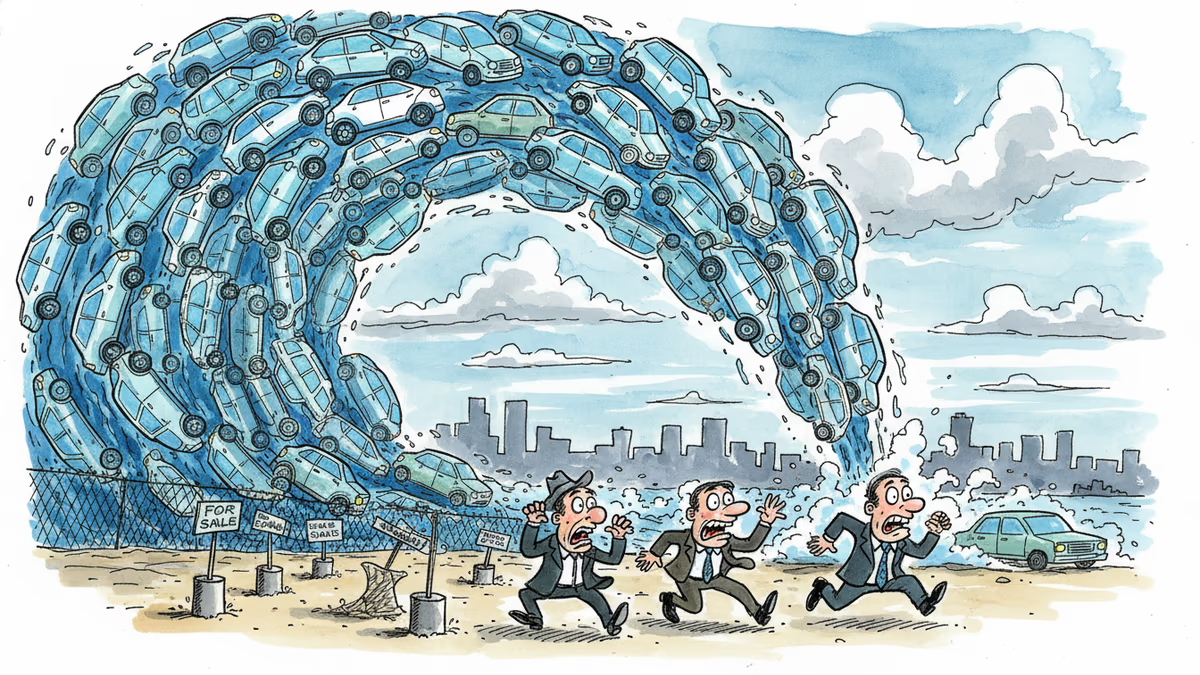
Expiring leases will flood the US used car market with over a million electric vehicles by 2028. Could this do what subsidies couldn't — make EVs genuinely affordable?
Waymo's new Ojai robotaxi isn't just a vehicle upgrade. It's the company's most serious attempt yet at cracking the cost problem that has kept autonomous vehicles from scaling. Here's what's really at stake.
Mercedes-AMG's new GT 4-door coupe packs three YASA axial flux motors producing 1,153 hp and 1,475 lb-ft of torque. Here's what it means for the EV performance race—and who actually wins.
Auto China 2026 set records with 1,451 vehicles and 181 world premieres. But the real story isn't the size—it's how Chinese automakers stopped competing on price and started competing on brains.
Expiring leases will flood the US used car market with over a million electric vehicles by 2028. Could this do what subsidies couldn't — make EVs genuinely affordable?
Thoughts
Share your thoughts on this article
Sign in to join the conversation