
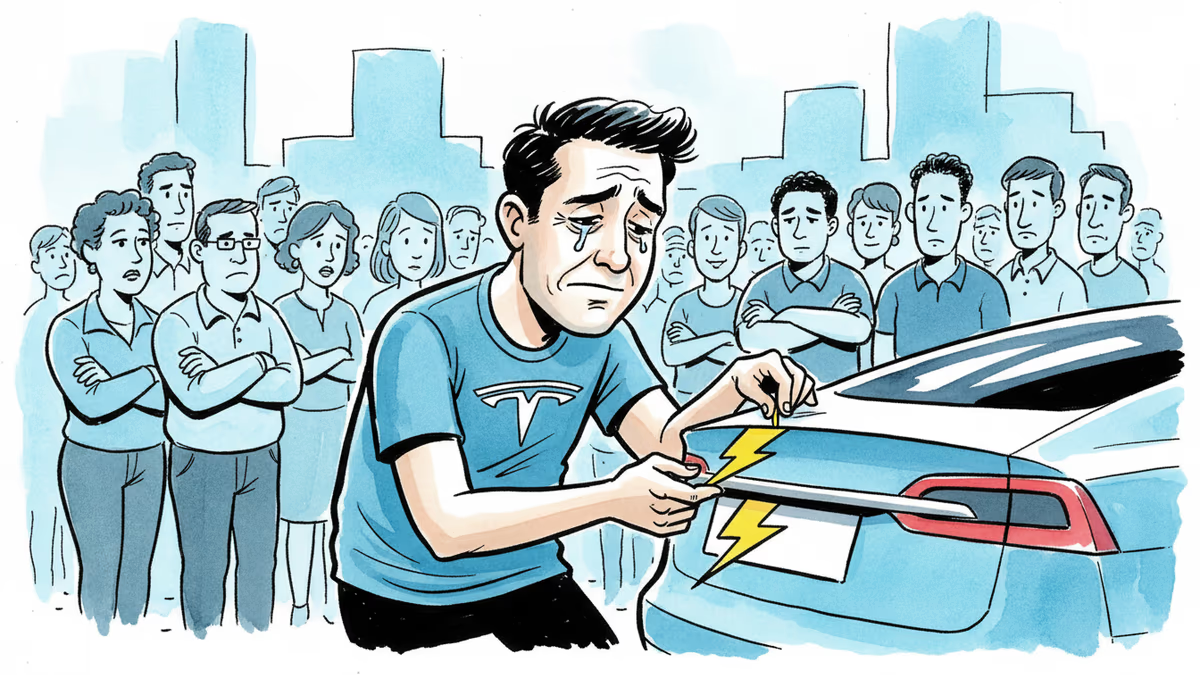
When Tesla Fans Stop Believing
Tesla's FSD transfer debacle has reignited a deeper question: what happens when a brand built on devotion starts breaking its promises? The psychology of fandom collapse.
Earl Banning, a psychologist in Anchorage, Alaska, once spent his evenings on Twitter defending Elon Musk from critics he dismissed as "haters" and "misinformed." He attacked auto journalists, mocked competing carmakers, and posted memes. "I was totally that guy," he says. Then came the pandemic, a lunge toward a fire hydrant, a car that tried to drive itself down a sidewalk outside a Walmart—and, finally, a live chat where he told Musk his transgender child no longer supported Tesla because of the CEO's public comments. Musk waved it off. That was enough.
Banning still drives his Model X. He just doesn't defend the man who made it anymore.
A Promise Quietly Rewritten
This month, a fresh wave of disillusionment swept through the Tesla community over what critics are calling a textbook bait-and-switch.
Here's what happened. Tesla had offered customers who once paid a "lifetime" fee—up to $15,000—for its Full Self-Driving feature the ability to transfer that software to a new vehicle. The offer was particularly compelling alongside a newly priced entry-level Cybertruck at $59,990, down sharply from the $79,990 it cost at the start of 2026. Musk clarified that price would only hold for 10 days, compressing the decision window for buyers.
Then Tesla quietly updated the fine print. To complete an FSD transfer, customers would now need to take delivery of their new vehicle by March 31. Given Tesla's current production backlogs, that condition made the offer functionally unreachable for many who had already placed orders. Tesla offered to refund the $250 deposit. The community was not appeased.
On X—which Musk owns, and which has long served as the de facto town square for Tesla enthusiasts—the backlash was fierce. "Tesla still hasn't fixed their blatant FSD Transfer lies," wrote the account known as The Cybertruck Guy. Another influencer responded by announcing they'd block anyone calling Tesla "liars." A third stepped in to call out the blocking as absurd, adding: "I don't need to be involved with people that want to worship a corporation and say they can do no wrong."
Three Tesla loyalists. Three different breaking points.
The Feature That Was Always "Almost Ready"
FSD sits at the center of Tesla's most contested promises. For years, Musk sold the vision of fully autonomous driving as perpetually imminent. Customers paid thousands—sometimes tens of thousands—upfront for a feature that was still, by any practical measure, a driver-assistance system requiring constant supervision.
Banning received early beta access to FSD in late 2020. The first time he activated it, his car lurched toward a fire hydrant. Later, leaving a Walmart, the vehicle abruptly turned onto a sidewalk and attempted to drive along it. His conclusion: "Either Elon is lying or he's brain-damaged or something, because there's no way you could sit in that car in 2020 and think that it's going to be finished soon."
Jilianne—a Tesla driver in Los Angeles who asked WIRED to use only her first name to avoid harassment—has streamed over 170 hours of FSD footage live on X to 16,000 followers. Her videos are not highlight reels. They document failures. She spent over $119,000 on a Model S Plaid with FSD. "I love the car," she says. "It's freaking amazing." But she no longer believes what Tesla or Musk say about the software's progress.

The legal record is catching up to the marketing. Tesla continues to face lawsuits over its driver-assistance features. Recently, a Houston driver filed suit alleging her Cybertruck attempted to drive itself off an overpass.
Why the Fandom Was So Strong—and Why It's Cracking
To understand why these defections matter, it helps to understand what made the Tesla community so cohesive in the first place.
Long before Musk acquired Twitter and rebranded it X, the platform was uniquely suited to Tesla's ecosystem. Musk posted directly. Investors and customers mingled. Skeptics were treated as either uninformed or financially motivated short-sellers. Over the past six years, Tesla's stock has risen approximately tenfold, giving the company a market cap well above $1 trillion. When your identity, your investment portfolio, and your daily commute are all wrapped up in the same brand, criticism doesn't feel like a differing opinion—it feels like an attack.
"It was kind of like a cult, but like a goofy cult," Banning says. "When Elon took more of a godlike status, and then when he took over Twitter, everybody—they don't have an opinion about anything unless it's Elon's."
Musk's increasingly polarizing political commentary has deepened the fractures. His early pandemic tweets—calling coronavirus panic "dumb" and predicting "close to zero" new US cases by the end of April 2020—were a turning point for Banning, a healthcare professional. "He would never correct it and never learn anything," Banning says. That pattern, repeated across topics from epidemiology to geopolitics, has made it harder for even sympathetic observers to maintain unconditional loyalty.
Tesla and Musk did not respond to requests for comment.
What Leaving Actually Costs
Breaking with the Tesla community isn't just a change of opinion—it's a social rupture. Banning lost followers and friendships. Jilianne keeps her profession private specifically to avoid coordinated harassment from loyalists. The community's enforcement mechanisms are real: accounts get blocked, reputations get challenged, and anyone who criticizes too loudly gets tagged as a short-seller or a saboteur.
For those who do leave, there's often a strange sense of relief. Banning made amends to some of the journalists and critics he once attacked. He still posts Frunk Puppy photos. Jilianne frames her FSD streams not as attacks on Tesla but as a counterweight to influencers who insist the software is nearly perfect.
Both still own their Teslas. Neither regrets the cars. What they've rejected is the narrative—the idea that Musk is infallible, that FSD is always almost done, and that loyalty requires silence.
The Broader Stakes
For investors, the erosion of Tesla's most vocal advocates is worth watching. The brand's premium valuation has always been partly built on enthusiasm that goes beyond rational market analysis. When the people who once amplified every product announcement start airing grievances instead, that signal carries weight.
For consumers considering a Tesla—or any vehicle with advanced driver-assistance features marketed as "self-driving"—the FSD story is a useful case study in reading the fine print. Features sold as transformative technology often arrive as incremental software, and the gap between the promise and the product can be measured in lawsuits.
For the broader EV market, Tesla's community fractures may actually open doors. Ford, GM, Hyundai, and Rivian are all competing for buyers who want electric vehicles without the ideological baggage. A customer who loved their Tesla but grew exhausted by the fandom is a customer someone else can win.
Authors
Related Articles
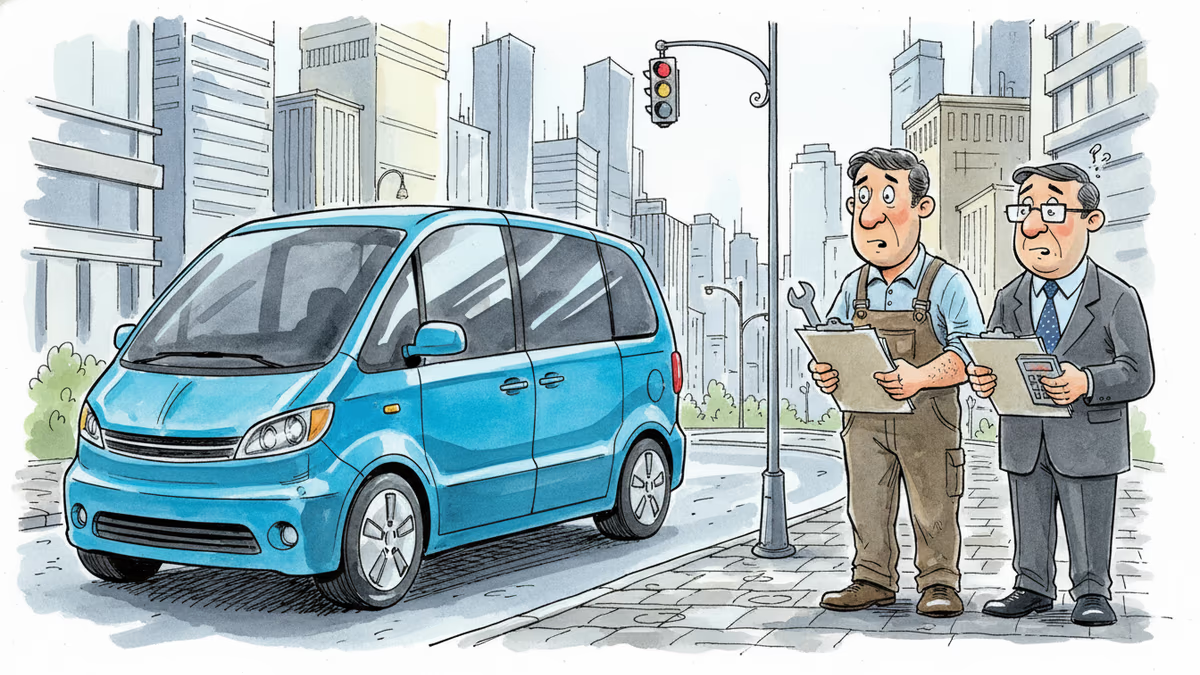
Waymo's new Ojai robotaxi isn't just a vehicle upgrade. It's the company's most serious attempt yet at cracking the cost problem that has kept autonomous vehicles from scaling. Here's what's really at stake.
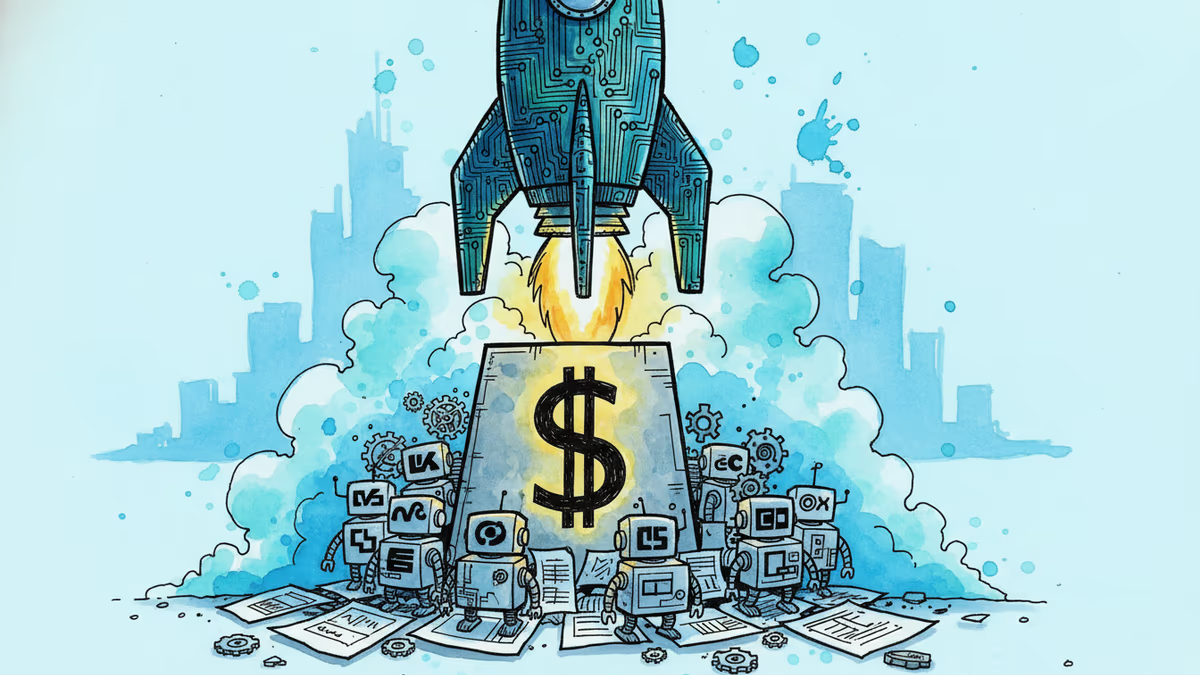
SpaceX's IPO filing puts AI at the center, claiming a $26.5 trillion market opportunity. But can Grok compete with OpenAI and Anthropic for enterprise customers?
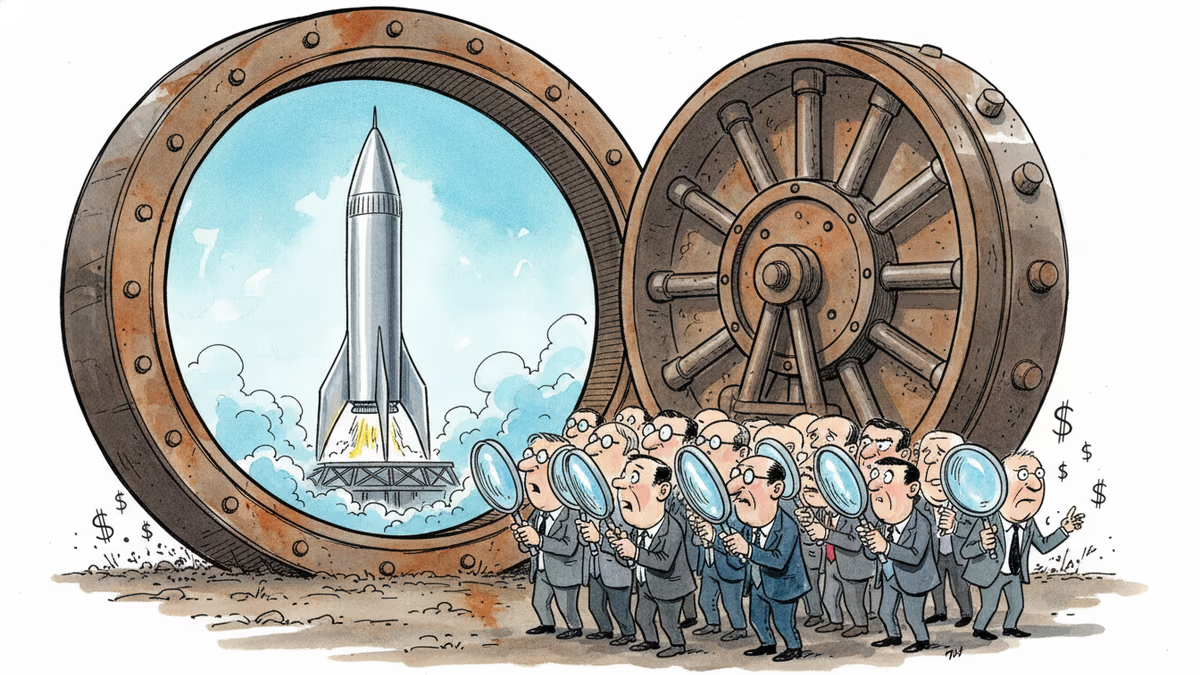
SpaceX filed a nearly 400-page S-1 with the SEC, targeting an IPO as early as June 12. Here's what the filing reveals—and what it doesn't.
SpaceX has filed its S-1 with the SEC, targeting the Nasdaq under ticker SPCX. With $18.67B in revenue but a $4.9B loss, the IPO forces investors to answer one hard question.
Waymo's new Ojai robotaxi isn't just a vehicle upgrade. It's the company's most serious attempt yet at cracking the cost problem that has kept autonomous vehicles from scaling. Here's what's really at stake.
SpaceX's IPO filing puts AI at the center, claiming a $26.5 trillion market opportunity. But can Grok compete with OpenAI and Anthropic for enterprise customers?
SpaceX filed a nearly 400-page S-1 with the SEC, targeting an IPO as early as June 12. Here's what the filing reveals—and what it doesn't.
SpaceX has filed its S-1 with the SEC, targeting the Nasdaq under ticker SPCX. With $18.67B in revenue but a $4.9B loss, the IPO forces investors to answer one hard question.
Thoughts
Share your thoughts on this article
Sign in to join the conversation