
A Million Used EVs Are Coming. Will That Finally Crack the Market?
Expiring leases will flood the US used car market with over a million electric vehicles by 2028. Could this do what subsidies couldn't — make EVs genuinely affordable?
The sticker price has always been the quiet killer of EV adoption. Not range anxiety. Not charging deserts. The number on the window.
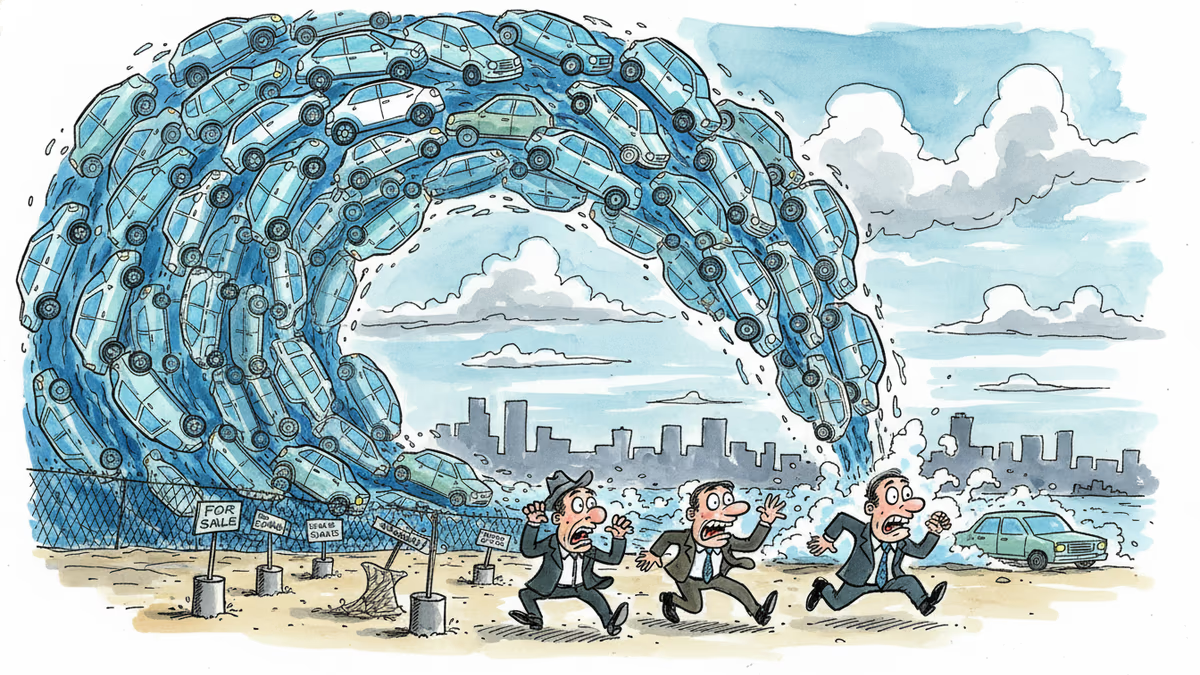
That's about to get a lot more complicated — in a good way, mostly. Over the next three years, the US used car market is set to be flooded with more than 1 million electric vehicles as leases signed during the early-2020s EV boom begin to expire. According to Cox Automotive, lease expirations on EVs will jump from 123,000 in 2025 to 300,000 in 2026, then 600,000 in 2027, and 660,000 in 2028. That's not a trickle. That's a wave.
Why This Matters More Than Another Subsidy
Here's the thing about the used car market most people overlook: it is the car market. As of 2024, roughly 76% of all vehicles sold in the US were used, according to Consumer Affairs. For most Americans, a used car isn't a compromise — it's the plan.
EVs have largely been absent from that market. The math explains why: most leases run 2 to 3 years, and the EV leasing boom only really kicked off around 2022 and 2023. Those contracts are now coming due. What was once a trickle of returned EVs is becoming a flood — and it's happening precisely when federal EV incentives are under political pressure and new EV prices remain stubbornly high.
This is supply-side democratization. Not a policy decision. Not a manufacturer rebate. Just the natural rhythm of the lease cycle finally catching up.
Who Wins, Who Sweats

For the average buyer sitting on the fence about EVs, this is straightforwardly good news. More supply means lower prices, and lower prices mean the calculation changes. A 2-3 year oldTesla Model 3 or Chevy Equinox EV at a significantly reduced price point is a very different proposition than a new one.
For dealers, it's more complicated. Used EV inventory is notoriously tricky — battery degradation is hard to assess, resale values have been volatile, and consumer education is still catching up. A lot arriving at once could pressure margins if demand doesn't keep pace.
For manufacturers, particularly those who leaned hard into leasing — Tesla, Hyundai, Kia, GM — there's a real cannibalization risk. Why buy new when a 2-year-old version of the same car is sitting on the lot for thousands less? The brands that built their EV momentum on aggressive lease deals are now facing the downstream consequences of that strategy.
The Part Nobody's Talking About
Lower prices don't automatically solve EV adoption. They reveal the next layer of friction.
Battery transparency is the obvious one. Used car buyers can kick the tires, check the mileage, get a mechanic's opinion. With EVs, the critical variable — battery state of health — is largely invisible to the average consumer. Without standardized, accessible battery diagnostics, a glut of affordable used EVs could just as easily generate a wave of buyer's remorse as it does a conversion moment.
Then there's the infrastructure irony. The buyers most likely to be attracted by lower used EV prices — middle- and lower-income households — are also the least likely to have a garage or dedicated home charging setup. The car gets cheaper; the ecosystem around it doesn't. Apartment dwellers and renters remain structurally disadvantaged, regardless of what happens to sticker prices.
Authors
Related Articles
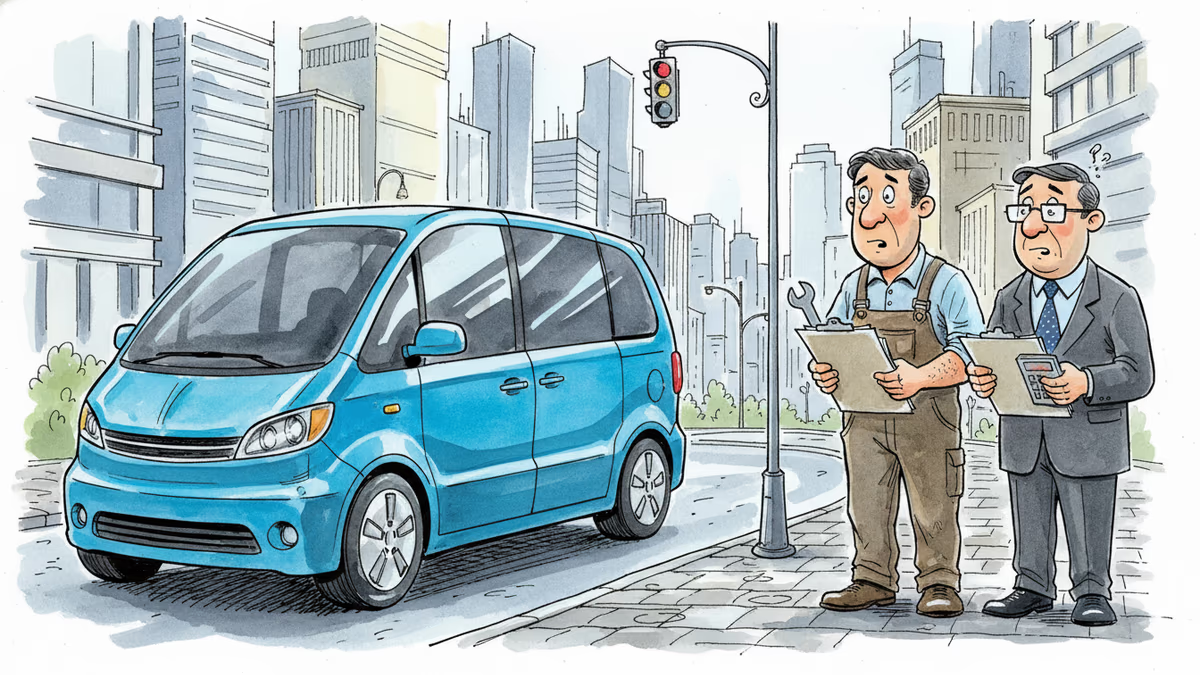
Waymo's new Ojai robotaxi isn't just a vehicle upgrade. It's the company's most serious attempt yet at cracking the cost problem that has kept autonomous vehicles from scaling. Here's what's really at stake.
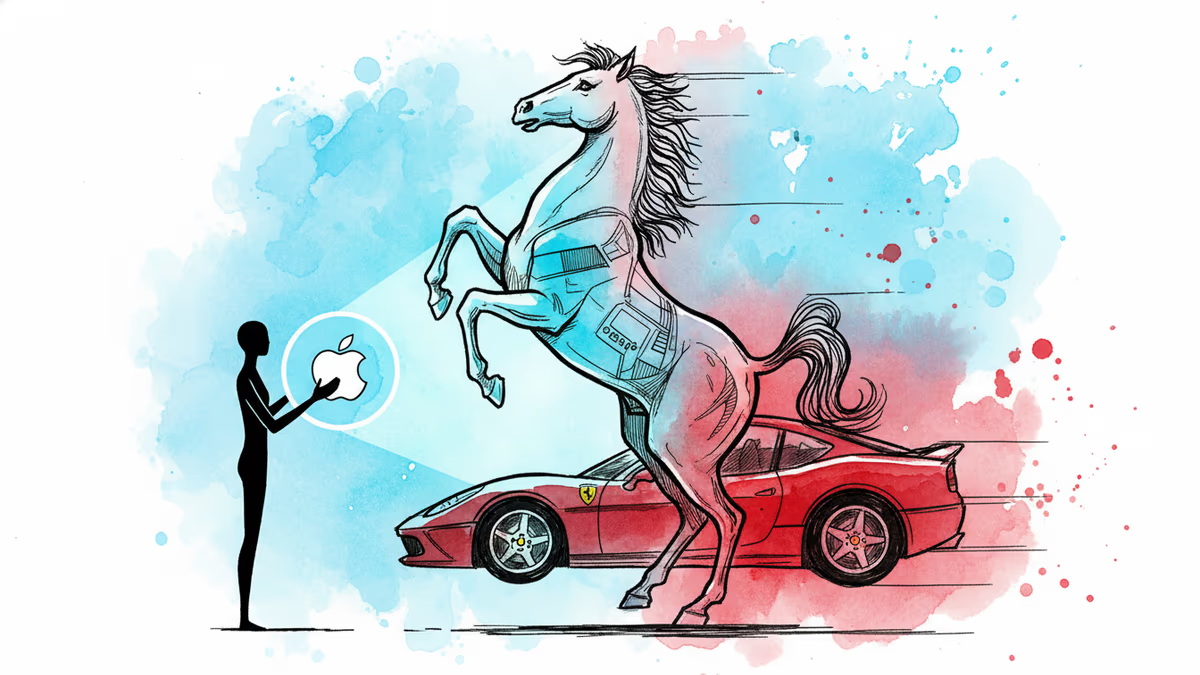
The Ferrari Luce is finally here — 1,000 hp, a 122 kWh battery, and an interior designed by the team behind the iPhone. But the real story is what Ferrari risked to build it.
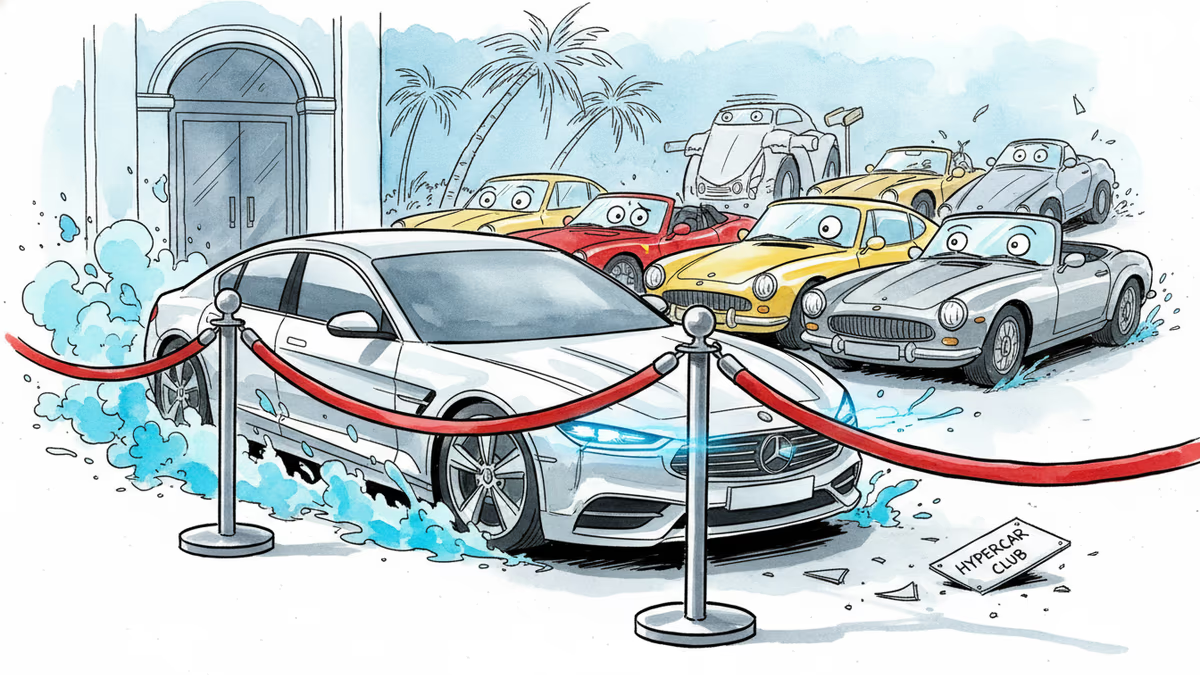
Mercedes-AMG's new GT 4-door coupe packs three YASA axial flux motors producing 1,153 hp and 1,475 lb-ft of torque. Here's what it means for the EV performance race—and who actually wins.
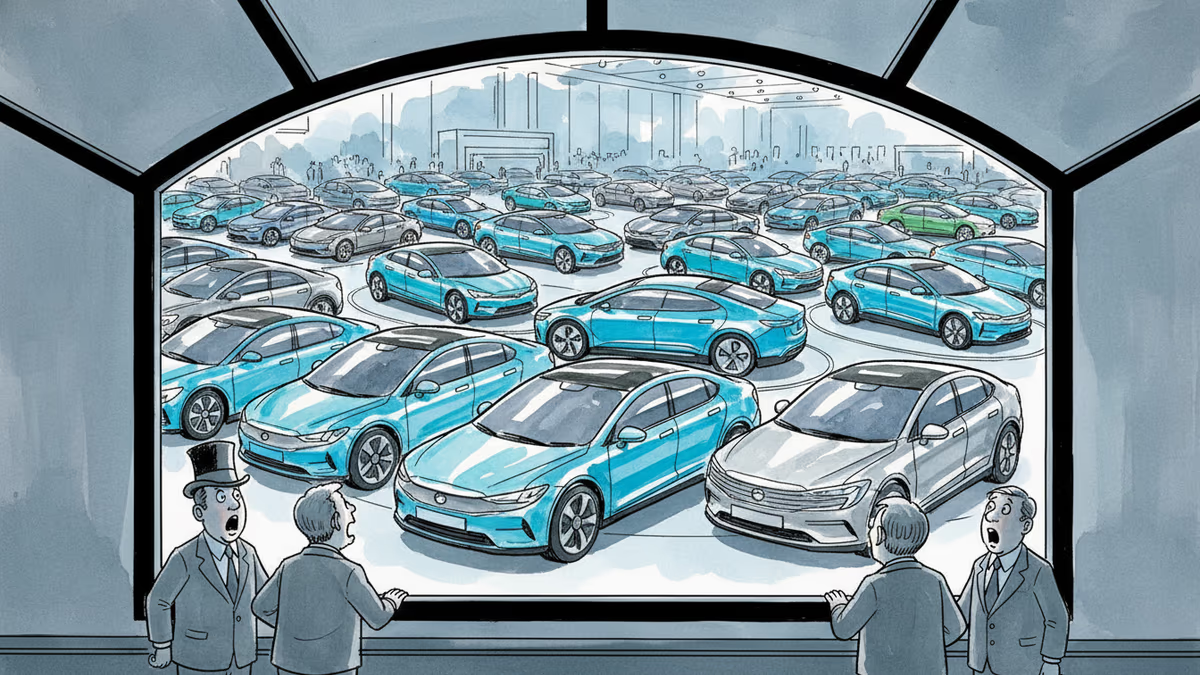
Auto China 2026 set records with 1,451 vehicles and 181 world premieres. But the real story isn't the size—it's how Chinese automakers stopped competing on price and started competing on brains.
Waymo's new Ojai robotaxi isn't just a vehicle upgrade. It's the company's most serious attempt yet at cracking the cost problem that has kept autonomous vehicles from scaling. Here's what's really at stake.
The Ferrari Luce is finally here — 1,000 hp, a 122 kWh battery, and an interior designed by the team behind the iPhone. But the real story is what Ferrari risked to build it.
Mercedes-AMG's new GT 4-door coupe packs three YASA axial flux motors producing 1,153 hp and 1,475 lb-ft of torque. Here's what it means for the EV performance race—and who actually wins.
Auto China 2026 set records with 1,451 vehicles and 181 world premieres. But the real story isn't the size—it's how Chinese automakers stopped competing on price and started competing on brains.
Thoughts
Share your thoughts on this article
Sign in to join the conversation