
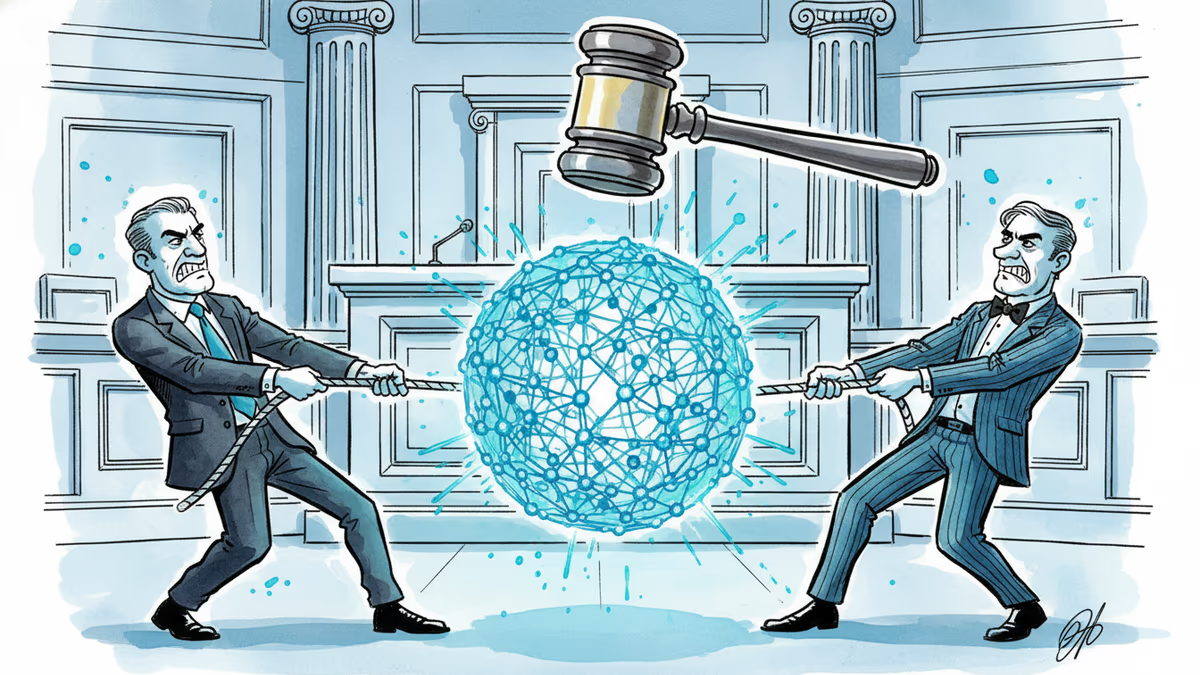
Musk vs. Altman: The Trial That Could Reshape AI
Elon Musk and Sam Altman head to trial this week in a case that could determine whether OpenAI survives as a for-profit company—and who leads it. Here's what's really at stake.
The Courtroom Where AI's Future Gets Argued
$134 billion. That's the number Elon Musk has put on what he says OpenAI owes him. This week, he and CEO Sam Altman go to trial in a case that could determine whether the most influential AI company in the world gets to remain a for-profit enterprise—or whether its current leadership even keeps their jobs.
Musk's argument is straightforward: he co-founded and bankrolled OpenAI on the explicit premise that it would be a non-profit research lab working for humanity's benefit. When the company began its pivot toward commercial operation and a planned IPO, he says he was defrauded. He wants the money back, wants Altman and president Greg Brockman removed, and wants the company restored to its non-profit roots.
OpenAI's counter-narrative is equally pointed. Musk, they argue, tried to seize control of the company in its early days, failed, walked away, and then built a direct competitor in xAI. From that vantage point, this lawsuit looks less like a principled stand and less like a legal strategy to kneecap a rival.
Judge Yvonne Gonzalez Rogers offered an unfiltered preview of the atmosphere when she noted prospective jurors openly confessing their negative views of Musk before the trial even began. "The reality is people don't like him," she said.
OpenAI Was Already Under Pressure Before a Single Witness Testified
The timing matters. OpenAI is heading into this trial in a weakened position. Its exclusive partnership with Microsoft has ended—the new arrangement lets OpenAI work with rivals like Amazon, which signals both freedom and fragility. Meanwhile, the company is reportedly missing key growth targets ahead of its IPO, a detail that will not escape the attention of investors watching the trial.
From the outside, the competitive landscape has also shifted dramatically. DeepSeek just priced its new model at 97% below OpenAI's GPT-5.5, explicitly targeting enterprise and developer markets. That's not a rounding error—it's a structural challenge to OpenAI's pricing power at the exact moment the company needs to demonstrate it can be a profitable public company.
And then there's Google, which just signed a classified AI deal with the Pentagon permitting use for "any lawful government purpose"—triggering internal dissent from over 600 employees. The AI industry's relationship with government, profit, and ethics is being stress-tested on multiple fronts simultaneously.

The Underpants Gnome Problem of AI
Zoom out, and you see a deeper issue that this trial inadvertently puts on display. MIT Technology Review framed the current state of AI monetization using the famous South Park underpants gnomes: Phase 1—collect underpants. Phase 2—? Phase 3—profit.
AI companies have built the technology (Phase 1) and promised transformation (Phase 3). The middle step—the actual business model that bridges capability and sustainable profit—remains genuinely unclear for most players. OpenAI's legal battle is, at one level, a fight about who controls a company. At another level, it's a fight about whether the non-profit origin story was ever compatible with the commercial ambitions that followed.
This tension isn't unique to OpenAI. It's the defining question of the current AI moment: can you build something intended to benefit humanity and also build a business that satisfies shareholders? Or does one eventually consume the other?
Three Stakeholders, Three Very Different Readings
For developers and enterprises, the trial creates real uncertainty. If OpenAI's leadership is ousted or its structure fundamentally changes, API roadmaps, pricing, and product commitments could shift overnight. The 97% price gap DeepSeek is advertising starts to look more attractive as a hedge against that instability.
For investors eyeing the IPO, the calculus is uncomfortable. A ruling against OpenAI's for-profit structure doesn't just delay an IPO—it potentially invalidates the valuation framework entirely. The company's worth is premised on its ability to monetize at scale. Strip that away, and the number changes dramatically.
For policymakers and regulators, the trial is a gift. It forces into the public record the question of whether AI labs should be allowed to convert from charitable missions to profit-driven enterprises without meaningful oversight. The EU is already pushing Google to open Android to AI rivals, signaling that regulators on both sides of the Atlantic are watching how AI power concentrates.
The Wider Unraveling
Beyond the courtroom, the week's AI news reads like a stress inventory. Deepfakes have moved from theoretical threat to documented harm—cheap, accessible tools are already generating non-consensual explicit images and political propaganda that's "startlingly real," disproportionately targeting women and marginalized communities. Taylor Swift is trademarking her voice and likeness. That a Grammy-winning artist needs legal IP protection against synthetic versions of herself tells you something about where we are.
In rural America, a populist backlash against AI is gaining momentum—from Indiana to Idaho, voters are organizing against the technology. And the resurgence of AIDS denialism, accelerated by COVID-era conspiracy networks, is a reminder that the information environment AI is operating in was already corroding before large language models entered the picture.
OpenAI's trial is the headline. But the context surrounding it suggests the trial is a symptom, not the disease.
This content is AI-generated based on source articles. While we strive for accuracy, errors may occur. We recommend verifying with the original source.
Related Articles
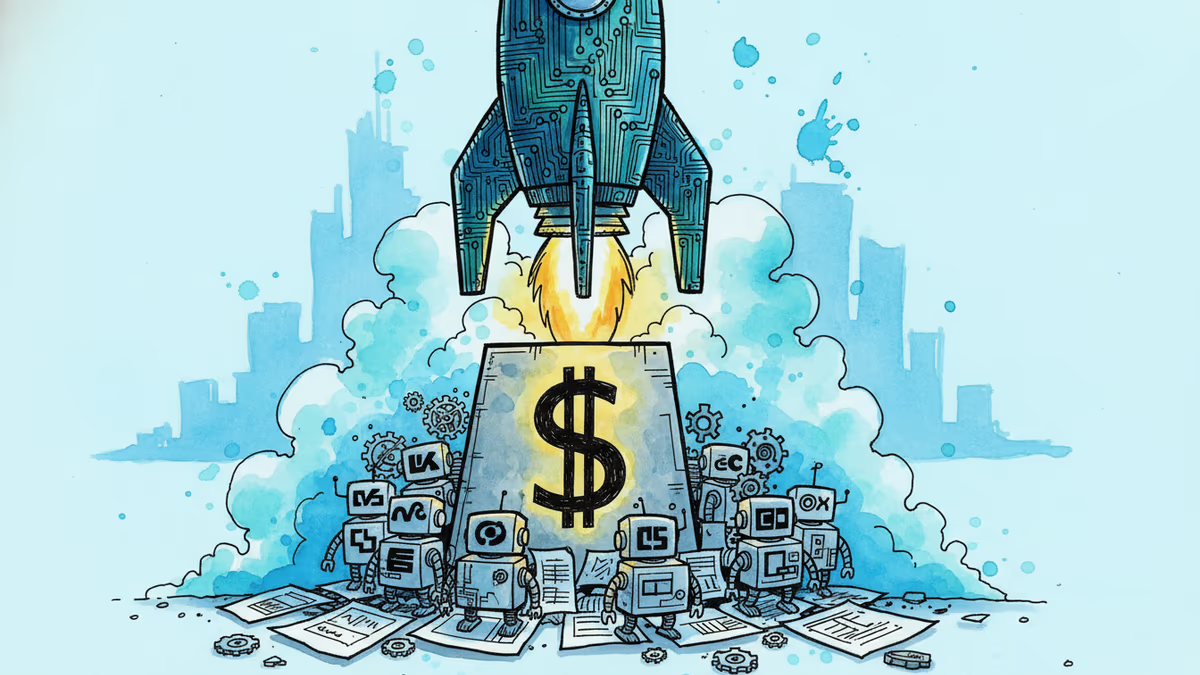
SpaceX's IPO filing puts AI at the center, claiming a $26.5 trillion market opportunity. But can Grok compete with OpenAI and Anthropic for enterprise customers?
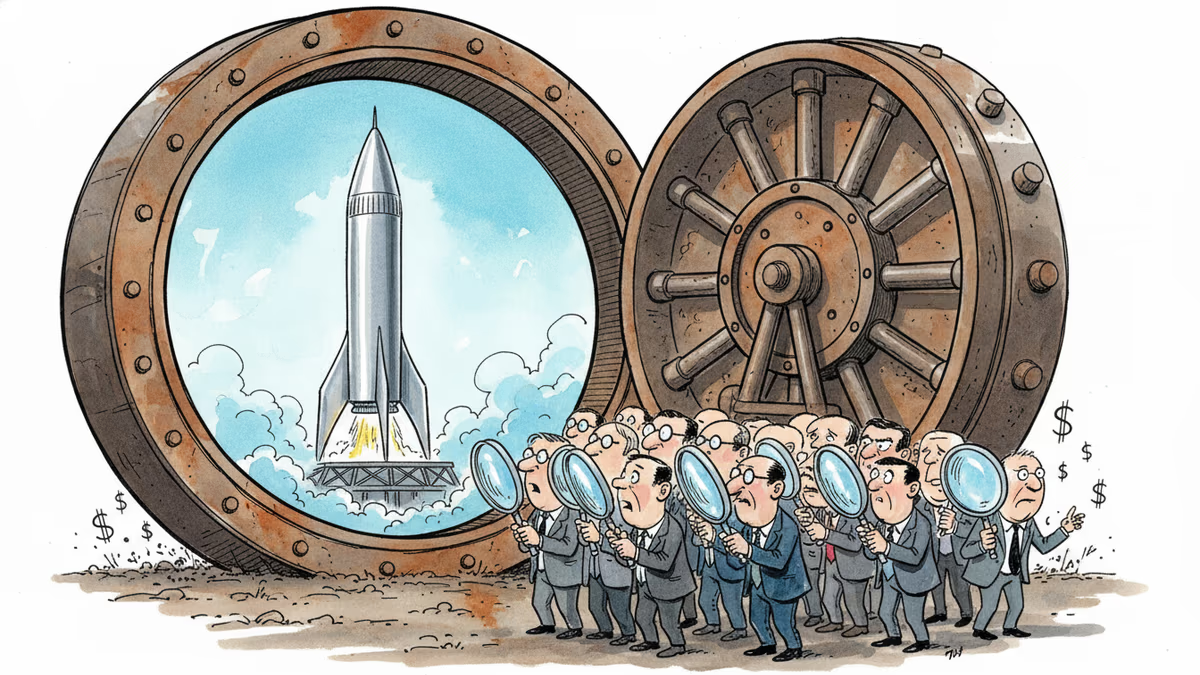
SpaceX filed a nearly 400-page S-1 with the SEC, targeting an IPO as early as June 12. Here's what the filing reveals—and what it doesn't.
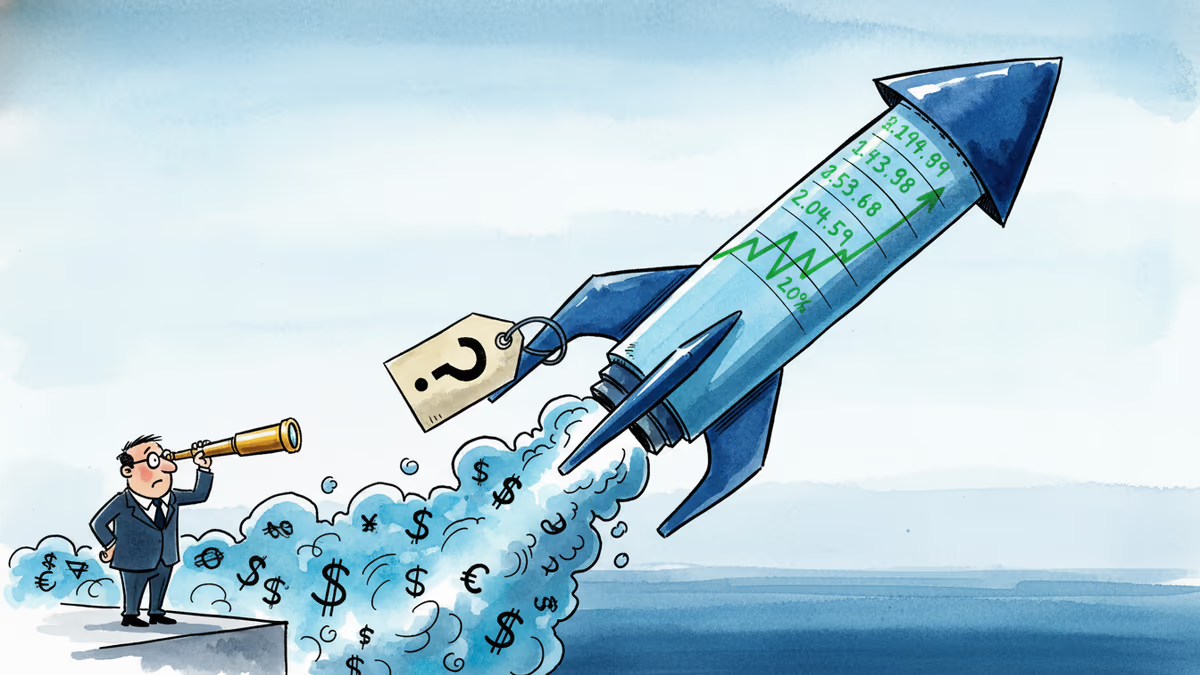
SpaceX has filed its S-1 with the SEC, targeting the Nasdaq under ticker SPCX. With $18.67B in revenue but a $4.9B loss, the IPO forces investors to answer one hard question.

OpenAI has reorganized for the second time in a month, merging ChatGPT and Codex into a single agentic platform under president Greg Brockman's unified product leadership.
SpaceX's IPO filing puts AI at the center, claiming a $26.5 trillion market opportunity. But can Grok compete with OpenAI and Anthropic for enterprise customers?
SpaceX filed a nearly 400-page S-1 with the SEC, targeting an IPO as early as June 12. Here's what the filing reveals—and what it doesn't.
SpaceX has filed its S-1 with the SEC, targeting the Nasdaq under ticker SPCX. With $18.67B in revenue but a $4.9B loss, the IPO forces investors to answer one hard question.
OpenAI has reorganized for the second time in a month, merging ChatGPT and Codex into a single agentic platform under president Greg Brockman's unified product leadership.
Thoughts
Share your thoughts on this article
Sign in to join the conversation