
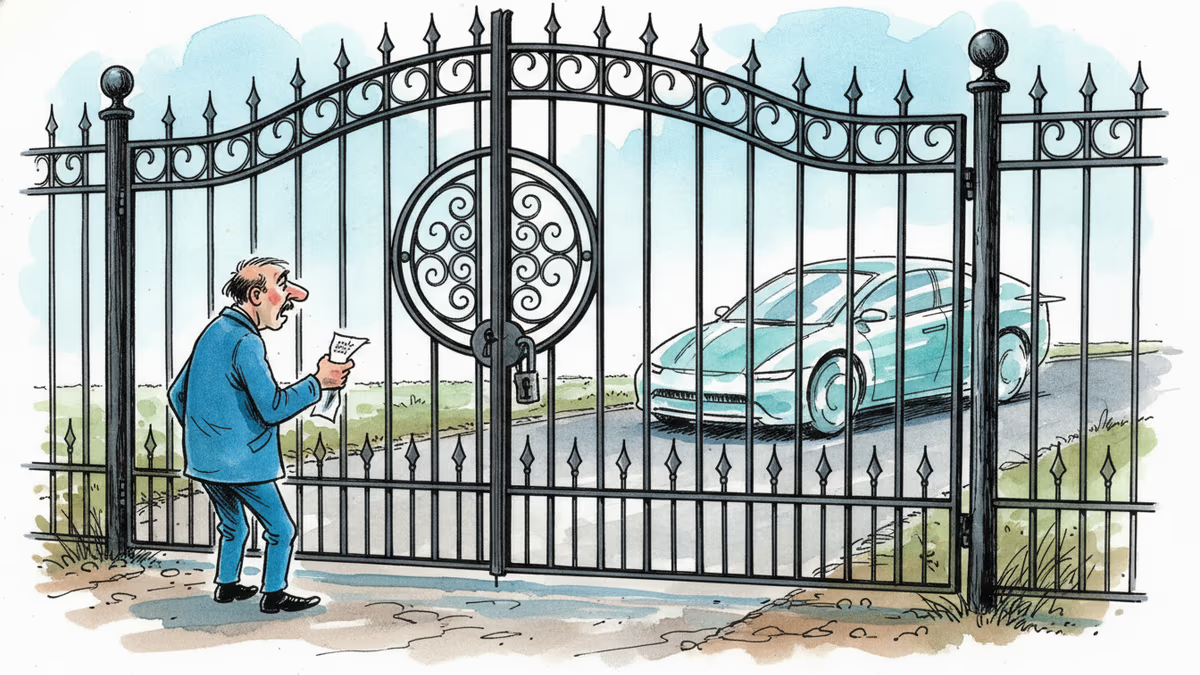
4 Million Tesla Owners Just Got Left Behind
Elon Musk confirmed on Tesla's Q1 2026 earnings call that Hardware 3 vehicles will never receive unsupervised Full Self-Driving — locking out millions who paid for the feature.
They paid. They waited. Now they're locked out.
On Tesla's Q1 2026 earnings call, CEO Elon Musk confirmed what many owners had feared: vehicles running on Hardware 3 (HW3) will not receive unsupervised Full Self-Driving. That's roughly 4 million Tesla vehicles — a significant slice of the company's fleet — permanently excluded from the feature that many owners paid thousands of dollars to access.
Musk kept it brief: "Hardware 3 simply does not have the capability to achieve unsupervised FSD. I wish it were otherwise." The regret was noted. The outcome was final. Upgrade your hardware, or go without.
What Was Actually Promised
This isn't a minor feature rollback. Unsupervised FSD — the ability for a Tesla to drive itself without any human oversight — has been Elon Musk's signature promise for years. He predicted it would arrive in 2019. Then 2020. Then 2021. Then 2022. Each year, the goalposts moved. Each year, buyers continued purchasing FSD packages — priced at up to $15,000 at various points — on the expectation that the software would eventually deliver.
HW3 was Tesla's onboard AI computer from 2019 through early 2023. Its successor, HW4, carries significantly more processing power, and Tesla has already been piloting unsupervised FSD robotaxi operations on HW4-equipped vehicles. For HW3 owners who want in, a hardware upgrade is the only path forward — though Tesla has not yet announced what that upgrade will cost.
Two Ways to Read This

There are two honest interpretations here, and they lead to very different conclusions.
The first: this is a consumer protection failure. When Tesla sold FSD, it explicitly marketed the feature as something that would be unlocked via over-the-air software updates — no hardware swap required. That pitch was central to the value proposition. Lawsuits over Tesla's FSD advertising claims are already working their way through U.S. courts. For owners who made purchasing decisions based on those promises, "the hardware can't do it" isn't a satisfying answer.
The second: autonomous driving is genuinely hard, and physical limits are physical limits. No software update can conjure compute that doesn't exist. Musk expressed regret, not indifference. Technology sometimes falls short of ambition, and that's not automatically fraud — it may simply be the messy reality of building something that's never been built before.
Both readings can be true simultaneously. That's what makes this uncomfortable.
What It Means Beyond Tesla
The 4 million figure matters beyond the immediate headlines. Tesla's stock price has long been priced on the promise of autonomous vehicles — robotaxis, FSD subscriptions, a fleet that earns money while parked. HW3 owners represent a pool of potential FSD revenue that now depends entirely on hardware upgrade conversion rates. How Tesla prices that upgrade, and how many owners actually pay for it, will have direct implications for the company's near-term financials.
For the broader EV and tech industry, the episode raises a structural question about the "software-defined vehicle" model. Automakers from GM to Volkswagen to Hyundai are racing to build cars that improve over time through updates. Tesla pioneered this model. But Tesla also just demonstrated its central risk: when the hardware can't keep up, the promise of future software becomes a liability, not an asset.
Regulators are watching, too. The U.S. FTC and state attorneys general have shown increasing appetite for scrutiny of tech companies that market future capabilities as present-day value. This case — 4 million vehicles, a paid feature, and a hardware ceiling — is exactly the kind of scenario that invites formal inquiry.
Authors
Related Articles
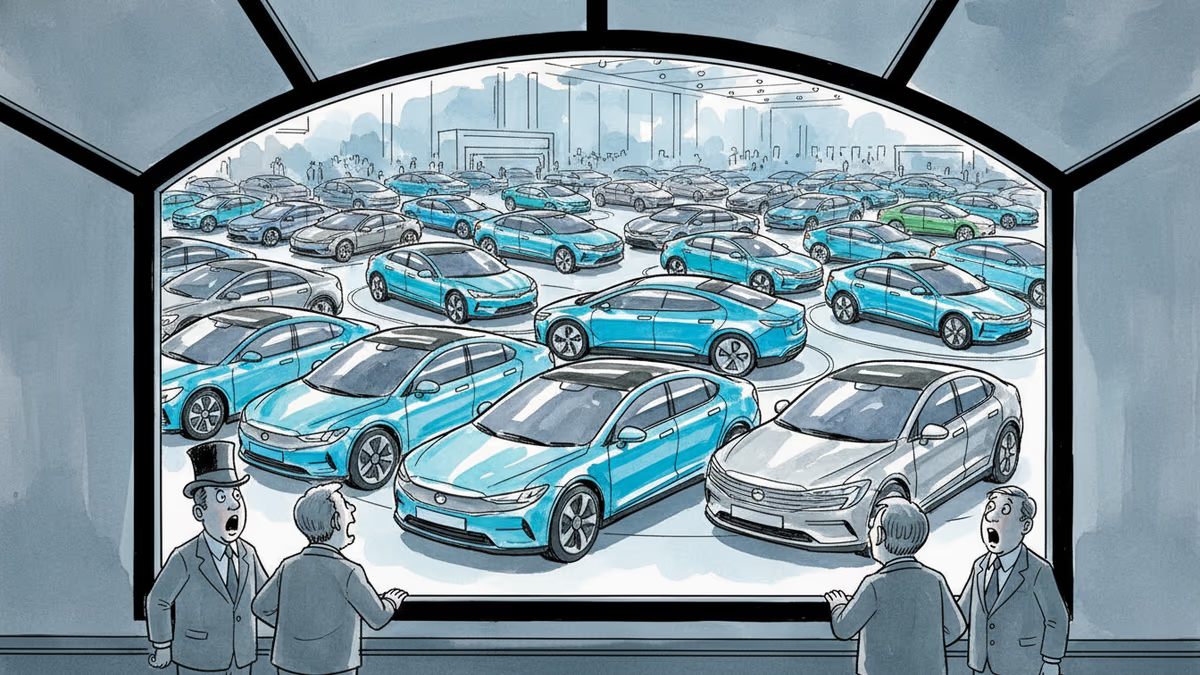
Auto China 2026 set records with 1,451 vehicles and 181 world premieres. But the real story isn't the size—it's how Chinese automakers stopped competing on price and started competing on brains.
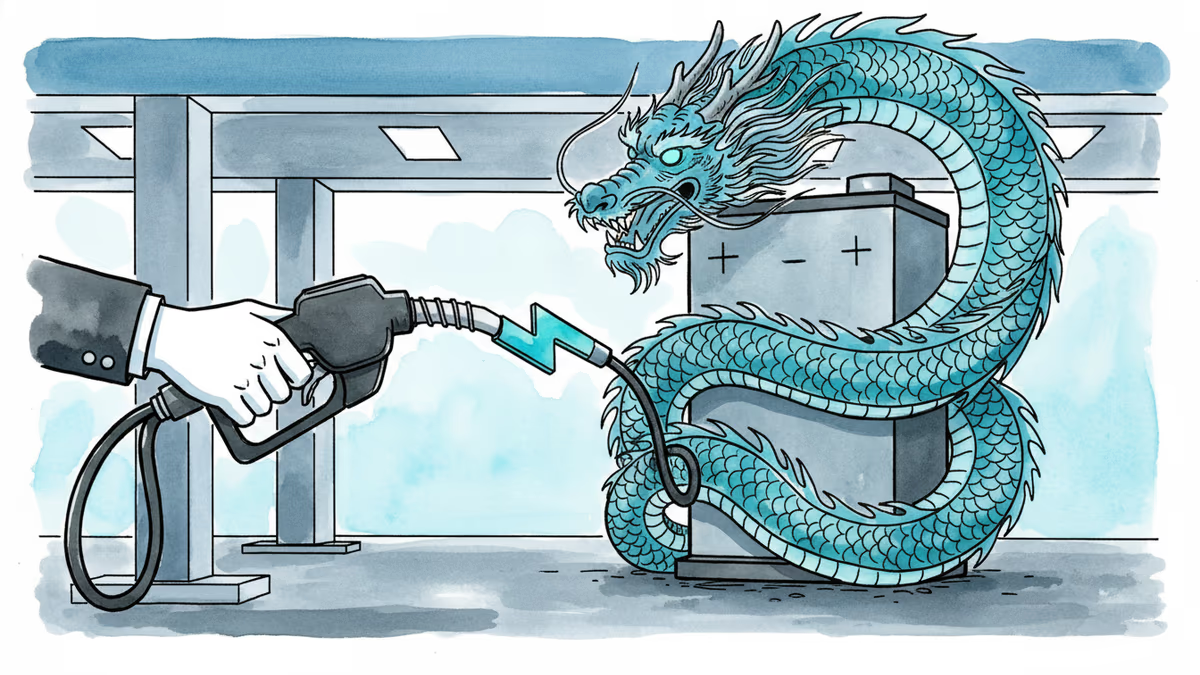
CATL's third-gen Shenxing LFP battery claims charging speeds nearly 5x faster than Hyundai or Porsche's best 800V systems. Here's what that really means.
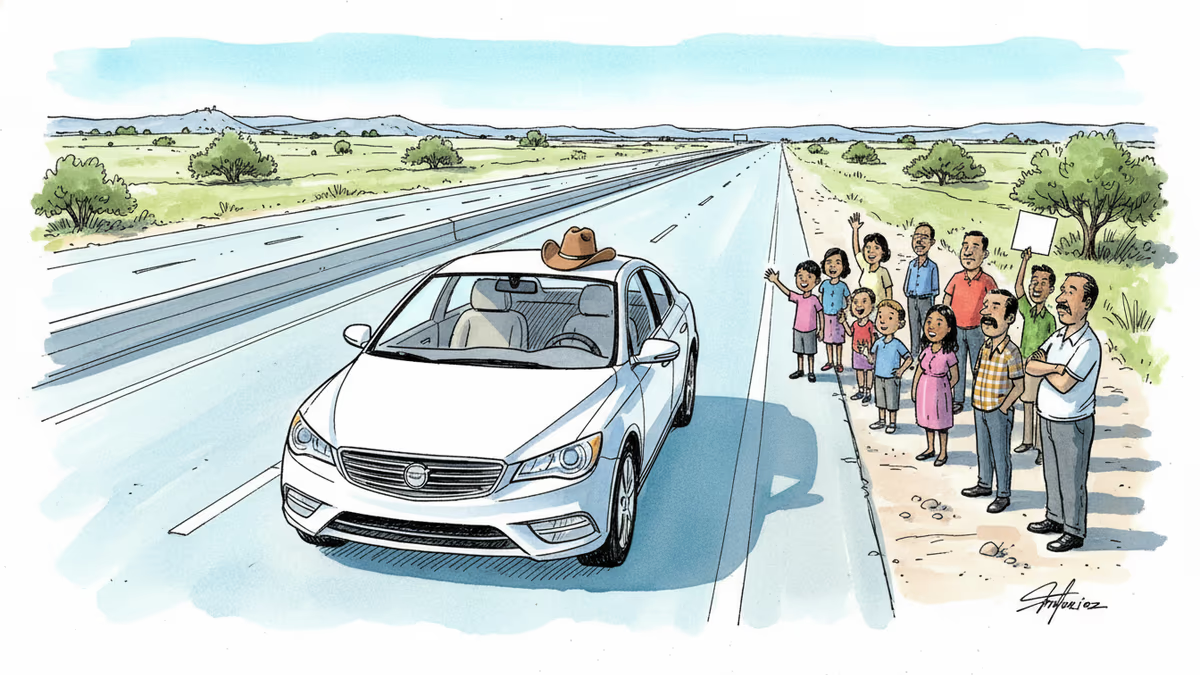
Tesla expanded its driverless robotaxi to Dallas and Houston, even after reporting 14 crashes in Austin. What does this tell us about how autonomous vehicles actually get built?
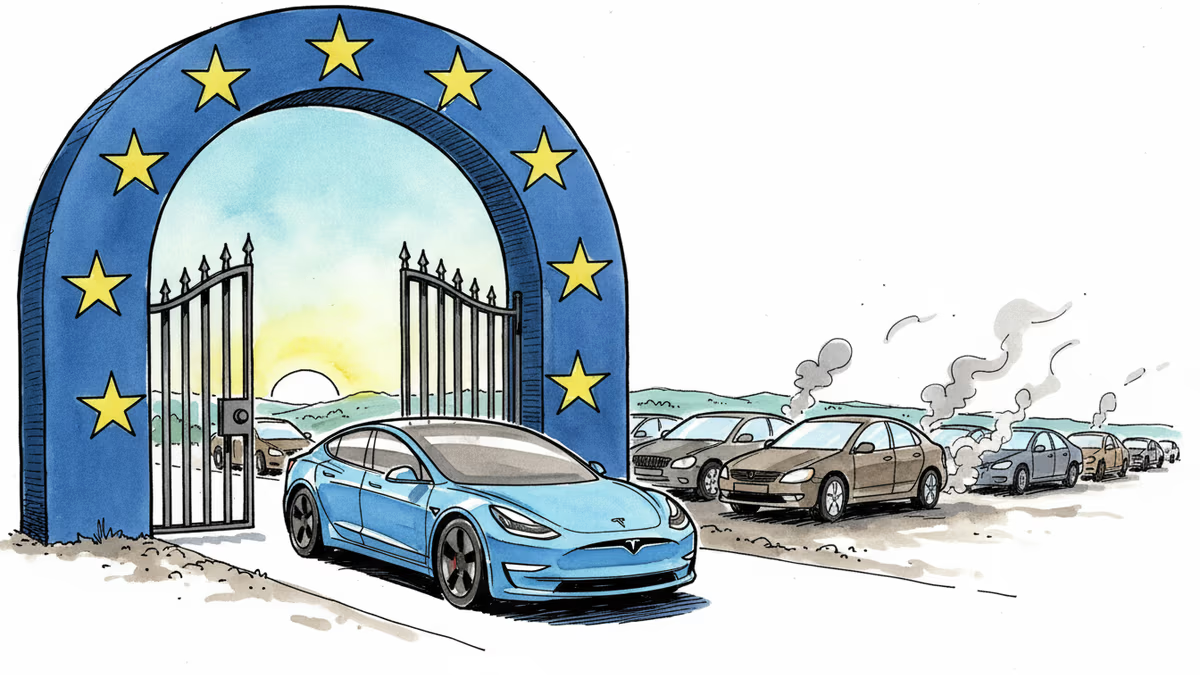
The Netherlands became the first European country to officially approve Tesla's FSD Supervised. With EU's type-approval framework, this could ripple across 27 member states fast.
Auto China 2026 set records with 1,451 vehicles and 181 world premieres. But the real story isn't the size—it's how Chinese automakers stopped competing on price and started competing on brains.
CATL's third-gen Shenxing LFP battery claims charging speeds nearly 5x faster than Hyundai or Porsche's best 800V systems. Here's what that really means.
Tesla expanded its driverless robotaxi to Dallas and Houston, even after reporting 14 crashes in Austin. What does this tell us about how autonomous vehicles actually get built?
The Netherlands became the first European country to officially approve Tesla's FSD Supervised. With EU's type-approval framework, this could ripple across 27 member states fast.
Thoughts
Share your thoughts on this article
Sign in to join the conversation