
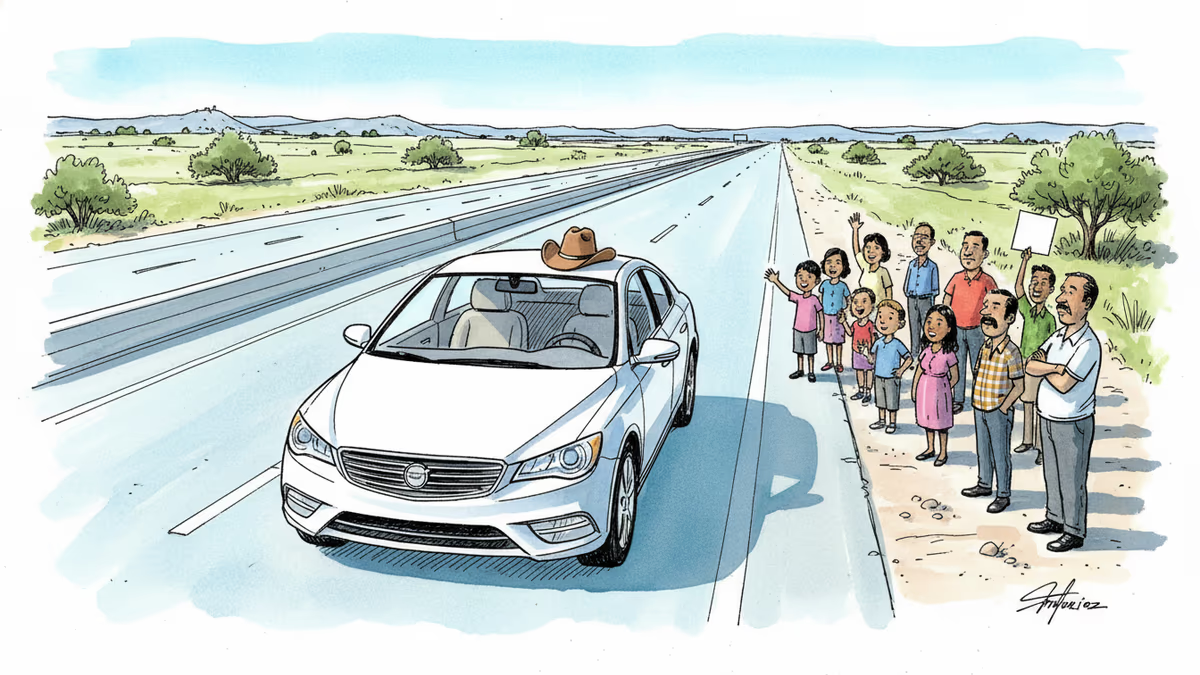
Texas Is Now America's Robotaxi Lab — Ready or Not
Tesla expanded its driverless robotaxi to Dallas and Houston, even after reporting 14 crashes in Austin. What does this tell us about how autonomous vehicles actually get built?
14 crashes. Tesla didn't slow down — it expanded.
On April 18, 2026, Tesla posted a 14-second video to social media. No caption beyond: "Robotaxi is now rolling out in Dallas & Houston 🤠." The footage showed Tesla vehicles gliding through city streets — front seat empty, no safety monitor, no remote operator visible. Full driverless operation, now in two new cities.
How Texas Became the Robotaxi Capital of America
The expansion to Dallas and Houston means all three of Tesla's fully driverless markets are in Texas. The company launched in Austin in 2025 and dropped safety drivers entirely in January 2026. Its Bay Area service, by contrast, still requires a human behind the wheel — a telling distinction that reflects California's tighter regulatory posture compared to Texas.
This isn't geography by accident. Texas has some of the most permissive autonomous vehicle rules in the country. Roads are wide, weather is predictable (mostly), and the political climate is friendly to corporate experimentation. It's the same logic that drew Waymo to Phoenix: regulation shapes the pace of deployment as much as technology does.
But here's where the story gets complicated. In a February 2026 regulatory filing, Tesla disclosed that its Austin robotaxis had been involved in 14 crashes since launch. At the time of the Dallas and Houston announcement, crowdsourced data from the Robotaxi Tracker site showed just 1 active vehicle in each new city, compared to 46 logged in Austin. This is less a rollout than a foothold — plant the flag, collect data, scale later.
What 14 Crashes Actually Tell Us
The number demands context before judgment.

Waymo, Tesla's most direct rival in the fully driverless space, reported in 2024 that its vehicles had a lower crash rate than human drivers per mile traveled. But Waymo publishes granular safety data — miles driven, crash severity, fault attribution. Tesla's 14-crash disclosure doesn't include those details. Without knowing the total miles driven or the severity of each incident, the number is hard to interpret.
Tesla's defenders argue the comparison to human drivers is what matters. In the US, humans average roughly 1.35 crashes per 100 million miles. If Tesla's 14 crashes occurred over tens of millions of miles, that's a strong safety record. Critics counter that robotaxis should be held to a higher standard than human drivers — not just statistically safer in aggregate, but reliably safe for every individual passenger who chooses to get in.
Both positions are reasonable. Neither is complete.
Who's Watching — and Who Should Be
The stakeholder map here is more complex than it looks.
For consumers in Dallas and Houston, the immediate question is simple: would you get in? Early adopters will. Most people won't — not yet. Trust in autonomous vehicles tends to build slowly, then all at once, usually after a period of quiet, uneventful rides accumulate in the public consciousness.
For regulators, Tesla's expansion tests a fundamental question about American transportation policy: should companies be allowed to iterate on public roads, treating crashes as data points in a learning curve? The FDA doesn't let pharmaceutical companies run that experiment on patients. The FAA doesn't allow it in aviation. But surface transportation has historically been more permissive, partly because the consequences of any single crash, while serious, are more contained.
For competitors — Waymo, Zoox, Cruise (still recovering from its 2023 suspension) — Tesla's move adds pressure. Waymo currently operates in San Francisco, Phoenix, and Austin, with a more methodical expansion pace and a stronger safety disclosure record. Tesla is betting that speed and scale will matter more than methodical caution. That bet may be right. It may not.
For investors, the expansion signals that Tesla's autonomous vehicle ambitions are moving from narrative to operation — slowly, but visibly. The stock has been sensitive to robotaxi news throughout 2026.
Authors
Related Articles
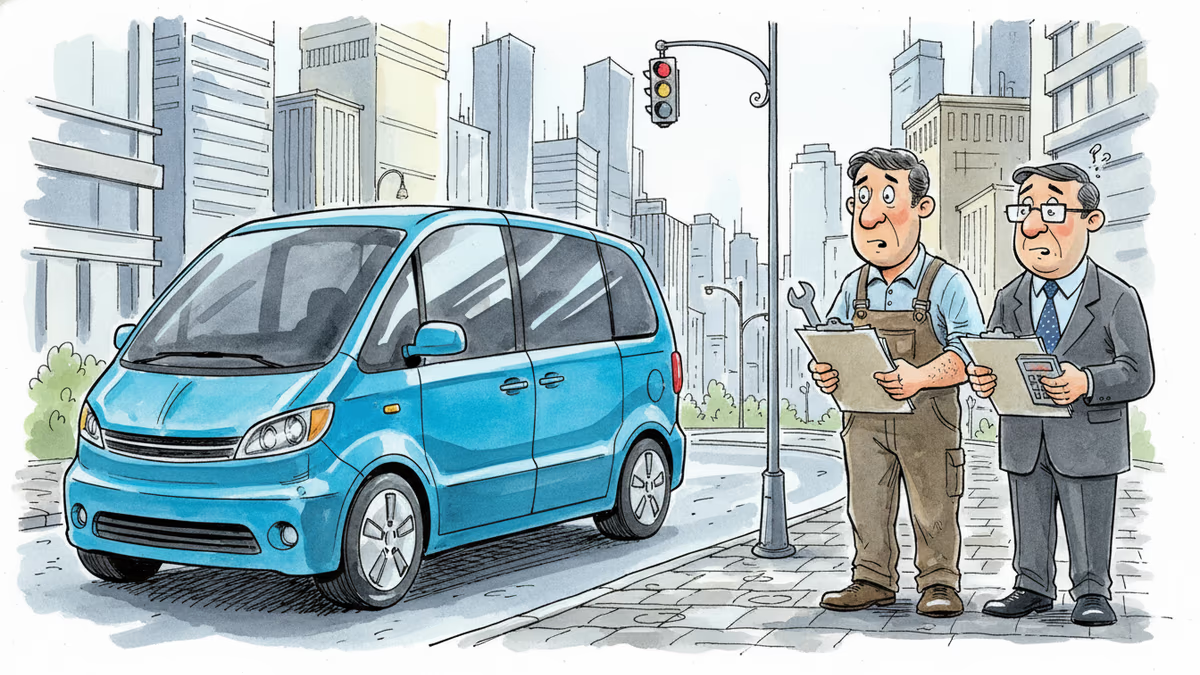
Waymo's new Ojai robotaxi isn't just a vehicle upgrade. It's the company's most serious attempt yet at cracking the cost problem that has kept autonomous vehicles from scaling. Here's what's really at stake.
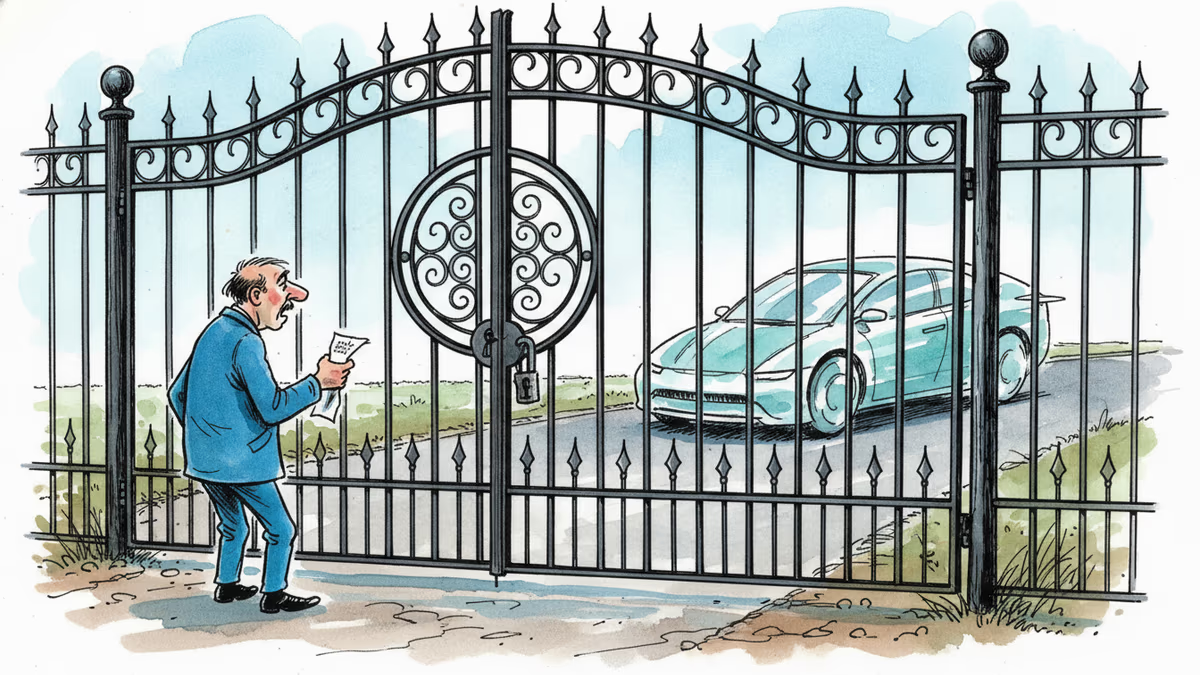
Elon Musk confirmed on Tesla's Q1 2026 earnings call that Hardware 3 vehicles will never receive unsupervised Full Self-Driving — locking out millions who paid for the feature.
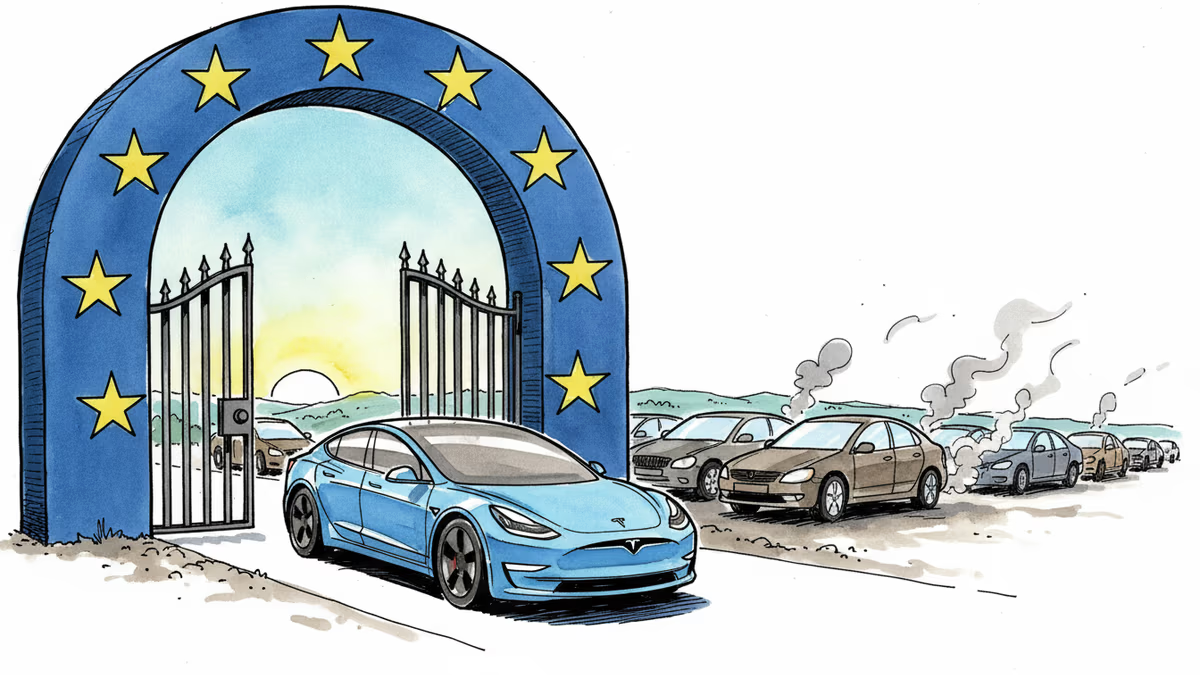
The Netherlands became the first European country to officially approve Tesla's FSD Supervised. With EU's type-approval framework, this could ripple across 27 member states fast.
As Washington D.C. enters another political spring, the battle over Big Tech regulation is heating up — and the stakes extend far beyond Silicon Valley.
Waymo's new Ojai robotaxi isn't just a vehicle upgrade. It's the company's most serious attempt yet at cracking the cost problem that has kept autonomous vehicles from scaling. Here's what's really at stake.
Elon Musk confirmed on Tesla's Q1 2026 earnings call that Hardware 3 vehicles will never receive unsupervised Full Self-Driving — locking out millions who paid for the feature.
The Netherlands became the first European country to officially approve Tesla's FSD Supervised. With EU's type-approval framework, this could ripple across 27 member states fast.
As Washington D.C. enters another political spring, the battle over Big Tech regulation is heating up — and the stakes extend far beyond Silicon Valley.
Thoughts
Share your thoughts on this article
Sign in to join the conversation