
Washington's Big Tech Season: Politics, Pollen, and Power
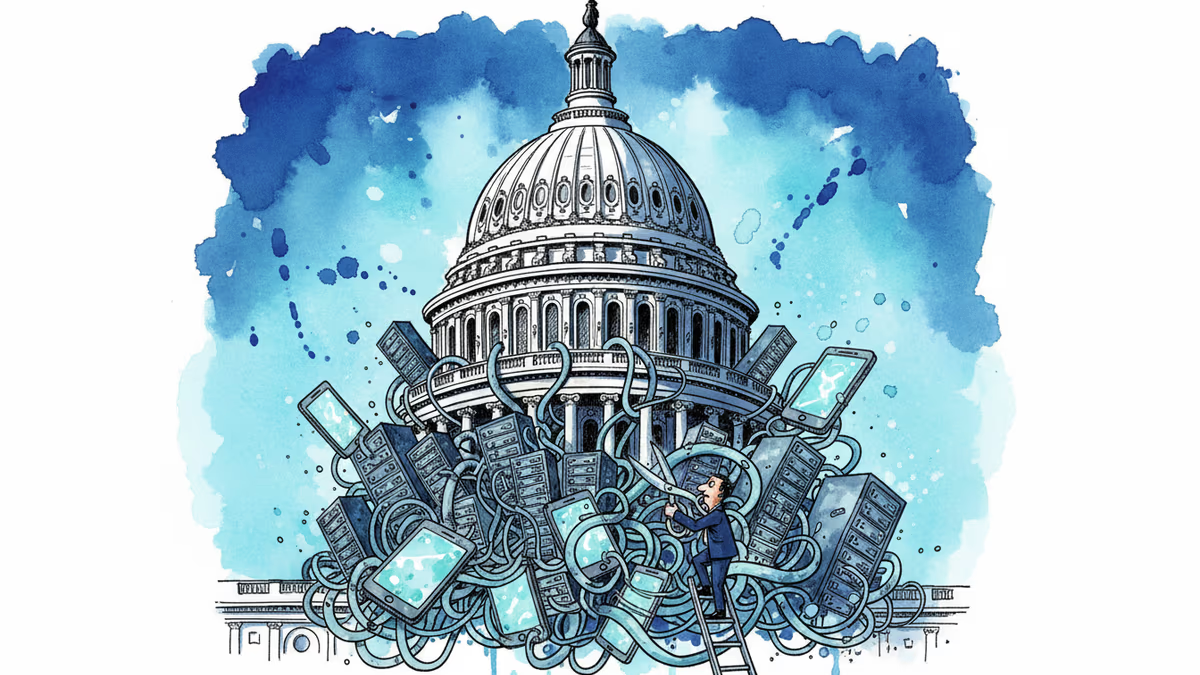
As Washington D.C. enters another political spring, the battle over Big Tech regulation is heating up — and the stakes extend far beyond Silicon Valley.
Every spring, Washington D.C. does two things reliably: it blooms, and it sneezes. With 21% of its acreage covered in public green space — consistently ranked the best city park system in America — the capital is beautiful and brutal in equal measure for anyone with allergies. But the more consequential irritant in Washington right now isn't pollen. It's the grinding, unresolved friction between Big Tech and political power.
The Regulation Paradox
The second Trump administration entered office with a nominally deregulatory posture toward tech. The instinct was familiar: regulation stifles innovation, Washington shouldn't micromanage Silicon Valley, and the market knows best. Early signals suggested some antitrust actions might quietly lose momentum. Meta, Google, and Apple sent their lobbyists to the table with cautious optimism.
But Trump's relationship with Big Tech has never been ideologically clean. When platforms serve his political interests — amplifying his message, suppressing his opponents' reach — they're allies. When they don't, they're enemies of free speech. The result is a regulatory environment that's less about policy and more about proximity to power. TikTok's near-ban and reprieve. The preferential treatment of X. The use of social platforms to broadcast threats — including, most recently, renewed rhetoric toward Iran — that would have been unthinkable in any prior diplomatic context.
Technology platforms are no longer just an industry. They're geopolitical infrastructure.
Who Actually Gets Regulated?

Here's the uncomfortable truth about Washington's Big Tech regulation debate: it crosses party lines, but not for the same reasons. Democrats target market concentration — Google's search dominance, Amazon's retail stranglehold, Meta's data empire. Republicans target perceived ideological bias — content moderation decisions they frame as censorship of conservative voices.
The direction differs. The destination is the same: political leverage over platforms that now shape public opinion, elections, and economic life.
And the companies themselves? They've learned to navigate this. Lobbying expenditures by major tech firms hit record levels in 2024. The sharper the regulatory blade, the more they spend dulling it. In that sense, the current moment isn't a crisis for Big Tech — it's an operating condition they've adapted to, arguably better than the regulators themselves.
The Investors' Dilemma
For anyone with exposure to tech stocks — and at this point, that's most retirement portfolios — the regulatory noise creates a specific kind of uncertainty. Not the kind that crashes markets overnight, but the slow, grinding kind that makes long-term capital allocation harder.
Will Google be forced to divest its ad business? Will Apple's App Store model survive European and American pressure simultaneously? Will Meta face meaningful data privacy legislation, or will it remain largely self-regulated? Each of these questions has been "imminent" for years. None has been definitively resolved. That ambiguity has a cost — and it's priced into every earnings call, every product roadmap, every hiring decision in the industry.
Authors
Related Articles
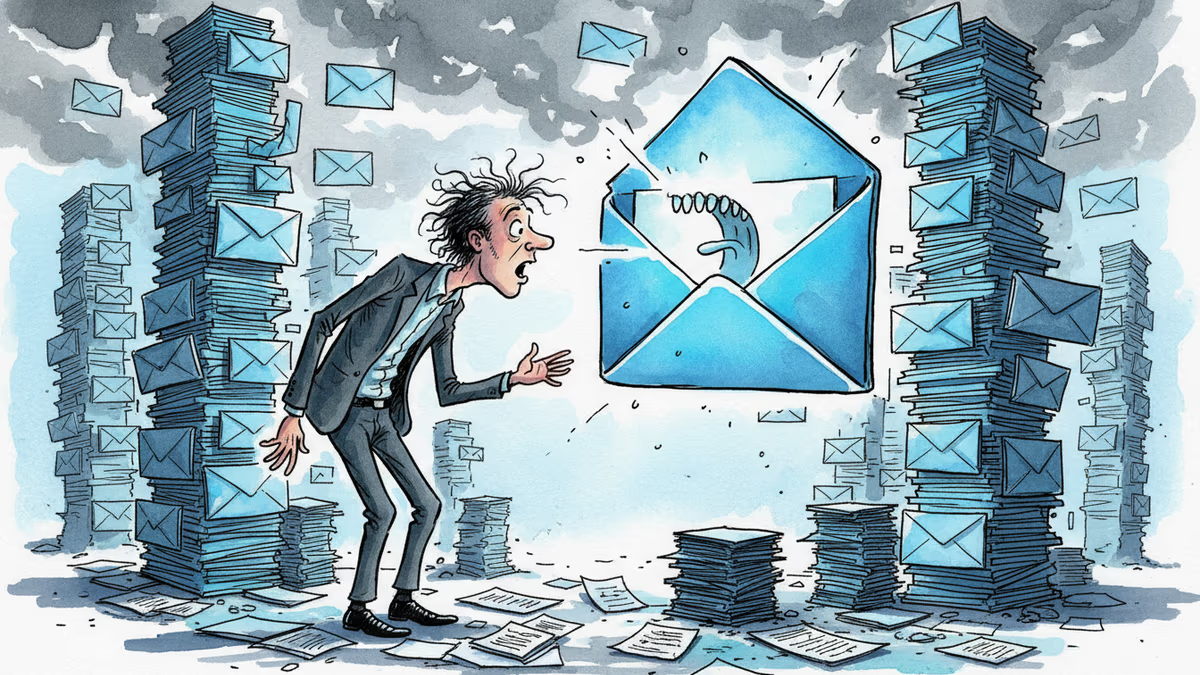
Google's Gmail Live lets you ask your inbox questions out loud. Announced at I/O 2026, it's AI's pitch to skeptics — and a reminder of how much Google already knows about you.

OpenAI has reorganized for the second time in a month, merging ChatGPT and Codex into a single agentic platform under president Greg Brockman's unified product leadership.
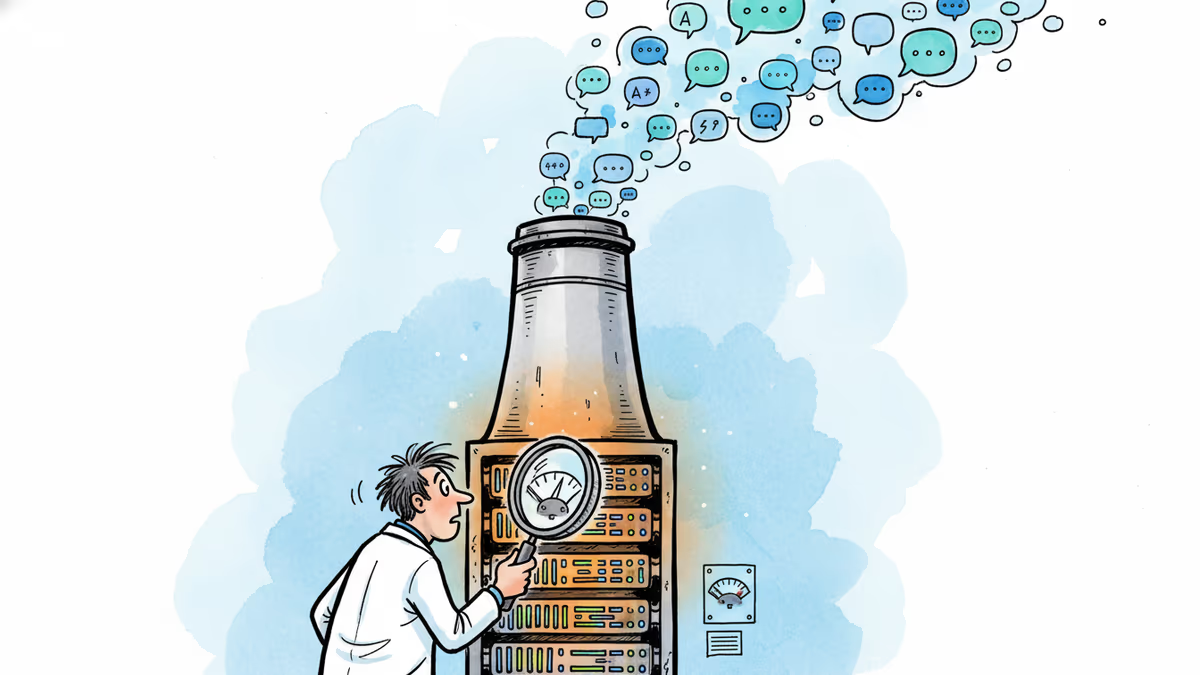
AI sustainability researcher Sasha Luccioni is launching a new venture to push for energy transparency in AI. Here's why Big Tech keeps the numbers hidden—and what's starting to change.
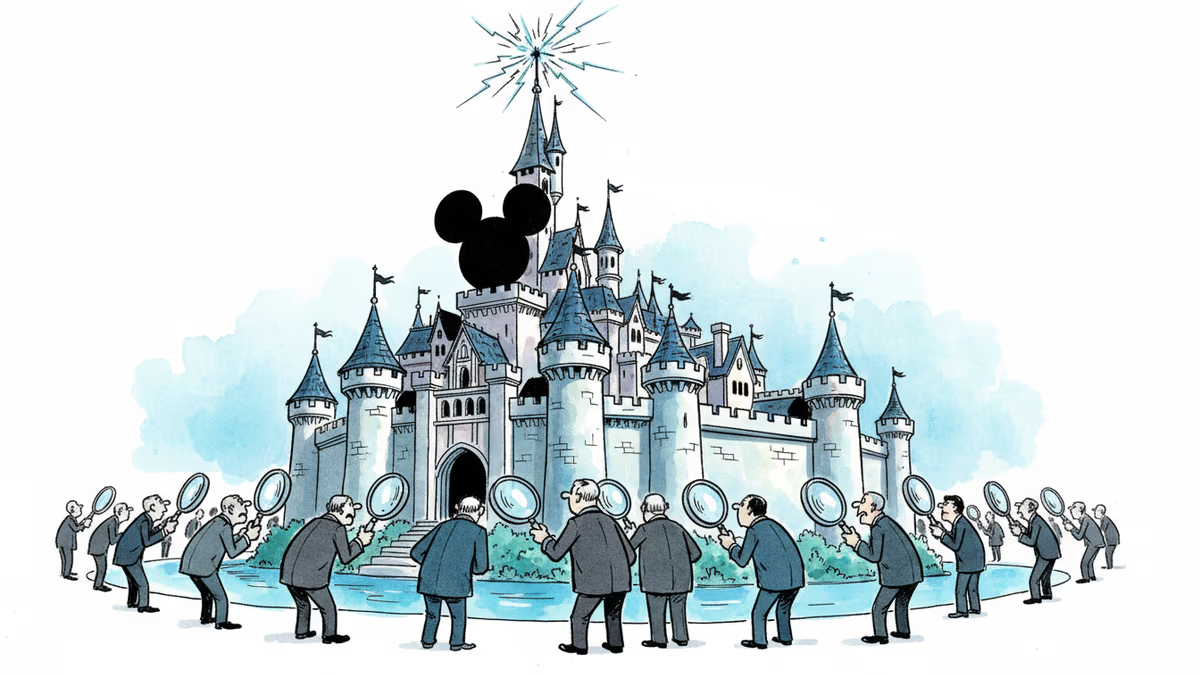
Josh D'Amaro took over Disney with a bold Disney Plus vision. Days later, he's in a First Amendment fight with the Trump administration over The View. What does this mean for media freedom?
Google's Gmail Live lets you ask your inbox questions out loud. Announced at I/O 2026, it's AI's pitch to skeptics — and a reminder of how much Google already knows about you.
OpenAI has reorganized for the second time in a month, merging ChatGPT and Codex into a single agentic platform under president Greg Brockman's unified product leadership.
AI sustainability researcher Sasha Luccioni is launching a new venture to push for energy transparency in AI. Here's why Big Tech keeps the numbers hidden—and what's starting to change.
Josh D'Amaro took over Disney with a bold Disney Plus vision. Days later, he's in a First Amendment fight with the Trump administration over The View. What does this mean for media freedom?
Thoughts
Share your thoughts on this article
Sign in to join the conversation