
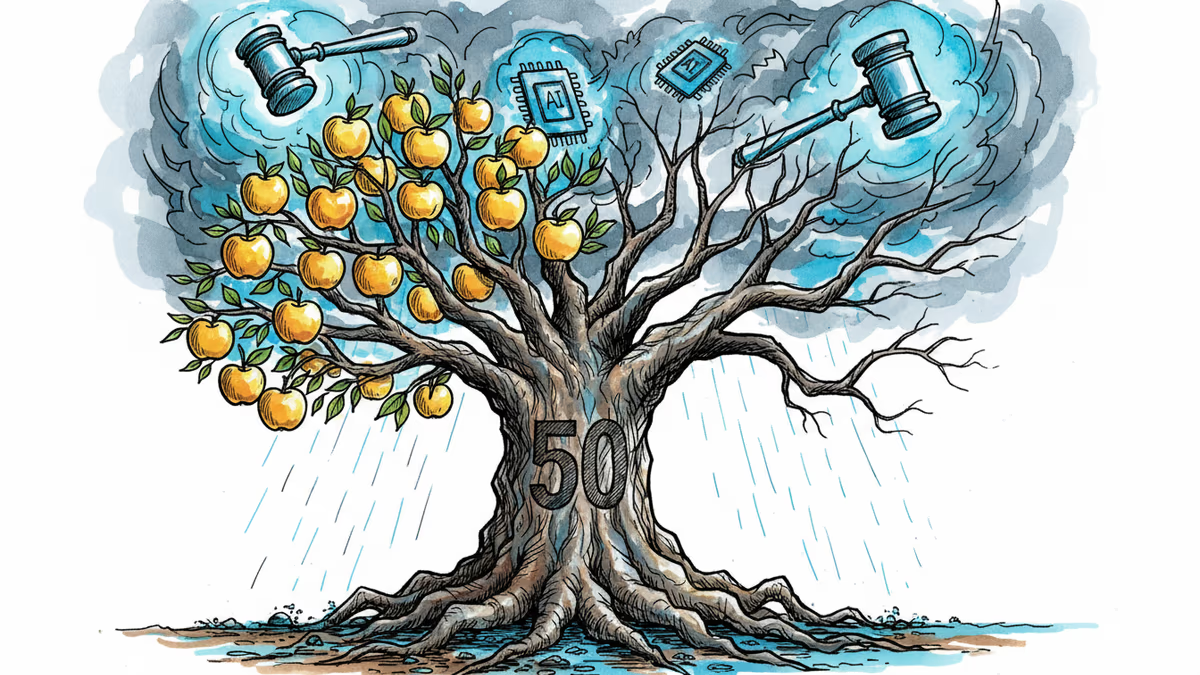
Apple Turns 50. Is It Actually Winning?
Apple hits its 50th birthday with a $3 trillion valuation — but AI struggles, antitrust pressure, and a quiet innovation drought are raising real questions about what comes next.
The Most Successful Company in History Has a Problem
A garage in Los Altos. 1976. Two Steves and a dream that sounded absurd. Fifty years later, Apple is worth more than the entire GDP of France. By any conventional measure, this is the greatest corporate success story ever told.
So why, in the week that journalists and analysts are lining up to celebrate Apple's 50th birthday, does the conversation keep circling back to the same uncomfortable question: Is Apple actually keeping up?
The Numbers That Look Good and the Ones That Don't
The bullish case is easy to make. Services revenue — the App Store, Apple Music, iCloud, Apple TV+ — crossed $100 billion annually and keeps climbing. The iPhone still captures more than 50% of global smartphone profits despite holding a fraction of unit market share. Customer loyalty metrics are the envy of every brand strategist alive.
But zoom in on 2025, and the picture gets complicated. Apple's stock was the weakest performer among the major tech giants for much of the year. Apple Intelligence, the company's answer to the generative AI wave, launched to a muted reception — limited features, a staggered rollout, and a Siri that still can't hold a candle to ChatGPT or Gemini in head-to-head comparisons. For a company built on the premise that it makes technology feel effortless, that's a strange place to be.
Three Cracks in the Foundation
The first crack is AI. OpenAI, Google, and Meta have spent the past two years rewiring how people interact with software. Apple responded with on-device processing and a privacy-first pitch — a genuinely differentiated angle. But differentiation only works if the product is good enough to make people choose it. Right now, that's an open question.

The second crack is regulatory. The US Department of Justice and the European Commission are both actively targeting Apple's App Store model. Under the EU's Digital Markets Act, Apple was forced to allow third-party app stores on iPhones in Europe — a concession that would have been unthinkable five years ago. If that model spreads, the 30% commission structure that turbocharged Apple's services growth faces serious erosion.
The third crack is the product pipeline. Apple Vision Pro launched at $3,499 with the promise of redefining personal computing. Sales have been underwhelming. The deeper issue isn't one product's performance — it's the absence of a clear answer to the question: what is Apple's next iPhone-scale category?
What 50 Years Actually Proves
Look at Apple's history and a pattern emerges. Apple didn't invent the MP3 player, the smartphone, or the tablet. It entered each market late, watched competitors stumble, and then delivered an experience so coherent that it rendered the alternatives irrelevant. The iPod didn't beat other MP3 players on specs. The iPhone didn't win on price. They won because Apple understood that people don't buy technology — they buy the feeling technology gives them.
The question for the next 50 years is whether that formula still works when the technology in question is AI — a category where the experience is defined by raw capability, where Google has decades of data advantage, and where OpenAI has captured the cultural imagination in a way that even Apple hasn't managed with a single product since the original iPhone.
How Investors and Consumers Are Reading the Room Differently
For long-term investors, Apple remains a cash-generation machine with unmatched brand loyalty and a hardware install base of over 2 billion active devices. The bull case: Apple is deliberately slow because it can afford to be, and when its AI products mature, the distribution advantage is enormous.
For everyday consumers — particularly younger ones who've grown up treating the iPhone as a default rather than a choice — the calculus is shifting. If Google's Gemini is deeply embedded in Android and OpenAI integrates seamlessly across platforms, the question becomes: does Apple's ecosystem still justify the premium if the AI inside it feels like a generation behind?
Regulators, meanwhile, aren't waiting for the market to sort it out. Every antitrust ruling that chips away at Apple's App Store control is a vote for a future where Apple's services moat is smaller than it looks today.
Authors
Related Articles
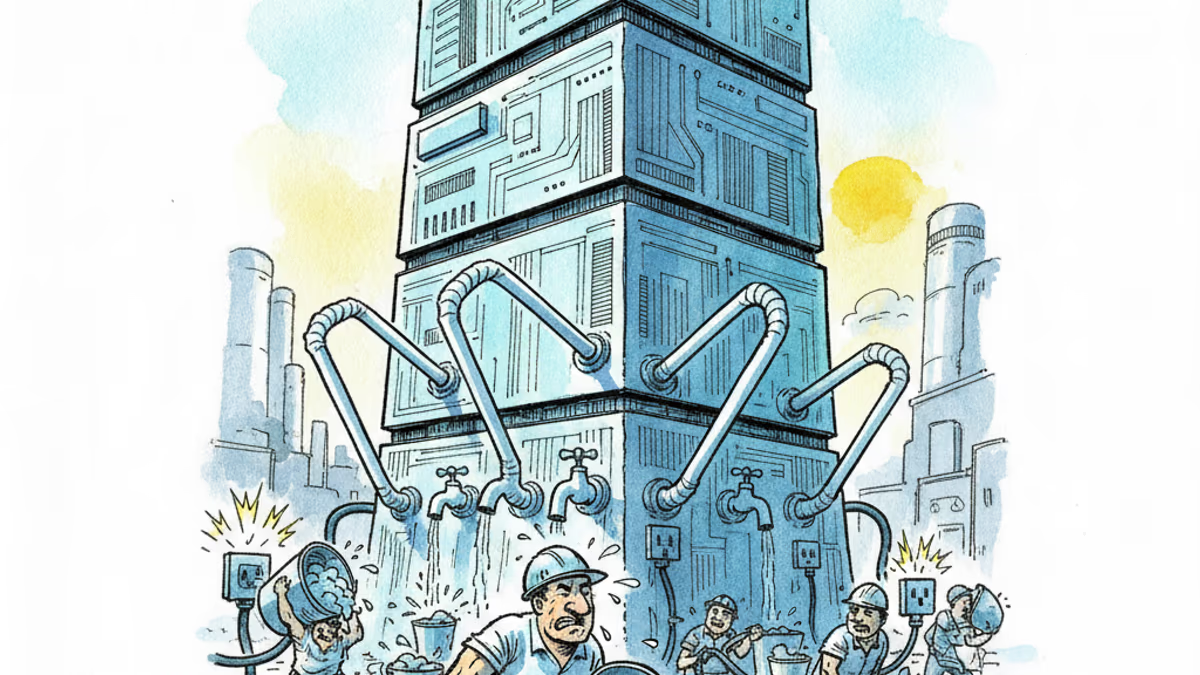
Samsung and SK unveiled a chip and AI investment package worth thousands of trillions of won on June 29. The headline number swings wildly by outlet, but the real contest isn't capital — it's water and power.
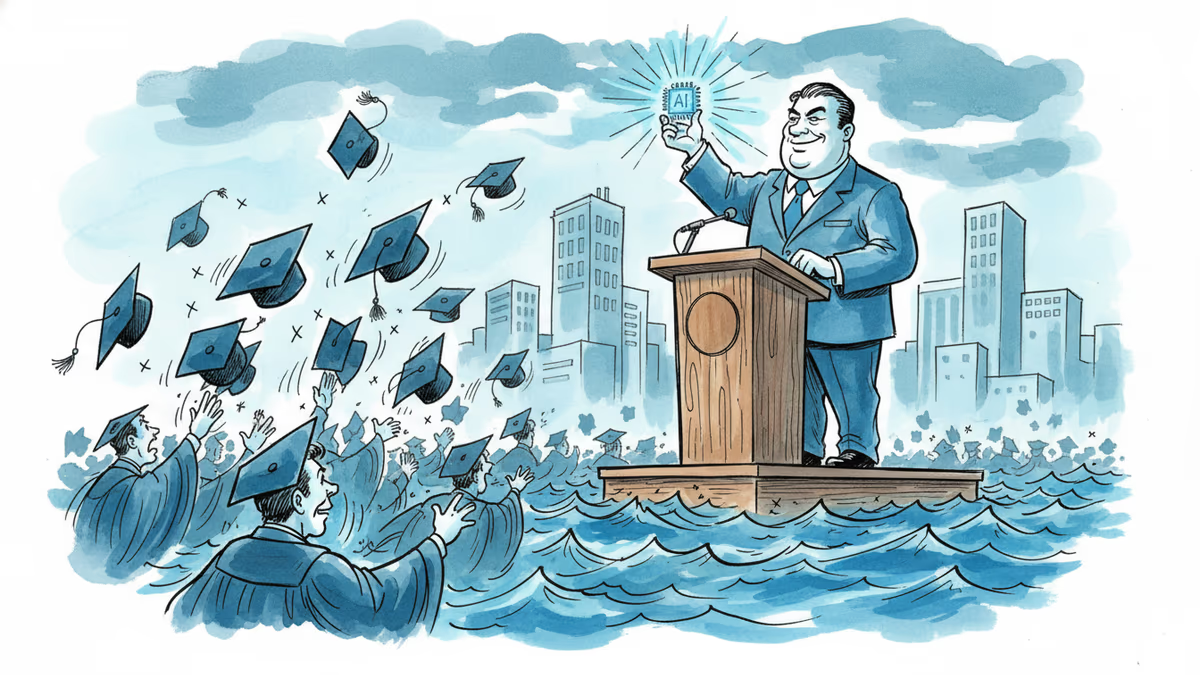
Viral videos show 2026 graduates jeering executives who praise AI at commencement ceremonies. It's not just rudeness — it's a signal about who pays for technological optimism.
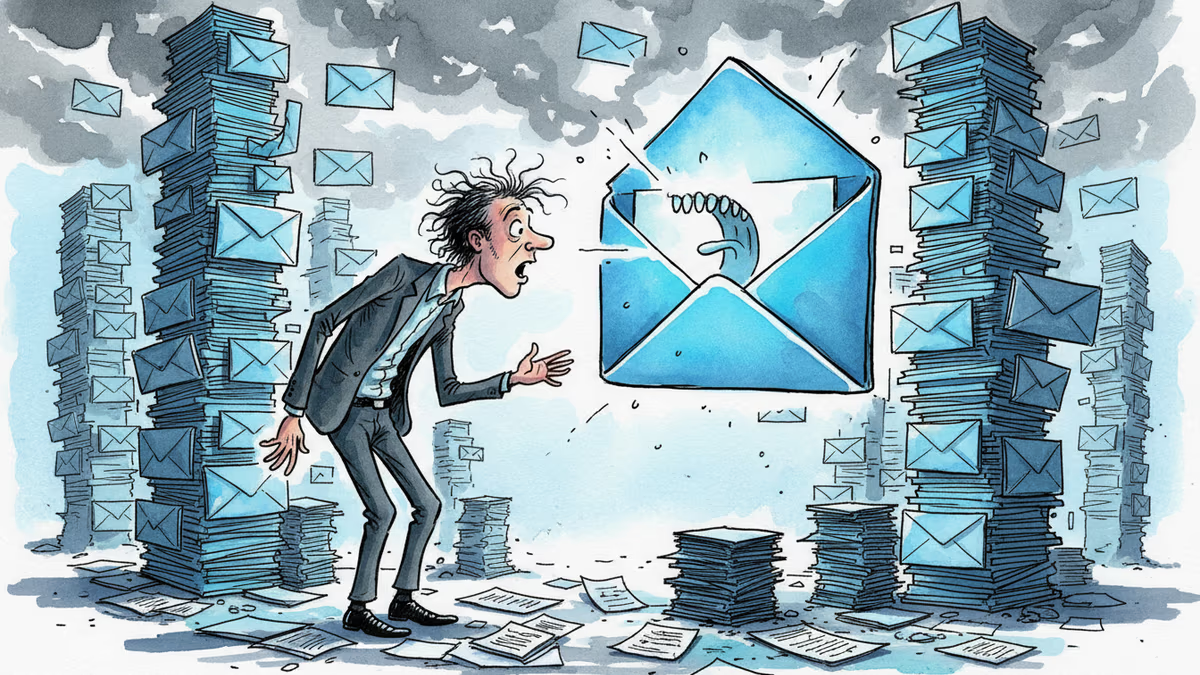
Google's Gmail Live lets you ask your inbox questions out loud. Announced at I/O 2026, it's AI's pitch to skeptics — and a reminder of how much Google already knows about you.
Filipino virtual assistants using AI to ghost-manage LinkedIn profiles for executives is now a structured industry. 30 comments a day, fake engagement rings, and a platform struggling to tell real from fabricated.
Samsung and SK unveiled a chip and AI investment package worth thousands of trillions of won on June 29. The headline number swings wildly by outlet, but the real contest isn't capital — it's water and power.
Viral videos show 2026 graduates jeering executives who praise AI at commencement ceremonies. It's not just rudeness — it's a signal about who pays for technological optimism.
Google's Gmail Live lets you ask your inbox questions out loud. Announced at I/O 2026, it's AI's pitch to skeptics — and a reminder of how much Google already knows about you.
Filipino virtual assistants using AI to ghost-manage LinkedIn profiles for executives is now a structured industry. 30 comments a day, fake engagement rings, and a platform struggling to tell real from fabricated.
Thoughts
Share your thoughts on this article
Sign in to join the conversation