
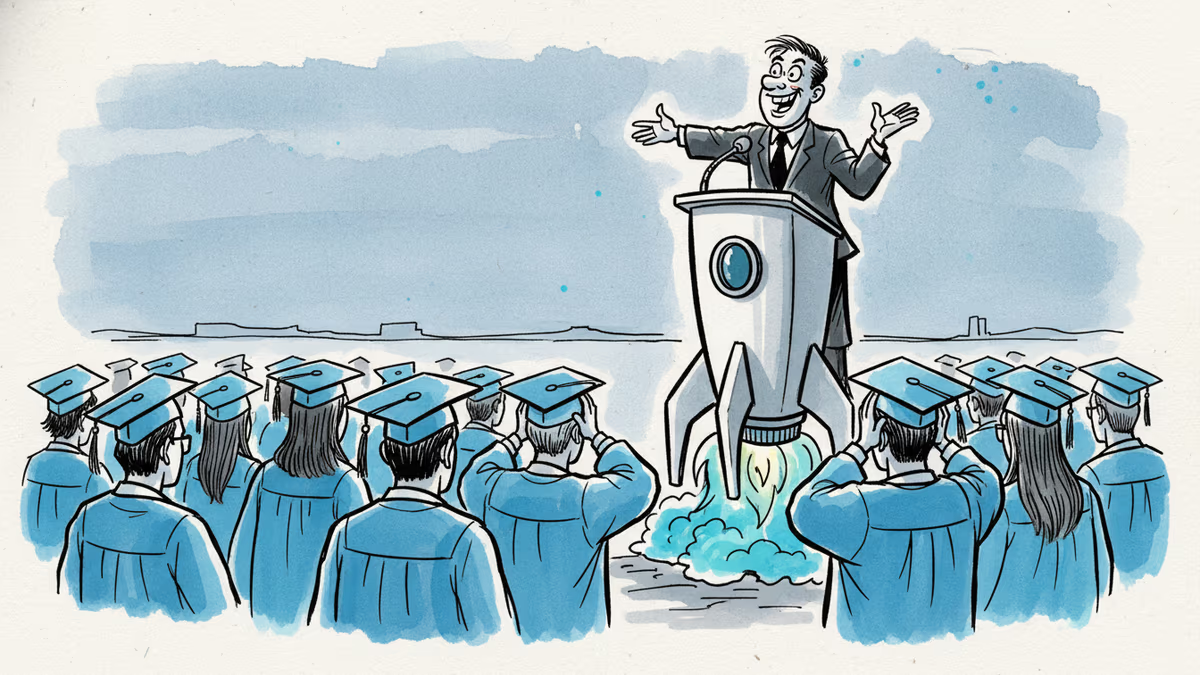
Say 'AI' at Graduation, Get Booed
Two commencement speakers learned the hard way that AI enthusiasm doesn't land well with today's graduates. The backlash reveals a widening gap between tech optimism and Gen Z's economic reality.
What's the fastest way to lose a room full of graduates in 2026? Mention artificial intelligence.
Two prominent speakers found this out in the same week — and the reaction from students tells us something that no earnings call or product launch can.
The Moment the Room Turned
At the University of Central Florida last week, Gloria Caulfield, an executive at real estate firm Tavistock Development Company, declared to the graduating class: "The rise of artificial intelligence is the next industrial revolution." The booing started almost immediately, swelling louder and louder until Caulfield paused, turned to her fellow speakers, and asked, genuinely puzzled: "What happened?"
She tried again. "Only a few years ago, AI was not a factor in our lives" — and this time, the crowd erupted in cheers. The implication was hard to miss: students were applauding the absence of AI, not its arrival.
Days later at the University of Arizona, former Google CEO Eric Schmidt faced a similar reception. His appearance was already controversial — some student groups had called for his removal over a lawsuit in which a former girlfriend accused him of sexual assault (allegations he has denied). But when Schmidt told graduates, "You will help shape artificial intelligence," the boos came in force. He pushed through, raising his voice: "You can now assemble a team of AI agents to help you with the parts that you could never accomplish on your own. When someone offers you a seat on the rocket ship, you do not ask which seat, you just get on."
The students were not getting on.

The Numbers Behind the Noise
It would be easy to dismiss this as performative cynicism — the kind of reflexive contrarianism that's always existed in college auditoriums. But the data suggests something more substantive is going on.
A recent Gallup poll found that only 43% of Americans aged 15 to 34 say it's a good time to find a job locally. In 2022, that figure was 75%. That's a 32-percentage-point collapse in three years. AI isn't solely responsible — high interest rates, a cooling job market, climate anxiety, and political dysfunction all feed into it. But AI has become the most visible symbol of a future that feels like it's being built for someone else.
Tech industry critic Brian Merchant put it plainly: "I too would loudly boo at the prospect of this next industrial revolution if I was in my early twenties, unemployed, and had aspirations for my future greater than entering prompts into an LLM."
Even Schmidt acknowledged the fear directly in his speech: "There is a fear in your generation that the future has already been written, that the machines are coming, that the jobs are evaporating, that the climate is breaking, that politics are fractured, and that you are inheriting a mess that you did not create." He named the wound accurately. Then he prescribed more AI.
Not Every Stage Got Booed — And That Matters
It's worth noting what didn't happen at Carnegie Mellon, where Nvidia CEO Jensen Huang told graduates that AI has "reinvented computing." No audible pushback. But Carnegie Mellon's graduating class skews heavily toward computer science and engineering — students who are more likely to see themselves as AI's architects than its casualties.
The contrast is instructive. The UCF crowd was largely arts and humanities graduates. One student noted that Caulfield had already lost the room before AI came up, with what they described as "generic" praise of executives like Jeff Bezos. Graduate Alexander Rose Tyson told The New York Times: "It wasn't one person that really started the booing. It was just sort of like a collective, 'This sucks.'" AI was the trigger. The frustration had been building long before.
Across commencement season, even speeches that avoided AI entirely kept returning to one word: resilience. That's a telling shift. When speakers can no longer credibly promise a bright future, they pivot to coaching graduates on how to endure an uncertain one.
This content is AI-generated based on source articles. While we strive for accuracy, errors may occur. We recommend verifying with the original source.
Related Articles

Samsung and SK unveiled a chip and AI investment package worth thousands of trillions of won on June 29. The headline number swings wildly by outlet, but the real contest isn't capital — it's water and power.
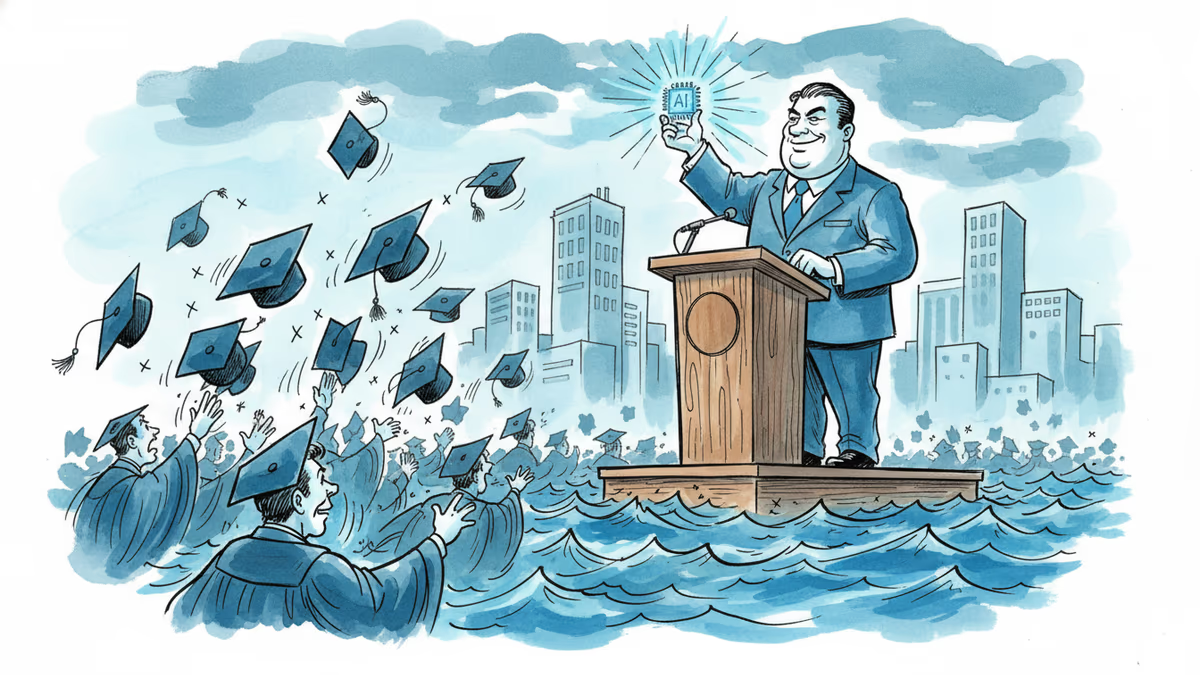
Viral videos show 2026 graduates jeering executives who praise AI at commencement ceremonies. It's not just rudeness — it's a signal about who pays for technological optimism.
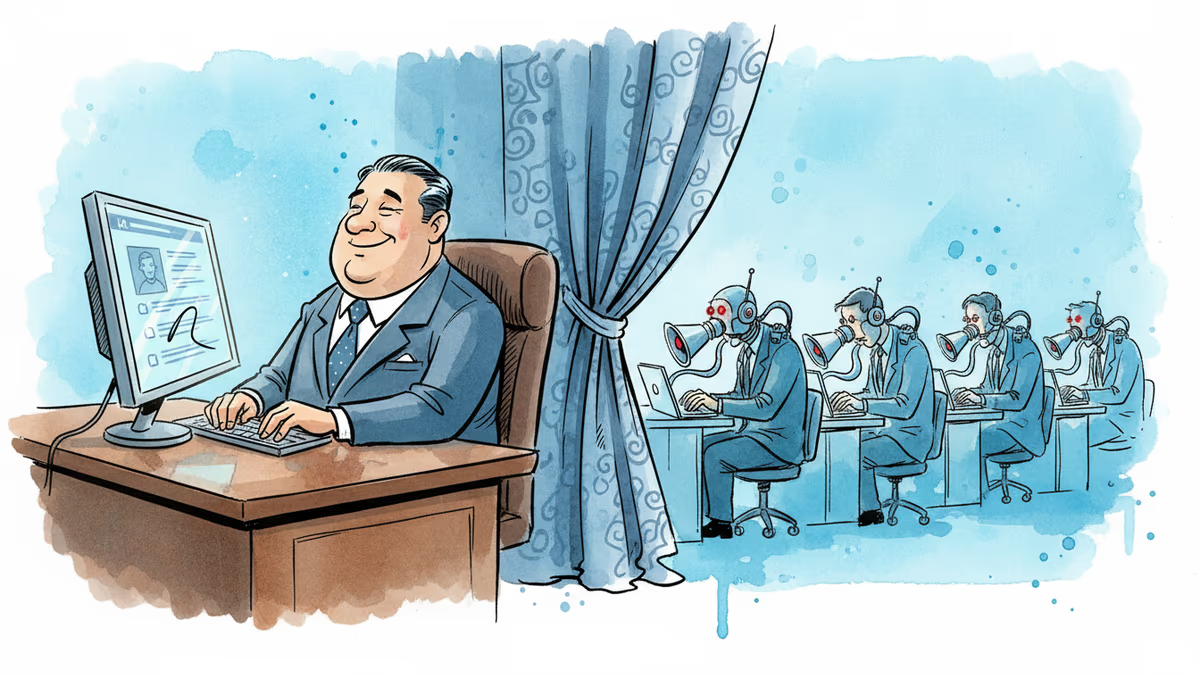
Filipino virtual assistants using AI to ghost-manage LinkedIn profiles for executives is now a structured industry. 30 comments a day, fake engagement rings, and a platform struggling to tell real from fabricated.
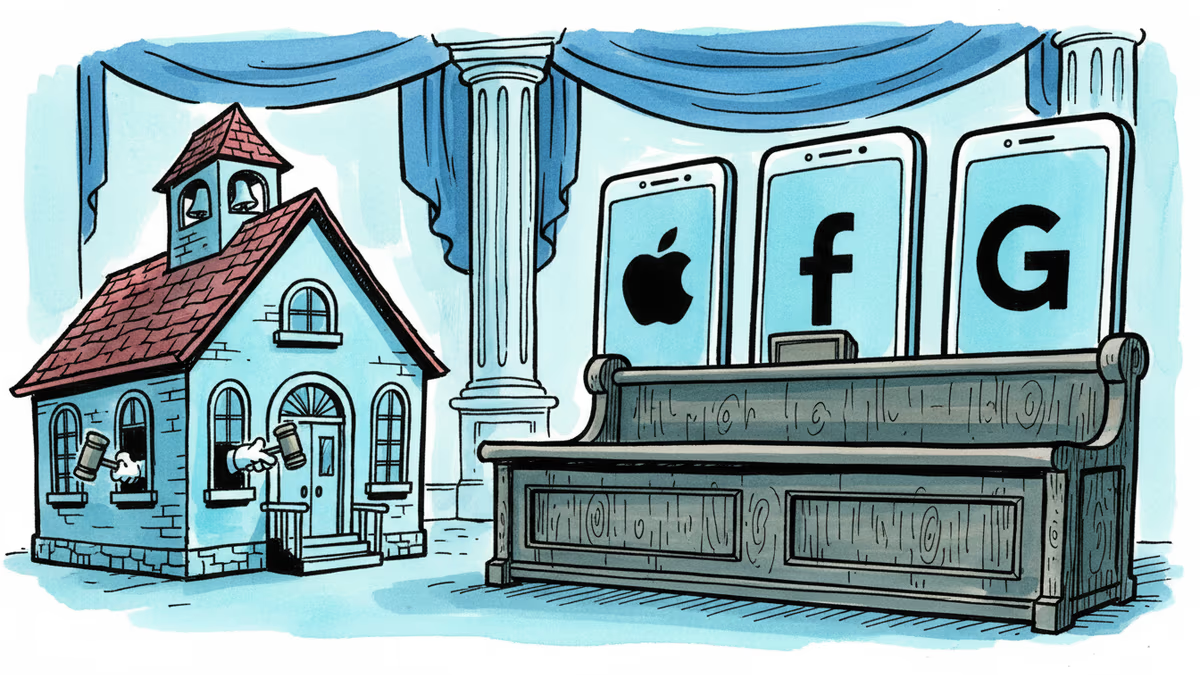
Snap, YouTube, and TikTok settled a landmark school district lawsuit over social media addiction. With 1,000+ similar cases pending, this could reshape Big Tech's liability landscape.
Samsung and SK unveiled a chip and AI investment package worth thousands of trillions of won on June 29. The headline number swings wildly by outlet, but the real contest isn't capital — it's water and power.
Viral videos show 2026 graduates jeering executives who praise AI at commencement ceremonies. It's not just rudeness — it's a signal about who pays for technological optimism.
Filipino virtual assistants using AI to ghost-manage LinkedIn profiles for executives is now a structured industry. 30 comments a day, fake engagement rings, and a platform struggling to tell real from fabricated.
Snap, YouTube, and TikTok settled a landmark school district lawsuit over social media addiction. With 1,000+ similar cases pending, this could reshape Big Tech's liability landscape.
Thoughts
Share your thoughts on this article
Sign in to join the conversation