
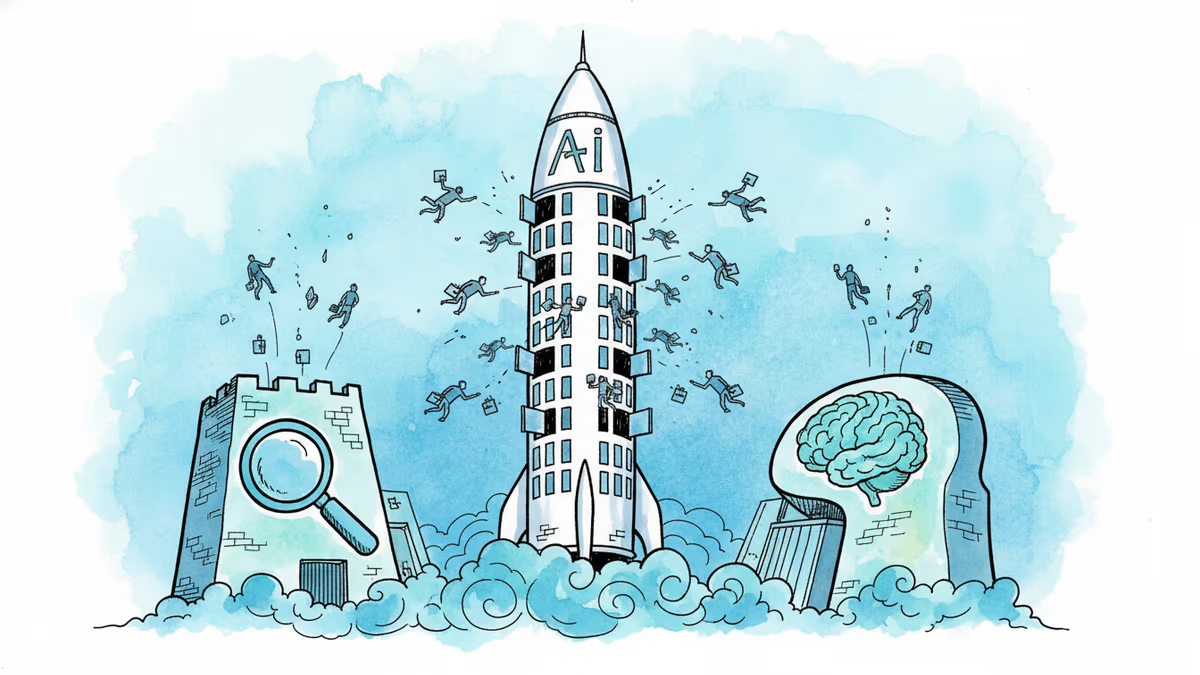
SpaceXAI Is Bleeding Talent—and the Wound Goes Deeper Than Headlines Suggest
Over 50 researchers and engineers have left SpaceXAI since February's merger. With the pre-training team nearly gutted, questions mount about whether Musk's AI ambitions can survive his management style.
The company got a new name. It also lost more than 50 of the people who were supposed to justify it.
Since SpaceX absorbed xAI in February and Elon Musk rebranded the combined entity SpaceXAI earlier this month, a steady stream of researchers and engineers has headed for the exits. According to The Information, at least 11 have landed at Meta. At least 7 have joined Mira Murati's Thinking Machines Lab. The departures span the company's most critical functions: coding, world models, and Grok voice. TechCrunch previously reported on 11 exits announced immediately after the merger, including two co-founders.
The rebranding was supposed to signal a new chapter. Instead, it's arriving alongside a story about institutional hollowing-out.
The Part That Actually Matters: Pre-Training
Not all departures are equal. The ones drawing the most alarm inside SpaceXAI—and among people close to the company—are from the pre-training team.
Pre-training is the foundational step in building any large AI model. It's where raw compute and raw data become something resembling intelligence. When Juntang Zhuang, the team's lead, walked out, others followed. What remains, per The Information, is a handful of people. For a company that has positioned itself as a serious contender in frontier AI, a gutted pre-training operation is not a personnel problem. It's a product problem.
Insiders and observers are now openly asking whether SpaceXAI is still in the business of building leading models—or whether it's pivoting, consciously or not, toward something narrower.

Three Reasons People Leave—and Why All Three Are Happening at Once
Musk's defenders will point to SpaceX's tender offer program as the primary explanation. The company regularly allows employees to sell vested shares privately, and with a blockbuster IPO widely anticipated, many staffers may simply be cashing out at peak valuation and walking toward less stressful pastures. That's a rational move, not an indictment of leadership.
But The Information's reporting adds two harder-to-dismiss factors. First: culture. A source told the outlet that Musk set unrealistic deadlines for model training runs, leading to corners being cut on Grok. This isn't a new complaint—it has surfaced at Tesla, at Twitter/X, and across Musk's portfolio for years. The pattern is consistent enough that it's no longer anecdotal.
Second: strategic doubt. Researchers who join frontier AI labs aren't primarily motivated by salary. They want to work on models that matter. If the pre-training team is collapsing and deadlines are being set by someone who may not fully understand the underlying science, the intellectual case for staying weakens fast—regardless of what the equity is worth.
All three forces are operating simultaneously. That's what makes this moment different from a typical post-merger attrition bump.
Who's Winning the Fallout
Meta is the clearest beneficiary. Mark Zuckerberg has spent the past two years making aggressive, public bets on AI talent and infrastructure. Absorbing 11SpaceXAI researchers isn't just a headcount win—it's competitive intelligence, institutional knowledge, and a signal to the broader talent market that Meta is where serious AI work is happening.
Thinking Machines Lab, Murati's post-OpenAI venture, is the more interesting story. It's younger, smaller, and less proven—but it's attracting people who left SpaceXAI specifically. That suggests the draw isn't just compensation or stability. It's something about the research environment and leadership credibility that Murati is offering.
For investors watching SpaceXAI's IPO trajectory, the talent drain introduces a variable that valuation models don't easily capture: organizational momentum. Companies don't just need capital to build frontier AI. They need teams that have worked together long enough to develop shared intuitions about what to try next.
This content is AI-generated based on source articles. While we strive for accuracy, errors may occur. We recommend verifying with the original source.
Related Articles
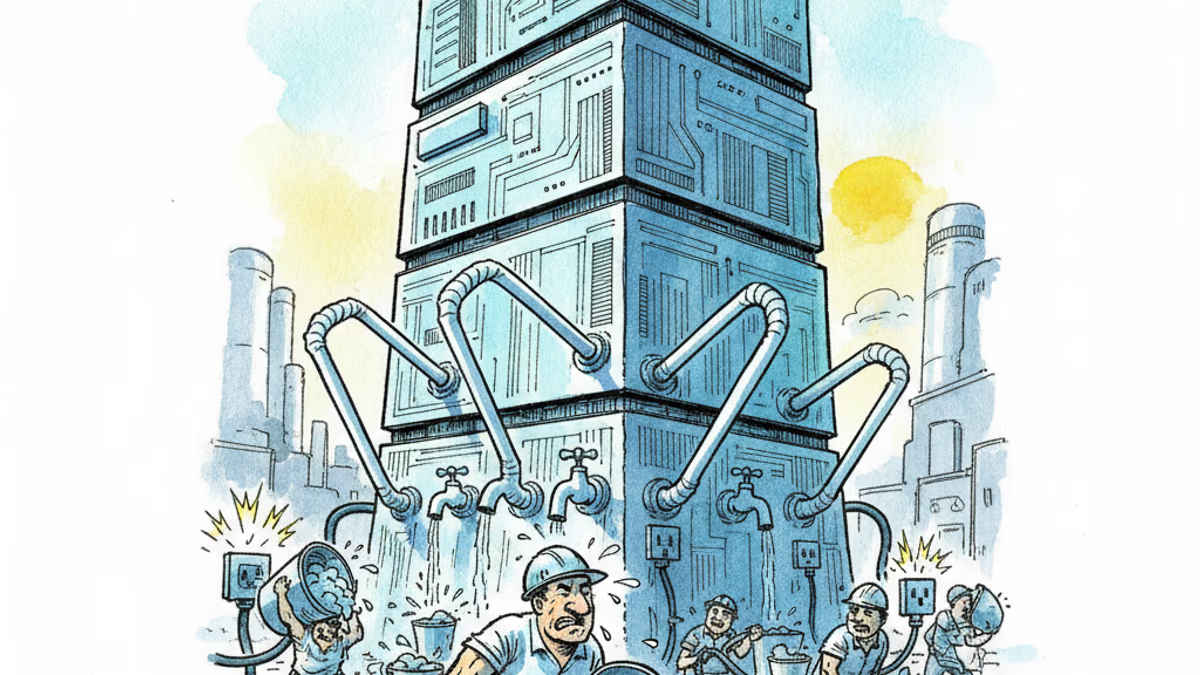
Samsung and SK unveiled a chip and AI investment package worth thousands of trillions of won on June 29. The headline number swings wildly by outlet, but the real contest isn't capital — it's water and power.
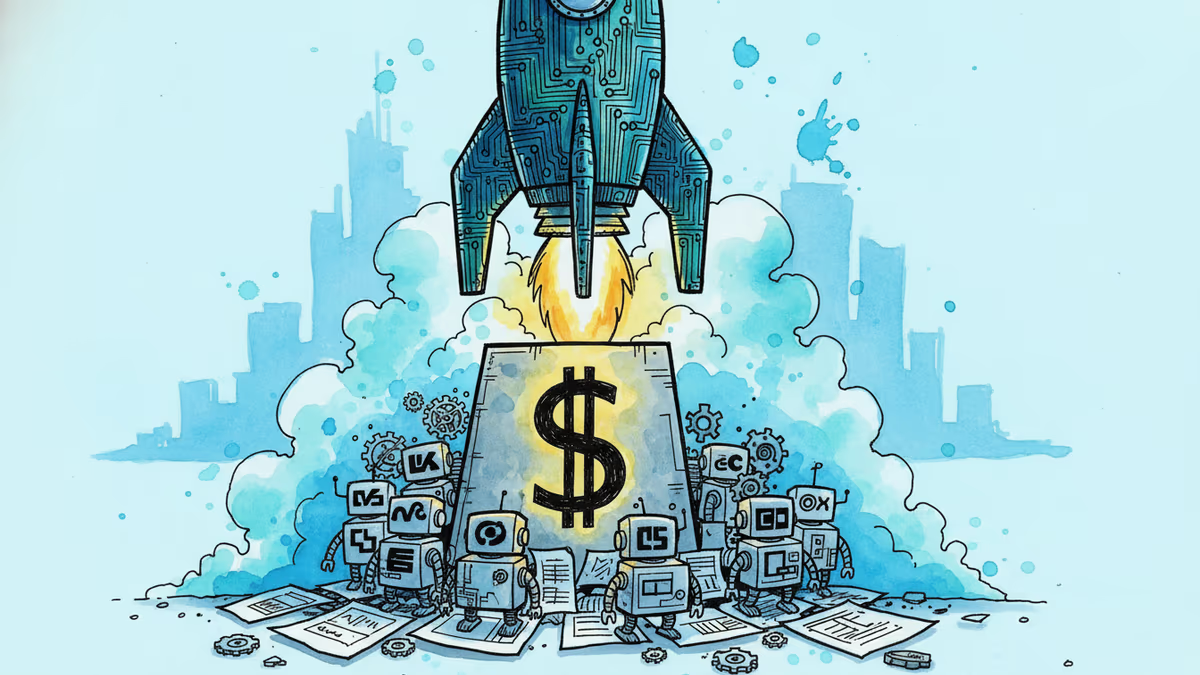
SpaceX's IPO filing puts AI at the center, claiming a $26.5 trillion market opportunity. But can Grok compete with OpenAI and Anthropic for enterprise customers?
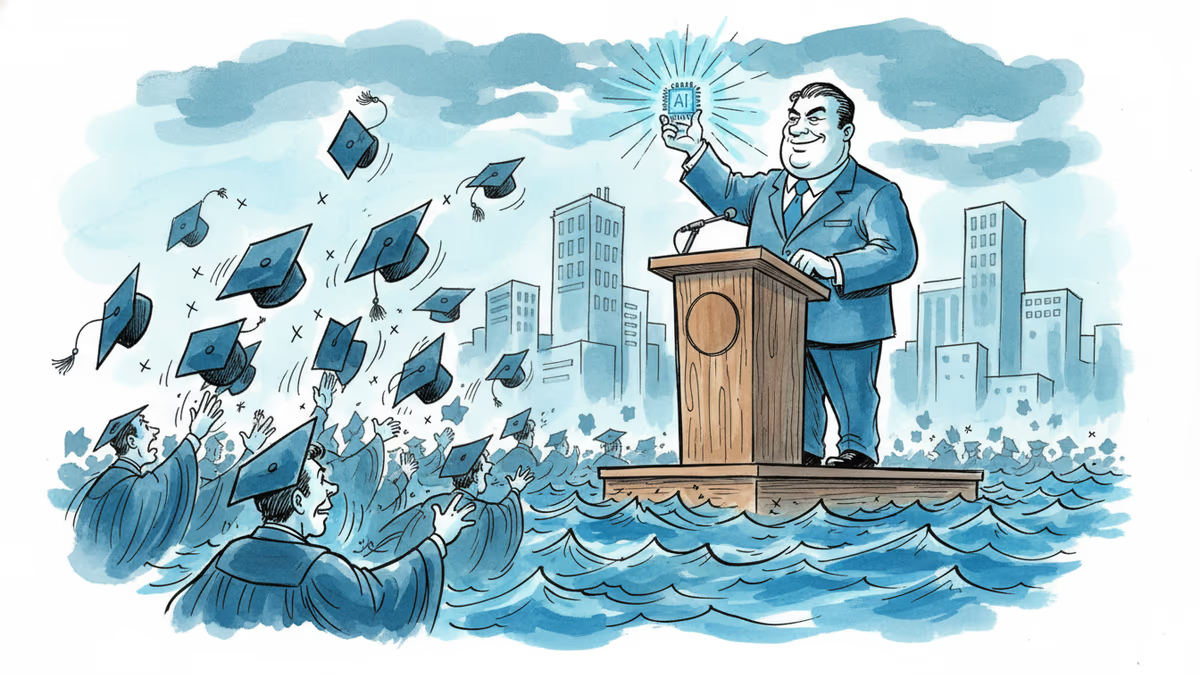
Viral videos show 2026 graduates jeering executives who praise AI at commencement ceremonies. It's not just rudeness — it's a signal about who pays for technological optimism.
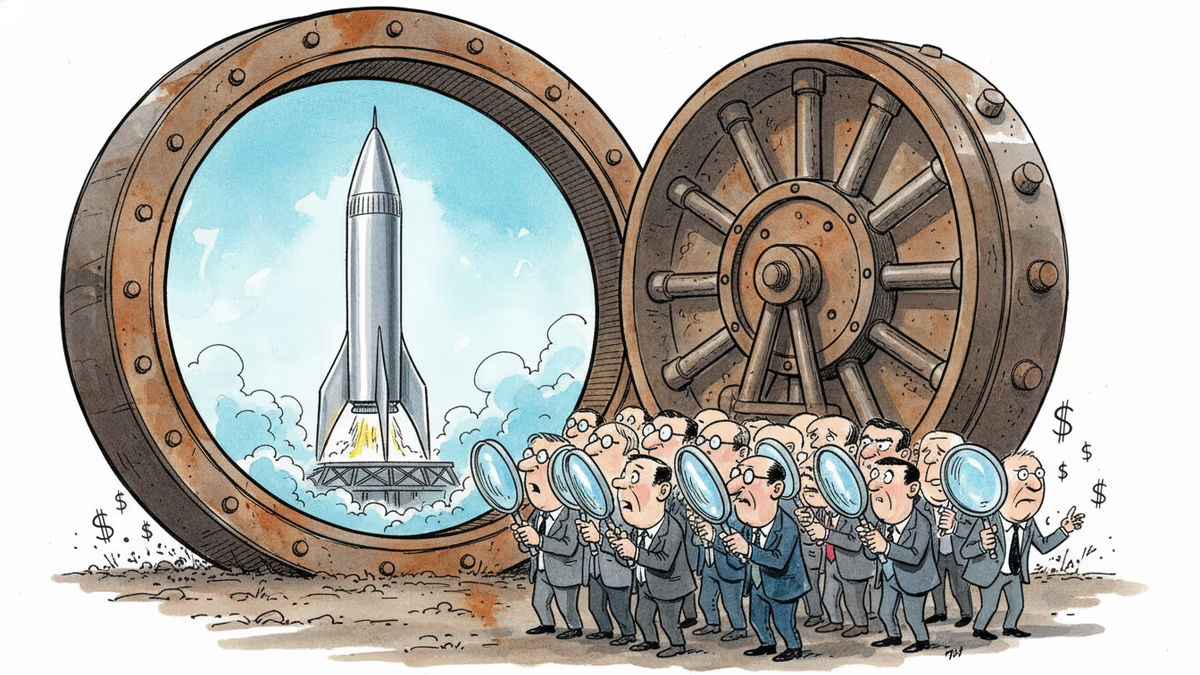
SpaceX filed a nearly 400-page S-1 with the SEC, targeting an IPO as early as June 12. Here's what the filing reveals—and what it doesn't.
Samsung and SK unveiled a chip and AI investment package worth thousands of trillions of won on June 29. The headline number swings wildly by outlet, but the real contest isn't capital — it's water and power.
SpaceX's IPO filing puts AI at the center, claiming a $26.5 trillion market opportunity. But can Grok compete with OpenAI and Anthropic for enterprise customers?
Viral videos show 2026 graduates jeering executives who praise AI at commencement ceremonies. It's not just rudeness — it's a signal about who pays for technological optimism.
SpaceX filed a nearly 400-page S-1 with the SEC, targeting an IPO as early as June 12. Here's what the filing reveals—and what it doesn't.
Thoughts
Share your thoughts on this article
Sign in to join the conversation