
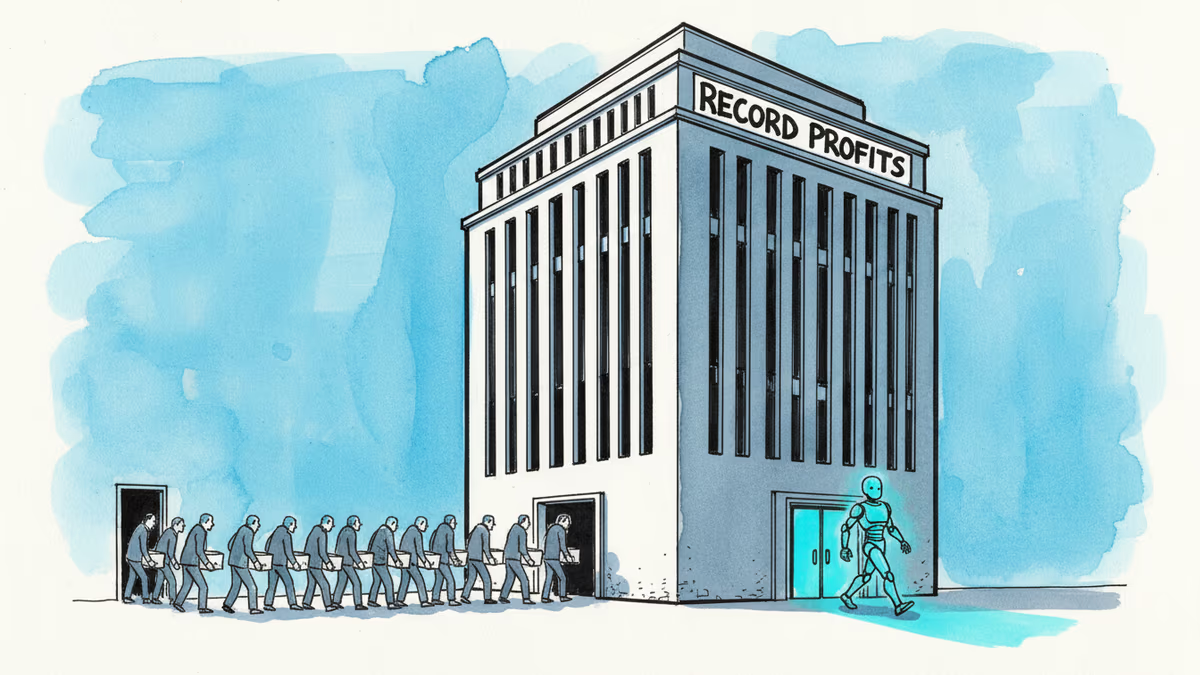
Record Revenue, 4,000 Layoffs: Welcome to the AI Economy
Cisco just posted record quarterly revenue and cut 4,000 jobs on the same day. It's not a contradiction — it's a template spreading across Big Tech.
On Wednesday morning, Cisco CEO Chuck Robbins published a blog post celebrating the company's "record revenue" and "double-digit growth." By the afternoon, nearly 4,000 employees were learning they no longer had jobs.
This isn't a contradiction. It's becoming a business model.
What Happened
Cisco announced it is cutting just under 4,000 jobs — roughly 5% of its global workforce — despite reporting better-than-expected profit and revenue for its fiscal third quarter. The stated rationale: restructuring its "cost structure" to fund increased investment in AI and cybersecurity.
Robbins framed the cuts as a forward-looking move, noting the company is making strategic investments in "our employees' use of AI across the company." He did not specify which roles are being eliminated or how AI tools are expected to absorb that work. Cisco did not respond to a request for comment, and declined to say whether Robbins — who is slated to receive more than $52 million in executive compensation for 2025 — plans to reduce his own pay.
This is the third significant round of layoffs at Cisco in roughly two years. The company cut thousands of employees across two separate rounds in 2024, followed by 150 more in 2025.
The Pattern Nobody Wants to Name

Cisco isn't alone. Cloudflare and General Motors both announced staff reductions in recent days — also while reporting strong financial results. The timing, in each case, was paired with AI investment commitments.
For decades, mass layoffs were a distress signal: revenue down, market shrinking, survival mode. That logic no longer holds. The new version goes like this: revenue is up, AI can now handle what humans were doing, and the money saved on headcount gets redirected toward the technology replacing them. The cycle is self-reinforcing.
What makes Cisco's case particularly sharp is the cybersecurity context. The company has faced a string of serious vulnerabilities in its routers and firewalls — products that protect corporate networks, including those of the U.S. government. A data breach last year exposed customer personal information. Investing more in security isn't optional at this point. But the question of whether AI spending and security hardening actually require 4,000 fewer people is one Cisco hasn't answered publicly.
Three Ways to Read This
For employees, the calculus has quietly shifted. Strong company performance used to signal job security. Now it can signal the opposite — a well-funded AI transition that no longer needs the same headcount to execute it. The psychological weight of that shift shouldn't be underestimated. Remaining staff know the math.
For investors, this reads as disciplined capital allocation. Cutting labor costs while signaling AI investment has become a reliable formula for positive market reaction. The market has largely rewarded companies that make this move, regardless of the human cost. That incentive structure isn't going away.
For regulators and policymakers, this is the scenario that's been theorized for years: profitable companies laying off workers not because they're struggling, but because automation makes it financially rational to do so. The existing policy toolkit — unemployment insurance, retraining programs — was designed for cyclical downturns, not structural AI-driven displacement during boom quarters.
This content is AI-generated based on source articles. While we strive for accuracy, errors may occur. We recommend verifying with the original source.
Related Articles
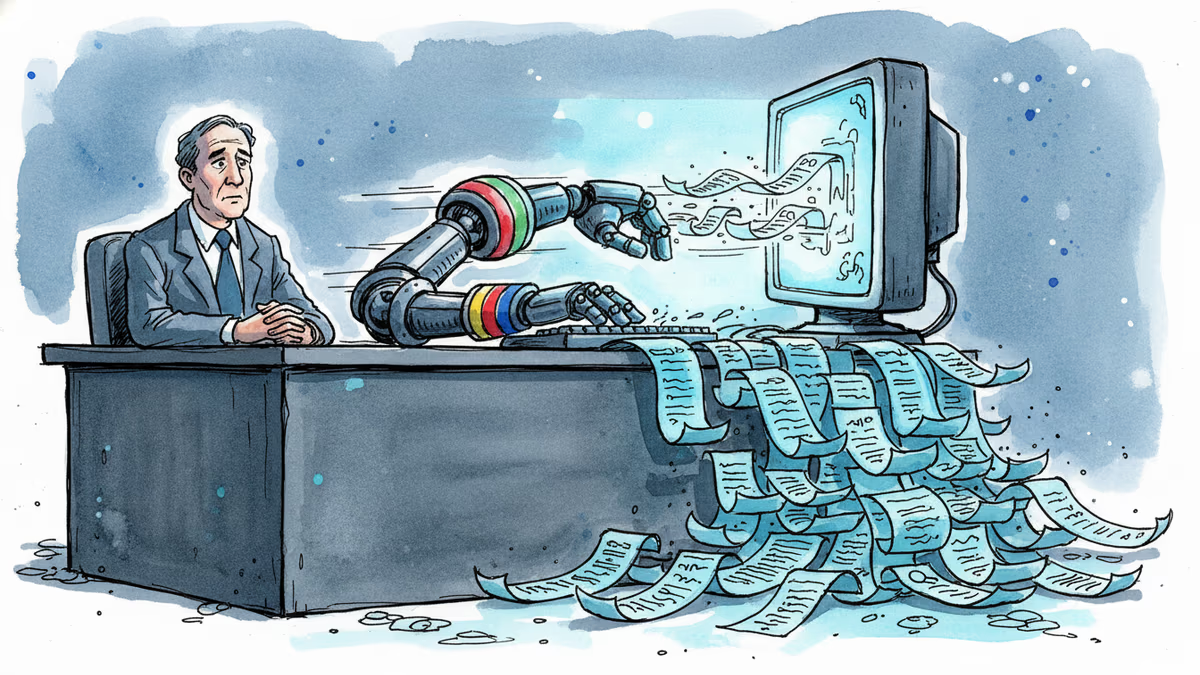
Google is building AI agents that search the web proactively, without user prompting. That's not just a product update — it's a fundamental shift in who controls the information you receive.
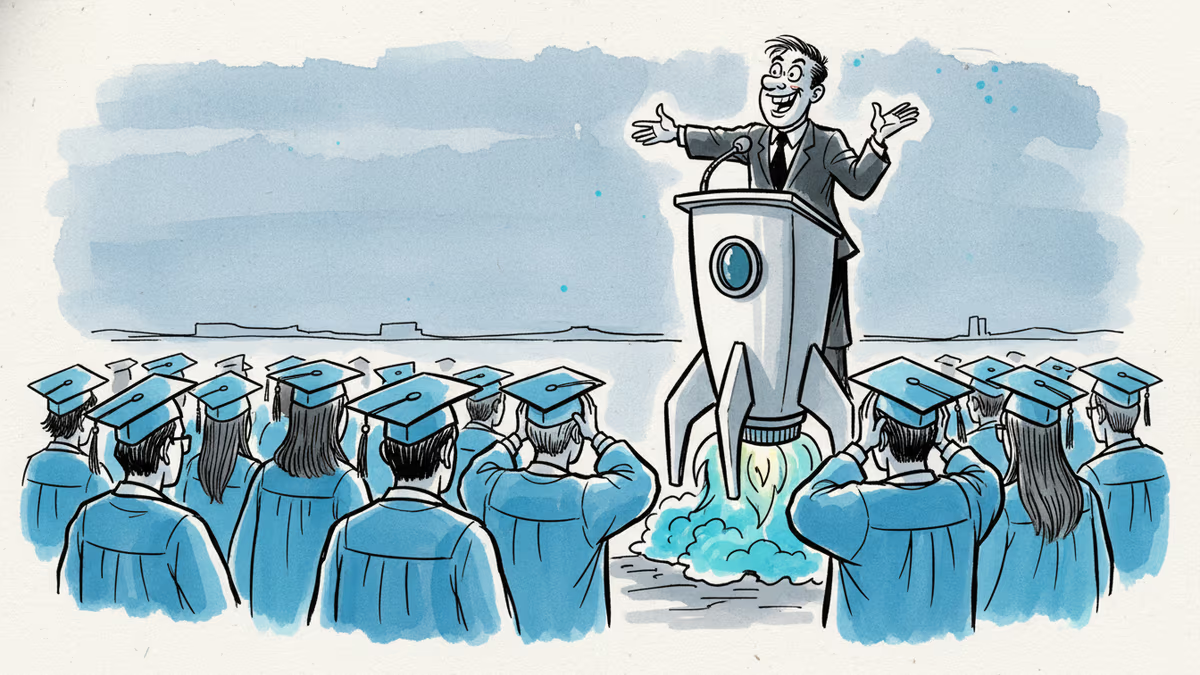
Two commencement speakers learned the hard way that AI enthusiasm doesn't land well with today's graduates. The backlash reveals a widening gap between tech optimism and Gen Z's economic reality.
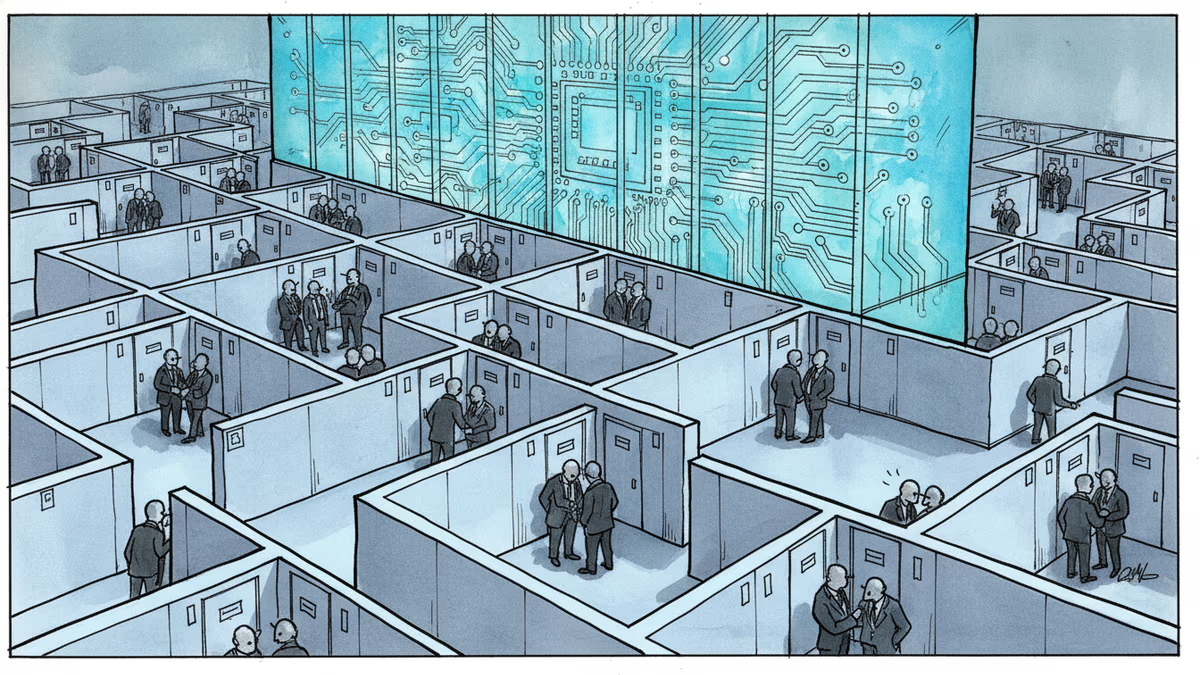
Behind every congressional hearing on Big Tech, there's a quieter room where the real rules get negotiated. As AI regulation, antitrust battles, and privacy law converge on Capitol Hill in 2026, the stakes have never been higher.

Meta acquired humanoid robotics startup ARI, adding to a Big Tech arms race in physical AI. The real prize isn't a robot product — it's a new way to train intelligence.
Google is building AI agents that search the web proactively, without user prompting. That's not just a product update — it's a fundamental shift in who controls the information you receive.
Two commencement speakers learned the hard way that AI enthusiasm doesn't land well with today's graduates. The backlash reveals a widening gap between tech optimism and Gen Z's economic reality.
Behind every congressional hearing on Big Tech, there's a quieter room where the real rules get negotiated. As AI regulation, antitrust battles, and privacy law converge on Capitol Hill in 2026, the stakes have never been higher.
Meta acquired humanoid robotics startup ARI, adding to a Big Tech arms race in physical AI. The real prize isn't a robot product — it's a new way to train intelligence.
Thoughts
Share your thoughts on this article
Sign in to join the conversation