
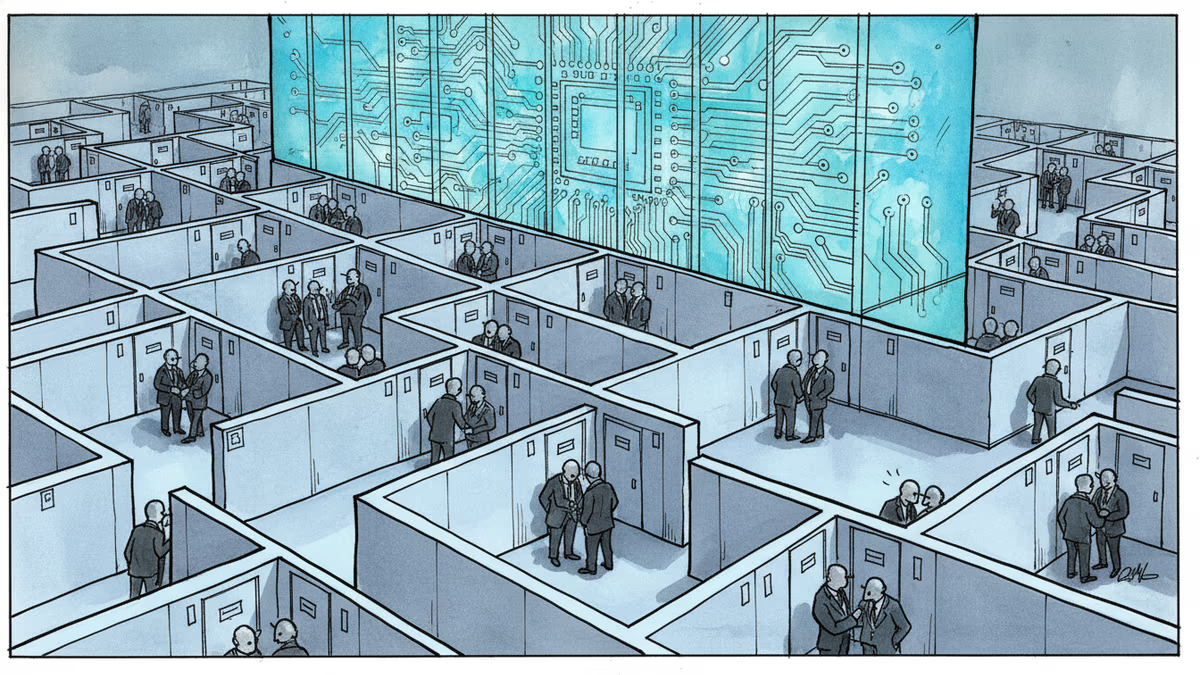
The Backrooms of Washington Are Where Big Tech's Future Gets Written
Behind every congressional hearing on Big Tech, there's a quieter room where the real rules get negotiated. As AI regulation, antitrust battles, and privacy law converge on Capitol Hill in 2026, the stakes have never been higher.
The most consequential decisions about your digital life aren't made in a Senate hearing room — they're made in the hallway outside it.
That's the central premise of The Verge's Washington tech policy newsletter, Regulator, which tracks what the publication describes as the "backrooms" of DC tech policy: a parallel universe of lobbyists, legislative aides, and agency officials quietly shaping the rules that govern the platforms billions of people use every day. In 2026, those backrooms are more crowded than ever.
Three Battles, One Capitol Hill
The current wave of tech regulation in Washington isn't one story — it's three overlapping ones, each at a different stage.
The first is AI accountability. Since the EU's AI Act came into force, pressure has mounted on Congress to produce a domestic equivalent. At least four separate AI-related bills are currently sitting in the Senate Commerce Committee, covering everything from algorithmic transparency requirements to mandatory disclosures when AI is used in consequential decisions like hiring or loan approvals. None has made it to a floor vote yet. The gap between legislative ambition and legislative output remains wide.
The second front is platform antitrust. The Department of Justice's landmark 2024 ruling against Google — finding it had illegally monopolized the search market — is now in appeals, with remedies still being debated. Meanwhile, Meta's FTC case grinds forward. What makes this moment unusual is that Congress and the courts are moving simultaneously, creating a rare double-pressure dynamic on the same companies at the same time.
The third is federal privacy law. The US remains one of the few wealthy democracies without a unified federal data privacy framework. The resulting patchwork — 19 states now have their own privacy laws, each with different standards — has created compliance chaos for companies and genuine confusion for consumers about what protections they actually have.
The Lobbying Math

Understanding Washington tech policy means understanding the lobbying infrastructure around it. In 2024, major tech companies collectively spent over $100 million on federal lobbying — a figure that doesn't include the revolving door of former congressional staffers now working as industry consultants or the "technical assistance" that company lawyers provide to legislative offices drafting complex bills.
The effect is structural, not conspiratorial. Legislators genuinely need technical expertise to write workable technology law. The people with the deepest expertise often work for the companies being regulated. The result is that the language of regulation — the definitions, the exemptions, the enforcement thresholds — tends to reflect the priorities of those who understand the technology well enough to write about it precisely.
This is what Regulator means by "backrooms": not secret deals, but the ordinary, unglamorous process by which technical complexity gets translated into legal text, and how that translation process systematically advantages those with the most resources to participate in it.
Who's Watching the Watchers
The stakeholder landscape here is genuinely complicated, and each group has a different read on what good regulation looks like.
Big Tech has largely shifted from opposing regulation to shaping it. The strategic play is regulatory capture by design: push for standards that incumbents can meet but that raise the compliance bar high enough to disadvantage smaller competitors. If you can't stop the rules from being written, write them yourself.
Startups and VCs are split. Some welcome strong antitrust enforcement as a potential crowbar against platform dominance. Others — particularly in AI — argue that heavy-handed regulation will freeze US innovation while China moves freely. Several prominent venture firms have publicly lobbied against proposed AI liability frameworks, arguing they'd chill investment.
Consumer advocates have the clearest policy goals — transparency, data rights, algorithmic accountability — but the weakest institutional muscle in Washington. Their influence tends to spike around election cycles when legislators need visible consumer-protection wins, then recede.
International observers, including European regulators and Asian tech ministries, are watching closely. The US has historically exported its regulatory frameworks — or its regulatory absence — globally. Whether Washington produces coherent AI and platform rules in 2026 will shape the default standards for markets far beyond American borders.
This content is AI-generated based on source articles. While we strive for accuracy, errors may occur. We recommend verifying with the original source.
Related Articles
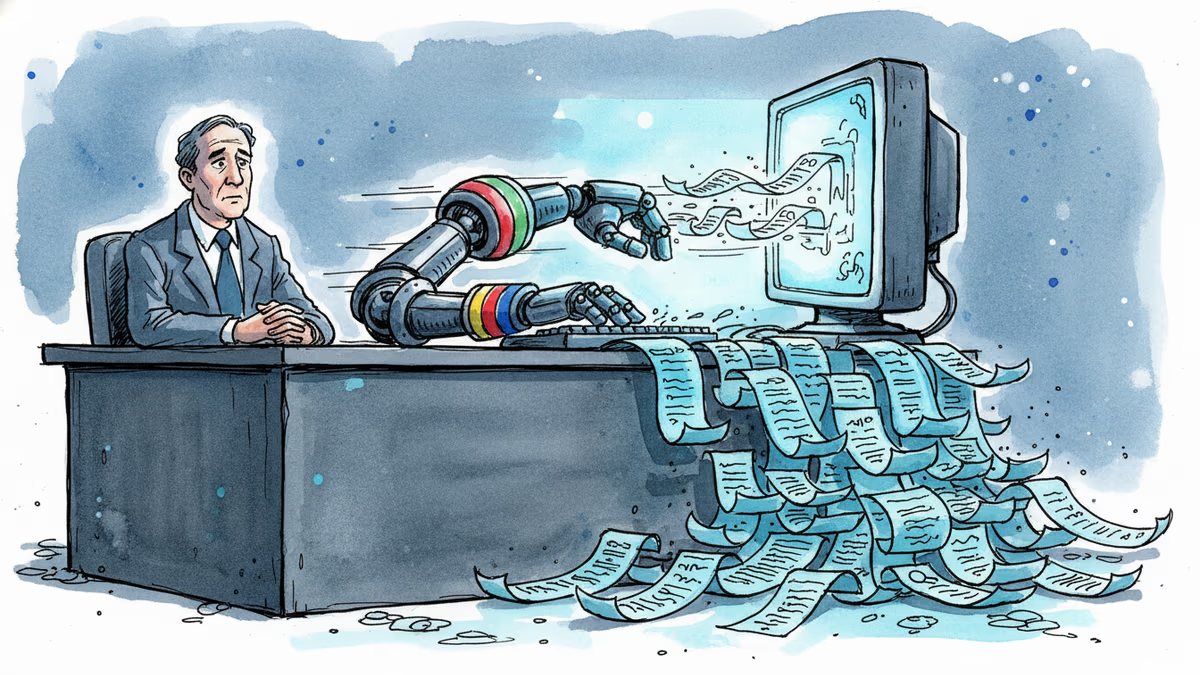
Google is building AI agents that search the web proactively, without user prompting. That's not just a product update — it's a fundamental shift in who controls the information you receive.
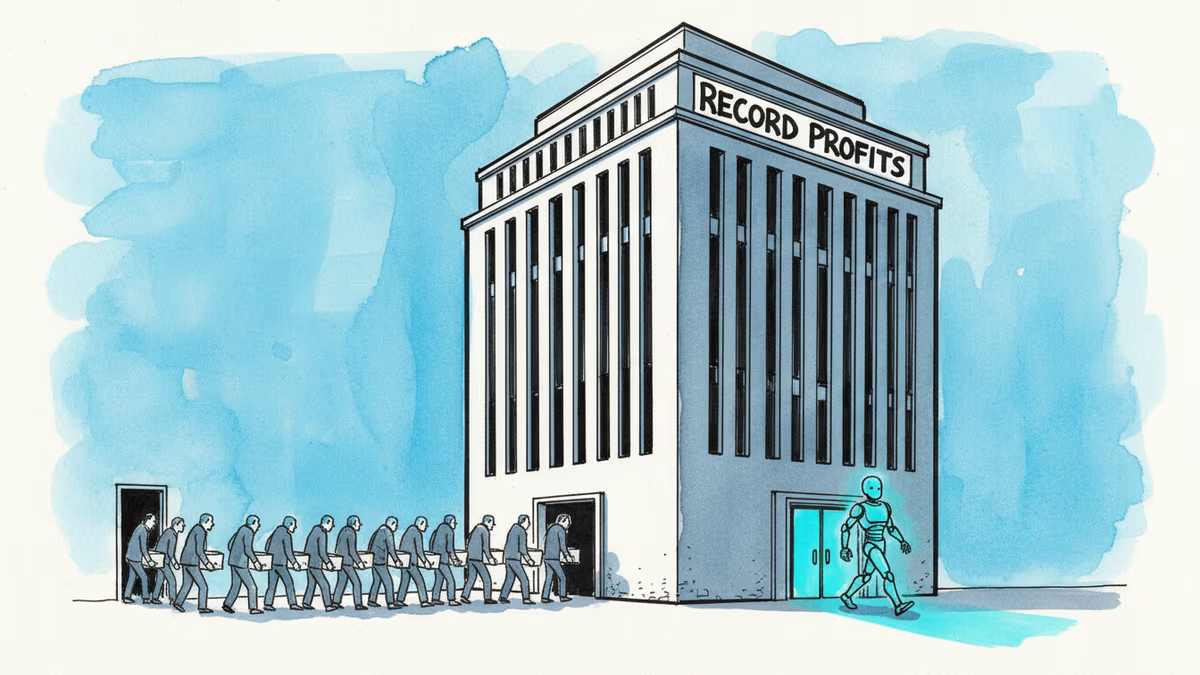
Cisco just posted record quarterly revenue and cut 4,000 jobs on the same day. It's not a contradiction — it's a template spreading across Big Tech.

Meta acquired humanoid robotics startup ARI, adding to a Big Tech arms race in physical AI. The real prize isn't a robot product — it's a new way to train intelligence.

Google is investing at least $10 billion in Anthropic, potentially up to $40 billion. With Amazon's $5B deal just days earlier, two tech giants are now backing the same AI startup — valued at $350 billion.
Google is building AI agents that search the web proactively, without user prompting. That's not just a product update — it's a fundamental shift in who controls the information you receive.
Cisco just posted record quarterly revenue and cut 4,000 jobs on the same day. It's not a contradiction — it's a template spreading across Big Tech.
Meta acquired humanoid robotics startup ARI, adding to a Big Tech arms race in physical AI. The real prize isn't a robot product — it's a new way to train intelligence.
Google is investing at least $10 billion in Anthropic, potentially up to $40 billion. With Amazon's $5B deal just days earlier, two tech giants are now backing the same AI startup — valued at $350 billion.
Thoughts
Share your thoughts on this article
Sign in to join the conversation