
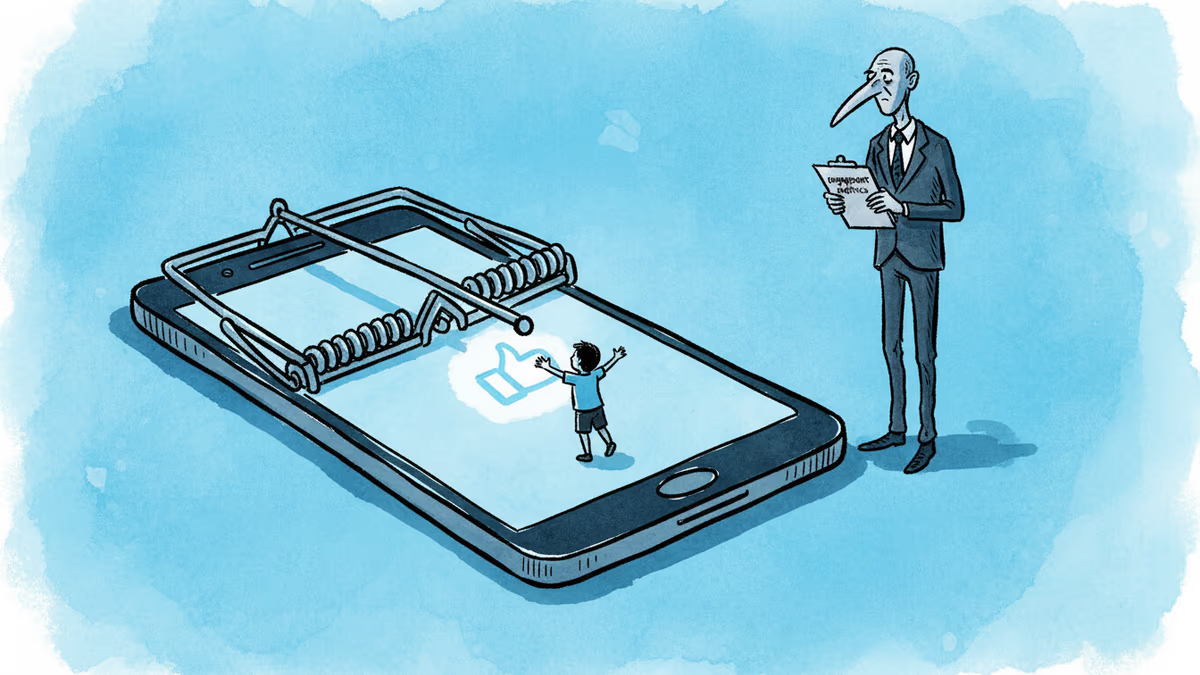
Meta Lost Twice in 48 Hours. The Floodgates Are Open.
Two court losses in two days mark a turning point for Meta's legal exposure on child safety. The tobacco playbook is working — and thousands more cases are waiting.
Two courtrooms. Two losses. Forty-eight hours.
Last week, Meta became legally liable for endangering child safety for the first time in its history — a New Mexico jury found the company had violated the state's Unfair Practices Act after a six-week trial. The fine: $375 million, calculated at the maximum $5,000 per violation. The next day, a Los Angeles jury found Meta 70% liable — and YouTube 30% — for the mental health harm suffered by a plaintiff identified as K.G.M., a 20-year-old whose case alleged the companies knowingly designed addictive products targeting minors. Combined damages: $6 million. Snap and TikTok had already settled before trial.
Two cases. Two different jurisdictions. One consistent argument — and it worked.
The Tobacco Playbook, Applied to Silicon Valley
For years, social media platforms have been effectively lawsuit-proof when it comes to the harm their content causes. Section 230 of the Communications Decency Act gave them broad immunity for what users post. Plaintiffs' attorneys couldn't get traction.
So they changed the target.
Instead of suing over content, these cases went after the design of the platforms themselves — infinite scroll, round-the-clock push notifications, algorithmic systems engineered to maximize time spent. The legal theory mirrors what brought down Big Tobacco: don't argue about what the product contains, argue about how it was built to hook you.
"They took the model that was used against the tobacco industry many years ago," said Allison Fitzpatrick, a digital media lawyer at Davis+Gilbert. "Instead of focusing on content, they focused on these addictive features — how the platform is designed. It turned out to be, in these two cases, a winning argument."
The distinction matters enormously. Content arguments run into the First Amendment. Design arguments don't.
What the Internal Documents Actually Said
The trials unsealed a trove of internal Meta documents, and they make for uncomfortable reading.

A 2019 internal research report, based on 24 one-on-one interviews with users whose behavior had been flagged as problematic — a category that applies to an estimated 12.5% of users — concluded bluntly: "The best external research indicates that Facebook's impact on people's well-being is negative."
Mark Zuckerberg himself wrote that for Facebook Live to succeed with teens, his "guess is we'll need to be very good at not notifying parents / teachers." An employee emailed Meta's Chief Product Officer with this observation: "We learned one of the things we need to optimize for is sneaking a look at your phone in the middle of Chemistry :)"
Perhaps most striking: Meta VP of Product Max Eulenstein wrote in January 2021, "No one wakes up thinking they want to maximize the number of times they open Instagram that day. But that's exactly what our product teams are trying to do."
Meta's response: many of these documents are nearly 10 years old, and the company has changed. It points to Instagram Teen Accounts, launched in 2024, which default to private settings, restrict who can tag minors, and send time-limit reminders after 60 minutes of use — adjustable for under-16s only with parental permission. "We do not goal on teen time spent today," a spokesperson said.
The company also plans to appeal both verdicts. "Reducing something as complex as teen mental health to a single cause risks leaving the many, broader issues teens face today unaddressed," Meta said in a statement.
Three Perspectives Worth Holding Simultaneously
For plaintiffs' attorneys and state AGs, this is a breakthrough moment. Fitzpatrick puts it plainly: "$6 million is nothing to Meta. But multiply that by the thousands of pending cases, and it becomes a very large number." 40 state attorneys general have filed suits similar to New Mexico's. The legal infrastructure for mass litigation is now in place.
For parents and educators, the internal documents confirm what many suspected but couldn't prove: the platforms weren't passively neutral environments. They were actively engineered to pull teenagers back in, including during school hours, including through "finstas" — fake Instagram accounts teens create specifically to hide from adults. Kelly Stonelake, a former Meta Director of Product Marketing who worked there from 2009 to 2024 and is now suing the company for alleged gender discrimination, said the unsealed evidence "demonstrates what I experienced firsthand" — that safety concerns raised internally were not taken seriously.
For policymakers, the picture is murkier. Congress has proposed multiple children's online safety bills, but critics warn that some versions would do more harm than good. Fight for the Future director Evan Greer argued that age verification laws, framed as child protection, could enable broad content censorship. And Stonelake — who once lobbied for the Kids Online Safety Act — now opposes its current version because it contains preemption clauses that would override state-level regulations. Those same clauses could, in theory, make cases like New Mexico's legally impossible in the future. "There is language in the latest version that would close the courthouse doors to school districts, to bereaved families, to states," she said. "And that's wild."
What Comes Next
The legal dam hasn't broken yet — but it's cracked. Thousands of individual cases remain pending. State AGs are coordinating. And the design-over-content legal theory has now survived two jury trials.
The $375 million New Mexico fine and the $6 million LA award are, in isolation, manageable for a company of Meta's scale. But they set precedent. And precedent, in American litigation, compounds.
The harder question is legislative. If Congress passes a federal child safety law with preemption clauses, it could simultaneously claim to protect children while stripping states and families of the very legal tools that just worked in court. Stonelake's framing: "We need folks to come to the table with solutions, instead of what they're doing now, which is just telling a different story to both sides of the aisle to rile them up."
Authors
Related Articles
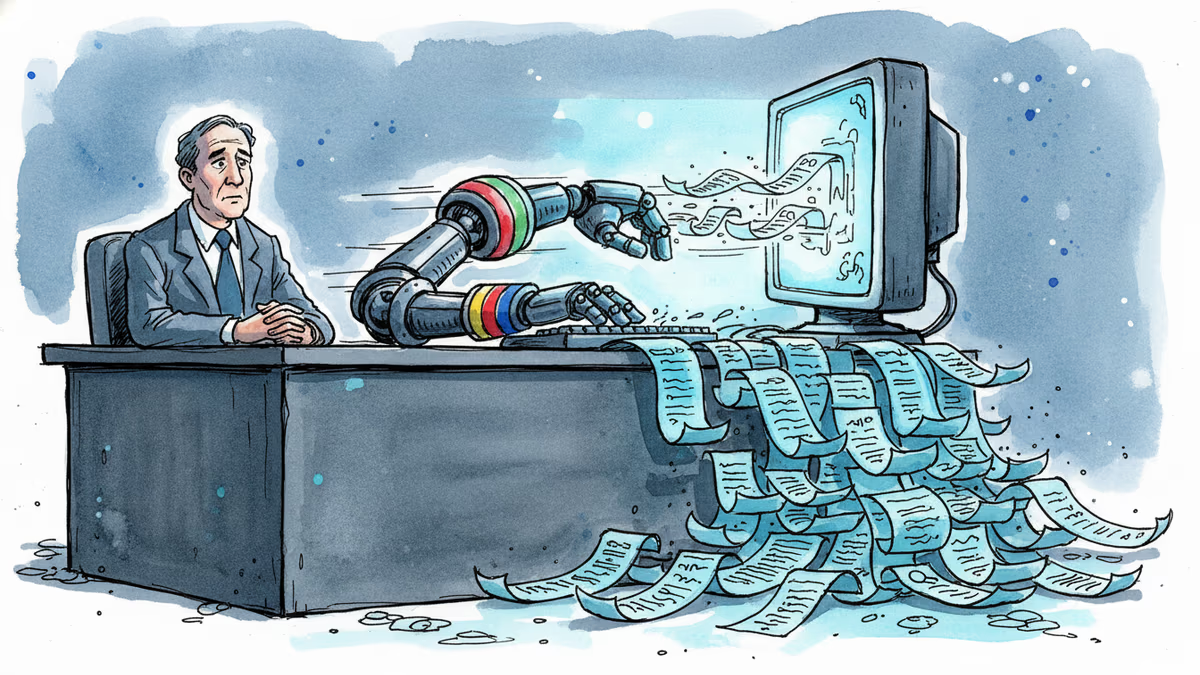
Google is building AI agents that search the web proactively, without user prompting. That's not just a product update — it's a fundamental shift in who controls the information you receive.
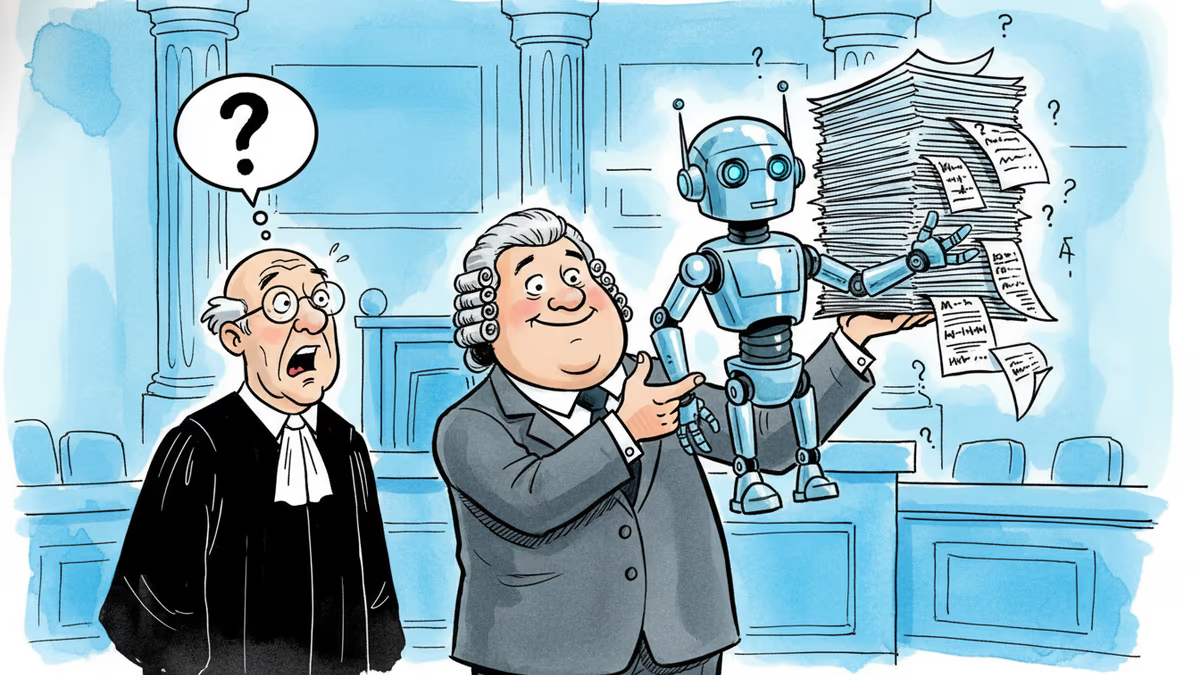
A law firm marketing itself on AI-powered legal success submitted fake citations in a federal appeal. Now its lawyers face sanctions — and the broader AI legal industry faces a credibility crisis.
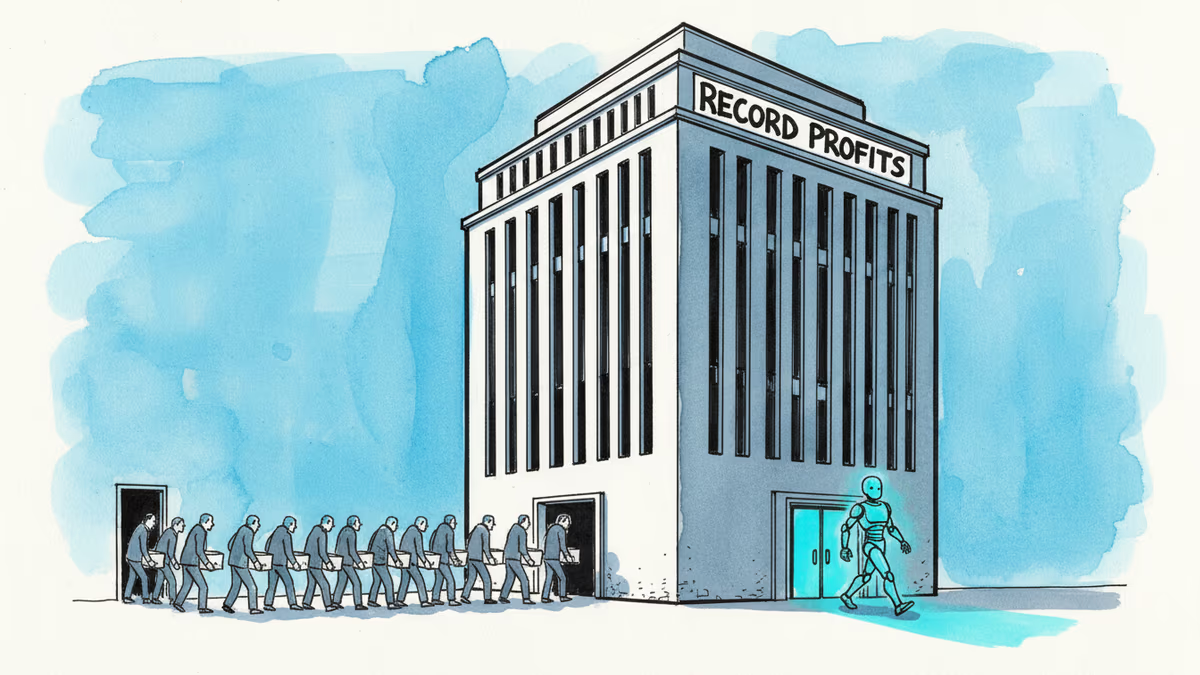
Cisco just posted record quarterly revenue and cut 4,000 jobs on the same day. It's not a contradiction — it's a template spreading across Big Tech.
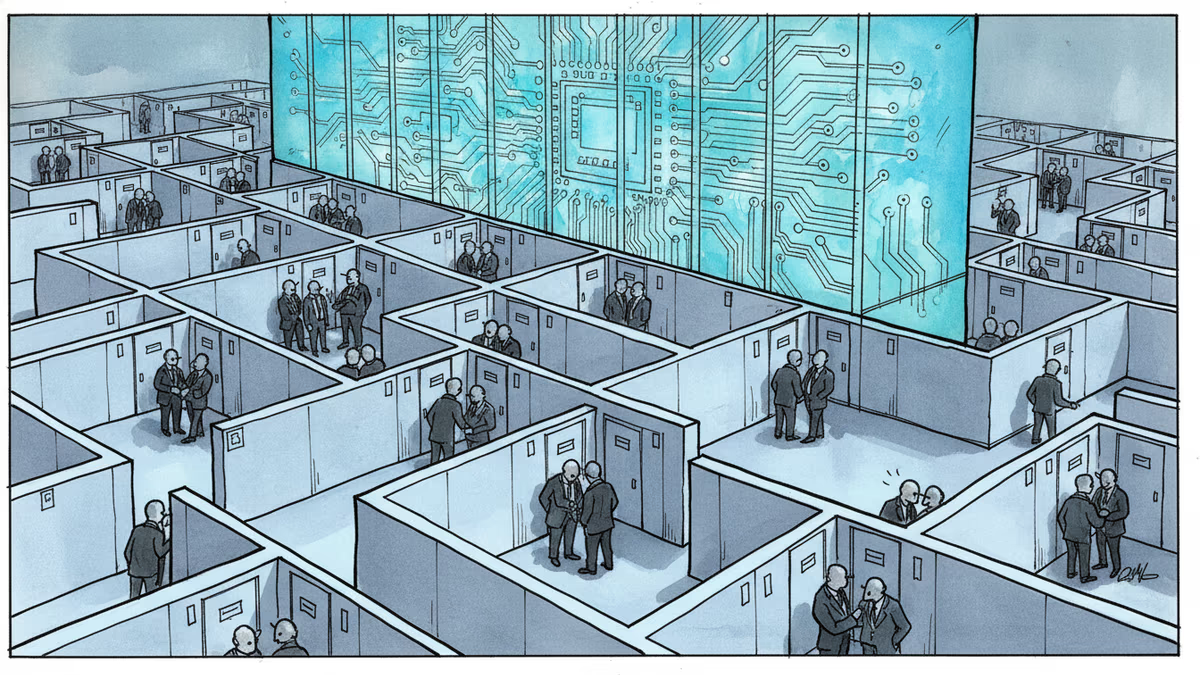
Behind every congressional hearing on Big Tech, there's a quieter room where the real rules get negotiated. As AI regulation, antitrust battles, and privacy law converge on Capitol Hill in 2026, the stakes have never been higher.
Google is building AI agents that search the web proactively, without user prompting. That's not just a product update — it's a fundamental shift in who controls the information you receive.
A law firm marketing itself on AI-powered legal success submitted fake citations in a federal appeal. Now its lawyers face sanctions — and the broader AI legal industry faces a credibility crisis.
Cisco just posted record quarterly revenue and cut 4,000 jobs on the same day. It's not a contradiction — it's a template spreading across Big Tech.
Behind every congressional hearing on Big Tech, there's a quieter room where the real rules get negotiated. As AI regulation, antitrust battles, and privacy law converge on Capitol Hill in 2026, the stakes have never been higher.
Thoughts
Share your thoughts on this article
Sign in to join the conversation