
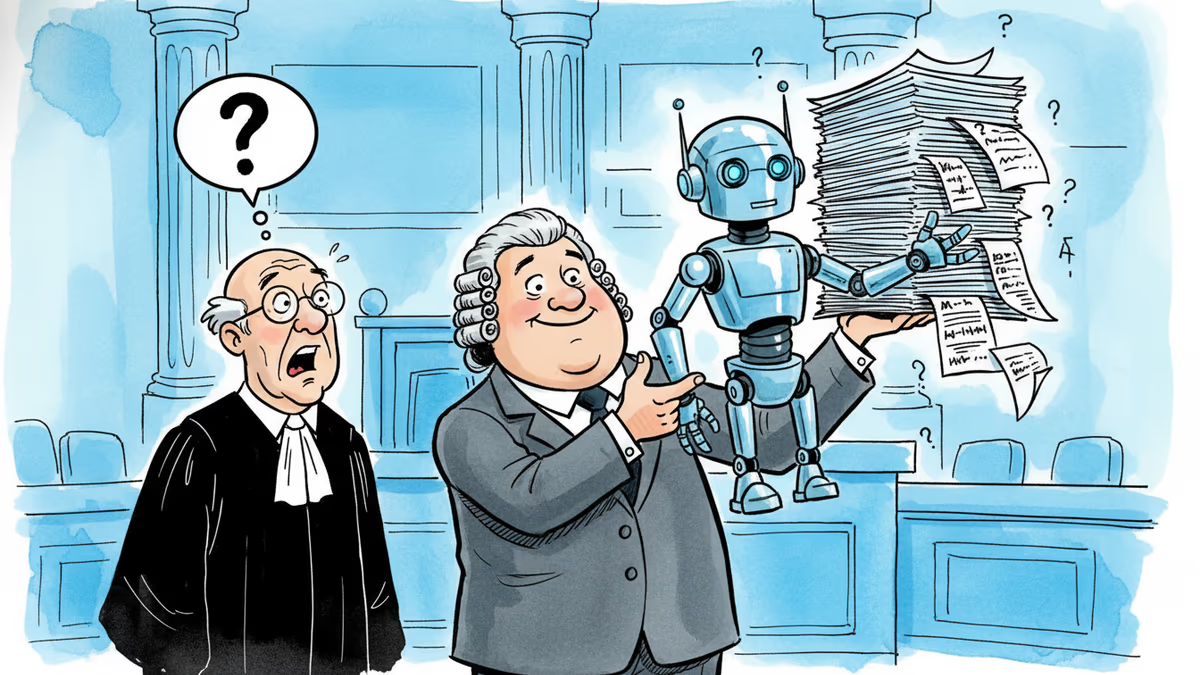
The AI Law Firm That Cited Cases That Don't Exist
A law firm marketing itself on AI-powered legal success submitted fake citations in a federal appeal. Now its lawyers face sanctions — and the broader AI legal industry faces a credibility crisis.
Three years after the legal world's first high-profile AI citation scandal, a law firm that built its entire brand on artificial intelligence just made the exact same mistake.
The Backstory: A Facebook Group and a Defamation Claim
The case started in a Chicago Facebook group called "Are We Dating the Same Guy" — one of dozens of similar communities where women share experiences about men they've dated, functioning as an informal peer-warning network in the age of dating apps.
A man named Nikko D'Ambrosio found himself the subject of a post in that group. His response: sue more than two dozen women for defamation and drag Meta into it too, arguing the platform had algorithmically amplified the post to profit from its "entertainment value." The district court dismissed the case with prejudice — meaning it found no conceivable amendment could save the complaint. That's a hard stop. Most litigants accept the signal.
D'Ambrosio appealed anyway.
Enter the AI Law Firm
For the appeal, he turned to MarcTrent.AI, a firm whose website promises to "uncover legal opportunities traditional firms miss" and boost clients' legal success rates by 35 percent through predictive modeling. AI isn't a tool here — it's the entire sales pitch.
What happened next is now under judicial review. Opposing counsel and the court identified citations in the firm's filings that appear to reference cases that do not exist. The legal term is hallucination — the tendency of large language models to generate plausible-sounding but entirely fabricated information. In a medical chart or a chatbot conversation, hallucination is a problem. In a federal court brief, it's potentially sanctionable misconduct.
The court is now weighing sanctions against the attorneys involved.

We've Seen This Before
In 2023, New York attorney Steven Schwartz submitted ChatGPT-generated fake citations in a personal injury case and was fined $5,000. The incident became a global cautionary tale. Law schools updated curricula. Bar associations issued guidance. Courts in multiple jurisdictions began requiring attorneys to certify whether AI tools were used in filings.
That was three years ago. The lesson, apparently, did not reach everyone.
What makes this iteration worse isn't ignorance — it's the context. Schwartz was a traditional lawyer who misused a general-purpose tool. MarcTrent.AI built its market identity around AI superiority. The gap between the marketing claim and the courtroom reality is not a footnote. It's the story.
Three Ways to Read This
Depending on where you sit, this case looks very different.
For the women in the group, the stakes were never abstract. The original lawsuit — now revealed to have been supported by fabricated legal authority — was structured in a way that could have forced the identification of anonymous members. That's not a procedural quirk. It's a potential safety issue for people who joined a private community specifically to share sensitive information.
For LegalTech investors and startups, the timing is uncomfortable. The AI legal services market has grown rapidly on the promise of democratizing access to law — cheaper representation, faster research, better outcomes for people who can't afford BigLaw rates. Every hallucination scandal chips away at that premise and hands ammunition to incumbents who argue that human judgment cannot be automated away.
For traditional law firms, the reaction is more complicated than simple schadenfreude. They face genuine pressure to integrate AI or lose clients to cheaper alternatives. But cases like this create a convenient counter-narrative: speed without verification isn't efficiency, it's liability.
What the Courts Are Actually Deciding
The sanctions question matters beyond this case. Courts are effectively setting the standard for what "reasonable AI use" looks like in legal practice. If sanctions are imposed here, the precedent will likely require attorneys using AI research tools to independently verify every citation before filing — a requirement that exists for human research too, but one that many AI-assisted workflows currently skip.
Some jurisdictions are moving toward mandatory AI disclosure rules. Others are waiting to see how existing professional responsibility frameworks apply. The legal profession is, characteristically, moving carefully — but the market is not.
This content is AI-generated based on source articles. While we strive for accuracy, errors may occur. We recommend verifying with the original source.
Related Articles
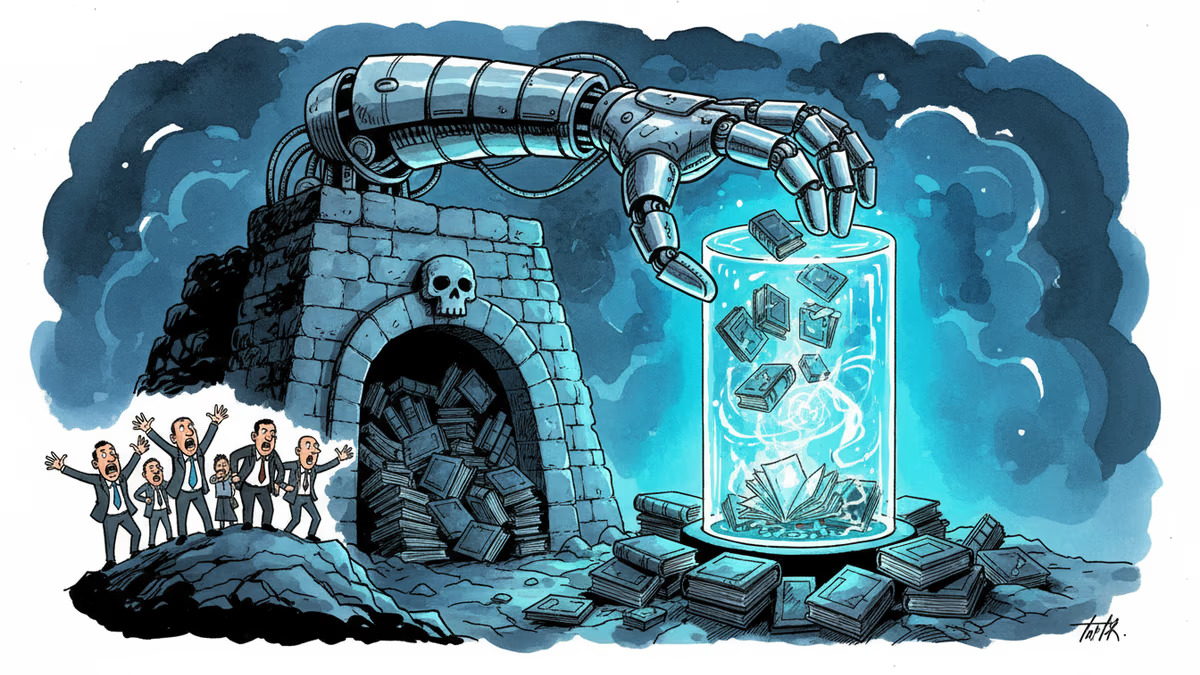
Five major publishers and author Scott Turow have filed a class action lawsuit against Meta, alleging the company used illegal pirate sites like LibGen to train its Llama AI models without permission.
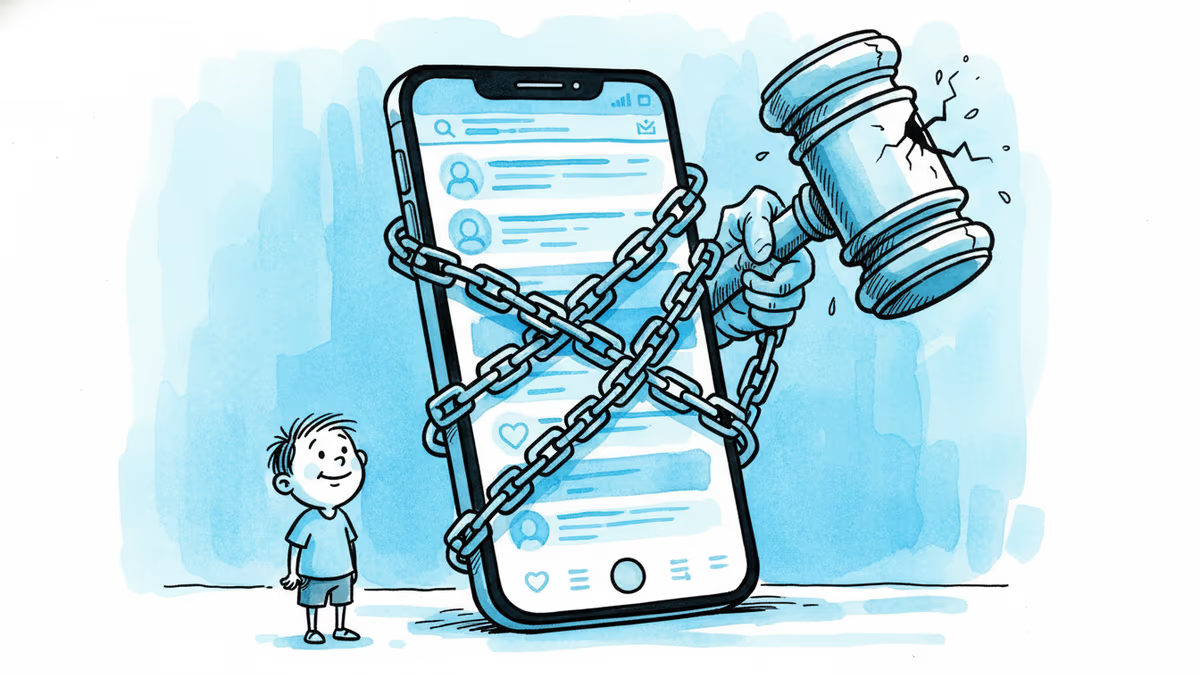
New Mexico already won $375 million from Meta. Now it wants something harder to give: a court order forcing Facebook, Instagram, and WhatsApp to redesign themselves. A three-week trial starts Monday.
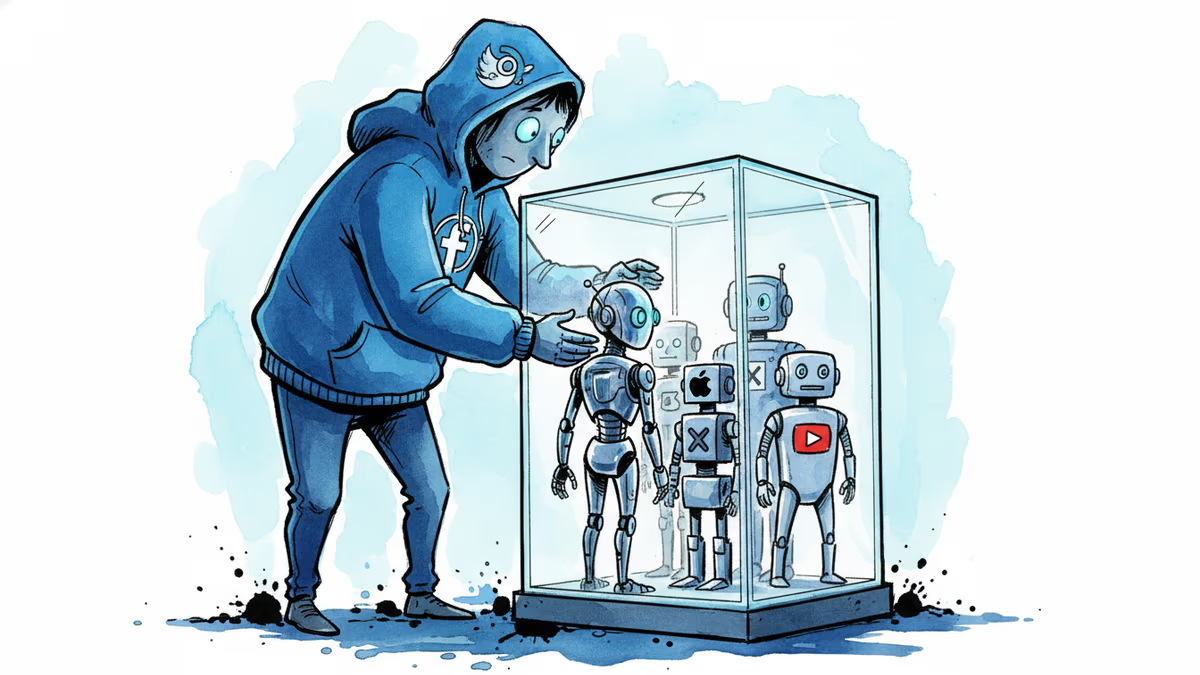
Meta acquired humanoid robotics startup ARI, adding to a Big Tech arms race in physical AI. The real prize isn't a robot product — it's a new way to train intelligence.
Two court losses in two days mark a turning point for Meta's legal exposure on child safety. The tobacco playbook is working — and thousands more cases are waiting.
Five major publishers and author Scott Turow have filed a class action lawsuit against Meta, alleging the company used illegal pirate sites like LibGen to train its Llama AI models without permission.
New Mexico already won $375 million from Meta. Now it wants something harder to give: a court order forcing Facebook, Instagram, and WhatsApp to redesign themselves. A three-week trial starts Monday.
Meta acquired humanoid robotics startup ARI, adding to a Big Tech arms race in physical AI. The real prize isn't a robot product — it's a new way to train intelligence.
Two court losses in two days mark a turning point for Meta's legal exposure on child safety. The tobacco playbook is working — and thousands more cases are waiting.
Thoughts
Share your thoughts on this article
Sign in to join the conversation