
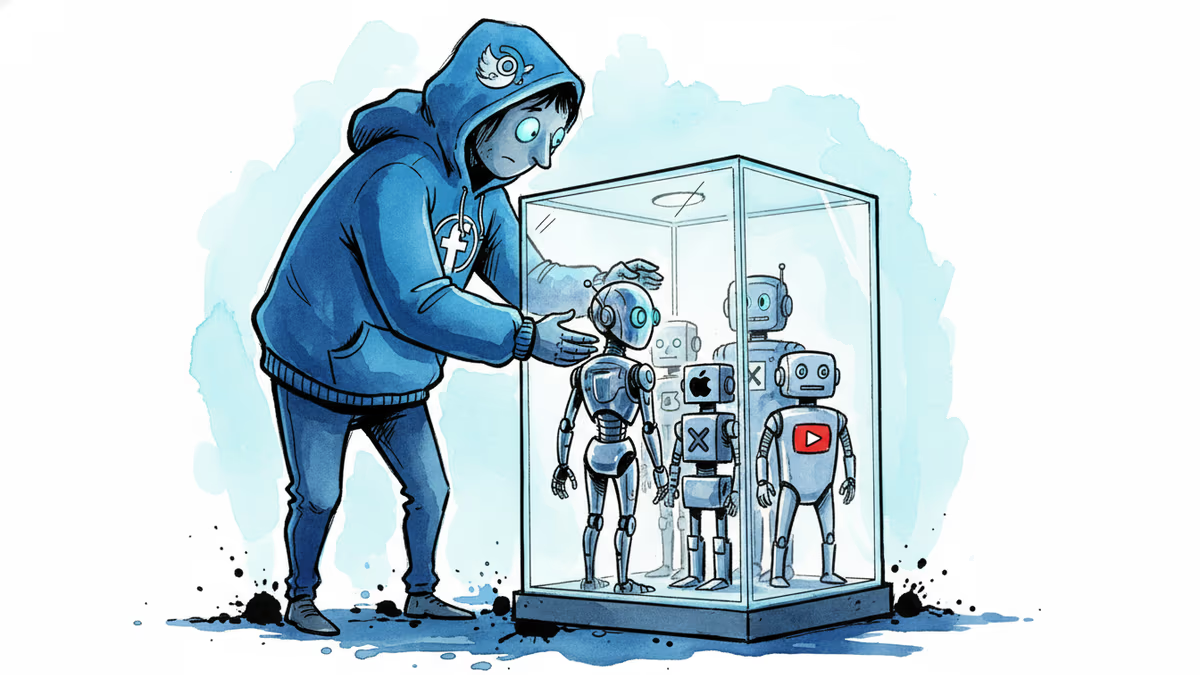
Meta's Robot Bet Is Really a Bet on AGI
Meta acquired humanoid robotics startup ARI, adding to a Big Tech arms race in physical AI. The real prize isn't a robot product — it's a new way to train intelligence.
Last month, Amazon bought a kid-size humanoid robotics startup called Fauna Robotics. This week, Meta bought Fauna's co-founder's next company. The race isn't just heating up — it's getting personal.
What Actually Happened
On April 30, Meta confirmed it had acquired Assured Robot Intelligence (ARI), a startup building foundation models for humanoid robots. The price was undisclosed. ARI's technology was designed to let robots understand, predict, and adapt to human behavior in complex, real-world environments — think household chores, not factory floors.
The team behind it is notable. Co-founder Xiaolong Wang is a former Nvidia researcher and ex-associate professor at UC San Diego. Co-founder Lerrel Pinto previously taught at NYU, co-founded Fauna Robotics — the startup Amazon just snapped up — and has won a string of prestigious research awards. Both will now join Meta's Superintelligence Labs research division.
Meta's statement was direct: the team "will bring deep expertise in how we can design our models and frontier capabilities for robot control and self-learning to whole-body humanoid control."
This didn't come from nowhere. A leaked internal memo from roughly a year ago revealed Meta had been quietly planning a consumer humanoid robot, including both AI models and hardware.
The Deeper Logic: Why a Social Media Company Wants a Body
The acquisition looks strange until you understand what Meta is actually buying — and it isn't a robot product.

A growing number of AI researchers argue that the path to AGI (artificial general intelligence — the theoretical point where AI matches or exceeds human-level reasoning across all domains) runs through the physical world. Text and image data can teach a model to describe gravity. It can't teach it to feel what happens when a glass tips over. Robots that learn by doing — stumbling, correcting, adapting — may develop a fundamentally different kind of intelligence than models trained on static datasets.
Meta acquiring ARI may be less about selling robots and more about building a new training ground. The physical world as a data source.
$38 Billion or $5 Trillion? Both, Somehow
The gap between analyst forecasts tells you everything about where this market stands. Goldman Sachs projects the humanoid robotics market will reach $38 billion by 2035. Morgan Stanley sees $5 trillion by 2050. That's a 130x spread — not a rounding error, but a reflection of genuine uncertainty about whether this technology will find its footing at all.
And yet Amazon, Meta, Tesla, Google, and others are all moving simultaneously. When capital floods an uncertain market this fast, it's often less about conviction and more about the cost of being wrong. Missing the next computing platform is an existential risk for a Big Tech company. So they buy options.
For researchers and engineers, the consolidation has a different flavor. Pinto built Fauna, Amazon bought it. He then co-founded ARI, and Meta bought that too — within months of each other. The talent pool in humanoid robotics is small enough that the same names keep appearing. That scarcity will only intensify as acquisition pace accelerates.
Who's Watching Nervously
For investors, the undisclosed price tags on deals like this are frustrating but telling — Meta didn't want to set a public benchmark for what frontier robotics talent costs. For independent robotics startups, the message is double-edged: your work is valuable enough to acquire, but the window to build independently may be closing.
For regulators, particularly in the EU where Meta already faces significant scrutiny, a move into physical AI and consumer robotics opens entirely new questions about liability, data collection in the home, and labor displacement — none of which existing AI governance frameworks are built to handle.
And for workers in logistics, domestic services, and light manufacturing, the timeline just got a little less abstract.
This content is AI-generated based on source articles. While we strive for accuracy, errors may occur. We recommend verifying with the original source.
Related Articles
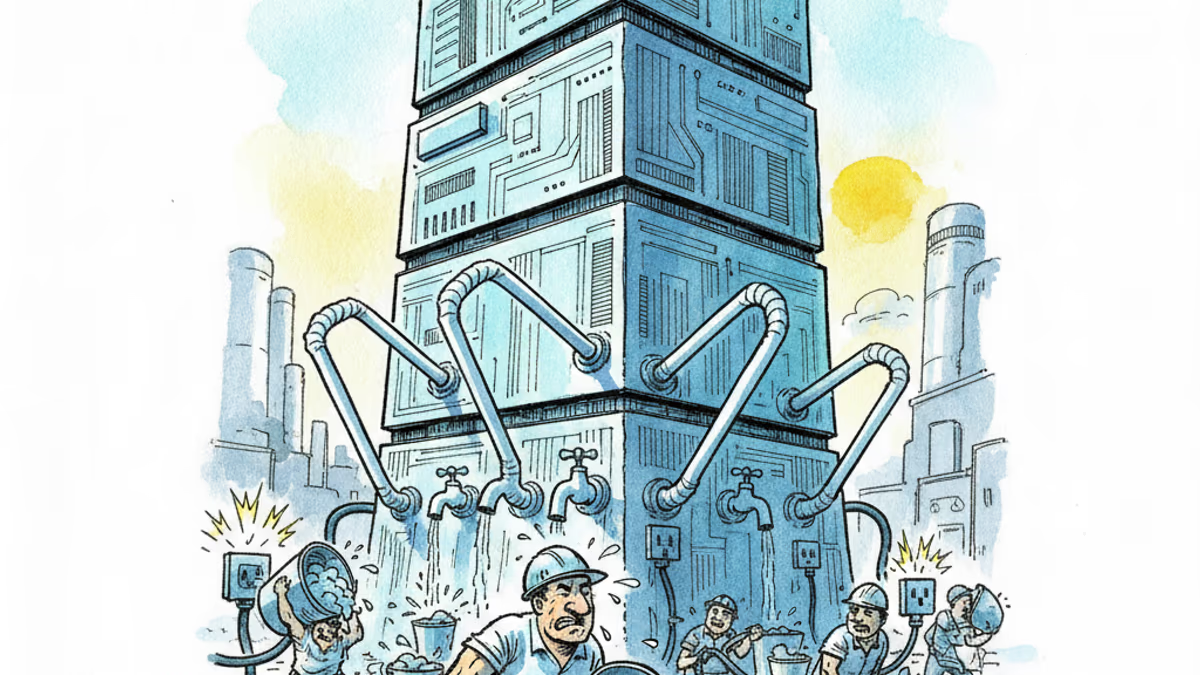
Samsung and SK unveiled a chip and AI investment package worth thousands of trillions of won on June 29. The headline number swings wildly by outlet, but the real contest isn't capital — it's water and power.
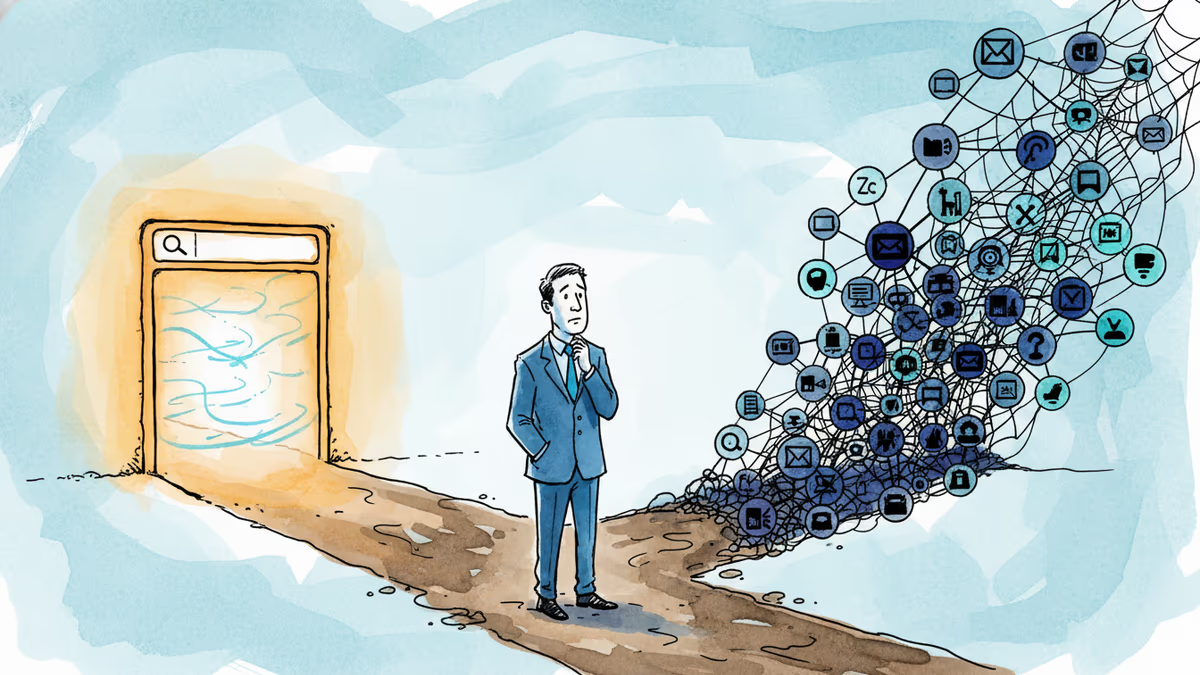
In a post-Google I/O interview, Sundar Pichai acknowledged flawed search results, real AI anxiety, and an AGI timeline that makes the label irrelevant. Here's what he said — and what it means.
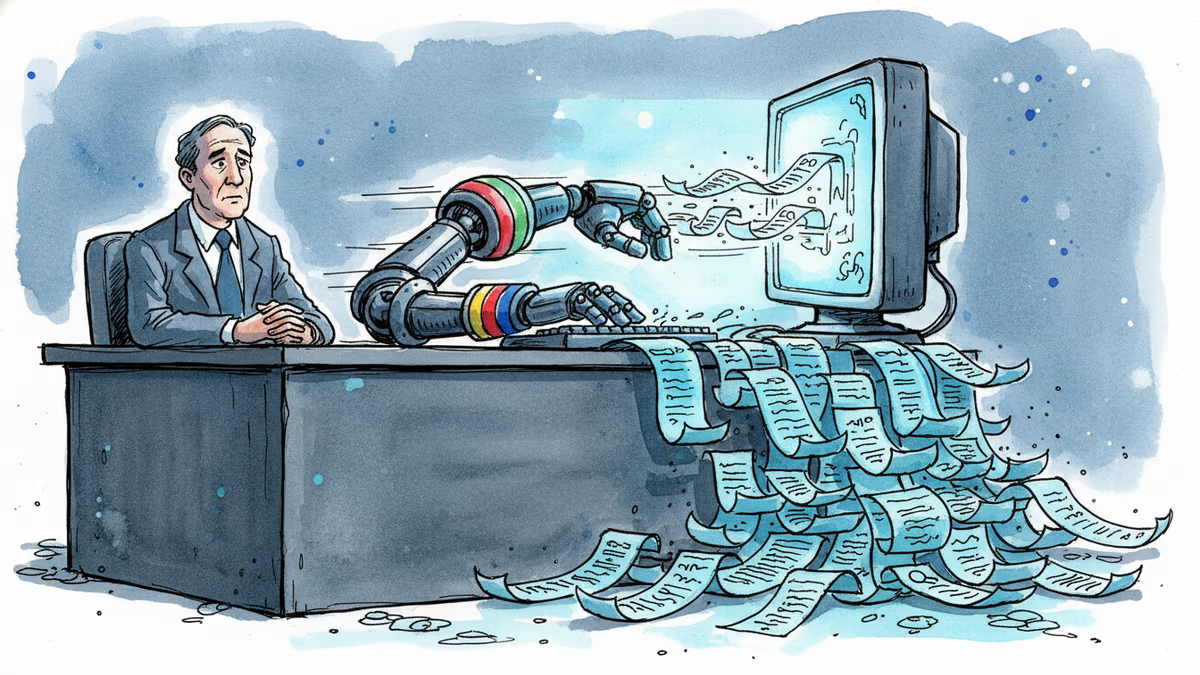
Google is building AI agents that search the web proactively, without user prompting. That's not just a product update — it's a fundamental shift in who controls the information you receive.
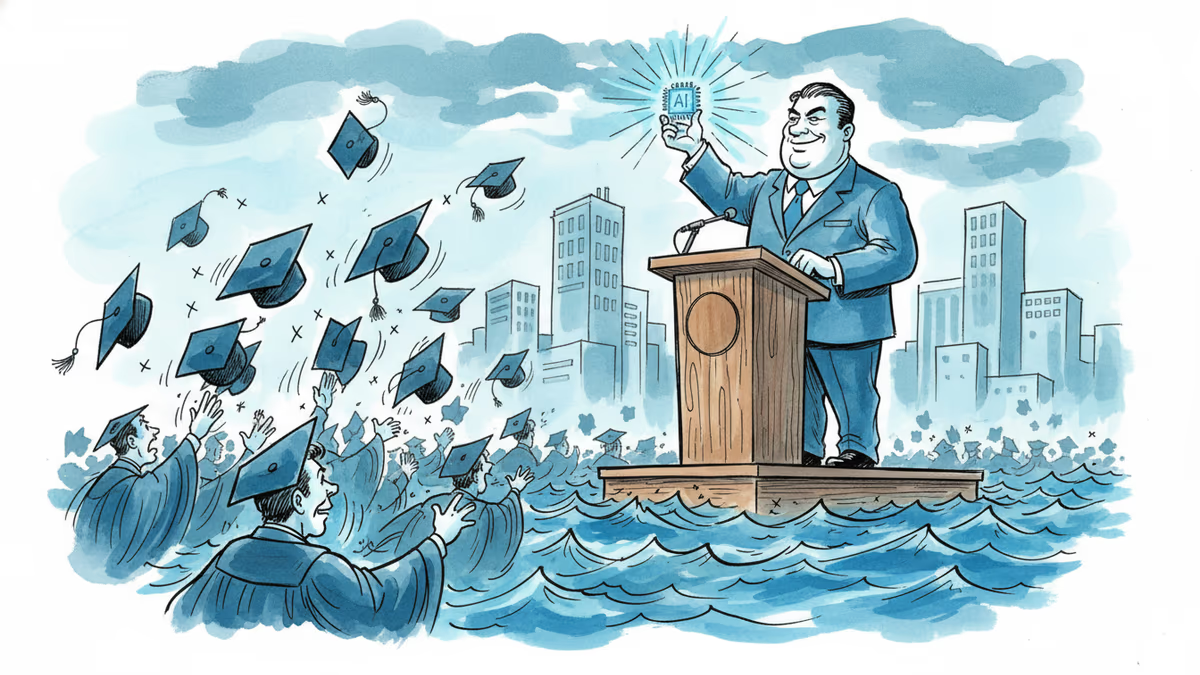
Viral videos show 2026 graduates jeering executives who praise AI at commencement ceremonies. It's not just rudeness — it's a signal about who pays for technological optimism.
Samsung and SK unveiled a chip and AI investment package worth thousands of trillions of won on June 29. The headline number swings wildly by outlet, but the real contest isn't capital — it's water and power.
In a post-Google I/O interview, Sundar Pichai acknowledged flawed search results, real AI anxiety, and an AGI timeline that makes the label irrelevant. Here's what he said — and what it means.
Google is building AI agents that search the web proactively, without user prompting. That's not just a product update — it's a fundamental shift in who controls the information you receive.
Viral videos show 2026 graduates jeering executives who praise AI at commencement ceremonies. It's not just rudeness — it's a signal about who pays for technological optimism.
Thoughts
Share your thoughts on this article
Sign in to join the conversation