
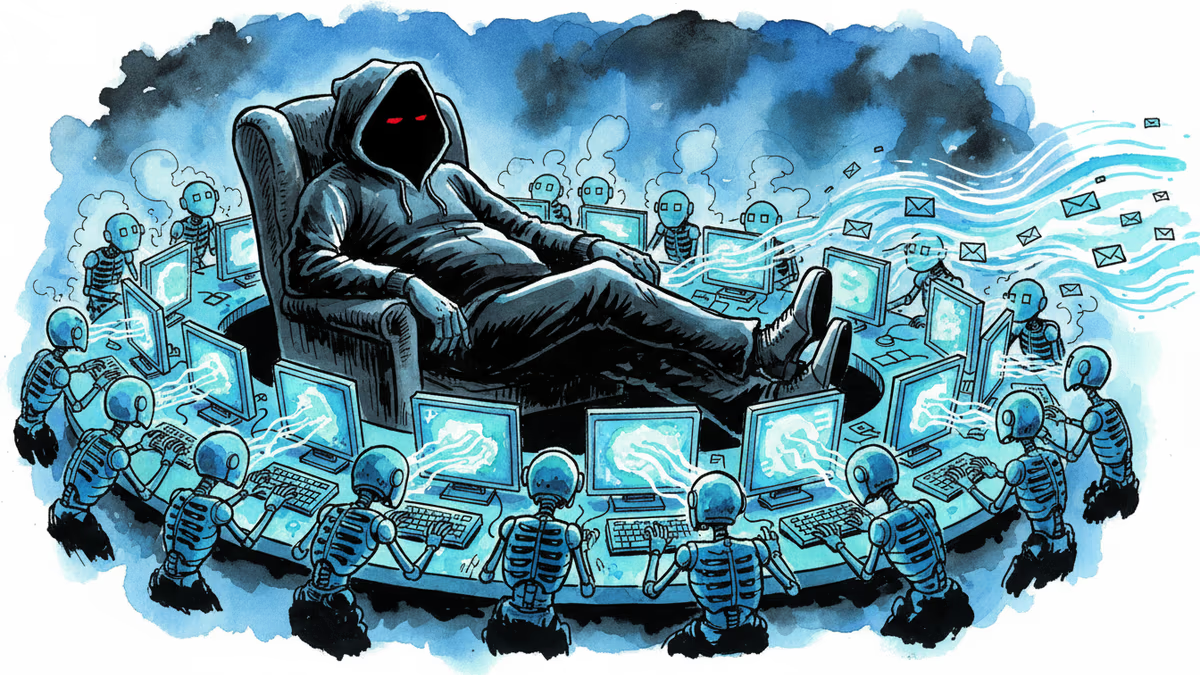
AI Didn't Just Help Scammers. It Hired Them Out.
From hyper-personalized phishing to deepfake video calls, AI has turbocharged cybercrime. Meanwhile, hospitals adopt AI tools whose patient benefits remain unproven. What does this mean for trust?
The scammer clocked out. The AI clocked in.
Since ChatGPT launched in late 2022, one of the quietest but most consequential shifts in technology has unfolded not in Silicon Valley boardrooms—but in cybercriminal forums. The grammatical errors, the awkward phrasing, the tell-tale signs of a phishing email? They're disappearing. Not because scammers got smarter. Because they got better tools.
The Crime Wave That Scales Itself
According to MIT Technology Review's latest reporting, cybercriminals have moved well beyond using large language models to polish their emails. The expansion is happening in three directions.
First: personalized phishing at industrial scale. Where attackers once blasted identical messages to thousands of targets, AI now lets them scrape social media profiles, email patterns, and professional histories to auto-generate messages that feel eerily personal. Your name, your recent purchase, your boss's writing style—all synthesized in seconds, at volume.
Second: hyperrealistic deepfakes. The cost of cloning a voice or a face has collapsed. In early 2024, a Hong Kong employee was tricked into wiring approximately $25 million after a deepfake video call appeared to show their CFO issuing the instruction. That incident is no longer an outlier—it's a template.
Third: automated vulnerability scanning. Tasks that once took a skilled hacker days—probing enterprise systems for security gaps—now take hours. AI doesn't sleep, doesn't take breaks, and doesn't get bored.
What makes this especially difficult to contain is the distribution model. On dark web marketplaces, malicious AI tools are already available as subscription services—crime-as-a-service, with pricing tiers. The barrier to entry for sophisticated cyberattacks is falling fast.
The Hospital AI Problem Nobody's Talking About

On the same day this cybercrime story broke, MIT Technology Review raised a quieter but equally important question: Is medical AI actually helping patients?
Doctors are using AI for clinical notetaking. Algorithms are combing through patient records to flag high-risk individuals. AI tools are reading X-rays and interpreting diagnostic scans. A growing body of studies confirms these tools can be accurate.
But accuracy and impact are not the same thing.
The critical question—does AI use in clinical settings actually improve patient health outcomes?—doesn't yet have a solid answer. We know AI saves doctors time. We don't know whether that saved time translates into better care. The gap between what AI can do in a controlled study and what it delivers inside a busy, under-resourced hospital system is significant, and largely unmeasured.
Hospital administrators eager to cut costs and streamline workflows are racing ahead. Researchers and clinicians urging rigorous outcome studies are struggling to keep pace with deployment.
Who's Winning, Who's Worried, Who's Waiting
These two stories—AI-powered crime and AI-assisted medicine—look unrelated on the surface. But they're asking the same underlying question: When AI proves capable, who controls what happens next?
Cybersecurity professionals will tell you the answer to AI attacks is AI defense. Threat detection systems are already being retrained in real time. But this framing creates an uncomfortable dynamic: an arms race in which humans increasingly become spectators to machine-versus-machine conflict, with our data and money as the prize.
Consumers and everyday users are absorbing a different kind of cost—the erosion of trust. A phone call from a family member, a video from your CEO, an email from your bank: none of these can be taken at face value anymore. The psychological tax of living in a world where everything might be synthetic is real, even if it's hard to quantify.
Regulators are moving, but unevenly. Norway is set to enforce new age restrictions on children's social media access. The Philippines may follow. In the US, debates about AI in schools are intensifying. The EU's AI Act has begun taking effect, but enforcement of AI-enabled fraud remains patchwork across jurisdictions.
Healthcare investors and hospital systems face a different calculus. Deploying AI tools that demonstrably save physician time is a compelling pitch—even without long-term outcome data. The risk is building an entire layer of clinical infrastructure on tools whose patient-level benefits are assumed rather than proven.
Authors
Related Articles
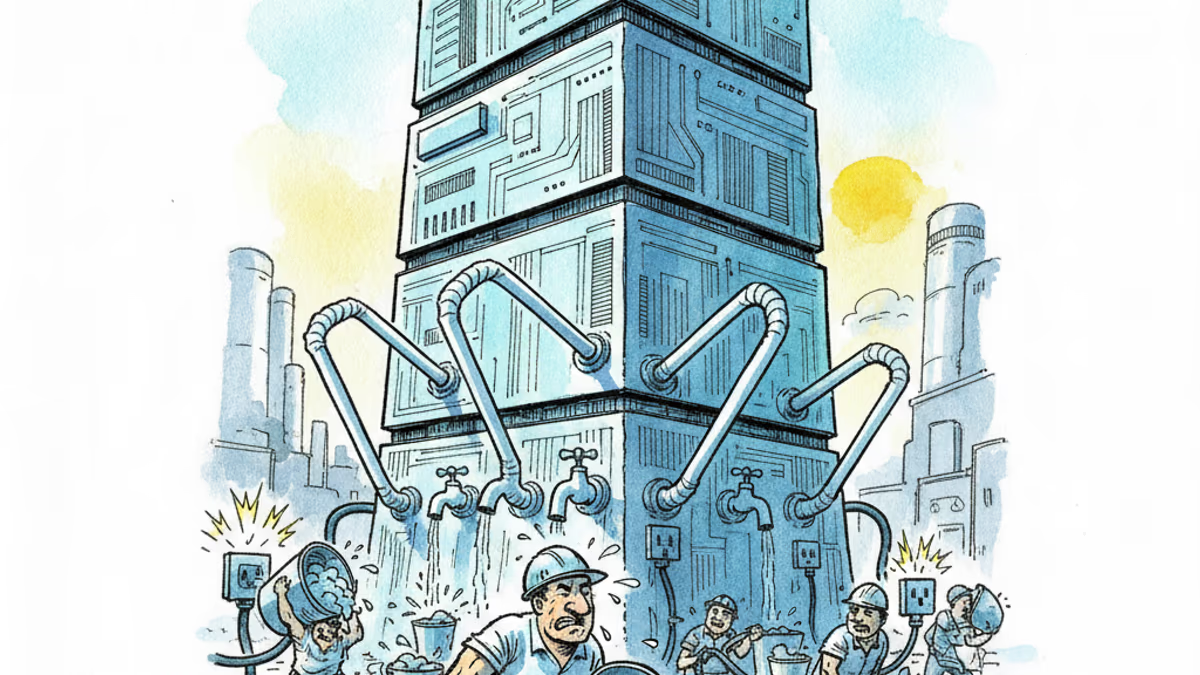
Samsung and SK unveiled a chip and AI investment package worth thousands of trillions of won on June 29. The headline number swings wildly by outlet, but the real contest isn't capital — it's water and power.
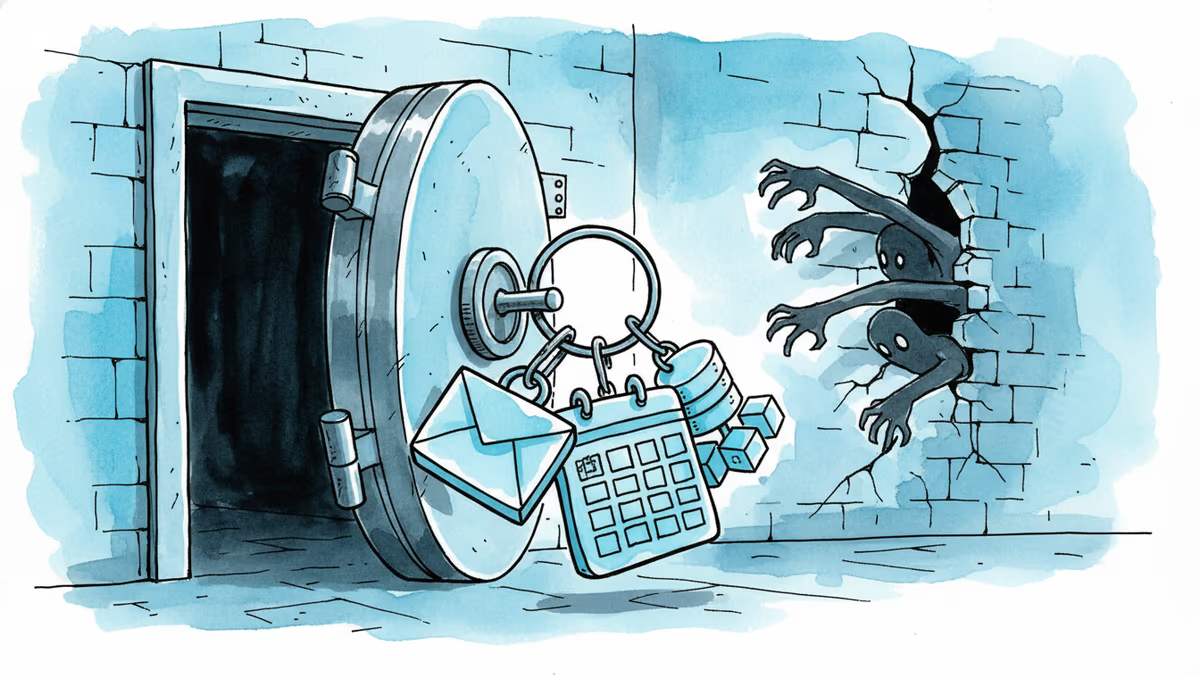
A critical vulnerability in Starlette—downloaded 325 million times per week—puts millions of AI agent servers at risk, exposing stored credentials for email, databases, and third-party services.

Viral videos show 2026 graduates jeering executives who praise AI at commencement ceremonies. It's not just rudeness — it's a signal about who pays for technological optimism.
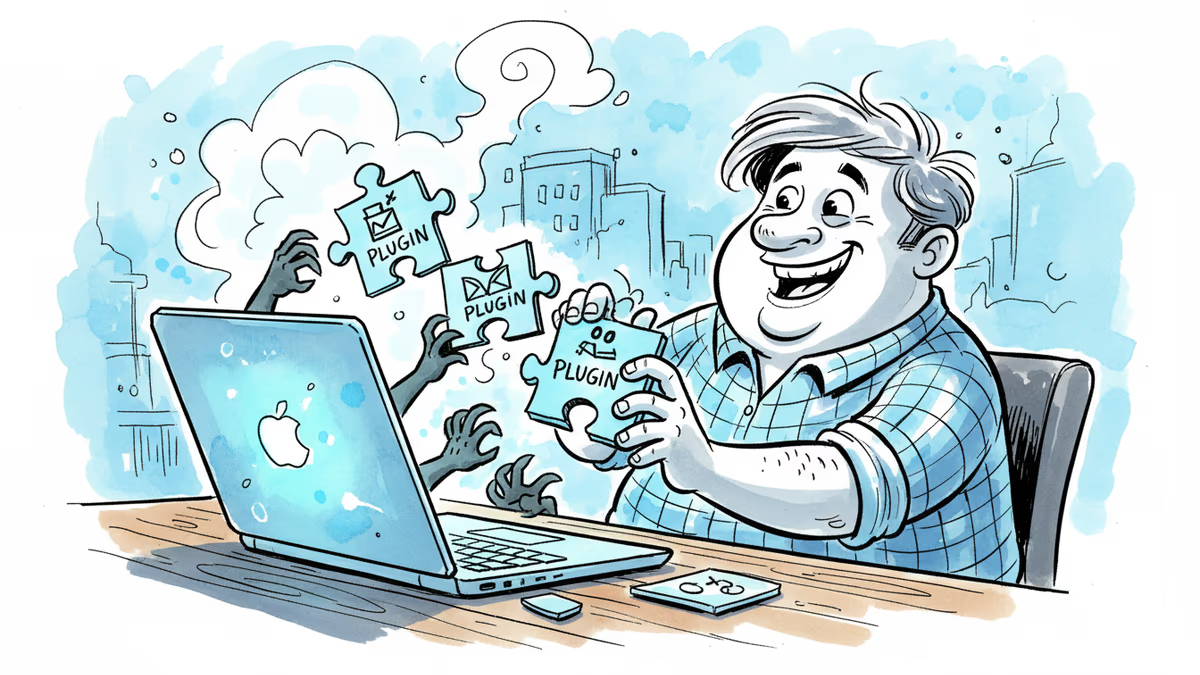
GitHub confirmed hackers stole data from 3,800 internal repositories via a poisoned VS Code extension. Here's why developer tools are now the most dangerous attack surface in tech.
Samsung and SK unveiled a chip and AI investment package worth thousands of trillions of won on June 29. The headline number swings wildly by outlet, but the real contest isn't capital — it's water and power.
A critical vulnerability in Starlette—downloaded 325 million times per week—puts millions of AI agent servers at risk, exposing stored credentials for email, databases, and third-party services.
Viral videos show 2026 graduates jeering executives who praise AI at commencement ceremonies. It's not just rudeness — it's a signal about who pays for technological optimism.
GitHub confirmed hackers stole data from 3,800 internal repositories via a poisoned VS Code extension. Here's why developer tools are now the most dangerous attack surface in tech.
Thoughts
Share your thoughts on this article
Sign in to join the conversation