

Microsoft Blinks: Windows Update Is Finally Yours to Control
Microsoft is letting Windows users delay updates indefinitely — 35 days at a time, as many times as they want. A long-overdue fix, or a security risk hiding in plain sight?
The Most Complained-About Feature in Windows Is Getting Fixed
You're mid-presentation. Or mid-raid. Or just mid-thought. Then Windows does what Windows does: it decides right now is the perfect time to restart and install updates.
For millions of users, this has been less a quirk and more a running joke — one that occasionally costs real money and real time. Microsoft is now, finally, doing something about it.
On Friday, Microsoft announced it is rolling out a significant change to Windows Update for users on its Dev and Experimental Windows Insider channels. The headline feature: users will be able to pause updates for up to 35 days at a time, with no limit on how many times they can extend that pause. In practical terms, that's indefinite deferral — on the user's terms, not Microsoft's.
The announcement is part of a broader set of improvements Microsoft flagged last month, when the company publicly acknowledged that disruptive updates were among the top complaints from Windows 11 users. Friday's blog post was the first concrete delivery on that promise.
Why This Took So Long
The cynical read: Microsoft has always had a business reason to push updates fast. Every unpatched machine is a liability — not just for the user, but for the broader network. The WannaCry ransomware attack in 2017 exploited a vulnerability that had already been patched; the machines that got hit simply hadn't updated yet. With roughly 1.5 billion active Windows devices worldwide, the company has long argued that frictionless, automatic updates are a public good, not just a product feature.
That argument isn't wrong. But it also conveniently aligned with Microsoft's interest in maintaining tight control over its software ecosystem. Automatic updates mean faster telemetry, faster feature rollouts, and a more homogeneous install base — all of which benefit the company as much as the user.

The result has been a decade-long tension: Microsoft optimizing for fleet-wide security at the expense of individual user autonomy. This week's announcement is a visible shift in that balance.
Who Actually Wins Here
For gamers and creative professionals, the change is straightforward good news. Competitive gaming, video editing, and live streaming are all sensitive to unexpected interruptions. The ability to lock your system into a stable state before a tournament or a client call has real, tangible value.
For IT administrators at small businesses, this matters differently. Enterprise versions of Windows have long offered granular update control through group policies. But small shops running consumer licenses have had far less flexibility. If this feature rolls out broadly, it levels that playing field somewhat.
For security professionals, the reaction is more cautious. The 35-day window is not trivial. Critical zero-day patches have historically needed to reach systems within days, not weeks. A user who keeps extending their pause — perhaps without fully understanding the implications — becomes a weak link. The question isn't whether sophisticated users will use this responsibly. It's whether the average user will.
Microsoft hasn't yet detailed whether there will be any guardrails — for instance, whether emergency security patches can override a user-set pause. That detail matters enormously, and its absence from Friday's announcement is notable.
The Bigger Shift
Zoom out, and this is part of a quieter but meaningful trend across big tech. Apple introduced App Tracking Transparency in 2021, handing users a blunt instrument to limit ad tracking. Google has spent years — with mixed results — trying to reframe its data practices around user consent. Now Microsoft is ceding control over one of its most tightly held levers: the update pipeline.
Each of these moves came after sustained user pressure, regulatory scrutiny, or competitive threat — often all three at once. macOS has offered flexible update scheduling for years. Chrome OS updates are nearly invisible. Microsoft is not leading this trend; it's catching up to it.
The feature is currently limited to Insider channels. A broader rollout timeline hasn't been confirmed, and it's common for features tested in Insider builds to be modified — or quietly dropped — before reaching general availability.
Authors
Related Articles
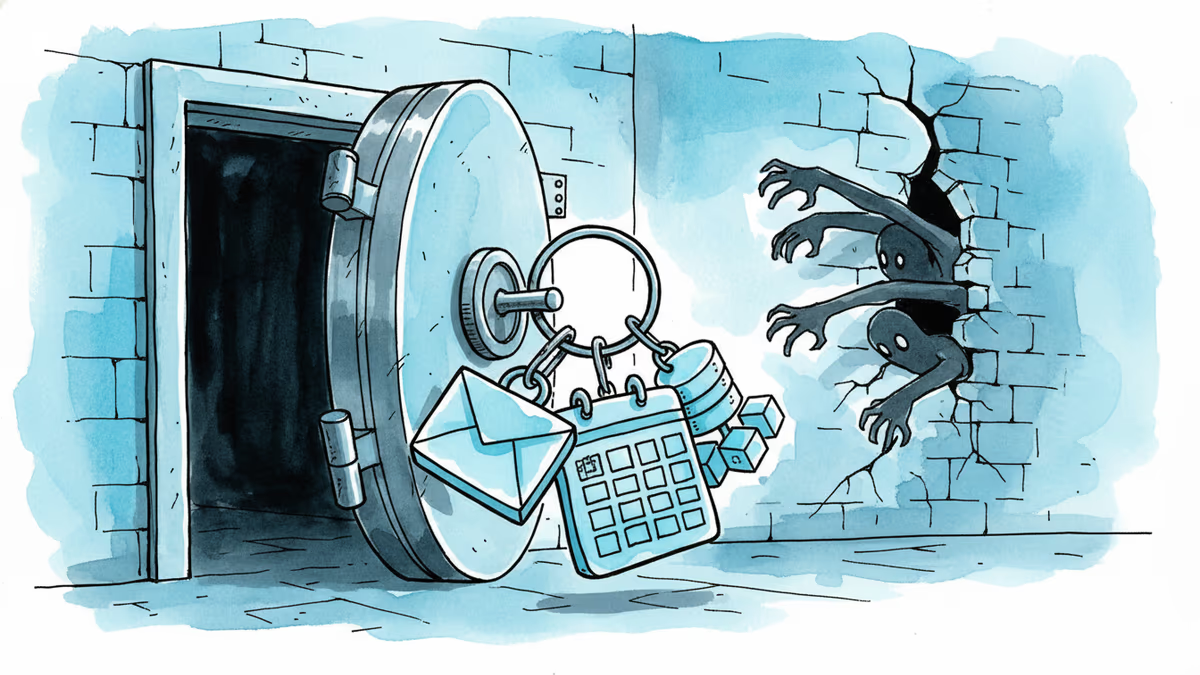
A critical vulnerability in Starlette—downloaded 325 million times per week—puts millions of AI agent servers at risk, exposing stored credentials for email, databases, and third-party services.
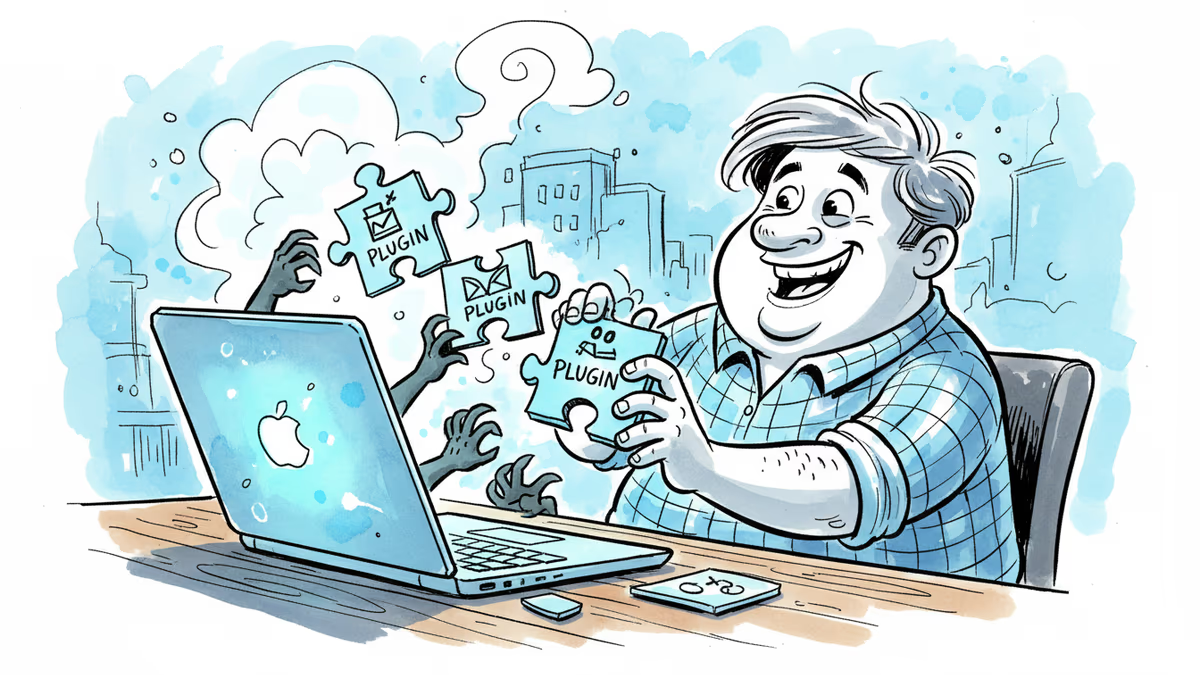
GitHub confirmed hackers stole data from 3,800 internal repositories via a poisoned VS Code extension. Here's why developer tools are now the most dangerous attack surface in tech.
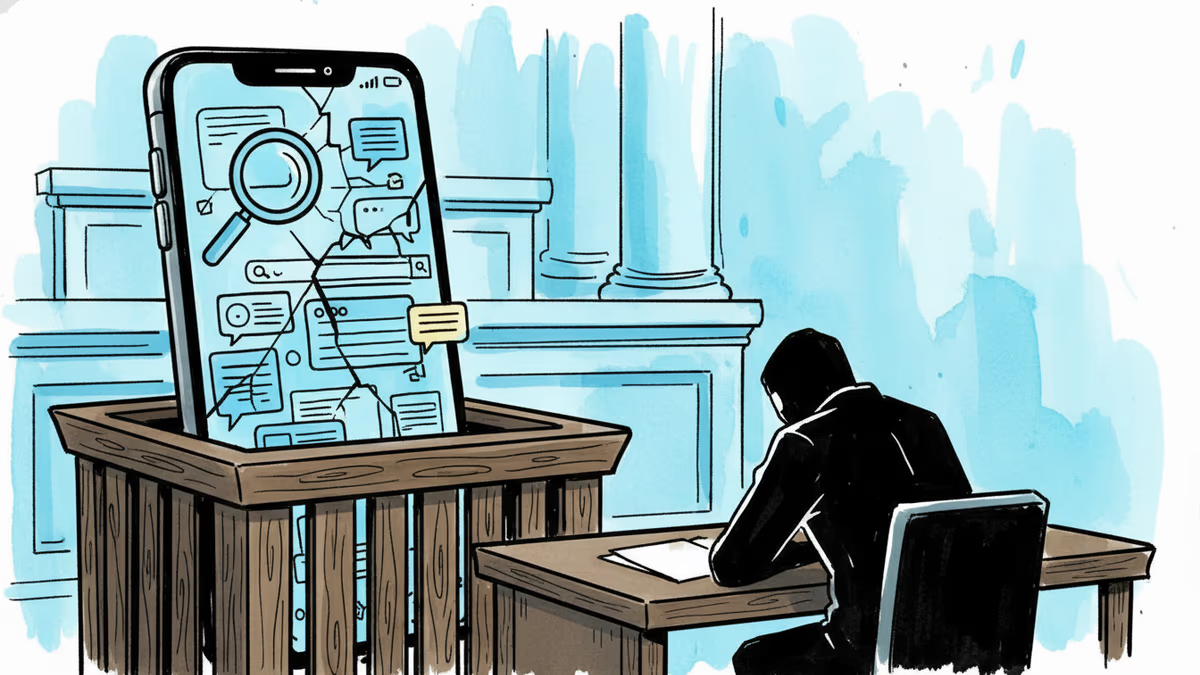
A Utah woman was sentenced to life in prison partly because of her Google searches and deleted texts. The Kouri Richins case reveals how digital footprints have become the courtroom's most reliable witness.
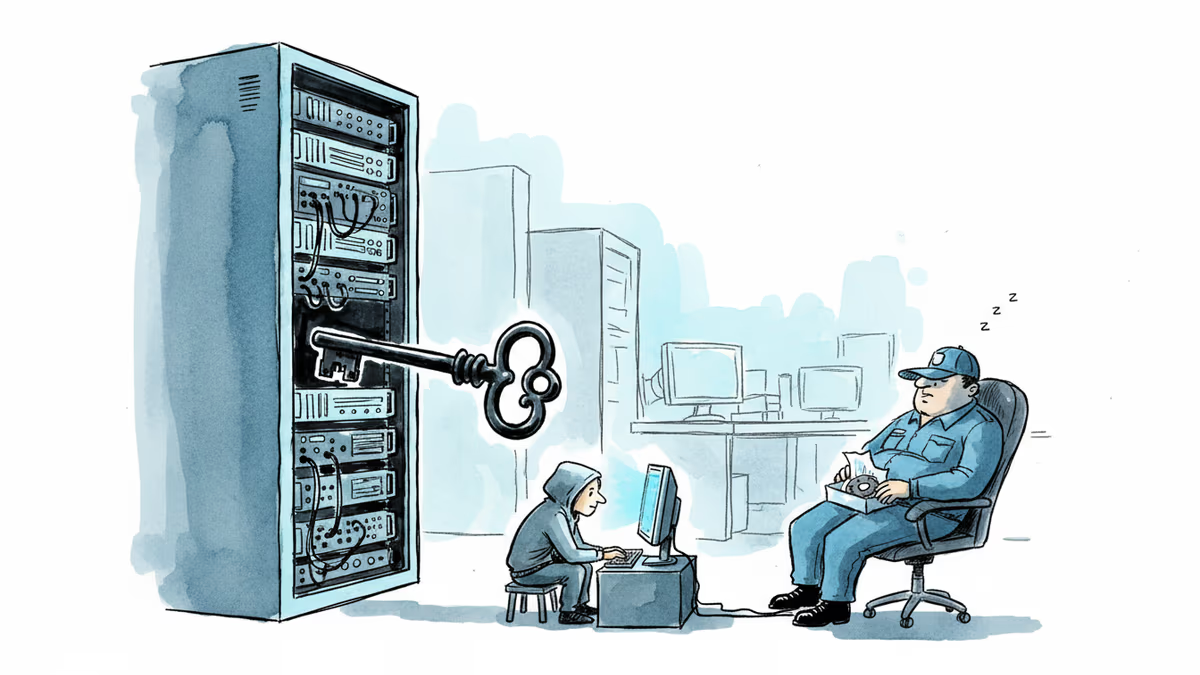
Dirty Frag gives low-privilege users root access on virtually every Linux distro. The exploit code leaked three days ago. Microsoft says attackers are already experimenting with it.
A critical vulnerability in Starlette—downloaded 325 million times per week—puts millions of AI agent servers at risk, exposing stored credentials for email, databases, and third-party services.
GitHub confirmed hackers stole data from 3,800 internal repositories via a poisoned VS Code extension. Here's why developer tools are now the most dangerous attack surface in tech.
A Utah woman was sentenced to life in prison partly because of her Google searches and deleted texts. The Kouri Richins case reveals how digital footprints have become the courtroom's most reliable witness.
Dirty Frag gives low-privilege users root access on virtually every Linux distro. The exploit code leaked three days ago. Microsoft says attackers are already experimenting with it.
Thoughts
Share your thoughts on this article
Sign in to join the conversation