
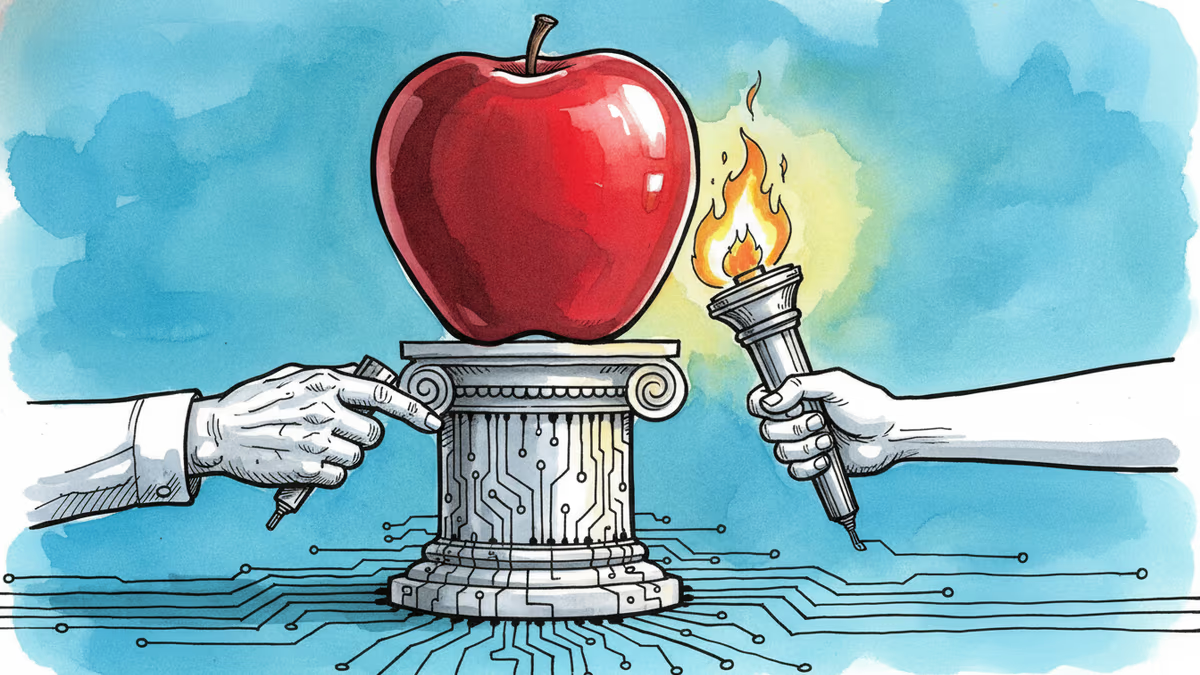
After Tim Cook: What Apple Bets On Next
Apple announced Tim Cook will step down as CEO on September 1st, replaced by hardware chief John Ternus. What does a hardware-first leader mean for Apple's future?
For 14 years, Tim Cook ran Apple like a machine — because, in many ways, that was exactly what the job required. He inherited a company built on Steve Jobs' genius and turned it into the world's first $3 trillion business. On September 1st, he hands the keys to someone who has spent his career not managing supply chains, but building the actual products.
Apple has confirmed that John Ternus, the company's head of hardware engineering, will become CEO this fall. Alongside him, chip architect Johny Srouji steps up as Chief Hardware Officer. Cook published a farewell letter to the Apple community, closing a chapter that reshaped not just a company, but the entire consumer technology industry.
What Cook Built — And What He Didn't
The Cook era had a clear thesis: make Apple indispensable. He did it through services. The App Store, Apple Music, Apple TV+, iCloud — by the time he stepped down, services accounted for roughly 30% of Apple's revenue, up from near zero when he took over. That's not a side business. That's a structural transformation.
But the Cook years also produced a visible gap. While OpenAI, Google, and Meta raced to define the generative AI era, Apple Intelligence launched late, underwhelmed, and drew criticism that the company had fallen behind in the most consequential technology shift since the smartphone. The foldable phone market — pioneered by Samsung and Chinese rivals — remains a space Apple has yet to enter, years after competitors established it.
Cook managed Apple's strengths brilliantly. Whether he managed its weaknesses with equal urgency is a question his successor will have to answer.
A Hardware Engineer in the Corner Office
John Ternus is not a typical CEO candidate in the Silicon Valley mold. He's not a finance guy, not a sales guy, not a platform strategist. He's the person who oversaw the transition to Apple Silicon, shepherded the M-series chip lineup, and had his hands on the Vision Pro's physical design. Inside Apple, he's known as someone who cares deeply about what the product actually feels like.

That background signals something. A Ternus-led Apple could prioritize hardware ambition in ways the Cook era didn't always. Foldable iPhones, Apple Glasses, home robotics — products that have circulated as rumors for years — may find a more natural champion in a CEO who came up through engineering.
The counterargument is real, though. Cook's genius was knowing that Apple's moat wasn't just the hardware — it was the ecosystem that made switching feel painful. Can a hardware-first CEO maintain that strategic discipline? Johny Srouji's elevation to CHO suggests Apple is doubling down on silicon independence, which is smart. But who holds the services strategy together is less clear.
What Investors Are Actually Watching
Markets dislike uncertainty, and a CEO transition at the world's most valuable company is, by definition, uncertain. Short-term volatility is likely. But the longer-term question for investors is whether Ternus can protect the $85 billion+ annual services revenue that Cook built, while also delivering the kind of hardware breakthrough that could open new product categories.
Apple's AI credibility problem is the most immediate test. The company has the on-device hardware advantage — Apple Silicon is genuinely fast — but has struggled to translate that into software experiences that compete with ChatGPT or Gemini. Ternus could fix that, or he could double down on hardware and leave the AI gap unaddressed.
For shareholders, the question is whether this transition represents continuity with a new face, or a genuine strategic pivot.
The View From Competitors
Samsung is watching carefully. If Ternus accelerates Apple's push into foldables and AR hardware, the competitive pressure on Samsung's premium lineup intensifies. But if Apple spends the next year in leadership transition mode, Samsung has a window.
Regulators in the EU and US, who have spent years scrutinizing Apple's App Store practices, will be curious whether a new CEO brings a new posture on antitrust compliance — or digs in harder. Cook was a skilled political operator. Ternus's comfort in those rooms is untested.
And the developer community — the millions of people who build on Apple's platforms — will be watching to see whether the new leadership treats them as partners or as revenue sources to be optimized.
Authors
Related Articles
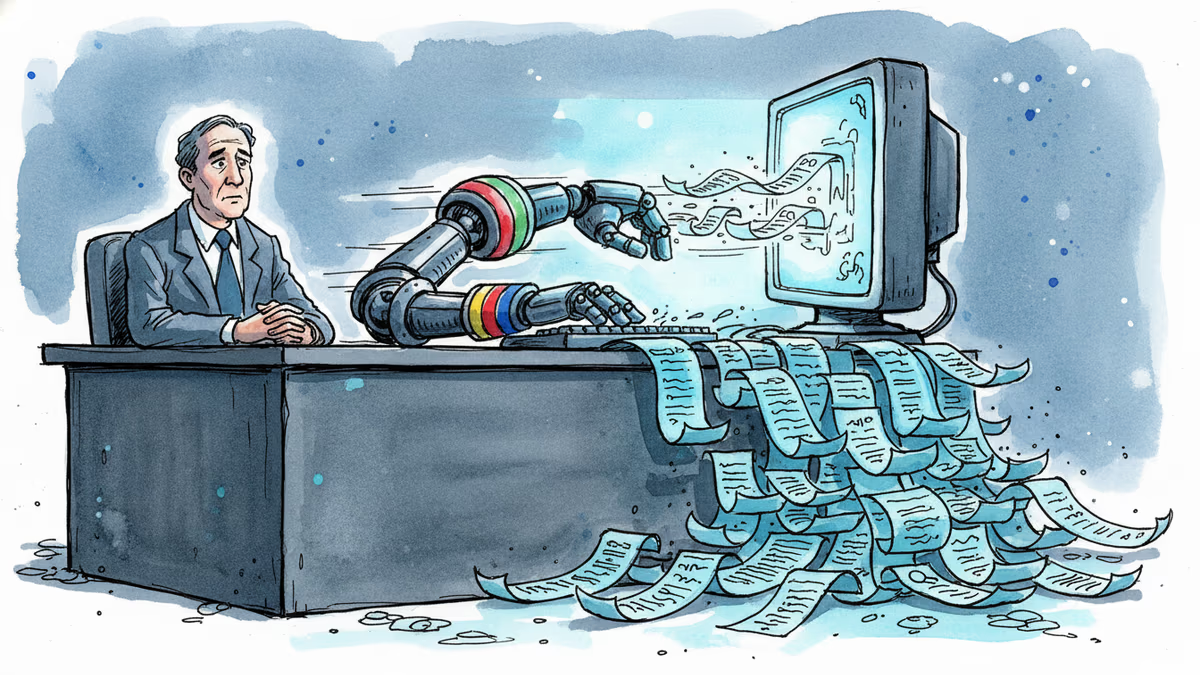
Google is building AI agents that search the web proactively, without user prompting. That's not just a product update — it's a fundamental shift in who controls the information you receive.
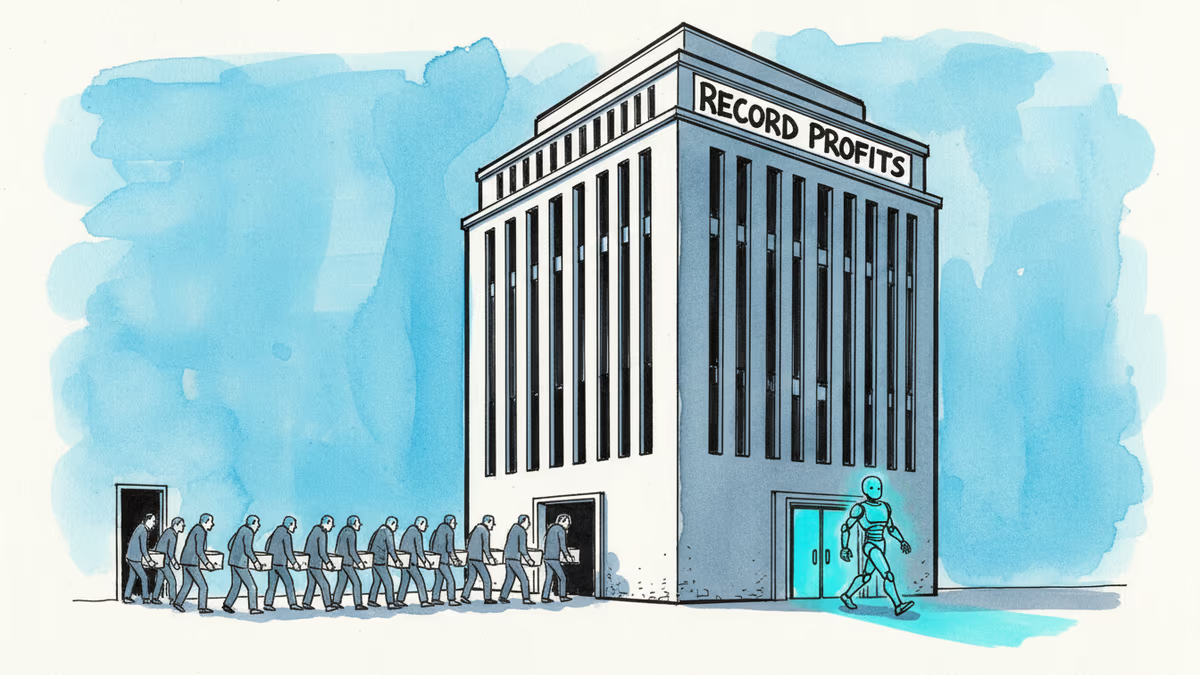
Cisco just posted record quarterly revenue and cut 4,000 jobs on the same day. It's not a contradiction — it's a template spreading across Big Tech.
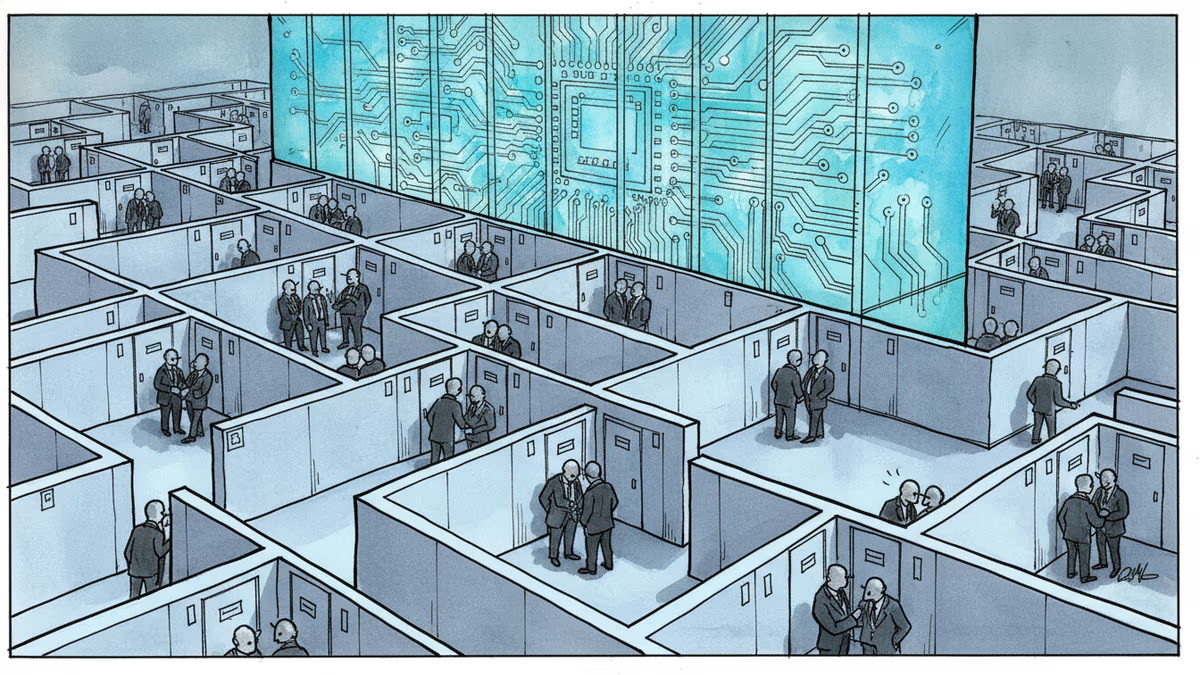
Behind every congressional hearing on Big Tech, there's a quieter room where the real rules get negotiated. As AI regulation, antitrust battles, and privacy law converge on Capitol Hill in 2026, the stakes have never been higher.
After 15 years of fragmented mobile messaging, Apple and Google are rolling out end-to-end encrypted RCS messaging between iPhones and Android devices. Here's what changed, why it took so long, and what it means for your privacy.
Google is building AI agents that search the web proactively, without user prompting. That's not just a product update — it's a fundamental shift in who controls the information you receive.
Cisco just posted record quarterly revenue and cut 4,000 jobs on the same day. It's not a contradiction — it's a template spreading across Big Tech.
Behind every congressional hearing on Big Tech, there's a quieter room where the real rules get negotiated. As AI regulation, antitrust battles, and privacy law converge on Capitol Hill in 2026, the stakes have never been higher.
After 15 years of fragmented mobile messaging, Apple and Google are rolling out end-to-end encrypted RCS messaging between iPhones and Android devices. Here's what changed, why it took so long, and what it means for your privacy.
Thoughts
Share your thoughts on this article
Sign in to join the conversation