
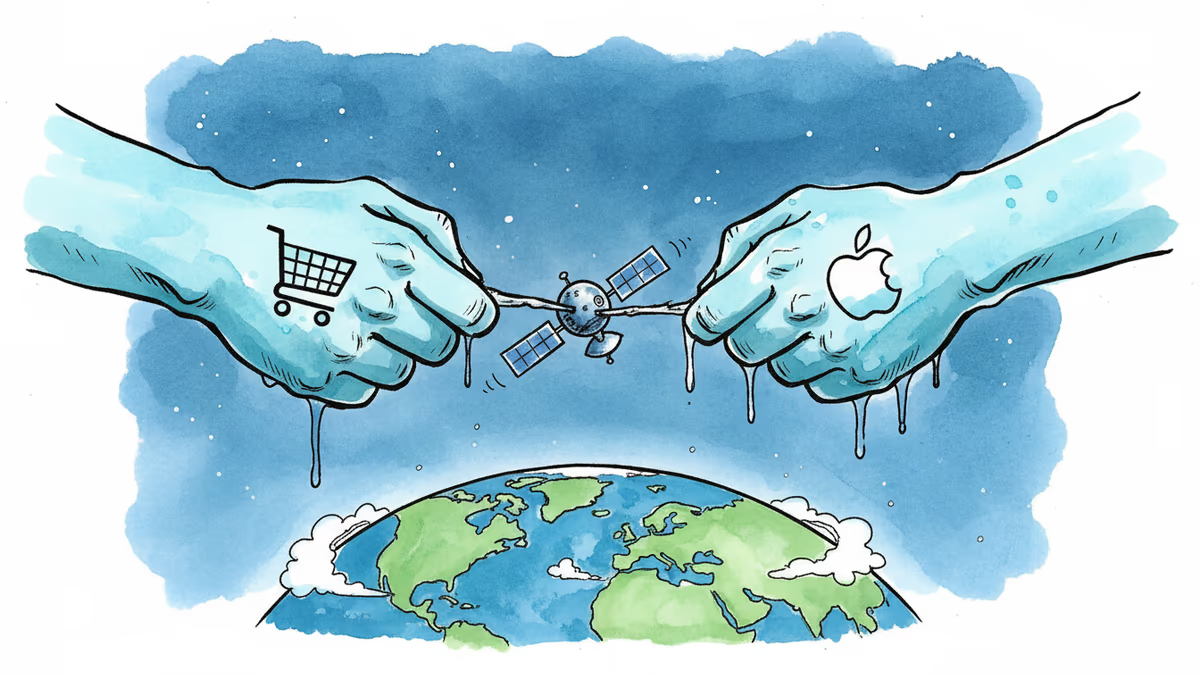
Amazon Wants the Sky. Apple's Standing in the Way.
Amazon is in talks to acquire Globalstar, the satellite telecom firm that powers Apple's emergency SOS feature. A 20% Apple stake is complicating everything — and the stakes go beyond one deal.
The race for low-Earth orbit has a new complication: two of the world's biggest tech companies are negotiating over the same piece of sky.
Amazon is in active talks to acquire Globalstar, the satellite telecommunications company best known for powering Apple's emergency SOS feature on iPhones. Negotiations have been ongoing for months — but they haven't closed. The sticking point? Apple owns a 20% stake in Globalstar, turning what might have been a straightforward acquisition into a three-way negotiation between two of the fiercest rivals in consumer tech.
What Is Globalstar, and Why Does Amazon Want It?
Globalstar isn't a household name, but it quietly became critical infrastructure. Founded in the 1990s, the company operates a constellation of low-Earth orbit (LEO) satellites. For years, it was a niche player — serving remote workers, maritime operators, and emergency responders. Then in 2022, Apple integrated Globalstar's network into the iPhone 14, enabling satellite-based emergency messaging in areas with no cellular coverage. That deal came with a 20% equity stake for Apple and a long-term capacity agreement, effectively making Apple both a major shareholder and Globalstar's most important customer.
For Amazon, the appeal is straightforward. The company has been building Project Kuiper, its own LEO satellite internet service, for years — committing more than $10 billion to launch a constellation of 3,236 satellites. The first commercial launches are expected in 2025. But SpaceX's Starlink already operates more than 6,000 satellites and serves customers in over 100 countries. Amazon is playing catch-up. Acquiring Globalstar would hand it existing orbital infrastructure, spectrum licenses, and ground station assets — years of runway, compressed into a single transaction.
The Apple Problem
Here's where it gets complicated. Apple isn't a passive investor in Globalstar. The emergency SOS feature is now a marquee safety selling point for iPhones worldwide. If Amazon acquires Globalstar, the infrastructure underpinning that feature would be owned by a direct competitor — a company that sells its own devices, its own services, and increasingly its own connectivity.

Apple has every incentive to either block the deal, extract significant concessions, or use the moment to renegotiate its own position. It could push for guaranteed capacity agreements that survive any ownership change. It could seek to sell its stake at a premium. Or it could quietly explore building redundancy into its satellite strategy — reducing dependence on a Globalstar that no longer answers to neutral owners.
None of those paths are simple, which explains why talks have stretched on without resolution.
Why This Moment Matters Beyond the Deal
Zoom out, and this negotiation reflects something bigger happening across the tech industry: the convergence of connectivity infrastructure and consumer platforms.
SpaceX has Starlink. Amazon wants Kuiper — and now possibly Globalstar. Apple has quietly embedded satellite capability into its hardware ecosystem. Even Google has explored satellite partnerships. The companies that once competed on software and devices are now racing to own the pipes themselves.
For regulators, this raises familiar questions. Spectrum is a public resource, allocated by international bodies. But the infrastructure that rides on that spectrum is being consolidated rapidly into a small number of private hands. The EU's antitrust apparatus, already stretched thin by cloud and app store cases, would likely scrutinize an Amazon-Globalstar deal closely — particularly given Apple's entangled position.
For investors, the deal signals where the next battleground is. Satellite connectivity stocks have been volatile, riding waves of Starlink IPO speculation. A confirmed Amazon acquisition of Globalstar would force a revaluation of the entire sector.
For consumers, the implications are more diffuse — but real. More competition in satellite internet could accelerate rural broadband access and push prices down. Or it could result in two dominant ecosystems — SpaceX and Amazon — with everyone else on the outside.
Authors
Related Articles
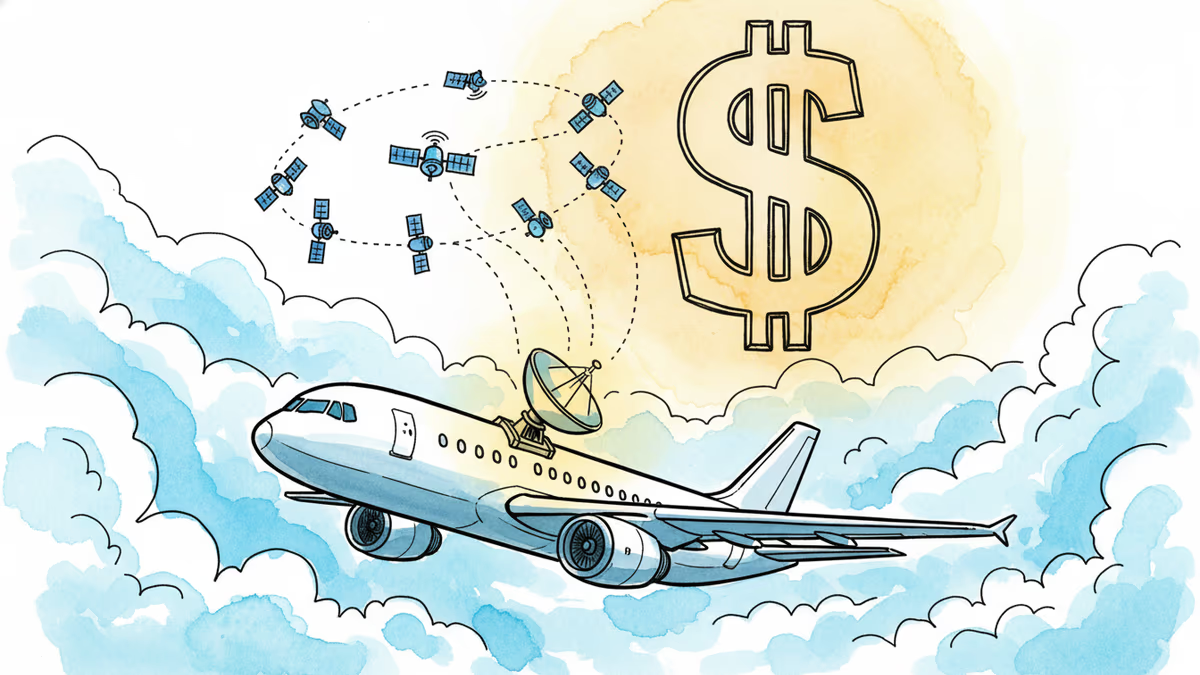
American Airlines just signed Starlink for 500+ aircraft. It's not just about faster inflight internet — it's a calculated move in the run-up to what could be the largest IPO in history.
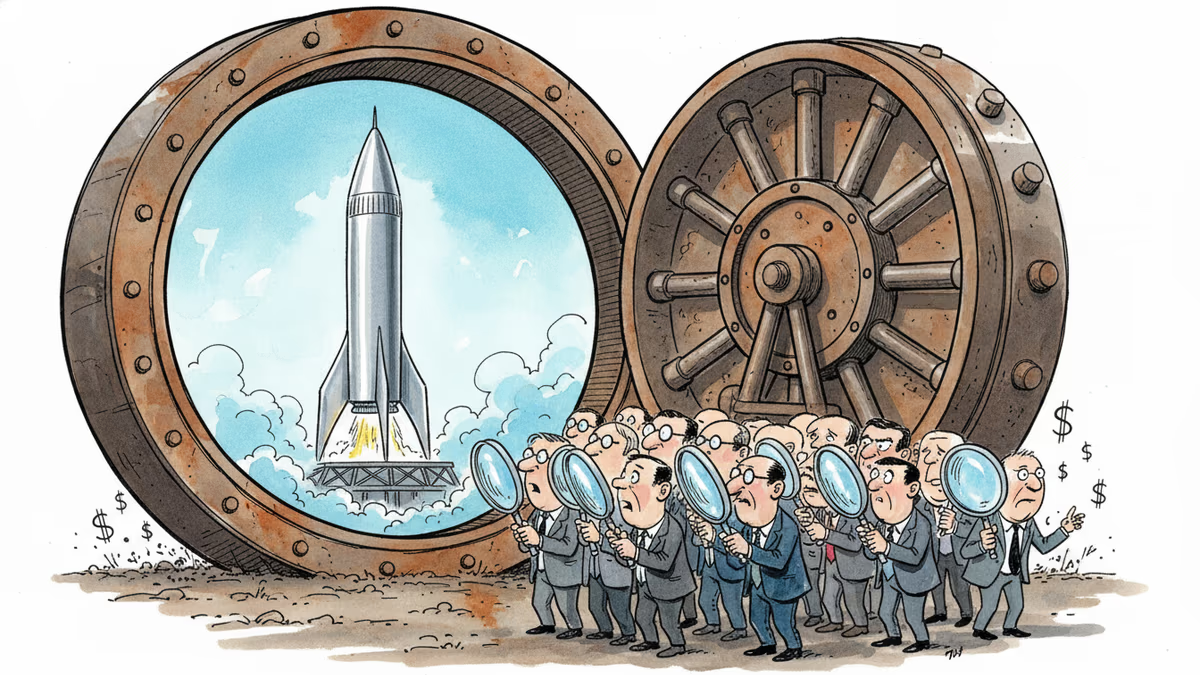
SpaceX filed a nearly 400-page S-1 with the SEC, targeting an IPO as early as June 12. Here's what the filing reveals—and what it doesn't.
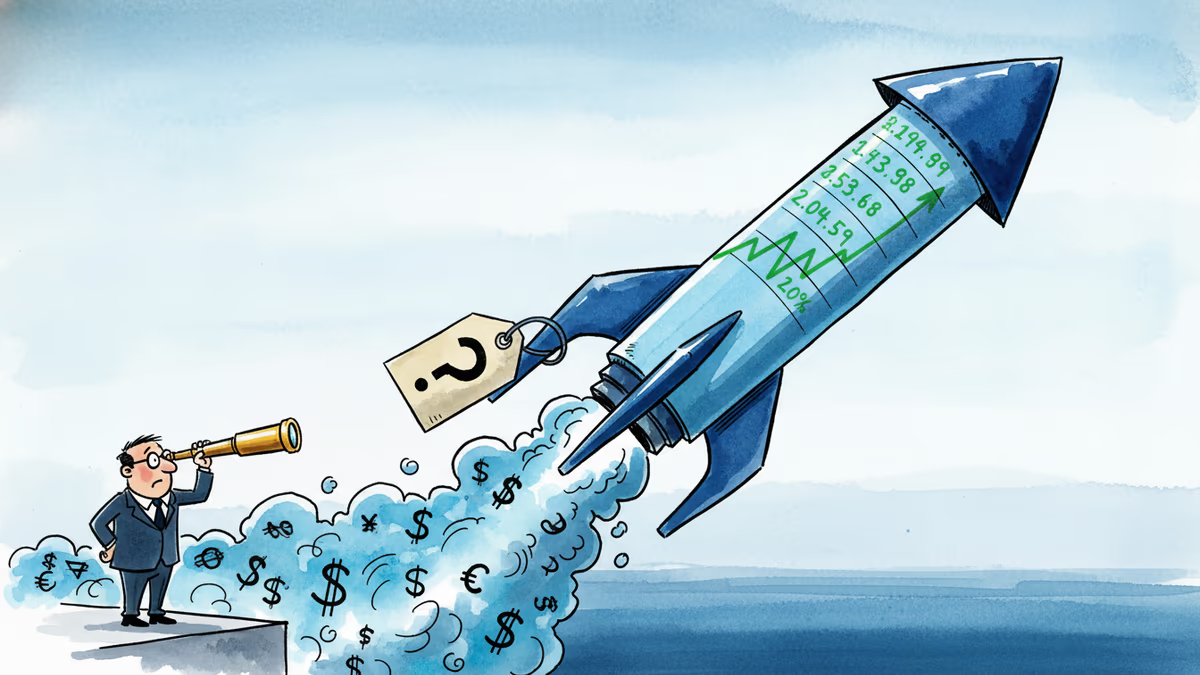
SpaceX has filed its S-1 with the SEC, targeting the Nasdaq under ticker SPCX. With $18.67B in revenue but a $4.9B loss, the IPO forces investors to answer one hard question.
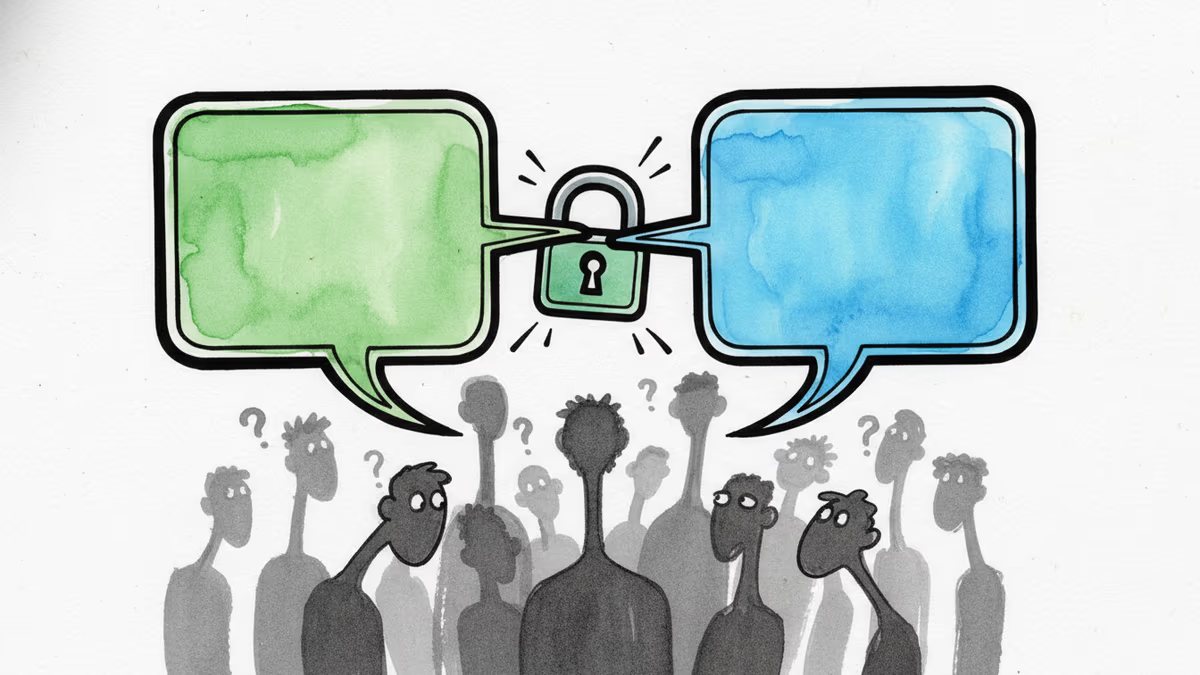
After 15 years of fragmented mobile messaging, Apple and Google are rolling out end-to-end encrypted RCS messaging between iPhones and Android devices. Here's what changed, why it took so long, and what it means for your privacy.
American Airlines just signed Starlink for 500+ aircraft. It's not just about faster inflight internet — it's a calculated move in the run-up to what could be the largest IPO in history.
SpaceX filed a nearly 400-page S-1 with the SEC, targeting an IPO as early as June 12. Here's what the filing reveals—and what it doesn't.
SpaceX has filed its S-1 with the SEC, targeting the Nasdaq under ticker SPCX. With $18.67B in revenue but a $4.9B loss, the IPO forces investors to answer one hard question.
After 15 years of fragmented mobile messaging, Apple and Google are rolling out end-to-end encrypted RCS messaging between iPhones and Android devices. Here's what changed, why it took so long, and what it means for your privacy.
Thoughts
Share your thoughts on this article
Sign in to join the conversation