
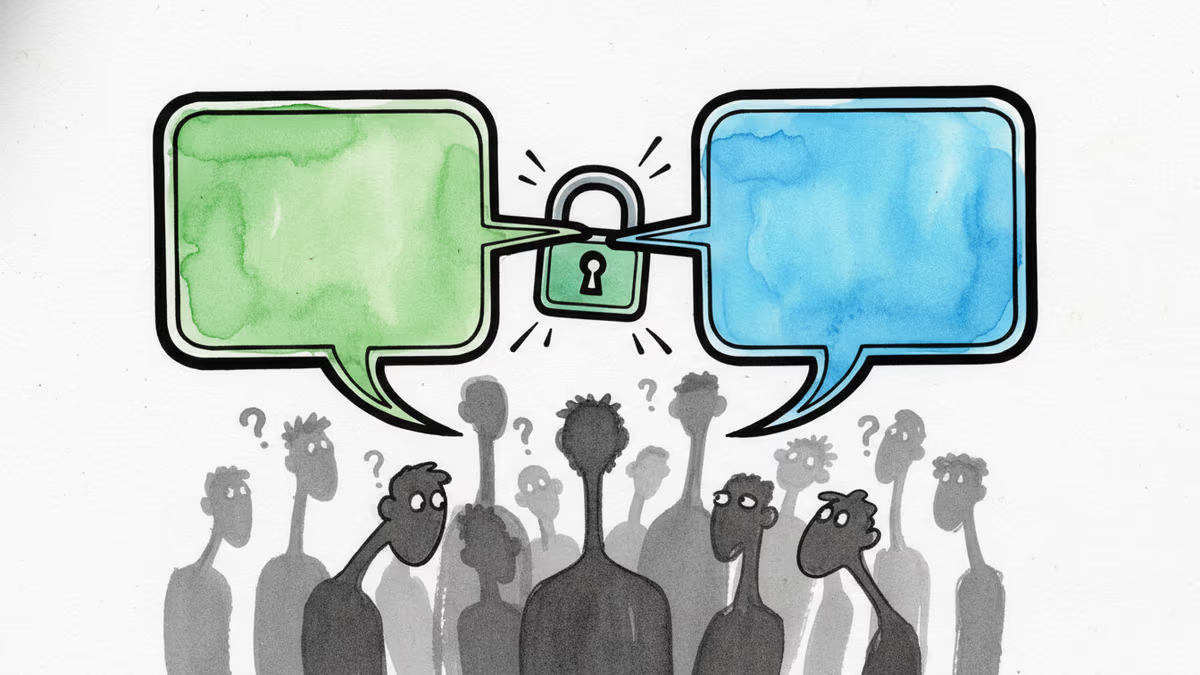
The Green Bubble Finally Gets a Lock
After 15 years of fragmented mobile messaging, Apple and Google are rolling out end-to-end encrypted RCS messaging between iPhones and Android devices. Here's what changed, why it took so long, and what it means for your privacy.
For 15 years, sending a text from an iPhone to an Android was, privacy-wise, roughly equivalent to writing a postcard. Anyone in the middle could read it. That changes now.
Apple and Google have begun a beta rollout of end-to-end encrypted (e2ee) messaging between iPhone and Android devices using RCS (Rich Communication Services). When a conversation is protected, users will see a lock icon in the chat. It's still beta — not everyone has it yet — but the direction is clear.
How We Got Here: A Timeline of Stubbornness
iMessage has been encrypted since its 2011 launch. Android users have been able to message each other with e2ee since 2021. The gap in between — cross-platform conversations — remained a glaring vulnerability for years.
The holdup wasn't technical. It was strategic. Google had been pushing Apple to adopt RCS, the industry-standard upgrade to decades-old SMS, for years. RCS brings typing indicators, read receipts, emoji reactions, high-quality media sharing, and longer messages to the default texting experience. Apple refused from 2020 onward, protecting the walled garden of iMessage and, critics argued, using green bubbles as a social lever to keep users on iPhone.
The dam broke in 2023 when Apple finally adopted RCS — not out of goodwill, but under sustained regulatory pressure from European authorities. The e2ee extension now completing that arc is the logical next step. Without that regulatory push, the timeline might look very different.
What End-to-End Encryption Actually Means

End-to-end encryption means that a message is scrambled from the moment it leaves your device until it arrives on the recipient's. Not hackers, not your carrier, not Apple, not Google — nobody in the middle can read it. Before this, cross-platform texts traveled as standard SMS or MMS: essentially readable by anyone with access to the network infrastructure.
The practical stakes differ by who's looking at them. For everyday users, this is a meaningful privacy upgrade for the messaging app they already use by default — no need to download Signal or WhatsApp to get basic protection. For enterprise users — lawyers, doctors, journalists — it closes a real compliance gap in casual cross-platform communication. For law enforcement and governments, it's a complication. The UK, Australia, and others have already been pushing for backdoor access to encrypted platforms, and every new e2ee deployment adds friction to those efforts.
The Bigger Tension: Open Standards vs. Walled Gardens
This story isn't really about a messaging feature. It's about who controls interoperability in tech ecosystems — and whether companies will ever open them voluntarily.
Apple's resistance to RCS for years was a case study in using compatibility as a competitive moat. The green bubble wasn't just an aesthetic quirk; it was a retention mechanism. American teenagers reportedly avoided Android phones partly to stay in blue-bubble group chats. That's a remarkable amount of social leverage extracted from a color.
The fact that regulators, not market competition, ultimately forced Apple's hand fits a pattern that's become hard to ignore: USB-C standardization in the EU, app store fee investigations, DMA compliance requirements. The question for the next decade of tech policy isn't whether regulation can force openness — it demonstrably can. The question is what gets opened next, and at what pace.
Privacy advocates will note an irony worth sitting with: the two companies now delivering e2ee to your default texts are the same two companies whose business models depend, in different ways, on understanding how you communicate. Google's advertising infrastructure and Apple's ecosystem lock-in don't disappear because one feature got encrypted.
This content is AI-generated based on source articles. While we strive for accuracy, errors may occur. We recommend verifying with the original source.
Related Articles
In a post-Google I/O interview, Sundar Pichai acknowledged flawed search results, real AI anxiety, and an AGI timeline that makes the label irrelevant. Here's what he said — and what it means.
The FTC fined Cox Media and two ad firms $930,000 — not for actually eavesdropping on users, but for falsely claiming they could. The case raises uncomfortable questions about surveillance capitalism.
Google is building AI agents that search the web proactively, without user prompting. That's not just a product update — it's a fundamental shift in who controls the information you receive.
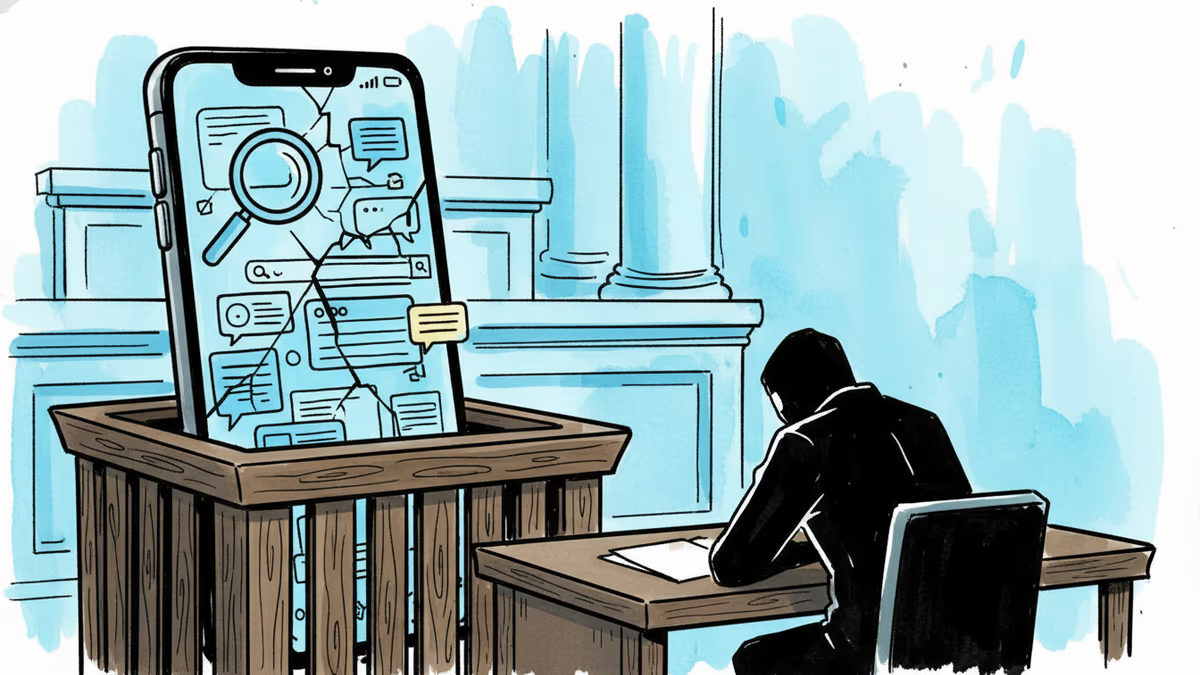
A Utah woman was sentenced to life in prison partly because of her Google searches and deleted texts. The Kouri Richins case reveals how digital footprints have become the courtroom's most reliable witness.
In a post-Google I/O interview, Sundar Pichai acknowledged flawed search results, real AI anxiety, and an AGI timeline that makes the label irrelevant. Here's what he said — and what it means.
The FTC fined Cox Media and two ad firms $930,000 — not for actually eavesdropping on users, but for falsely claiming they could. The case raises uncomfortable questions about surveillance capitalism.
Google is building AI agents that search the web proactively, without user prompting. That's not just a product update — it's a fundamental shift in who controls the information you receive.
A Utah woman was sentenced to life in prison partly because of her Google searches and deleted texts. The Kouri Richins case reveals how digital footprints have become the courtroom's most reliable witness.
Thoughts
Share your thoughts on this article
Sign in to join the conversation