
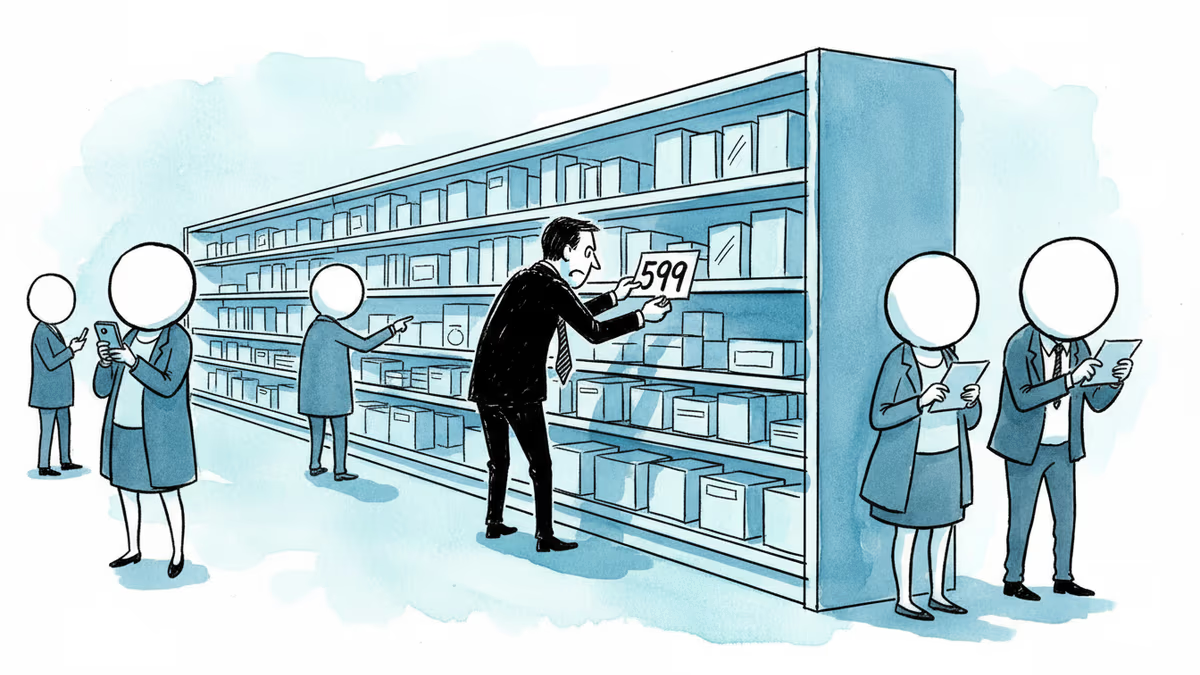
Mac Mini's $599 Tier Is Gone. Here's What That Really Means.
Apple quietly removed the entry-level $599 Mac Mini, raising the starting price to $799 — just one day after Tim Cook warned of chip supply constraints on the earnings call.
Tim Cook warned investors. Twenty-four hours later, the cheapest Mac Mini disappeared.
Apple has pulled the $599 256GB Mac Mini from its online store, pushing the entry price up to $799 — a 33% jump with no formal announcement, no press release, and no fanfare. The move came one day after Cook told analysts on the company's earnings call that chip shortages would hit Mac products in the coming months.
What Cook Said — and What Happened Next
Cook was unusually specific on the call. "If you look forward to June, the majority of our supply constraints will be on several Mac models," he said. "We think looking forward that the Mac Mini and the Mac Studio may take several months to reach supply-demand balance." He also noted that both devices had seen "higher-than-expected demand."
High demand. Constrained supply. Those are the textbook conditions for a price increase. But Apple didn't raise the price on the existing model — it simply removed the cheapest one. The outcome is identical: the lowest price a consumer can pay for a Mac Mini just went up by $200. The method, however, is quieter and harder to protest.
The timing is difficult to read as coincidence. Flagging supply issues publicly on an earnings call — then clearing out the low-margin SKU the following day — follows a logic that serves shareholders and product margins simultaneously. Investors hear "strong demand." Consumers find fewer options at checkout.
Who Feels This Most

The $599 Mac Mini wasn't just a budget option — it was a gateway. First-time Mac buyers, students, small businesses equipping a few workstations: that price point carried real psychological weight. At $799, the Mac Mini is still competitive against comparable Windows mini-PCs, but the gap has narrowed.
For enterprise buyers, the math gets starker fast. A company deploying 50 units just absorbed an extra $10,000 in hardware costs with no warning and no negotiation. Procurement teams that locked in budgets based on the $599 tier are now recalculating.
Apple, meanwhile, has little incentive to mourn the entry-level slot. When chip supply is limited, allocating silicon to higher-margin configurations is straightforward financial logic. The $599 model likely carried thinner margins than the $799 — discontinuing it isn't just a supply response, it's a margin optimization.
A New Pattern in Supply Chain Disruption
This episode illustrates how chip shortages translate into consumer prices differently than they did during the 2021–2022 global semiconductor crunch. Back then, products went out of stock entirely, and secondary markets filled the gap with inflated resale prices. The mechanism was visible and chaotic.
What's happening now is more structured. Manufacturers quietly retire low-cost configurations, effectively repricing the floor of a product line without ever announcing a price hike. The consumer's experience isn't "this costs more" — it's "this option no longer exists." The distinction matters because the second framing generates far less backlash.
Apple isn't unique in this. Across consumer electronics, automakers, and even appliance manufacturers, the playbook during supply constraints has consistently been: prioritize premium SKUs, phase out entry-level variants, and let the product mix shift upmarket organically. The Mac Mini is the latest, most visible example of that pattern.
This content is AI-generated based on source articles. While we strive for accuracy, errors may occur. We recommend verifying with the original source.
Related Articles
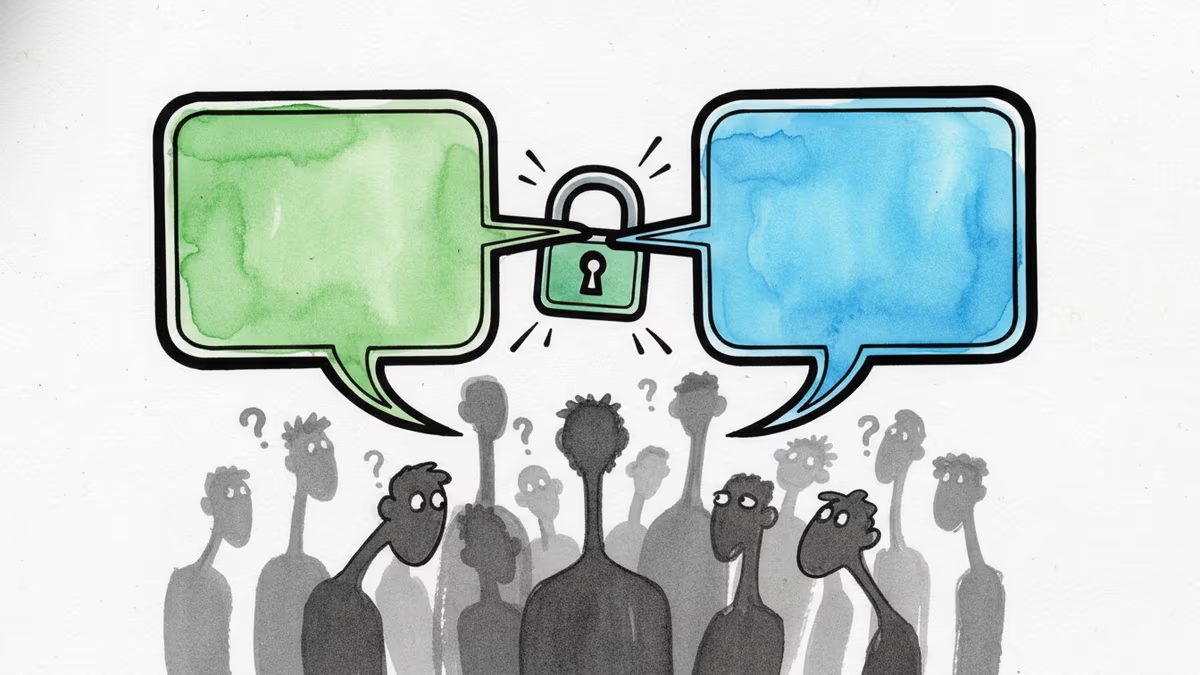
After 15 years of fragmented mobile messaging, Apple and Google are rolling out end-to-end encrypted RCS messaging between iPhones and Android devices. Here's what changed, why it took so long, and what it means for your privacy.
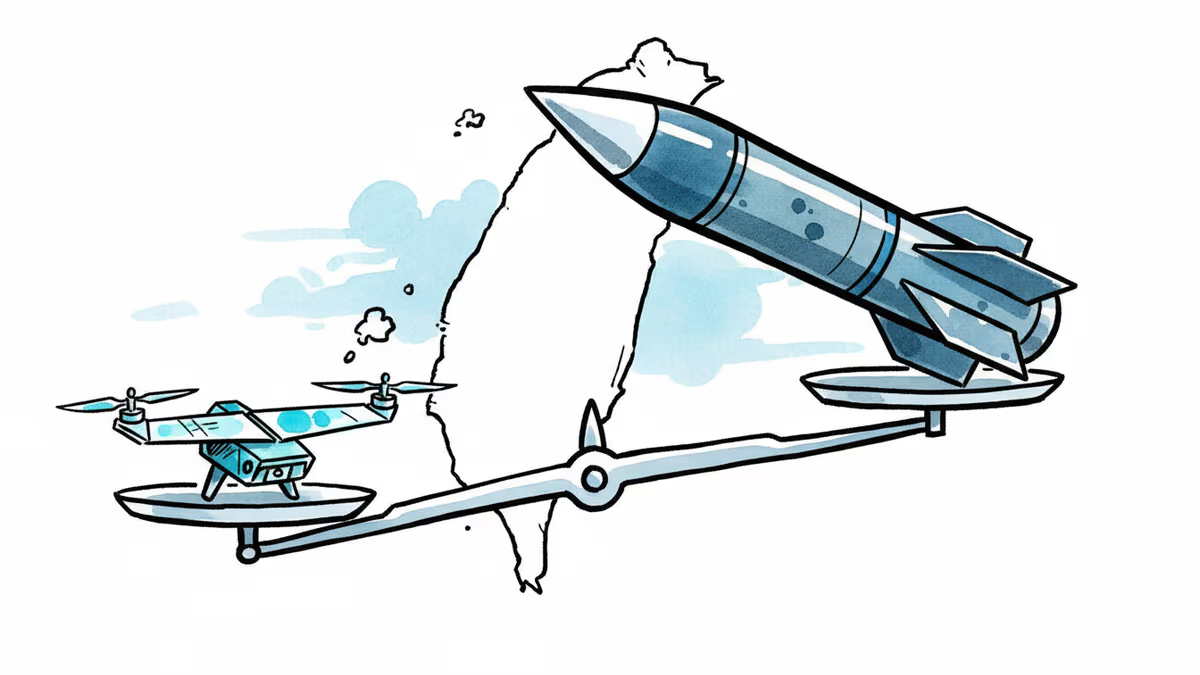
Taiwan's Thunder Tiger became the first Asian firm to win US military drone clearance with a China-free supply chain. As Trump meets Xi, the drone arithmetic reshapes defense strategy.
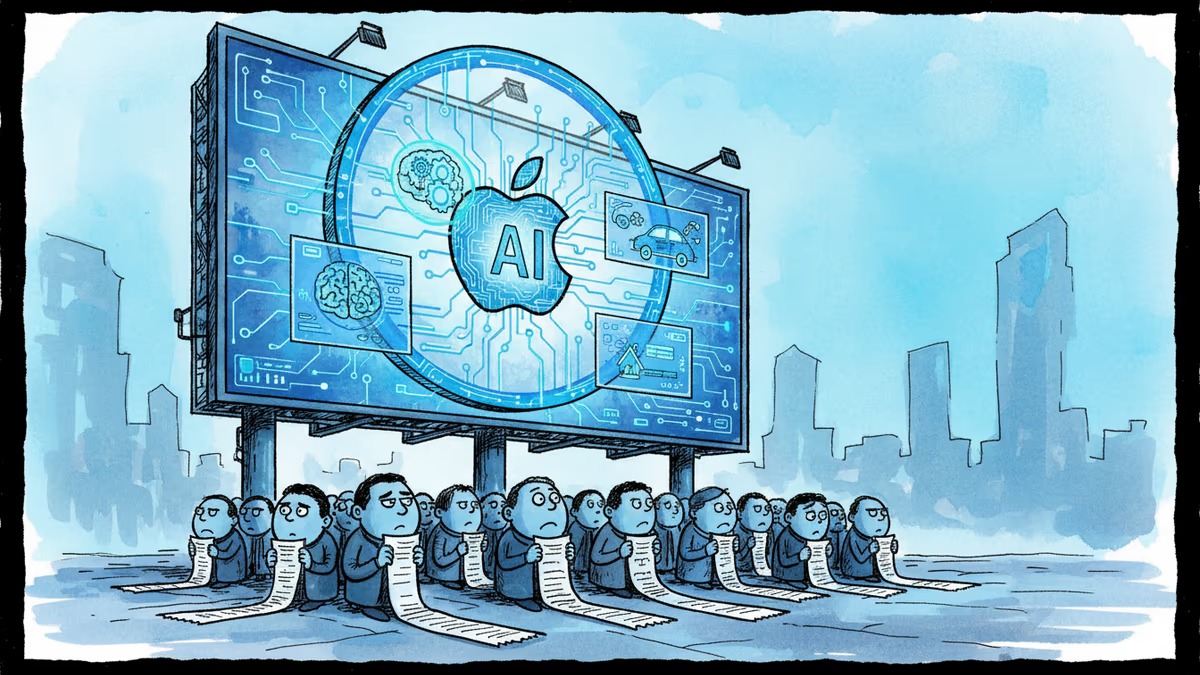
Apple agreed to pay $250 million to settle claims it misled iPhone 16 buyers about Apple Intelligence features. What this means for consumers, Big Tech marketing, and the AI industry.
Expiring leases will flood the US used car market with over a million electric vehicles by 2028. Could this do what subsidies couldn't — make EVs genuinely affordable?
After 15 years of fragmented mobile messaging, Apple and Google are rolling out end-to-end encrypted RCS messaging between iPhones and Android devices. Here's what changed, why it took so long, and what it means for your privacy.
Taiwan's Thunder Tiger became the first Asian firm to win US military drone clearance with a China-free supply chain. As Trump meets Xi, the drone arithmetic reshapes defense strategy.
Apple agreed to pay $250 million to settle claims it misled iPhone 16 buyers about Apple Intelligence features. What this means for consumers, Big Tech marketing, and the AI industry.
Expiring leases will flood the US used car market with over a million electric vehicles by 2028. Could this do what subsidies couldn't — make EVs genuinely affordable?
Thoughts
Share your thoughts on this article
Sign in to join the conversation