
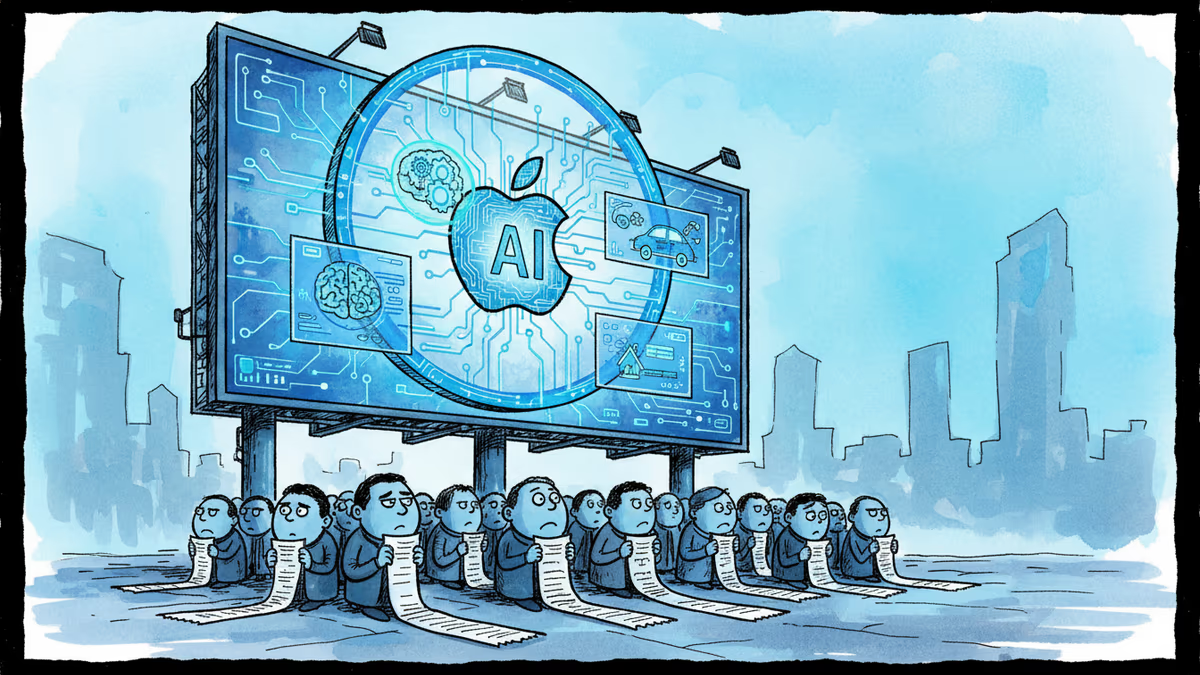
Apple's $250M Lesson in AI Overpromising
Apple agreed to pay $250 million to settle claims it misled iPhone 16 buyers about Apple Intelligence features. What this means for consumers, Big Tech marketing, and the AI industry.
You bought the phone for the AI. The AI wasn't ready. Now Apple owes you $25.
That's the blunt summary of a $250 million proposed settlement that Apple reached over allegations it misled customers about the availability of Apple Intelligence features. It's a modest number for a company that earns roughly $24 billion in quarterly profit — but the precedent it sets may matter far more than the payout.
What Happened
The class action, led by Clarkson Law Firm, alleged that Apple marketed Apple Intelligence as a central selling point of the iPhone 16 lineup and iPhone 15 Pro — yet many of the promised features were unavailable at launch, and some remain limited today.
The proposed settlement covers US customers who purchased any iPhone 16 model or iPhone 15 Pro between June 10th, 2024 and March 29th, 2025. Eligible claimants can receive $25 per qualifying device, with that figure potentially rising or falling to as much as $95 depending on claim volume and other factors. Final court approval is still pending.
Apple agreed to settle without admitting wrongdoing — a standard corporate move that lets the company close the chapter without creating a formal legal record of liability.
Why This Moment Matters
2024 was the year every major smartphone maker decided AI was the new camera. Samsung plastered "Galaxy AI" across its S24 launch. Google led with Gemini on the Pixel 9. Apple, not wanting to be left behind, made Apple Intelligence the centerpiece of its iPhone 16 campaign — complete with demos of features like a smarter Siri, image generation tools, and deeper third-party app integration.

The problem: hardware ships on a fixed date. Software, especially AI software, doesn't always cooperate. When customers turned on their new iPhone 16s, several of the advertised features simply weren't there yet.
This settlement is the first significant legal consequence of that gap — and it arrives at a moment when AI feature marketing has become an industry-wide strategy, not just an Apple habit.
Three Ways to Read the Same Number
For Apple, $250 million is a rounding error. It's roughly 1% of a single quarter's profit. Settling early avoids years of discovery proceedings, depositions, and the kind of courtroom testimony that tends to generate unflattering headlines. Financially, this is the easy call.
For consumers, the math is less satisfying. A $25 check on a $999 phone represents a 2.5% refund at best. Most people who bought an iPhone 16 specifically for Apple Intelligence won't feel made whole. But the point of a class action isn't always the individual payout — it's the signal. Companies now have documented evidence that shipping half-finished AI features under full-price marketing carries legal exposure.
For the broader tech industry, this is the case everyone will cite in the next marketing strategy meeting. Google, Samsung, Microsoft, and a dozen AI startups routinely promote features that are "coming soon" or "available in select regions." If Apple — with its legal resources and brand loyalty — chose to settle rather than fight, other companies are quietly reassessing where the line between aspiration and misrepresentation actually sits.
The Regulator Angle
The FTC has been sharpening its focus on AI-related advertising claims since 2023, issuing guidance that "coming soon" language doesn't immunize companies from deceptive marketing rules. This settlement is a civil matter, not a regulatory action — but it hands enforcers a useful data point. If a jury-ready case was strong enough to push Apple to $250 million, the bar for what counts as misleading AI marketing just got measurably clearer.
European regulators, operating under stricter consumer protection frameworks, are likely watching closely. The EU's AI Act and existing consumer law already impose disclosure requirements that American courts are only beginning to approximate through litigation.
This content is AI-generated based on source articles. While we strive for accuracy, errors may occur. We recommend verifying with the original source.
Related Articles
After 15 years of fragmented mobile messaging, Apple and Google are rolling out end-to-end encrypted RCS messaging between iPhones and Android devices. Here's what changed, why it took so long, and what it means for your privacy.
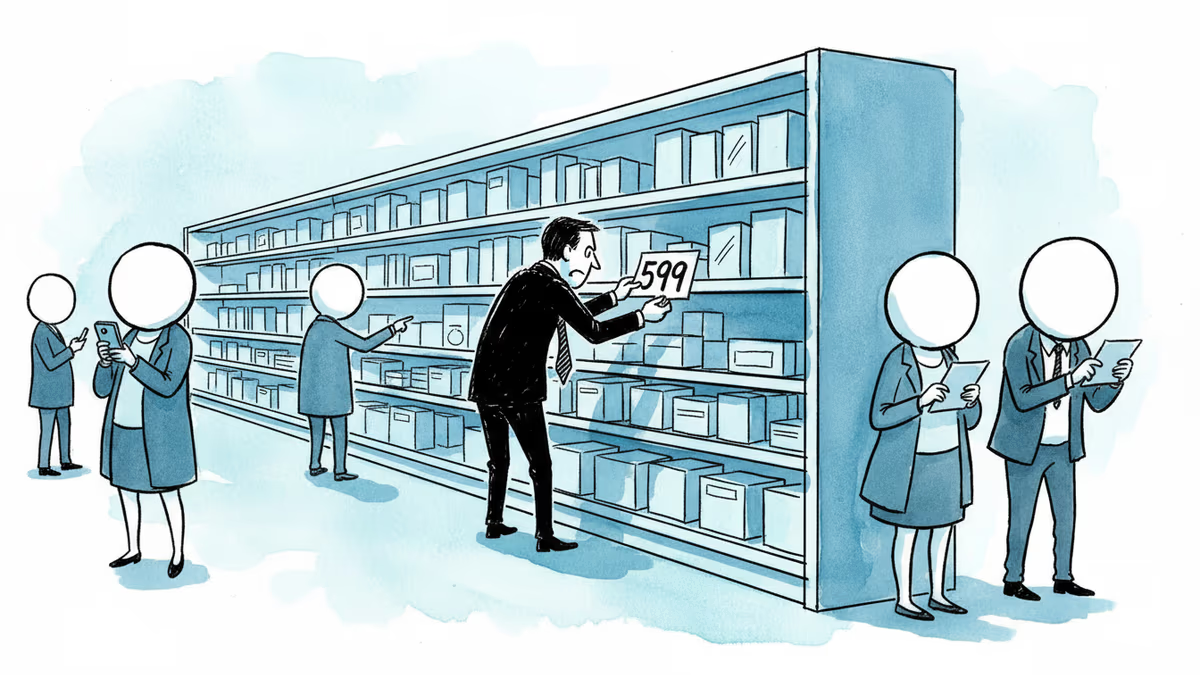
Apple quietly removed the entry-level $599 Mac Mini, raising the starting price to $799 — just one day after Tim Cook warned of chip supply constraints on the earnings call.
Apple names John Ternus, its hardware engineering chief, as the next CEO. The shift from operator to product person signals where Apple thinks its next decade of growth will come from — and raises real questions about what comes next.
Apple announced Tim Cook will step down as CEO on September 1st, replaced by hardware chief John Ternus. What does a hardware-first leader mean for Apple's future?
After 15 years of fragmented mobile messaging, Apple and Google are rolling out end-to-end encrypted RCS messaging between iPhones and Android devices. Here's what changed, why it took so long, and what it means for your privacy.
Apple quietly removed the entry-level $599 Mac Mini, raising the starting price to $799 — just one day after Tim Cook warned of chip supply constraints on the earnings call.
Apple names John Ternus, its hardware engineering chief, as the next CEO. The shift from operator to product person signals where Apple thinks its next decade of growth will come from — and raises real questions about what comes next.
Apple announced Tim Cook will step down as CEO on September 1st, replaced by hardware chief John Ternus. What does a hardware-first leader mean for Apple's future?
Thoughts
Share your thoughts on this article
Sign in to join the conversation