
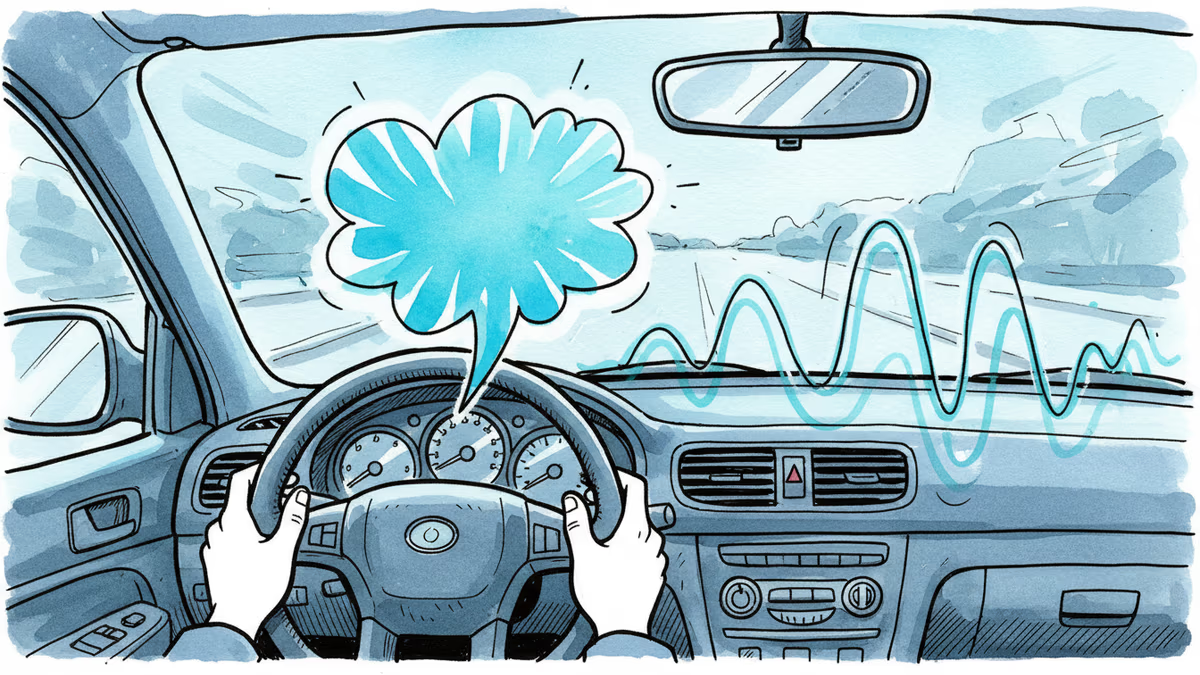
ChatGPT Just Got a Seat in Your Car
iOS 26.4 brings ChatGPT to CarPlay — voice only, no screen. It's a small update with big implications for how AI fits into the places where we can't look at our phones.
Your car might be the one place left where you genuinely can't scroll. Apple just decided that's exactly where ChatGPT belongs.
What Changed — and How It Works
With the release of iOS 26.4, Apple quietly opened CarPlay to a new category: voice-based conversational apps. The first to walk through that door is ChatGPT. According to 9to5Mac, users running iOS 26.4 or later with the latest version of the ChatGPT app (version 9 or above) can now access the chatbot directly from their CarPlay dashboard.
There's a catch — and it's an intentional one. No text appears on screen. No images either. Apple's developer guidelines prohibit displaying text or visual responses while driving, so the entire interaction is voice-only. You ask, it answers, you listen. That's the whole interface.
It sounds like a limitation. But depending on how you look at it, it might actually be the point.
Why Apple Opened the Door Now
For years, Siri was the only AI voice in CarPlay. That's not a controversial statement — it's just the architecture. But Siri's reputation for handling complex, contextual questions has lagged behind the newer generation of large language models. Rather than racing to close that gap internally, Apple has been selectively opening its ecosystem to OpenAI — first in iOS 18 with Siri-to-ChatGPT handoffs, now in CarPlay with direct voice access.

The timing matters. Google's Android Auto has been deepening its Gemini integration. Tesla has its own in-car AI stack. Automakers like Mercedes and BMW are racing to embed conversational AI into their native infotainment systems. The car is becoming a battleground for AI assistants, and Apple clearly doesn't want CarPlay to feel like the platform that got left behind.
By opening CarPlay to third-party AI apps — rather than trying to rebuild Siri from scratch — Apple gets to offer a compelling experience without betting everything on its own model. It's a pragmatic move dressed up as an ecosystem expansion.
Who Benefits, Who Should Be Watching
For drivers, the practical upside is real. Asking for restaurant recommendations near your destination, getting a quick briefing on your afternoon meeting, or just having a conversation on a long highway stretch — all without touching your phone. From a road safety standpoint, keeping eyes on the road while still accessing AI assistance is a meaningful improvement over fumbling with a screen.
But the more interesting story is what this does to the competitive landscape. ChatGPT getting a native voice presence in CarPlay means OpenAI is now embedded in one of the most intimate, captive environments a person occupies — the daily commute. Habits formed in the car tend to stick. If your go-to AI voice in the car is ChatGPT, that shapes your expectations everywhere else.
For automakers, this is a quiet pressure point. CarPlay already hands significant control of the in-car experience to Apple. Adding AI into that equation narrows the space where manufacturers can differentiate. It's part of why companies like Hyundai and GM have been investing heavily in proprietary connected-car platforms — they're trying to own the relationship with the driver before someone else does.
And for regulators, particularly in the EU where Apple has faced scrutiny over platform openness, this selective opening of CarPlay raises a fair question: if ChatGPT gets in, on what terms do other AI assistants get access?
Authors
Related Articles

Samsung and SK unveiled a chip and AI investment package worth thousands of trillions of won on June 29. The headline number swings wildly by outlet, but the real contest isn't capital — it's water and power.
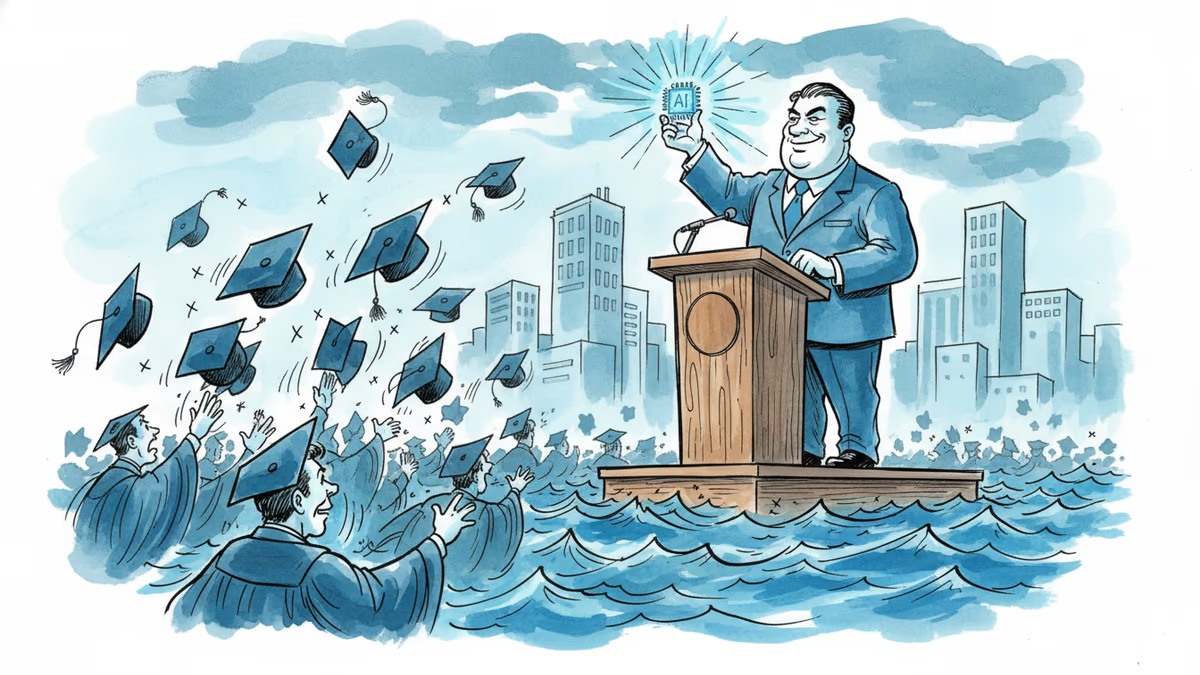
Viral videos show 2026 graduates jeering executives who praise AI at commencement ceremonies. It's not just rudeness — it's a signal about who pays for technological optimism.
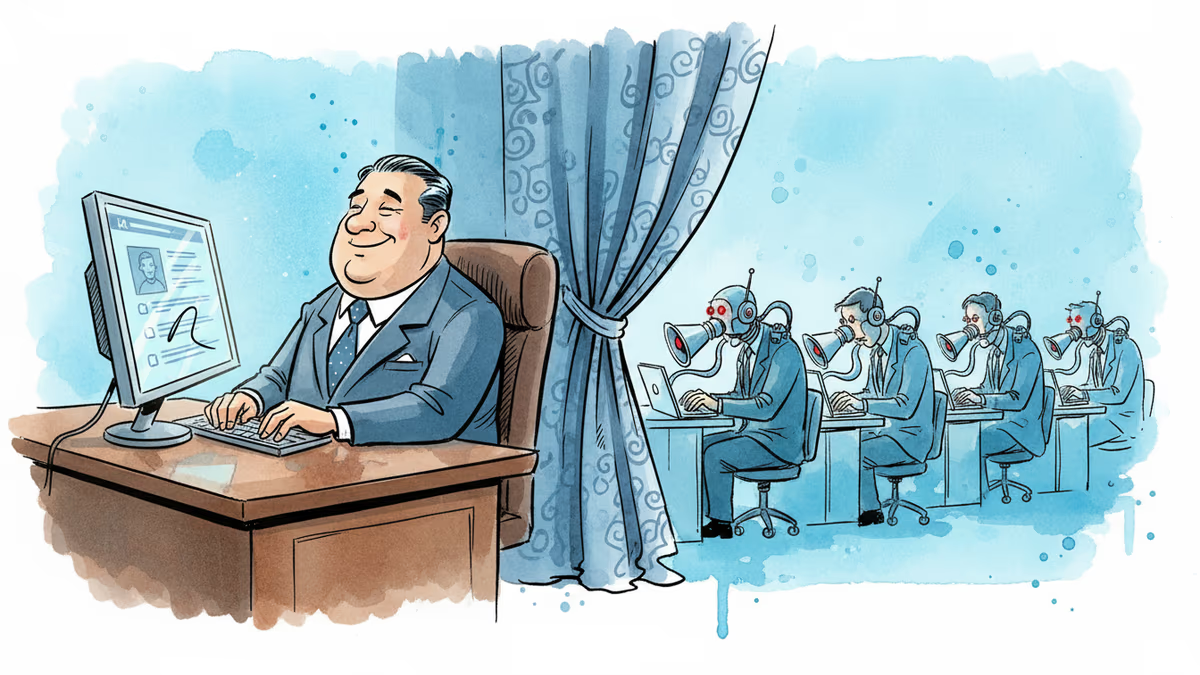
Filipino virtual assistants using AI to ghost-manage LinkedIn profiles for executives is now a structured industry. 30 comments a day, fake engagement rings, and a platform struggling to tell real from fabricated.
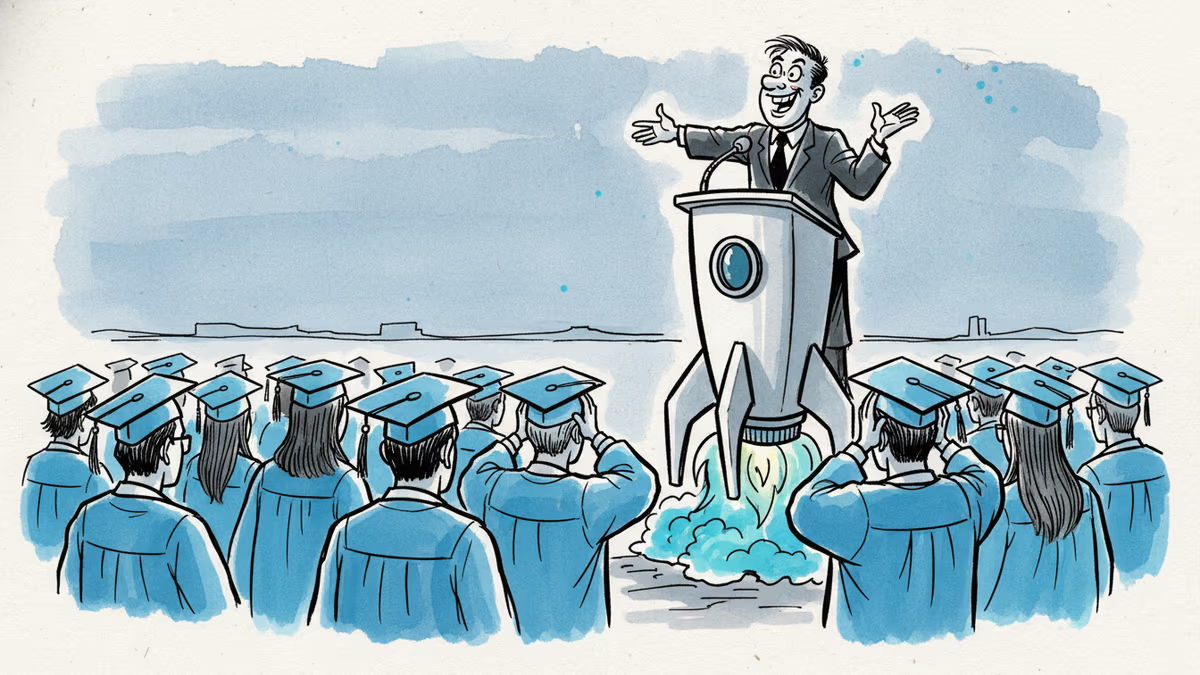
Two commencement speakers learned the hard way that AI enthusiasm doesn't land well with today's graduates. The backlash reveals a widening gap between tech optimism and Gen Z's economic reality.
Samsung and SK unveiled a chip and AI investment package worth thousands of trillions of won on June 29. The headline number swings wildly by outlet, but the real contest isn't capital — it's water and power.
Viral videos show 2026 graduates jeering executives who praise AI at commencement ceremonies. It's not just rudeness — it's a signal about who pays for technological optimism.
Filipino virtual assistants using AI to ghost-manage LinkedIn profiles for executives is now a structured industry. 30 comments a day, fake engagement rings, and a platform struggling to tell real from fabricated.
Two commencement speakers learned the hard way that AI enthusiasm doesn't land well with today's graduates. The backlash reveals a widening gap between tech optimism and Gen Z's economic reality.
Thoughts
Share your thoughts on this article
Sign in to join the conversation