
The LinkedIn Exec Who Never Wrote a Word
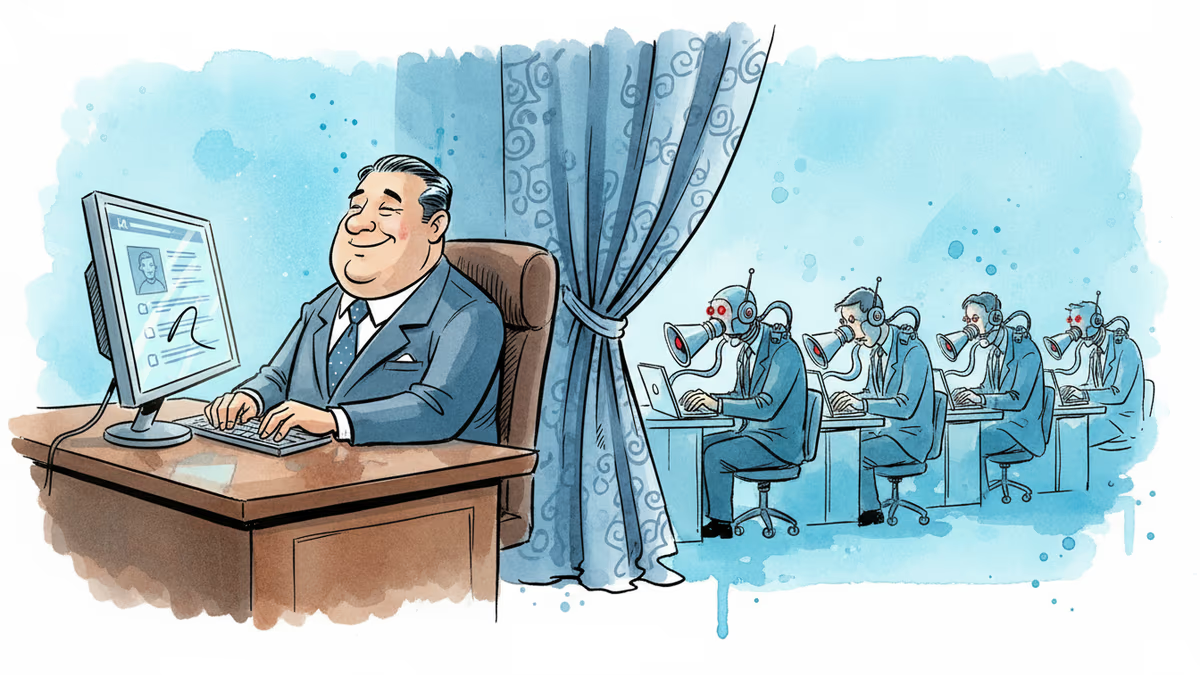
Filipino virtual assistants using AI to ghost-manage LinkedIn profiles for executives is now a structured industry. 30 comments a day, fake engagement rings, and a platform struggling to tell real from fabricated.
A European childcare CEO posts about the qualities of great leadership. Dozens of senior executives respond with warmth: "Beautifully said." "Leadership is kindness." The conversation looks alive. Nobody involved wrote a single word.
Every post, every comment — generated by a virtual assistant in the Philippines, running ChatGPT on a four-page brief about someone they've never met.
A Quiet Industry in Plain Sight
This isn't a fringe hack. Rest of World spoke to six Filipino virtual assistants and two agencies describing what has quietly become a structured offshore industry: low-paid workers, armed with generative AI tools, producing LinkedIn personas for executives and self-styled thought leaders across the US, UK, Canada, and Australia.
The economics are straightforward. Renee, 27, from Rizal Province, generates 30–40 comments per day for a London-based investor using ChatGPT, targeting accounts with high engagement to maximize algorithmic reach. Her hourly rate: $4–7. Alon Pearl, CEO of Israeli recruitment firm VA Masters, which has placed over 1,000 workers with 500 clients, frames it as simple arbitrage: clients save up to 80% on labor costs compared to hiring locally. "A business that couldn't afford a full-time social media manager can now run consistent content and lead-generating campaigns at a fraction of the cost," he said.
Nina, based in Manila, spent two years generating LinkedIn content for executives at an electric vehicle company. She had to project authority on a subject she'd never encountered. "I had to read up about EV charging ports," she said. "I'd never even seen one in my life."
Alex, in Quezon City, goes further. A WhatsApp group of roughly 20 virtual assistants coordinates mutual engagement — members alert each other when a new post goes live, then comment using their own managed accounts. The volume generates its own momentum. The errors do too: one assistant left "Huge win" on a post commemorating the September 11 attacks.

The Platform's Losing Battle
LinkedIn says it's fighting back. In March, the platform deployed an AI system to filter out "engagement bait" and "low quality, automated or generic" content. Its stated goal: surface "professional conversations that help people advance their careers."
The virtual assistants aren't impressed. Robin, 39, a Manila-based VA who has worked across seven agencies, has developed a simple workflow: feed ChatGPT a prompt to "create an outline for a high-performing blog post" with instructions to cover "different angles that serve our client's brand," then port the output directly to LinkedIn. His verdict on the tools: "Gemini is better at research, but ChatGPT sounds more like a human."
Alex describes the tell-tale signs of an offshore-managed account with the confidence of someone who built them: daily posting, sudden follower surges, replies to every single comment. LinkedIn's algorithm and the VA industry are engaged in a direct optimization war — and the VAs have a structural advantage. They're optimizing for exactly what the algorithm rewards.
Three Perspectives Worth Holding Simultaneously
For the executives using this service, the logic is defensible in narrow terms. LinkedIn reach translates to deal flow, speaking invitations, and hiring leverage. If everyone else is gaming the system, opting out is a competitive disadvantage. Pearl's pitch — consistent content at a fraction of the cost — is rational.
For the virtual assistants, the picture is more complicated. Robin asks: "It's alienation on top of alienation. What value am I actually making by throwing this garbage into the world?" Alex quit in late 2025, describing the work as "mind-numbing." And the industry may be eating itself: Ivan Gonzales, a recruiter at workforce agency Worca, predicts AI will eventually eliminate the VA role entirely. His clients are "developing tools to minimize using virtual assistants." He calls it a "dead-end job."
For LinkedIn users, the implications are harder to dismiss. Juan Gabriel Felix, a researcher at Sigla Research Center studying digital labor, draws the connection to the broader "slop" crisis online. "Influencers and thought leaders stand to gain from this practice where a self-sustaining industry of humans and bots generates an illusion of engagement." The professional network you're using to evaluate candidates, vet partners, or find mentors is increasingly populated by personas that no one actually maintains.
The AI-assisted virtual assistant market is projected to grow 182% over the next decade from its current $19.5 billion valuation. A significant portion of that growth will be spent making executives sound thoughtful.
This content is AI-generated based on source articles. While we strive for accuracy, errors may occur. We recommend verifying with the original source.
Related Articles

Samsung and SK unveiled a chip and AI investment package worth thousands of trillions of won on June 29. The headline number swings wildly by outlet, but the real contest isn't capital — it's water and power.

A small but growing group of developers has gone all-in on AI coding agents like Claude Code and OpenClaw. History suggests the rest of us won't be far behind.

Viral videos show 2026 graduates jeering executives who praise AI at commencement ceremonies. It's not just rudeness — it's a signal about who pays for technological optimism.
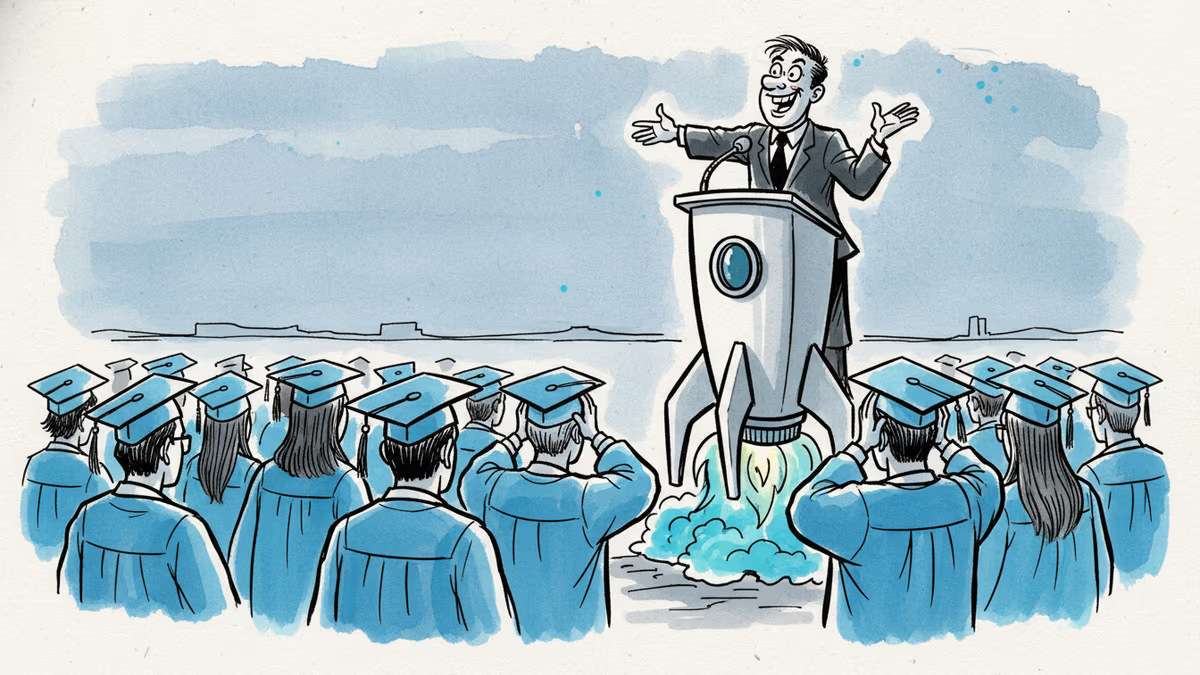
Two commencement speakers learned the hard way that AI enthusiasm doesn't land well with today's graduates. The backlash reveals a widening gap between tech optimism and Gen Z's economic reality.
Samsung and SK unveiled a chip and AI investment package worth thousands of trillions of won on June 29. The headline number swings wildly by outlet, but the real contest isn't capital — it's water and power.
A small but growing group of developers has gone all-in on AI coding agents like Claude Code and OpenClaw. History suggests the rest of us won't be far behind.
Viral videos show 2026 graduates jeering executives who praise AI at commencement ceremonies. It's not just rudeness — it's a signal about who pays for technological optimism.
Two commencement speakers learned the hard way that AI enthusiasm doesn't land well with today's graduates. The backlash reveals a widening gap between tech optimism and Gen Z's economic reality.
Thoughts
Share your thoughts on this article
Sign in to join the conversation