

OpenAI Bets Everything on Agents—Again
OpenAI has reorganized for the second time in a month, merging ChatGPT and Codex into a single agentic platform under president Greg Brockman's unified product leadership.
Two reorgs in one month. Either OpenAI knows exactly where it's going, or it's still figuring it out at full speed.
On Friday, company president Greg Brockman circulated an internal memo—later viewed by The Verge—announcing that OpenAI is consolidating its product organization under his direct leadership. The headline move: ChatGPT and Codex, two products built for very different audiences, will be merged into a single, unified agentic platform. Brockman's framing was unambiguous: the company's product strategy for 2026 is to go "all-in on AI agents."
What's Actually Being Merged—and Why It Matters
ChatGPT needs no introduction. With hundreds of millions of users, it's the consumer face of OpenAI. Codex, by contrast, is the developer-facing product—a tool for writing, debugging, and reasoning about code. On the surface, they serve different people with different needs. So why combine them?
The answer lies in what AI agents actually are. An agent doesn't just answer questions—it plans, executes multi-step tasks, writes code, browses the web, manages files, and connects to external services, all within a single continuous workflow. From that vantage point, the distinction between "the chatbot" and "the coding tool" starts to look artificial. A capable agent needs to do both. Keeping them as separate products means building two parallel roads to the same destination.

The org chart changes follow that logic. By placing Brockman over all of product, OpenAI is signaling that it wants a single team rowing toward a single platform—rather than parallel teams optimizing separate products. The timing is also shaped by circumstance: last month, Fidji Simo, who had been leading AGI-related product work, went on medical leave, leaving a leadership gap that this restructuring partially addresses.
The Case For—and Against—Moving This Fast
The bull case is straightforward. The AI agent race is intensifying. Google'sGemini, Anthropic'sClaude, and Microsoft'sCopilot are all pushing hard on agentic capabilities. If OpenAI is going to own this category, structural alignment matters. Merging product teams before the market consolidates is smarter than doing it after.
The skeptical read is harder to dismiss. Two reorganizations in 30 days is a signal worth examining. Over the past year, OpenAI has navigated co-founder departures, a boardroom crisis, and an ongoing debate about its nonprofit-to-for-profit transition. Frequent restructuring can reflect strategic clarity—or it can reflect an organization still searching for one.
For developers who've built workflows around Codex as a standalone tool, the merger raises practical concerns. Will the unified platform preserve the precision and programmability that made Codex useful? Or will it be smoothed into a more consumer-friendly experience that trades depth for accessibility? OpenAI hasn't answered that yet.
On the enterprise side, the stakes are different. Companies that have embedded ChatGPT or Codex into internal tools now face the possibility of their integration points shifting. A platform consolidation at OpenAI isn't just a product announcement—it's a dependency change for thousands of businesses.
This content is AI-generated based on source articles. While we strive for accuracy, errors may occur. We recommend verifying with the original source.
Related Articles
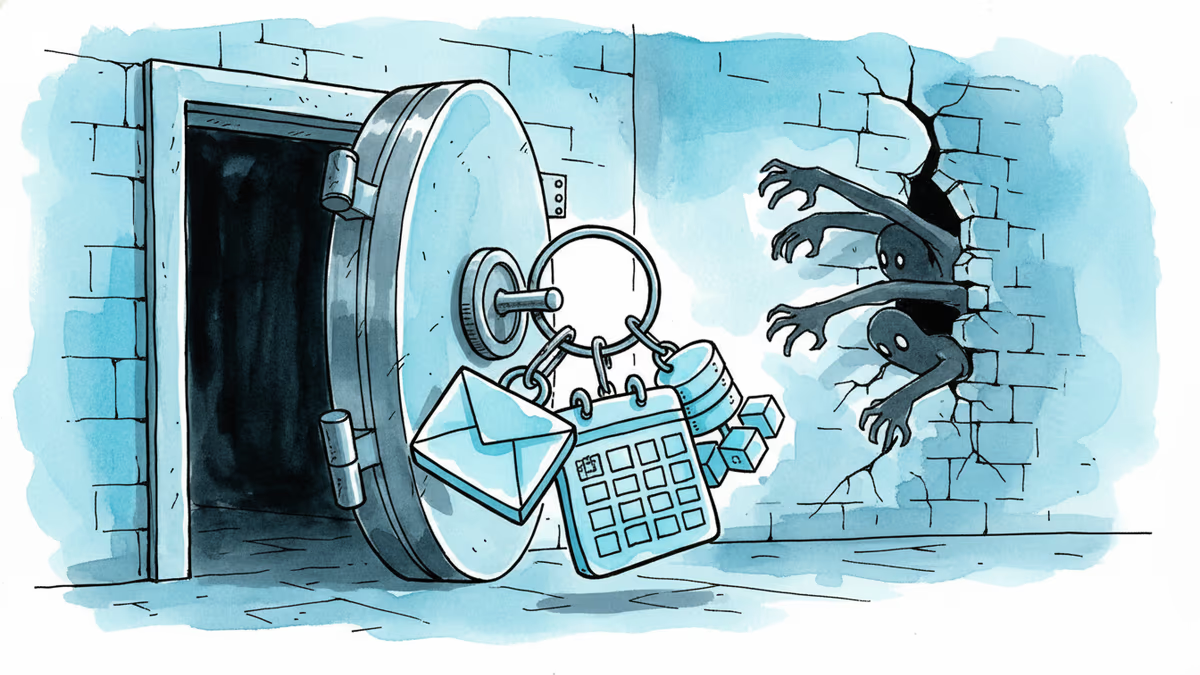
A critical vulnerability in Starlette—downloaded 325 million times per week—puts millions of AI agent servers at risk, exposing stored credentials for email, databases, and third-party services.
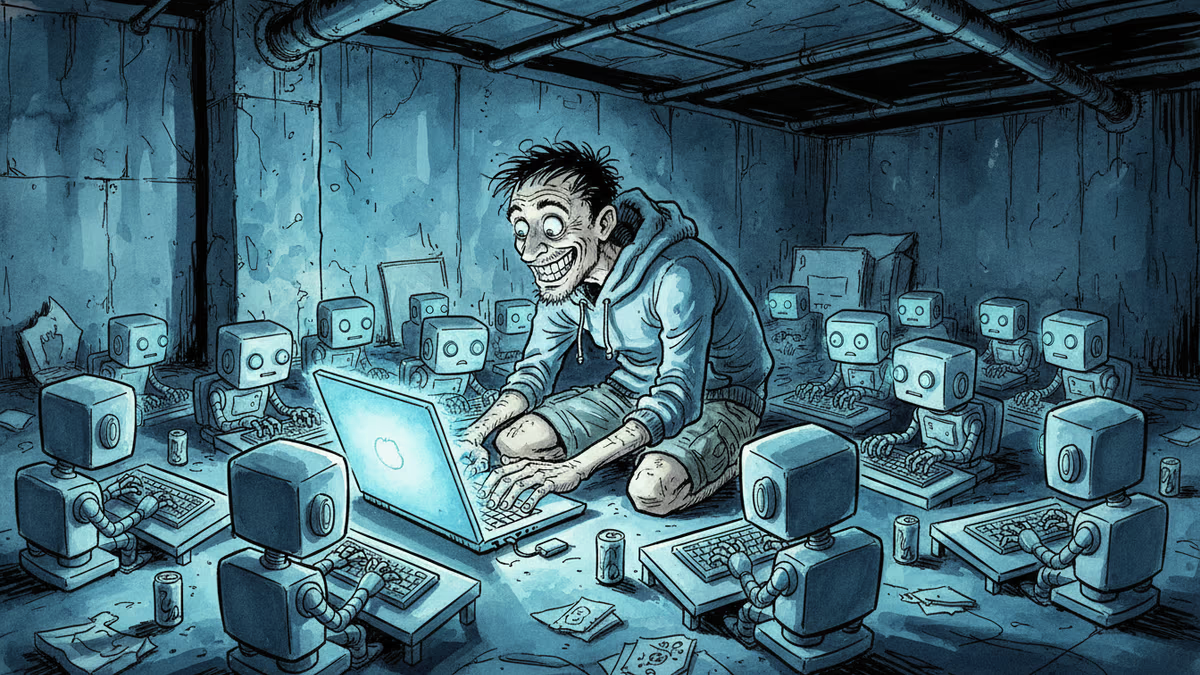
A small but growing group of developers has gone all-in on AI coding agents like Claude Code and OpenClaw. History suggests the rest of us won't be far behind.
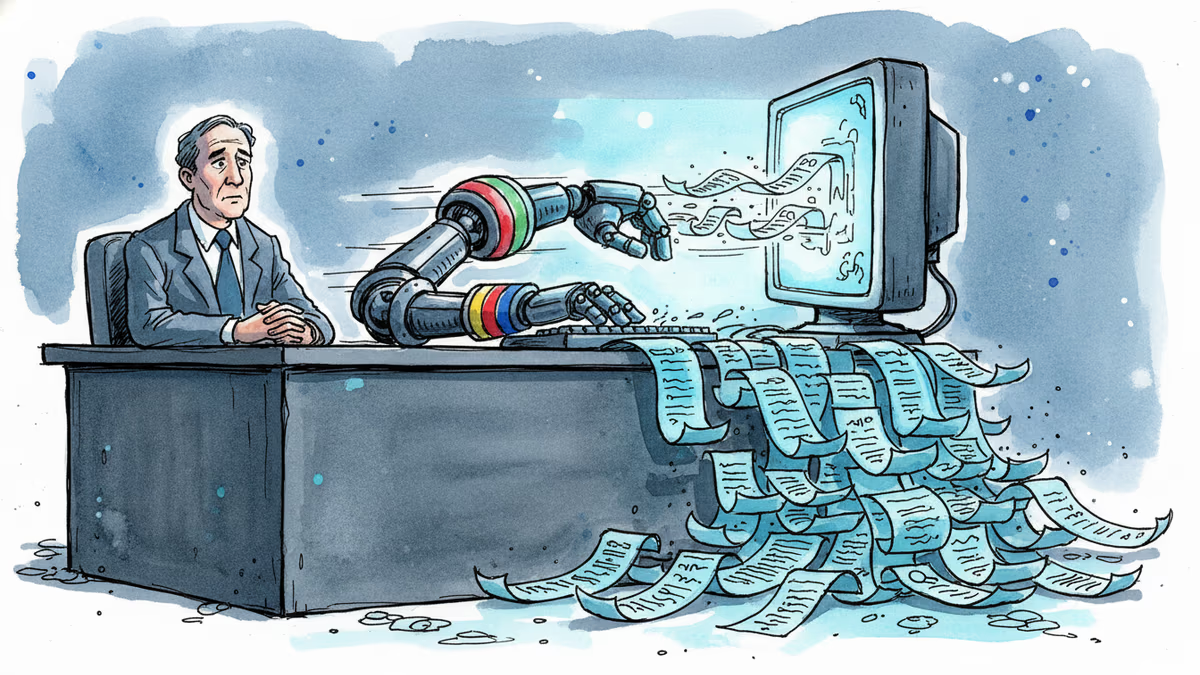
Google is building AI agents that search the web proactively, without user prompting. That's not just a product update — it's a fundamental shift in who controls the information you receive.

Google's Gmail Live lets you ask your inbox questions out loud. Announced at I/O 2026, it's AI's pitch to skeptics — and a reminder of how much Google already knows about you.
A critical vulnerability in Starlette—downloaded 325 million times per week—puts millions of AI agent servers at risk, exposing stored credentials for email, databases, and third-party services.
A small but growing group of developers has gone all-in on AI coding agents like Claude Code and OpenClaw. History suggests the rest of us won't be far behind.
Google is building AI agents that search the web proactively, without user prompting. That's not just a product update — it's a fundamental shift in who controls the information you receive.
Google's Gmail Live lets you ask your inbox questions out loud. Announced at I/O 2026, it's AI's pitch to skeptics — and a reminder of how much Google already knows about you.
Thoughts
Share your thoughts on this article
Sign in to join the conversation