
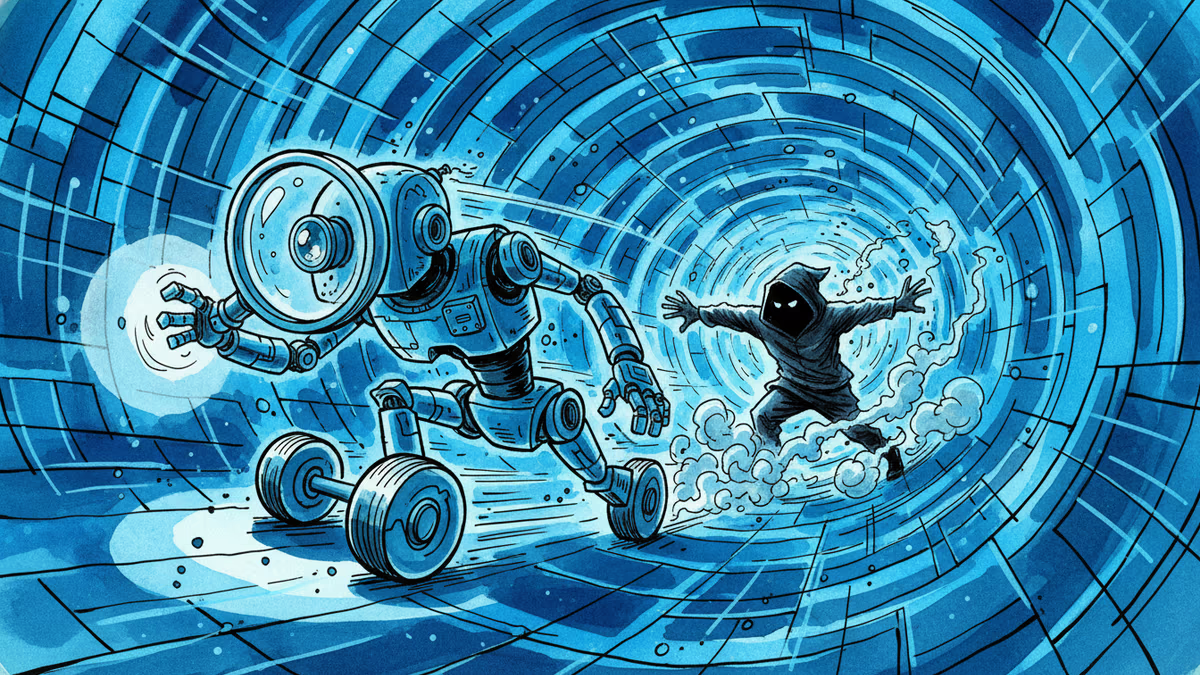
OpenAI Wants to Out-Hack the Hackers
OpenAI's new Daybreak initiative uses the Codex AI agent to find and patch security vulnerabilities before attackers do—putting it in direct competition with Anthropic's secretive Claude Mythos.
Every security team's worst nightmare isn't the breach itself—it's finding out about it weeks later. OpenAI thinks an AI agent can close that gap entirely.
On May 12, OpenAI officially launched Daybreak, a security-focused AI initiative designed to find and fix vulnerabilities before attackers get there first. The engine behind it is Codex, the security AI agent OpenAI released in March. Feed it an organization's codebase, and Codex builds a threat model, maps possible attack paths, validates the most likely vulnerabilities, and automates detection of the highest-risk ones—work that traditionally takes a seasoned penetration tester weeks to complete manually.
The launch lands just over a month after rival Anthropic unveiled Claude Mythos, a security AI it deemed too dangerous to release publicly. Anthropic has kept Claude Mythos locked inside its own private program, Project Glasswing. Two companies, the same technology, two completely opposite deployment decisions.
Why This Matters More Than Another AI Announcement
Cybersecurity is an asymmetric fight by design. Defenders have to seal every gap; attackers only need to find one. Traditional security tools excel at matching known threat signatures, but they're largely blind to novel attack vectors. The promise of Daybreak is a shift from reactive pattern-matching to proactive reasoning—an AI that asks, if I were the attacker, where would I look?

That reframing matters because the talent shortage in security is acute. There are an estimated 3.5 million unfilled cybersecurity positions globally as of 2025, and skilled penetration testers command salaries that put them out of reach for most mid-sized companies. If Daybreak can automate even a fraction of that expertise, it doesn't just help Fortune 500 security teams—it potentially democratizes enterprise-grade vulnerability assessment for organizations that currently can't afford it.
The timing also reflects an accelerating arms race. AI-generated code is flooding codebases faster than human reviewers can audit it. The same models that help developers ship faster are introducing vulnerabilities at scale. OpenAI is, in a sense, selling the antidote to a problem that AI tools—including its own—helped create.
Three Stakeholders, Three Very Different Reactions
Enterprise security teams are the obvious beneficiaries, at least on paper. Automated threat modeling that integrates directly with existing code repositories could cut the time between code commit and vulnerability detection from weeks to hours. For CISOs under pressure to do more with shrinking headcounts, that's a compelling pitch.
Independent security researchers are more cautious. A tool that automatically discovers exploitable vulnerabilities is, by definition, a dual-use technology. The same capability that helps a defender patch a flaw can help an attacker weaponize it. Anthropic's decision to keep Claude Mythos private wasn't just corporate caution—it was an acknowledgment that broad access to this kind of tool carries real risk. OpenAI's choice to commercialize Daybreak raises the question of what access controls, vetting processes, and safeguards are in place. The details of that framework will matter more than the feature list.
Competitors in the security software market—companies like CrowdStrike, Palo Alto Networks, and a generation of AI-native security startups—are watching closely. These firms have spent years building AI-assisted detection and response tools. A direct offering from OpenAI, with its model capabilities and developer ecosystem, is a credible competitive threat, not just a headline.
This content is AI-generated based on source articles. While we strive for accuracy, errors may occur. We recommend verifying with the original source.
Related Articles
Anthropic shipped Claude Sonnet 5, its mid-tier agent model, on June 30. Behind the 'Opus-class power, budget price' headline sits a tokenizer catch and a three-horse race that's only half real. Here's what developers should actually run the numbers on.
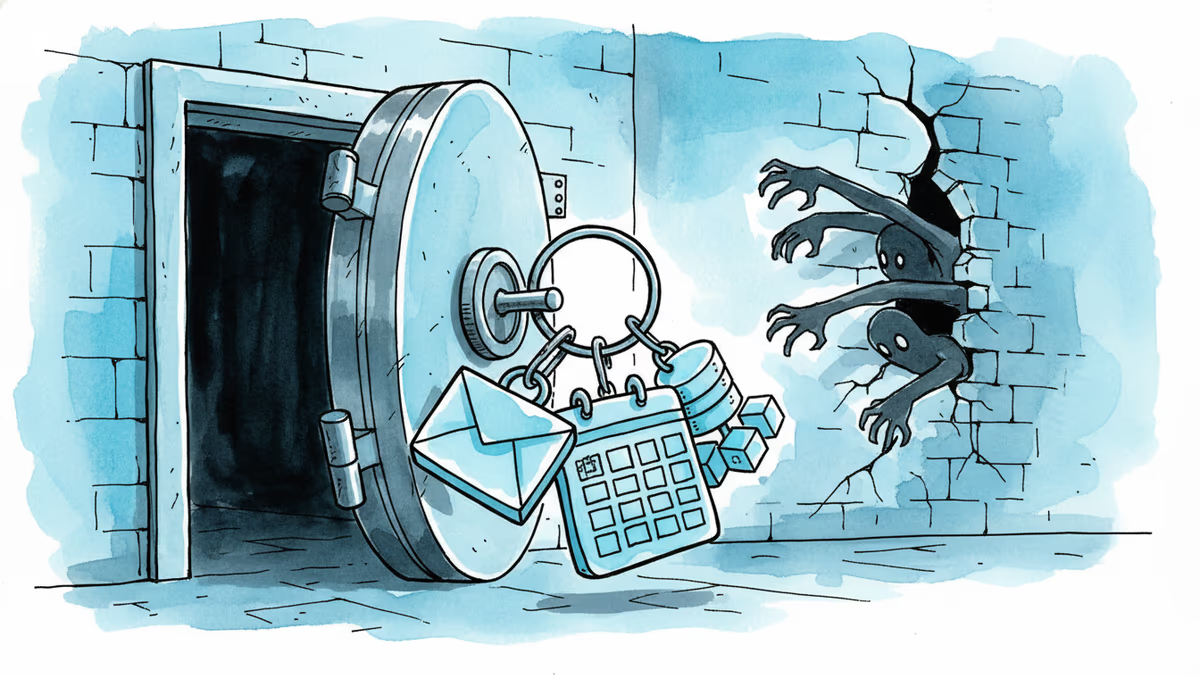
A critical vulnerability in Starlette—downloaded 325 million times per week—puts millions of AI agent servers at risk, exposing stored credentials for email, databases, and third-party services.
A small but growing group of developers has gone all-in on AI coding agents like Claude Code and OpenClaw. History suggests the rest of us won't be far behind.

GitHub confirmed hackers stole data from 3,800 internal repositories via a poisoned VS Code extension. Here's why developer tools are now the most dangerous attack surface in tech.
Anthropic shipped Claude Sonnet 5, its mid-tier agent model, on June 30. Behind the 'Opus-class power, budget price' headline sits a tokenizer catch and a three-horse race that's only half real. Here's what developers should actually run the numbers on.
A critical vulnerability in Starlette—downloaded 325 million times per week—puts millions of AI agent servers at risk, exposing stored credentials for email, databases, and third-party services.
A small but growing group of developers has gone all-in on AI coding agents like Claude Code and OpenClaw. History suggests the rest of us won't be far behind.
GitHub confirmed hackers stole data from 3,800 internal repositories via a poisoned VS Code extension. Here's why developer tools are now the most dangerous attack surface in tech.
Thoughts
Share your thoughts on this article
Sign in to join the conversation