
Europe's First FSD Green Light — Who's Next?
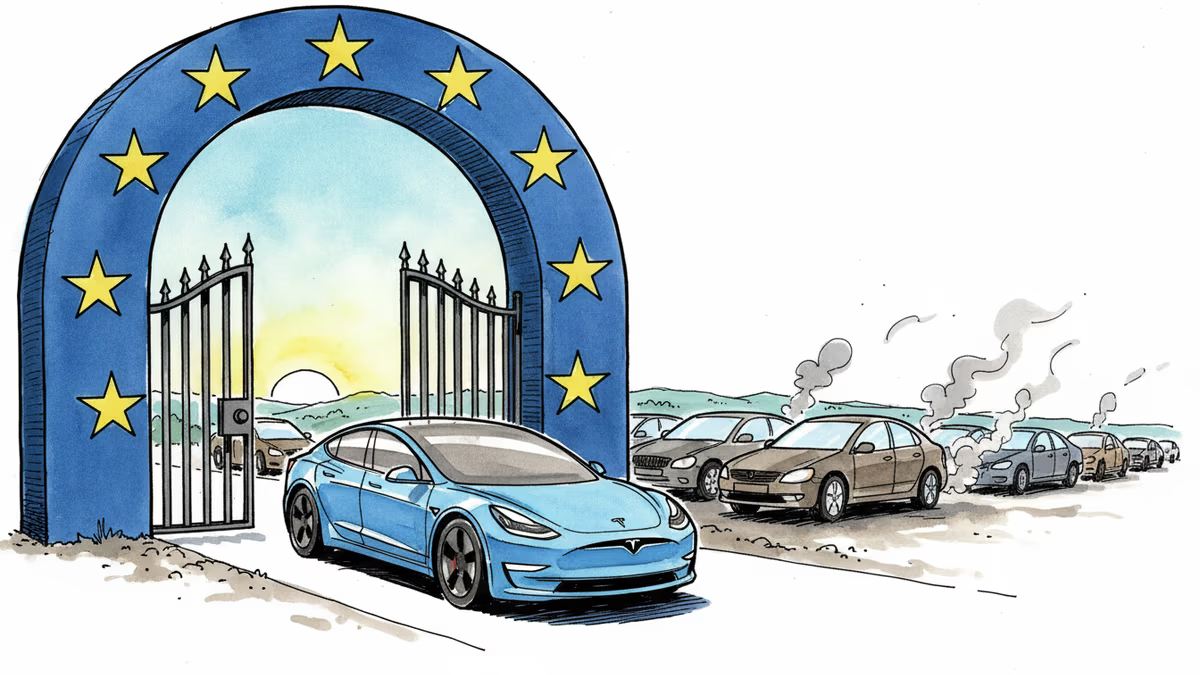
The Netherlands became the first European country to officially approve Tesla's FSD Supervised. With EU's type-approval framework, this could ripple across 27 member states fast.
18 months of road tests. Thousands of kilometers of data scrutiny. And then, a single regulatory stamp that no European country had issued before. The Netherlands just handed Tesla something it's been chasing across the Atlantic for years.
What Actually Happened
The Dutch Vehicle Authority (RDW) has officially approved Tesla's FSD (Full-Self Driving) Supervised for use on public roads — making the Netherlands the first country in Europe to do so. In its announcement, the RDW stated that "using driver assistance systems correctly makes a positive contribution to road safety because the driver is supported in their driving task."
The key word is supervised. FSD Supervised handles acceleration, steering, and braking autonomously, but requires the driver to remain attentive and ready to intervene at any moment. It is not hands-free, eyes-off driving. The name "Full-Self Driving" has long been a source of public confusion — and scrutiny from regulators — precisely because the technology still demands full human oversight.
Tesla's European headquarters sits in Amsterdam. Whether that proximity accelerated regulatory dialogue or is purely coincidental, the result is the same: the Netherlands opened a door that the rest of Europe has kept firmly shut.
Why This Is Bigger Than One Country
The EU's vehicle type-approval framework is the key mechanism here. When one member state formally approves a vehicle technology under this system, it creates a pathway — not an automatic guarantee, but a meaningful precedent — for that approval to be recognized across all 27 member states. The Netherlands didn't just approve FSD for Dutch roads. It potentially handed Tesla a template for the entire European market.

The timing matters too. Tesla has been accumulating real-world FSD data in the US and China for years, logging hundreds of millions of miles. European regulators now had a substantial evidence base to evaluate. The fact that the RDW spent over a year and a half in formal testing before approving suggests this wasn't a rubber stamp — it was a deliberate, data-driven decision.
The Stakeholders Don't All See This the Same Way
For Tesla investors, this is a market expansion signal. Europe represents one of the world's largest EV markets, and FSD — sold as a $8,000 add-on or a monthly subscription — is a high-margin software product. Every new country that approves it is incremental recurring revenue.
For legacy European automakers — Volkswagen, BMW, Stellantis — this is a competitive pressure point. They have invested heavily in their own driver-assistance systems, but none have achieved a comparable regulatory approval for this level of autonomy in Europe. Tesla now has a first-mover advantage in consumer perception on the continent.
For safety advocates, the picture is more complicated. Tesla's FSD has been involved in accidents in the US, and the National Highway Traffic Safety Administration (NHTSA) has launched multiple investigations into the system. European consumer groups may argue that the RDW's approval sets the bar too low, or that the "supervised" label gives drivers false confidence about what the system can and cannot do.
For everyday drivers who own a Tesla in Europe, the approval is tangible: a feature that was previously unavailable — or available only in limited beta — is now legally sanctioned. That changes the product they already own.
The Regulatory Domino Question
The more consequential question isn't whether other EU countries will follow — it's how fast. France, Germany, and Sweden all have active autonomous vehicle testing programs and established regulatory frameworks. If they align with the RDW's findings, the European FSD rollout could accelerate significantly within 12–18 months.
Beyond Europe, regulators in Japan, South Korea, and Australia will be watching closely. Each country has its own approval process, but a credible European precedent carries weight in regulatory conversations globally.
Authors
Related Articles
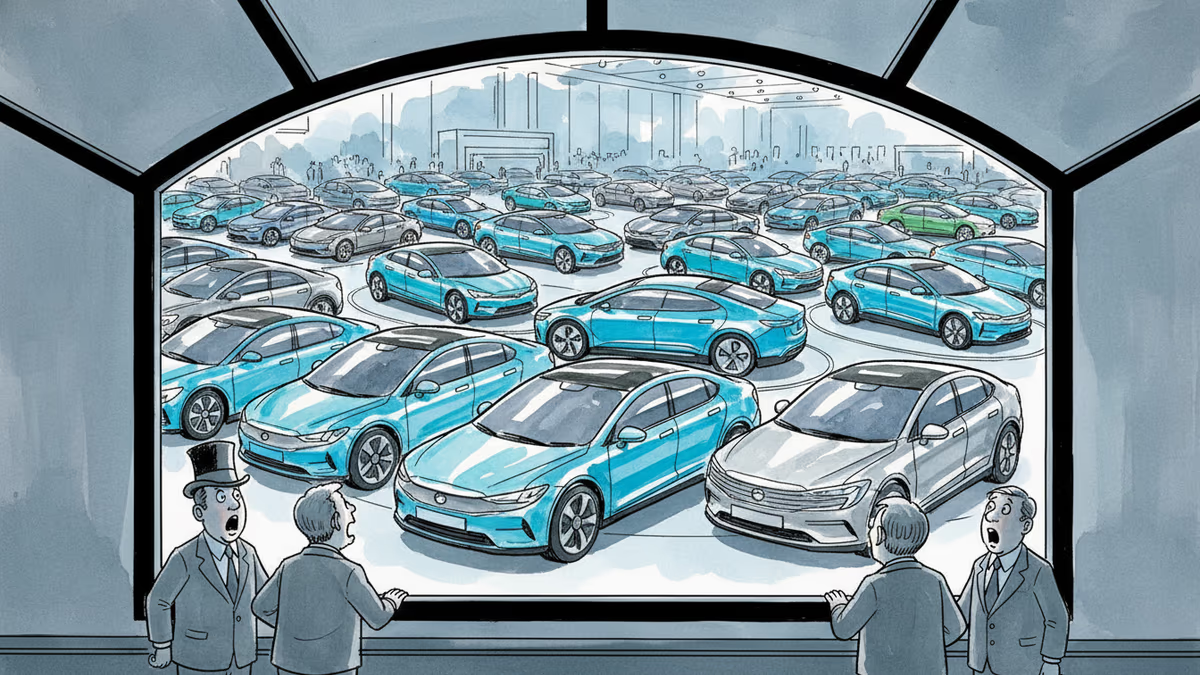
Auto China 2026 set records with 1,451 vehicles and 181 world premieres. But the real story isn't the size—it's how Chinese automakers stopped competing on price and started competing on brains.
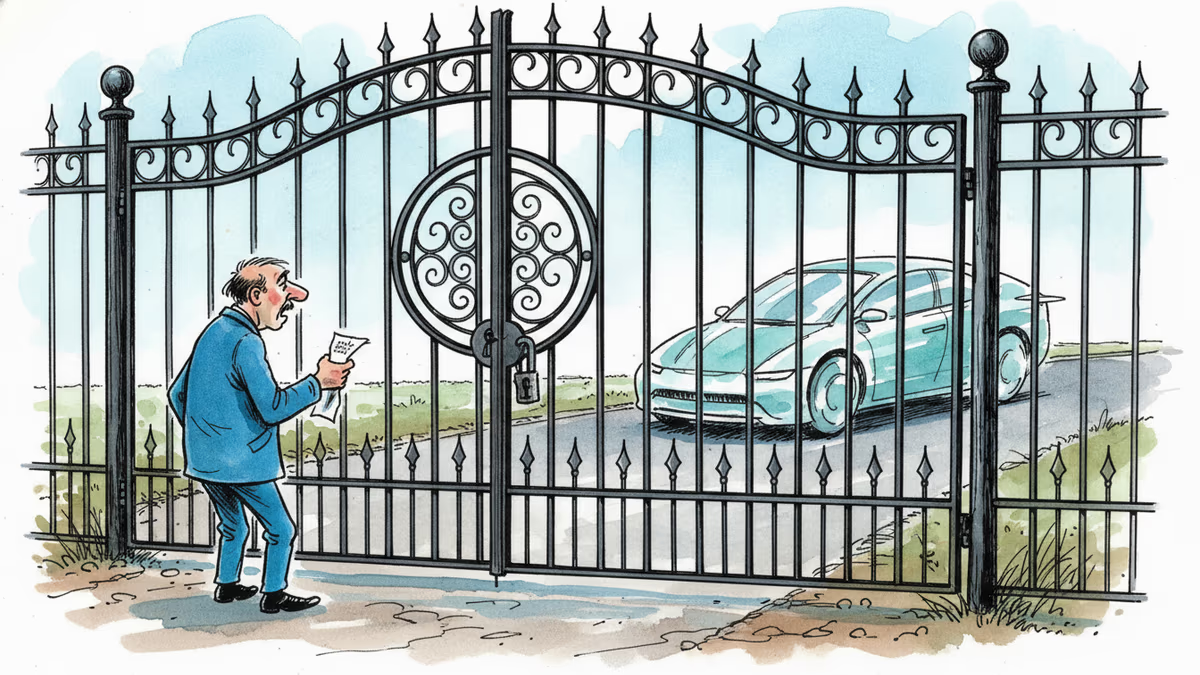
Elon Musk confirmed on Tesla's Q1 2026 earnings call that Hardware 3 vehicles will never receive unsupervised Full Self-Driving — locking out millions who paid for the feature.
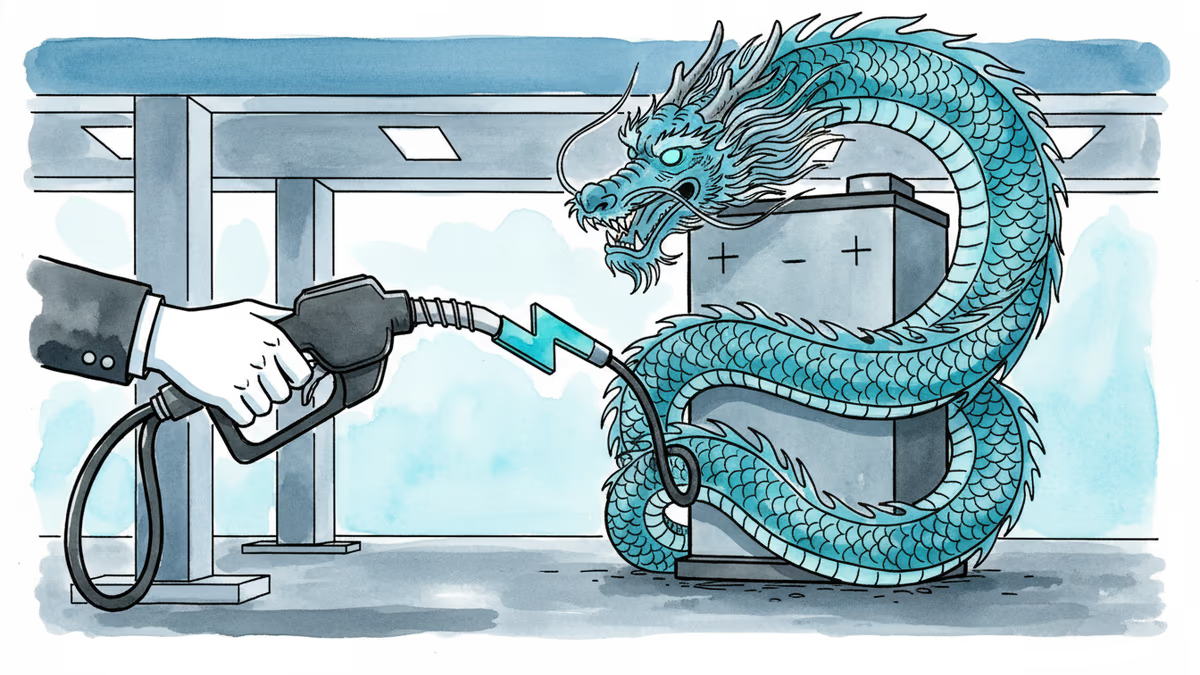
CATL's third-gen Shenxing LFP battery claims charging speeds nearly 5x faster than Hyundai or Porsche's best 800V systems. Here's what that really means.
Tesla expanded its driverless robotaxi to Dallas and Houston, even after reporting 14 crashes in Austin. What does this tell us about how autonomous vehicles actually get built?
Auto China 2026 set records with 1,451 vehicles and 181 world premieres. But the real story isn't the size—it's how Chinese automakers stopped competing on price and started competing on brains.
Elon Musk confirmed on Tesla's Q1 2026 earnings call that Hardware 3 vehicles will never receive unsupervised Full Self-Driving — locking out millions who paid for the feature.
CATL's third-gen Shenxing LFP battery claims charging speeds nearly 5x faster than Hyundai or Porsche's best 800V systems. Here's what that really means.
Tesla expanded its driverless robotaxi to Dallas and Houston, even after reporting 14 crashes in Austin. What does this tell us about how autonomous vehicles actually get built?
Thoughts
Share your thoughts on this article
Sign in to join the conversation