
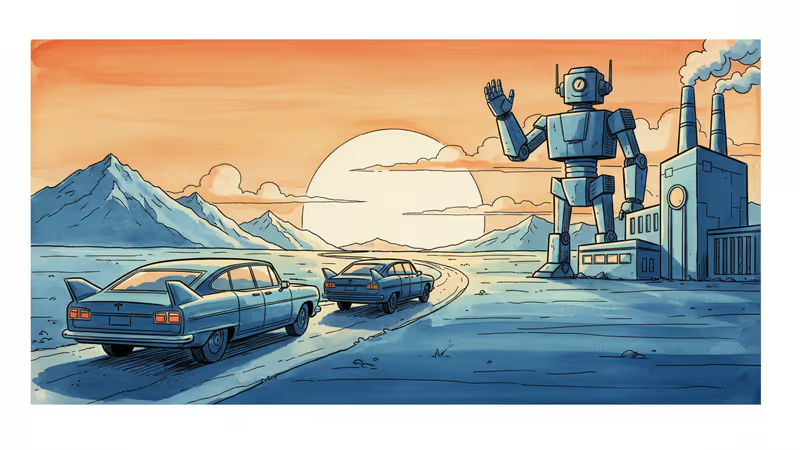
Tesla Kills Model S and X: End of an Era, Start of Robot Future
Tesla ends production of Model S sedan and Model X SUV as Elon Musk shifts focus to autonomy and robotics. The vehicles that launched the EV revolution bow out after over a decade.
After 14 years, the cars that made electric vehicles cool are getting their final curtain call.
Elon Musk announced Wednesday that Tesla will end production of the Model S sedan and Model X SUV next quarter, marking the conclusion of an era that began when electric cars were still considered golf carts for environmentalists. "It's time to basically bring the Model S and X programs to an end with an honorable discharge," Musk said during Tesla's earnings call, "because we're really moving into a future that is based on autonomy."
The Fremont factory space currently building these vehicles will soon house Optimus robots instead—a symbolic shift from the company that electrified transportation to one betting its future on artificial intelligence and automation.
The Car That Changed Everything
When the Model S launched in 2012 with a $57,400 base price, it wasn't just another electric vehicle—it was a statement. Tesla's first ground-up design ditched the compromises of converting gas cars to electric and delivered something genuinely desirable: a floor-mounted battery that created a spacious, low center of gravity sedan that could outperform most sports cars.
The market responded immediately. Tesla collected over 10,000 reservations before the first deliveries began that June. By 2013, MotorTrend named it Car of the Year, beating every gas-powered competitor globally. "At its core, the Tesla Model S is simply a damned good car you happen to plug in to refuel," they wrote—perhaps the highest praise an electric vehicle had ever received.
The Model S became Tesla's testing ground for breakthrough features. Ludicrous Mode made 0-60 mph in 2.8 seconds possible, turning every Tesla into a conversation starter and word-of-mouth marketing machine. Over-the-air updates meant the car got better after you bought it—a concept that seems obvious now but was revolutionary then.
The Beautiful Disaster

The Model X told a different story. First teased in 2012 but not delivered until 2015, the SUV arrived with those famous Falcon Wing doors that folded upward like a transformer. They looked incredible and made getting in and out effortless, but they also made the vehicle nearly impossible to build reliably at scale.
Musk eventually called it the "Fabergé of cars"—a reference to both its luxury appeal and its delicate nature. Despite a major refresh in 2021, production problems persisted. Tesla even halted Model X production before the redesigned version was ready, a mistake Musk admitted in early 2022.
The Writing on the Factory Wall
The retirement wasn't sudden. Musk telegraphed this move back in 2019, calling the Model S and X "niche" vehicles Tesla made for "sentimental reasons more than anything else." Even then, when Tesla was still selling tens of thousands per quarter, he said "they are really of minor importance to our future."
What was supposed to replace them? The Cybertruck, revealed in 2019 with promises of a $40,000 base price and 250,000 annual production. Instead, the angular pickup became what one might generously call a "learning experience." Despite claims of 2 million pre-orders, Tesla has struggled to sell even a few thousand per quarter, and that $40,000 price tag never materialized.
The Cybertruck's struggles likely gave the Model S and X some extra time. Tesla bundled all three as "other models" in quarterly reports, making it harder to see just how badly the truck was performing. But even that accounting trick couldn't hide the fundamental shift in Tesla's priorities.
Beyond Cars
Today's Tesla isn't the same company that launched the Model S. Back then, Tesla was fighting to prove electric cars could be desirable. Now, with Ford, GM, and virtually every automaker producing competitive EVs, Tesla's mission has evolved. Musk's focus has shifted to full self-driving technology and humanoid robots—bets that could either cement Tesla's position as a tech company or prove to be expensive distractions.
The Model S and X served their purpose: they made electric vehicles aspirational and proved the market existed. But in a world where even Hyundai and Kia produce compelling EVs, Tesla's luxury sedans and SUVs feel more like museum pieces than cutting-edge technology.
Authors
Related Articles
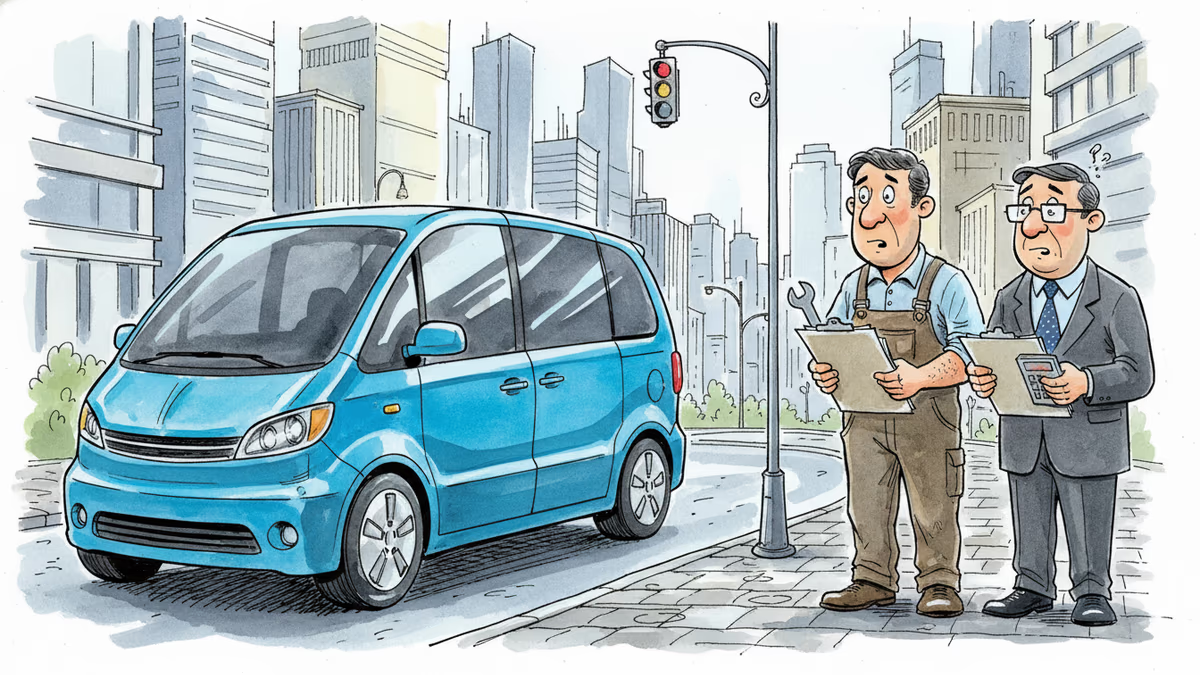
Waymo's new Ojai robotaxi isn't just a vehicle upgrade. It's the company's most serious attempt yet at cracking the cost problem that has kept autonomous vehicles from scaling. Here's what's really at stake.
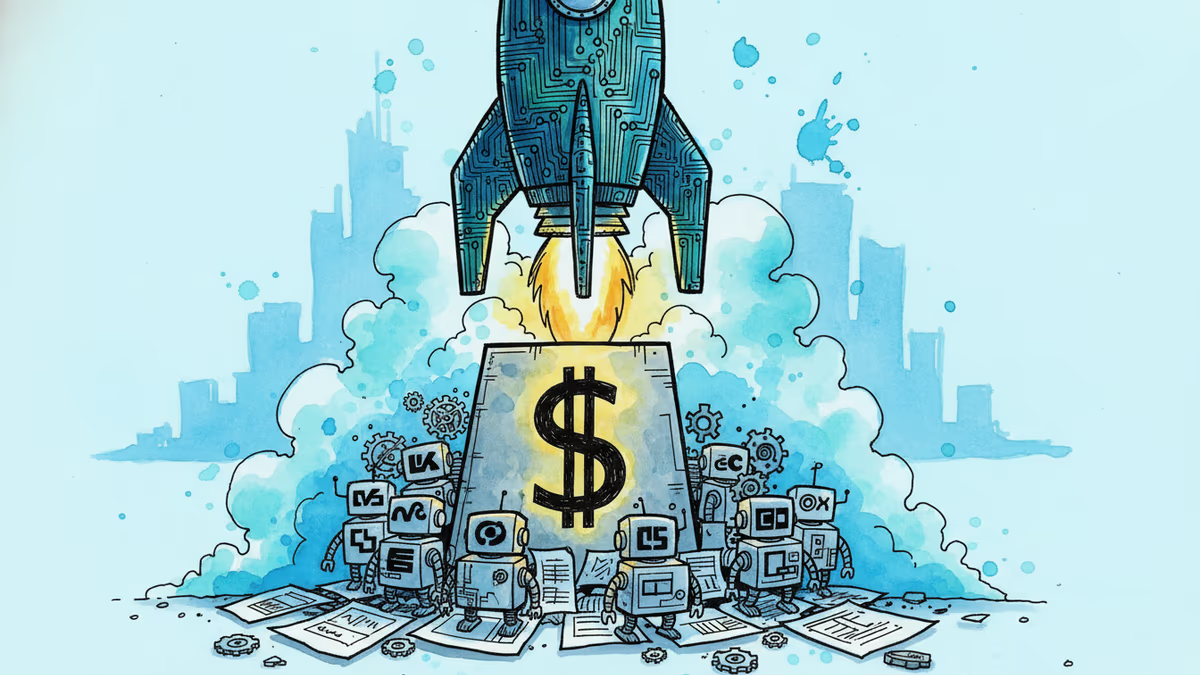
SpaceX's IPO filing puts AI at the center, claiming a $26.5 trillion market opportunity. But can Grok compete with OpenAI and Anthropic for enterprise customers?
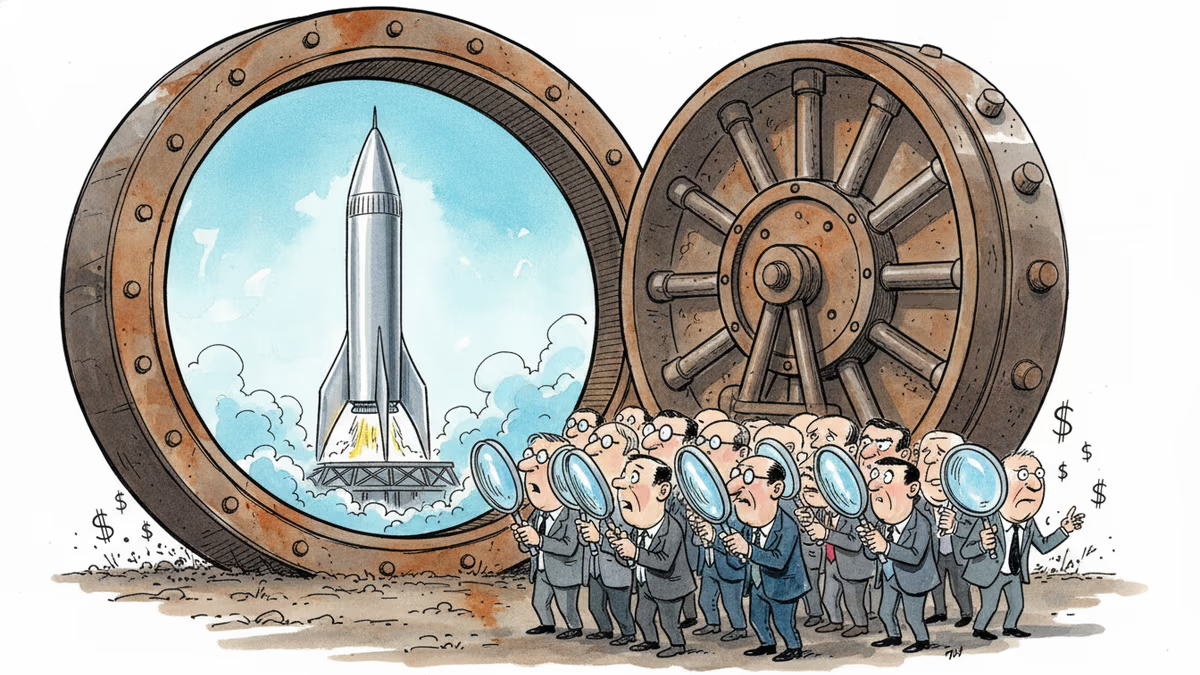
SpaceX filed a nearly 400-page S-1 with the SEC, targeting an IPO as early as June 12. Here's what the filing reveals—and what it doesn't.
SpaceX has filed its S-1 with the SEC, targeting the Nasdaq under ticker SPCX. With $18.67B in revenue but a $4.9B loss, the IPO forces investors to answer one hard question.
Waymo's new Ojai robotaxi isn't just a vehicle upgrade. It's the company's most serious attempt yet at cracking the cost problem that has kept autonomous vehicles from scaling. Here's what's really at stake.
SpaceX's IPO filing puts AI at the center, claiming a $26.5 trillion market opportunity. But can Grok compete with OpenAI and Anthropic for enterprise customers?
SpaceX filed a nearly 400-page S-1 with the SEC, targeting an IPO as early as June 12. Here's what the filing reveals—and what it doesn't.
SpaceX has filed its S-1 with the SEC, targeting the Nasdaq under ticker SPCX. With $18.67B in revenue but a $4.9B loss, the IPO forces investors to answer one hard question.
Thoughts
Share your thoughts on this article
Sign in to join the conversation