
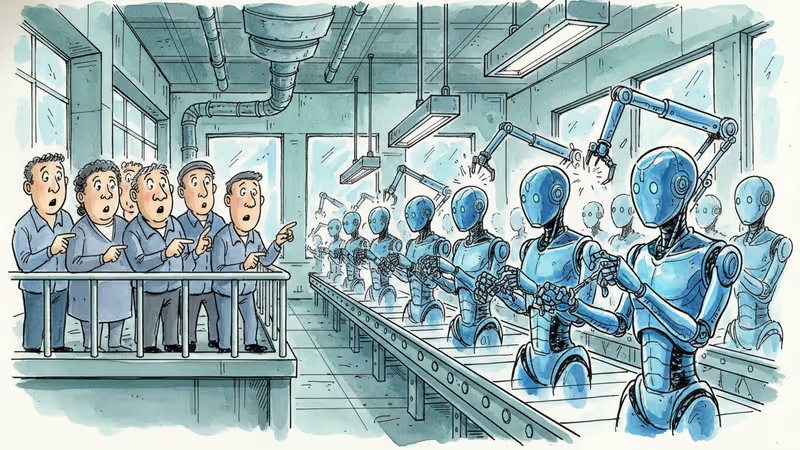
Tesla's Million-Robot Vision: Optimus Gen 3 Set for 2026 Debut
Tesla announces third-generation Optimus humanoid robot for Q1 2026, targeting 1 million units annually. Production begins end of 2026 with major upgrades including new hand design.
One million robots per year. That's Tesla's ambitious production target for its Optimus humanoid robot. It sounds like science fiction, but the company is betting this could be bigger than cars.
What's New in Optimus Gen 3
Tesla revealed in its latest earnings report that the third-generation Optimus, designed "for mass production," will debut in Q1 2026. The new version promises "major upgrades from version 2.5, including our latest hand design" – a detail that could prove crucial for real-world applications.
The timeline is aggressive. Tesla plans to start its first production line before the end of 2026, scaling up to that 1 million units annually capacity. For context, Elon Musk previously predicted 5,000 robots would be produced in 2025, a target that appears to have been missed.
Why the sudden urgency? Musk has long argued that the humanoid robot market could dwarf the automotive industry. If he's right, Tesla isn't just pivoting – it's positioning itself at the center of the next industrial revolution.
From Factory Floor to Living Room
The path to mass adoption likely starts in manufacturing. Tesla is already testing Optimus robots in its own factories, where they can perform repetitive tasks in controlled environments. This makes business sense: industrial customers can justify higher prices for productivity gains.
But the real prize is the consumer market. Imagine a $20,000-$30,000 robot – Musk's stated price target – that can handle household chores, elderly care, or child supervision. At scale, that's cheaper than a luxury car and could work 24/7 without breaks, benefits, or sick days.

The challenge isn't just technical – it's social. How do societies adapt when robots can perform many human jobs? The "latest hand design" Tesla mentioned isn't just about dexterity; it's about crossing the threshold from novelty to necessity.
The Competitive Landscape Shifts
Tesla isn't alone in this race. Boston Dynamics has decades of robotics expertise, while Chinese companies like Unitree and Agility Robotics are advancing rapidly. Amazon has been testing warehouse robots for years, and Google continues AI research that could power future robotics applications.
What Tesla brings is manufacturing scale and cost reduction expertise learned from ramping electric vehicle production. The company turned luxury EVs into mass-market products; can it do the same for humanoid robots?
The implications extend beyond Tesla's bottom line. If humanoid robots become commonplace, entire industries – from logistics to hospitality to healthcare – could restructure around human-robot collaboration rather than pure human labor.
The Investment and Regulatory Reality Check
Investors should note the gap between Musk's predictions and Tesla's delivery history. The 5,000 robots by 2025 target appears to have been missed, and the 1 million annually goal represents a massive scaling challenge.
Regulators, meanwhile, are just beginning to grapple with humanoid robots in workplaces and homes. Safety standards, liability frameworks, and labor protections will need updating. The EU's AI Act and similar legislation may influence how quickly these robots can be deployed.
For consumers, the question isn't just affordability but acceptance. Will people welcome robots into intimate spaces like homes and caregiving situations? Cultural attitudes toward automation vary significantly across markets.
Authors
Related Articles
SpaceX's IPO filing puts AI at the center, claiming a $26.5 trillion market opportunity. But can Grok compete with OpenAI and Anthropic for enterprise customers?
AI is everywhere now—but is it helping or hurting? MIT Technology Review diagnoses a new mood: not excitement, not panic, just a creeping, uncomfortable uncertainty.
Elon Musk confirmed on Tesla's Q1 2026 earnings call that Hardware 3 vehicles will never receive unsupervised Full Self-Driving — locking out millions who paid for the feature.
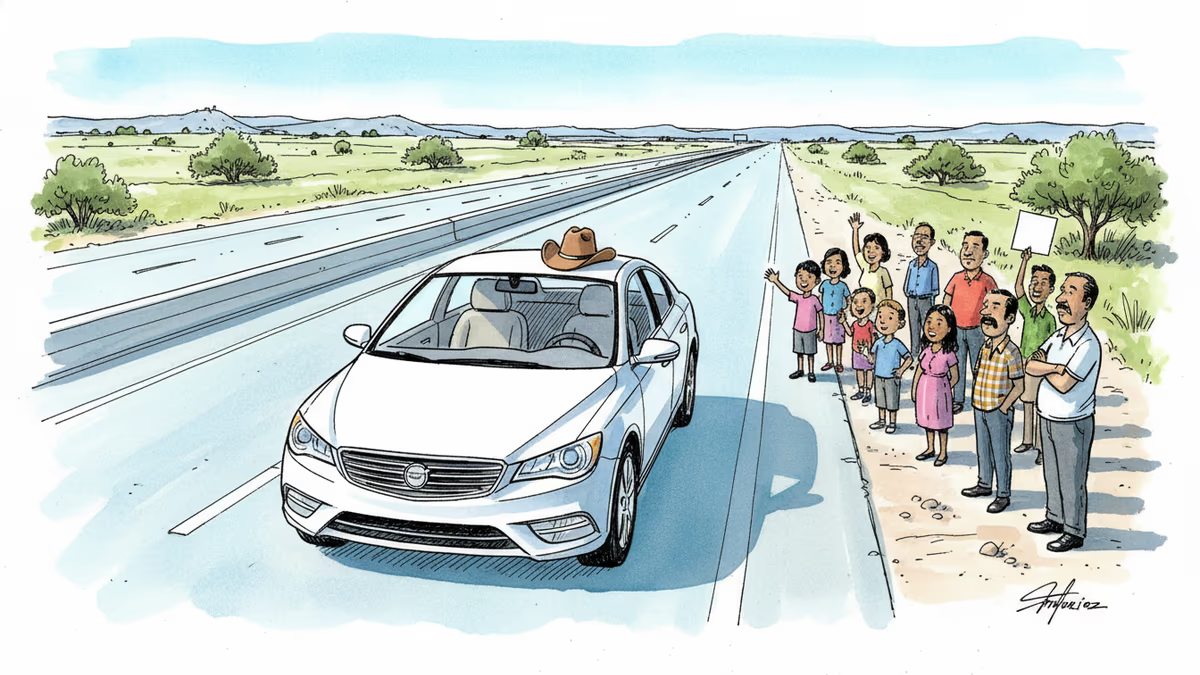
Tesla expanded its driverless robotaxi to Dallas and Houston, even after reporting 14 crashes in Austin. What does this tell us about how autonomous vehicles actually get built?
SpaceX's IPO filing puts AI at the center, claiming a $26.5 trillion market opportunity. But can Grok compete with OpenAI and Anthropic for enterprise customers?
AI is everywhere now—but is it helping or hurting? MIT Technology Review diagnoses a new mood: not excitement, not panic, just a creeping, uncomfortable uncertainty.
Elon Musk confirmed on Tesla's Q1 2026 earnings call that Hardware 3 vehicles will never receive unsupervised Full Self-Driving — locking out millions who paid for the feature.
Tesla expanded its driverless robotaxi to Dallas and Houston, even after reporting 14 crashes in Austin. What does this tell us about how autonomous vehicles actually get built?
Thoughts
Share your thoughts on this article
Sign in to join the conversation