

Tesla Reports First-Ever Annual Revenue Decline
Tesla recorded its first annual revenue drop in company history, with automotive sales falling 11% despite strong growth in energy storage and services. What's behind the EV giant's struggles?
For the first time in Tesla's history, the electric vehicle pioneer reported declining annual revenues. The company that once seemed unstoppable has hit a speed bump that reveals much about the evolving EV landscape.
The Numbers Tell a Mixed Story
Tesla's 2025 financial results paint a picture of a company in transition. Automotive revenues dropped 11% to $17.7 billion, driven by a 16% decline in fourth-quarter deliveries compared to the same period in 2024.
Yet the story isn't entirely grim. Energy storage business surged 25% to $3.8 billion, while services grew 18% to $3.4 billion. These non-automotive segments partially offset the automotive decline, suggesting Tesla's evolution beyond just being a car company.
The revenue drop comes at a time when Tesla faces intensifying competition from both traditional automakers like Ford and GM, and new entrants, particularly Chinese manufacturers like BYD that are gaining global market share.
The Maturation of Electric Vehicles

Tesla's struggles reflect broader changes in the EV market. The early days of limited competition and eager early adopters are giving way to a more mature market where consumers have multiple compelling options.
Traditional automakers have finally caught up with competitive electric models. Volkswagen's ID series, Hyundai's Ioniq lineup, and even luxury brands like BMW and Mercedes now offer electric vehicles that match or exceed Tesla's capabilities in many areas.
Price has become a critical factor. While Tesla built its reputation on premium vehicles, mass-market adoption requires more affordable options. Chinese competitors have proven particularly effective at delivering capable EVs at lower price points.
Energy Storage: The Hidden Growth Engine
The 25% growth in energy storage reveals Tesla's strategic pivot beyond automobiles. As renewable energy adoption accelerates globally, the need for large-scale battery storage systems has exploded.
Tesla's Megapack and Powerwall products are becoming increasingly important for grid stability and renewable energy integration. This business segment, while smaller than automotive, offers higher margins and less competition than the crowded EV market.
The energy business also provides Tesla with a hedge against automotive market volatility. While car sales fluctuate with economic conditions, energy infrastructure investments tend to be more stable and long-term focused.
Authors
Related Articles
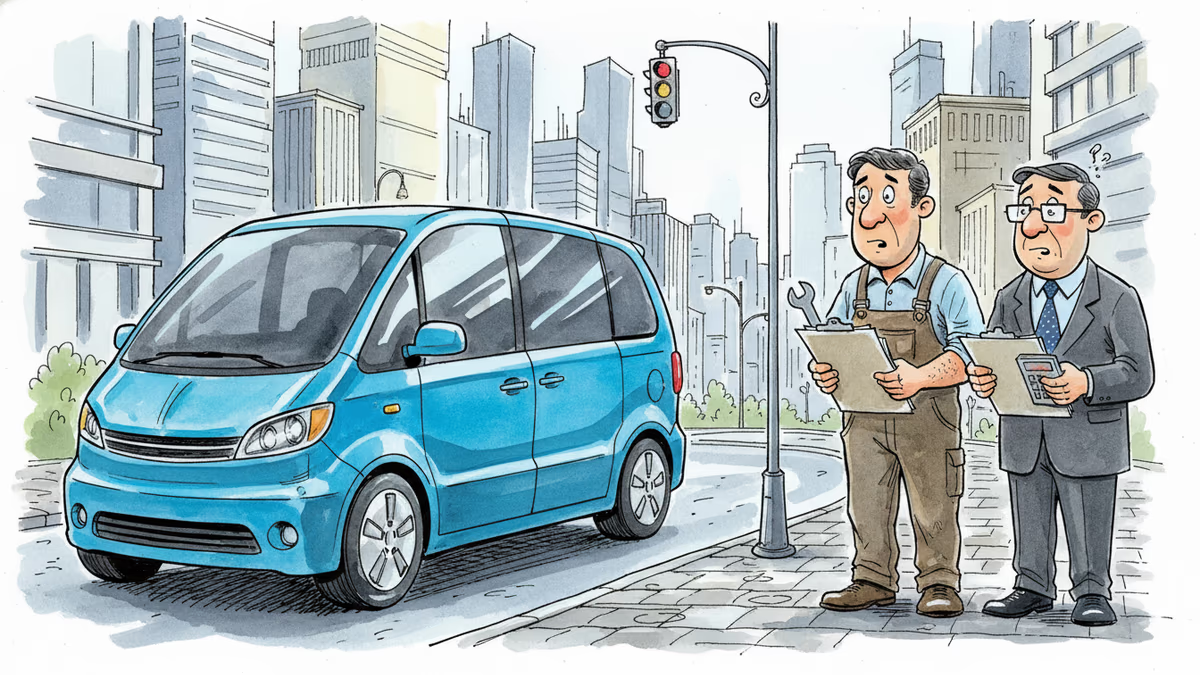
Waymo's new Ojai robotaxi isn't just a vehicle upgrade. It's the company's most serious attempt yet at cracking the cost problem that has kept autonomous vehicles from scaling. Here's what's really at stake.
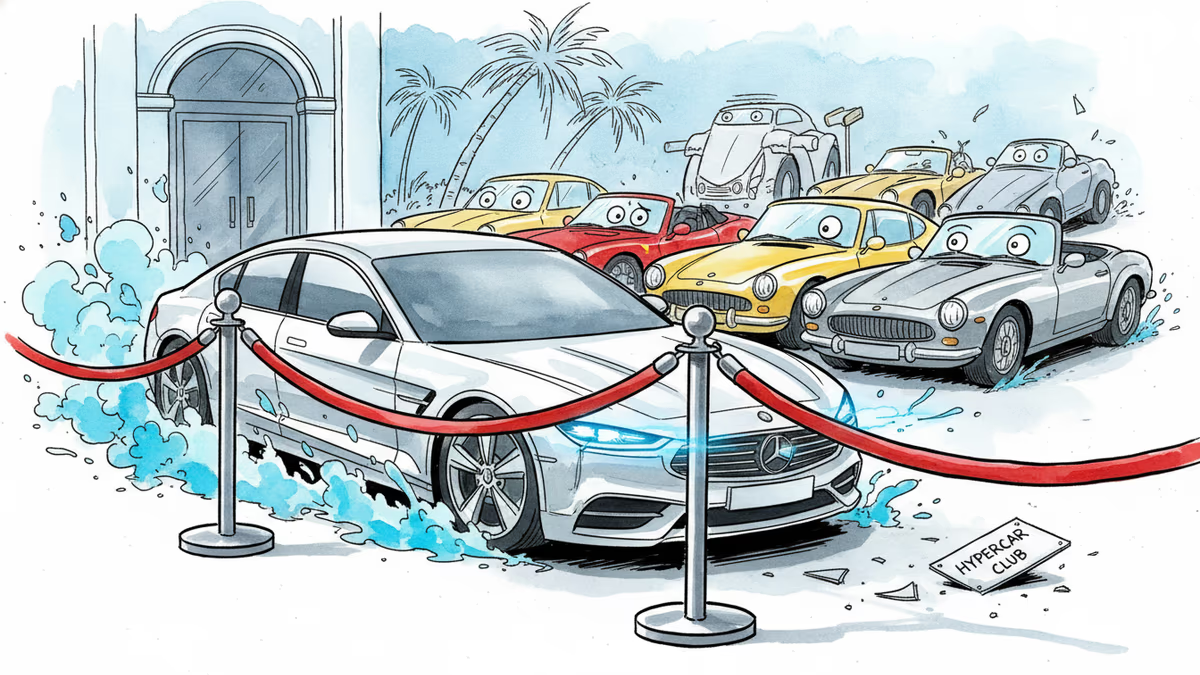
Mercedes-AMG's new GT 4-door coupe packs three YASA axial flux motors producing 1,153 hp and 1,475 lb-ft of torque. Here's what it means for the EV performance race—and who actually wins.
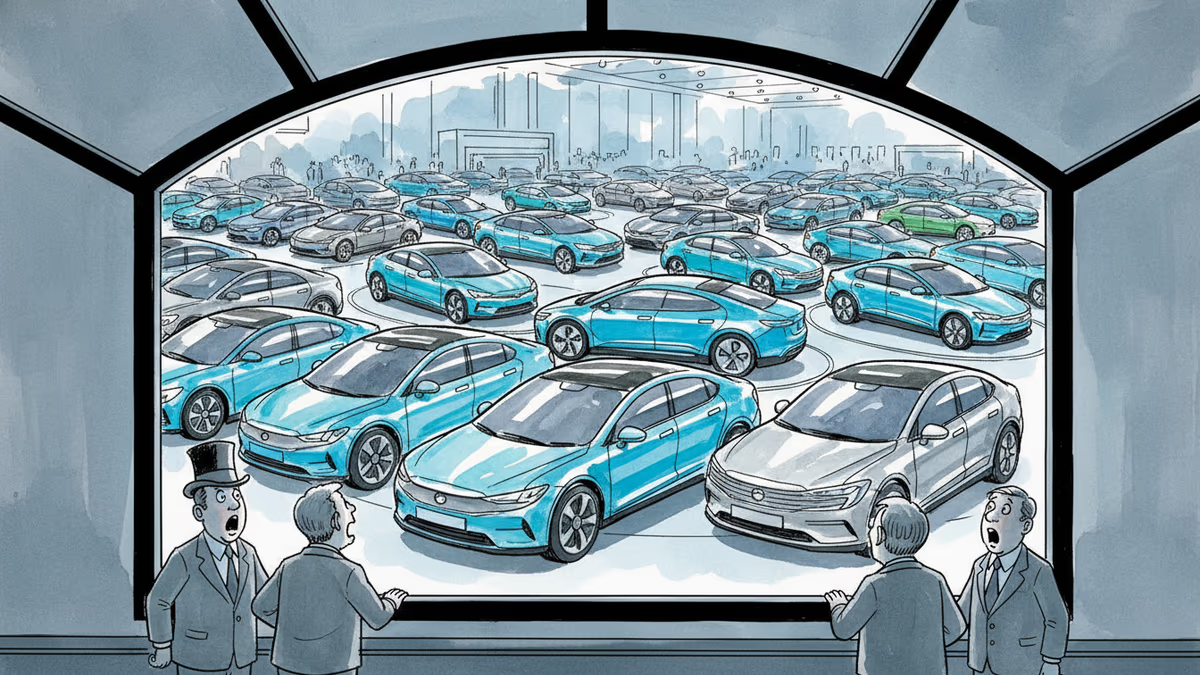
Auto China 2026 set records with 1,451 vehicles and 181 world premieres. But the real story isn't the size—it's how Chinese automakers stopped competing on price and started competing on brains.
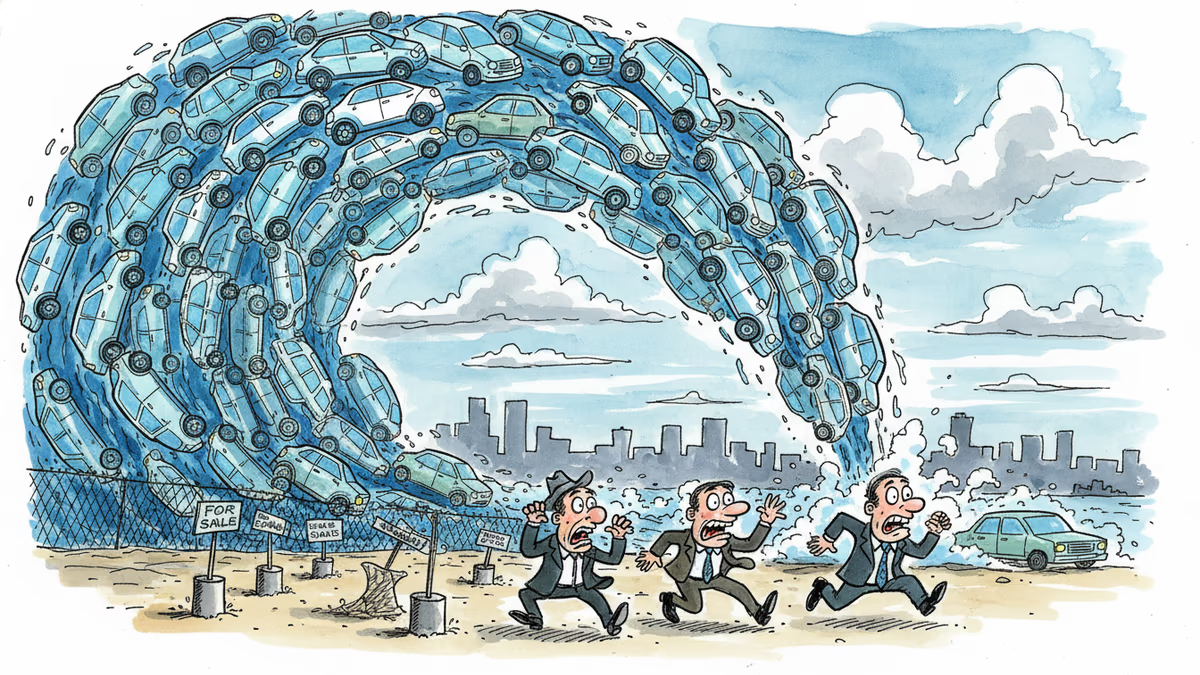
Expiring leases will flood the US used car market with over a million electric vehicles by 2028. Could this do what subsidies couldn't — make EVs genuinely affordable?
Waymo's new Ojai robotaxi isn't just a vehicle upgrade. It's the company's most serious attempt yet at cracking the cost problem that has kept autonomous vehicles from scaling. Here's what's really at stake.
Mercedes-AMG's new GT 4-door coupe packs three YASA axial flux motors producing 1,153 hp and 1,475 lb-ft of torque. Here's what it means for the EV performance race—and who actually wins.
Auto China 2026 set records with 1,451 vehicles and 181 world premieres. But the real story isn't the size—it's how Chinese automakers stopped competing on price and started competing on brains.
Expiring leases will flood the US used car market with over a million electric vehicles by 2028. Could this do what subsidies couldn't — make EVs genuinely affordable?
Thoughts
Share your thoughts on this article
Sign in to join the conversation