
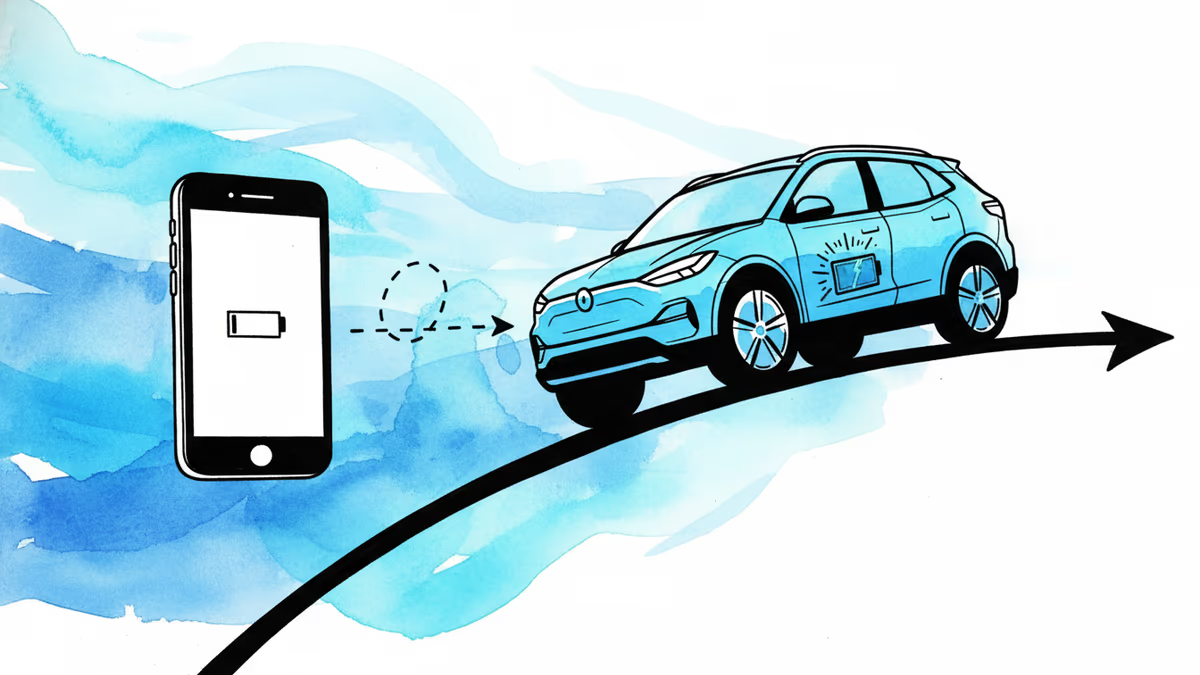
Your Phone Dies in 2 Years. Your EV Battery Won't.
University of Michigan study reveals modern EV batteries lose only 2% capacity annually, lasting over a decade. How liquid cooling and thermal management changed everything.
The $30,000 Question Everyone's Asking
Your laptop battery barely lasts three hours after two years. Your smartphone needs charging twice daily after 18 months. So naturally, when considering an electric vehicle, the same fear creeps in: "Won't I need a massive battery replacement in a few years?"
A new University of Michigan study puts this anxiety to rest with hard data. Modern EV batteries lose just 2% capacity per year. Translation? After a decade of driving, you'll still have 80% of your original range.
That's not your grandfather's lithium-ion battery.
What Changed: It's All About Temperature
Early EVs deserved their reputation for battery degradation. Models from 2012-2015 essentially used oversized smartphone batteries without proper thermal management. The result was predictable: rapid capacity loss and expensive replacements.
Today's EVs are different beasts entirely. Tesla, BMW, and Ford now standard-equip liquid cooling systems and sophisticated Battery Management Systems (BMS). These systems monitor individual cell temperatures, optimize charging patterns, and prevent the thermal runaway that killed early batteries.
General Motors offers an 8-year, 100,000-mile warranty on Bolt batteries not out of marketing bravado, but engineering confidence. They know the numbers.
The Climate Reality Check

Here's where the Michigan study gets interesting. As our planet warms, EVs face a double challenge: higher ambient temperatures stress batteries, while increased air conditioning usage reduces range.
Yet the research found something counterintuitive. Modern thermal management systems handle 95°F+ days remarkably well. The bigger enemy? Cold weather. Batteries still struggle more in sub-20°F conditions than scorching summers.
For American drivers, this means your EV will likely perform better in Phoenix than Minneapolis—but both are manageable with current technology.
The Used Car Market Tells the Truth
Want real-world proof? Check the used EV market. Five-year-old Tesla Model S vehicles regularly show 90%+ battery health. Nissan Leafs from 2018 (with improved thermal management) maintain 85-90% capacity after 100,000 miles.
Meanwhile, how's that three-year-old iPhone holding up?
The data is compelling: battery replacement rates for modern EVs hover around 0.1% annually. Compare that to the 60% of smartphone users who consider battery replacement after two years.
The Economics Are Shifting
Here's what the anxiety misses: by the time your EV battery needs replacement (if ever), costs will have plummeted. Battery prices dropped 85% between 2010 and 2020. They're projected to fall another 50% by 2030.
Meanwhile, that gas engine? Transmission repairs, timing belt replacements, and catalytic converter theft aren't getting cheaper.
Authors
Related Articles
Waymo's new Ojai robotaxi isn't just a vehicle upgrade. It's the company's most serious attempt yet at cracking the cost problem that has kept autonomous vehicles from scaling. Here's what's really at stake.
Mercedes-AMG's new GT 4-door coupe packs three YASA axial flux motors producing 1,153 hp and 1,475 lb-ft of torque. Here's what it means for the EV performance race—and who actually wins.
AI sustainability researcher Sasha Luccioni is launching a new venture to push for energy transparency in AI. Here's why Big Tech keeps the numbers hidden—and what's starting to change.
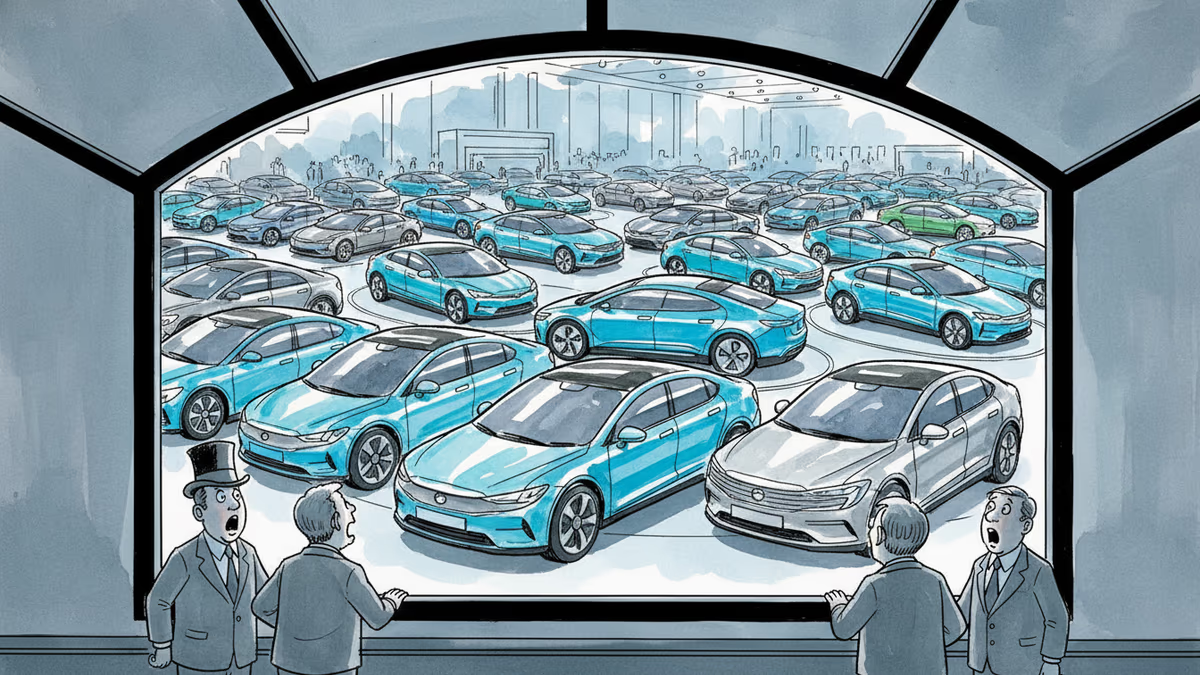
Auto China 2026 set records with 1,451 vehicles and 181 world premieres. But the real story isn't the size—it's how Chinese automakers stopped competing on price and started competing on brains.
Waymo's new Ojai robotaxi isn't just a vehicle upgrade. It's the company's most serious attempt yet at cracking the cost problem that has kept autonomous vehicles from scaling. Here's what's really at stake.
Mercedes-AMG's new GT 4-door coupe packs three YASA axial flux motors producing 1,153 hp and 1,475 lb-ft of torque. Here's what it means for the EV performance race—and who actually wins.
AI sustainability researcher Sasha Luccioni is launching a new venture to push for energy transparency in AI. Here's why Big Tech keeps the numbers hidden—and what's starting to change.
Auto China 2026 set records with 1,451 vehicles and 181 world premieres. But the real story isn't the size—it's how Chinese automakers stopped competing on price and started competing on brains.
Thoughts
Share your thoughts on this article
Sign in to join the conversation