
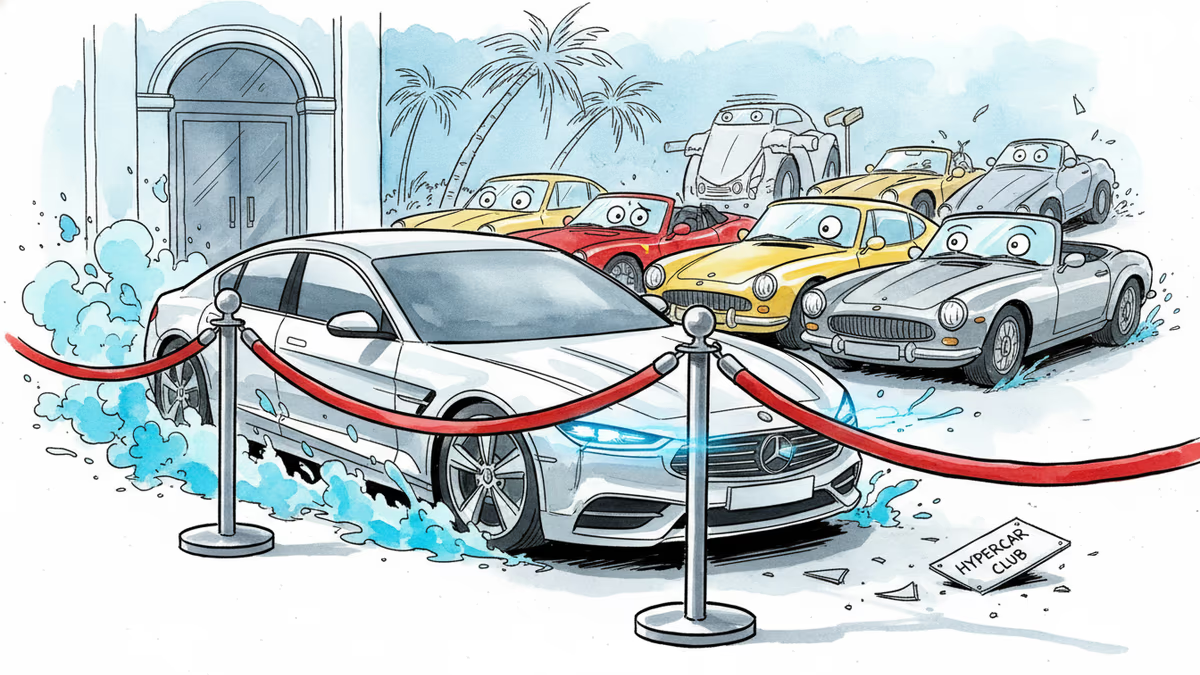
1,153 Horsepower in a Family Sedan. Is This the End of Hypercars?
Mercedes-AMG's new GT 4-door coupe packs three YASA axial flux motors producing 1,153 hp and 1,475 lb-ft of torque. Here's what it means for the EV performance race—and who actually wins.
Somewhere in southern Italy, a circular track called Nardò Ring has seen a lot of records fall. Last year, a Mercedes concept EV lapped it continuously for under 8 days, covering 24,901 miles—roughly the circumference of the Earth. The engineers called it a durability test. The marketing team called it something else. Either way, it worked.
Now that concept has a price tag. And probably a waiting list.
What Mercedes Actually Built
The new AMG GT 4-door coupe isn't a rebadged EV with a sporty suspension tune. It's a ground-up rethink of what a performance electric sedan can be, built around three axial flux motors developed by YASA—a British startup Mercedes quietly acquired in 2021.
Axial flux motors are worth understanding, because they're not the same motors in your average EV. In a conventional radial flux motor, the magnetic field runs perpendicular to the shaft. In an axial flux design, it runs parallel—which sounds like a minor geometry tweak but produces a dramatically higher power density. Thinner, lighter, stronger. It's the same reason Formula E teams and aerospace engineers have been eyeing the technology for years.
Three of these motors, combined, deliver 1,153 horsepower and 1,475 lb-ft of torque. To put that in context: a Lamborghini Huracán STO makes 640 hp. A Ferrari SF90 Stradale—a plug-in hybrid hypercar—makes 986 hp. The AMG GT, a four-door sedan with a back seat, beats both.
Why This Moment Matters

The high-performance EV market has been moving fast, but it's been moving in a specific direction: niche, expensive, often impractical. Rimac's Nevera hit 1,914 hp but costs over $2 million and has the production volume of a boutique watch brand. Tesla's Model S Plaid democratized four-digit horsepower at a relatively accessible price point, but it's still fundamentally a tech product wearing a car's clothes.
What Mercedes-AMG is attempting is different. It's trying to bring hypercar performance into a vehicle that's also expected to carry luggage, park in a garage, and survive a decade of ownership. The Nardò endurance run wasn't just a stunt—it was a proof of concept for thermal management and motor durability under sustained stress. That data now lives in the production car.
The timing is deliberate. Porsche's Taycan Turbo GT already pushes 1,108 hp. BMW M is accelerating its own high-output EV program. The German premium trio is converging on the same territory simultaneously, which tells you something: the industry has decided that the credibility of a performance brand in the EV era will be measured in peak horsepower, at least for now.
Three Ways to Read This
For the buyer: If you're in the market for a six-figure performance sedan, this raises the bar significantly. The competition between AMG, Porsche, and eventually BMW M means these numbers will keep climbing while prices—at least relatively—may not. The consumer wins when brands are racing each other.
For the industry:YASA's axial flux technology, now exclusive to Mercedes, is a strategic moat. Every other automaker that wants similar motor performance either needs to develop it in-house, license it from someone else, or acquire a startup. That acquisition playbook is already well underway across the sector. The real competition isn't horsepower—it's who controls the underlying motor architecture.
For the skeptic: There's a reasonable argument that 1,153 hp in a road car is a number in search of a use case. Speed limits haven't changed. Track days are still a weekend hobby for a small slice of buyers. The cynical read is that peak power figures are now primarily a marketing instrument—a way for legacy performance brands to signal that electrification hasn't neutered them. That's not nothing, but it's worth naming.
This content is AI-generated based on source articles. While we strive for accuracy, errors may occur. We recommend verifying with the original source.
Related Articles
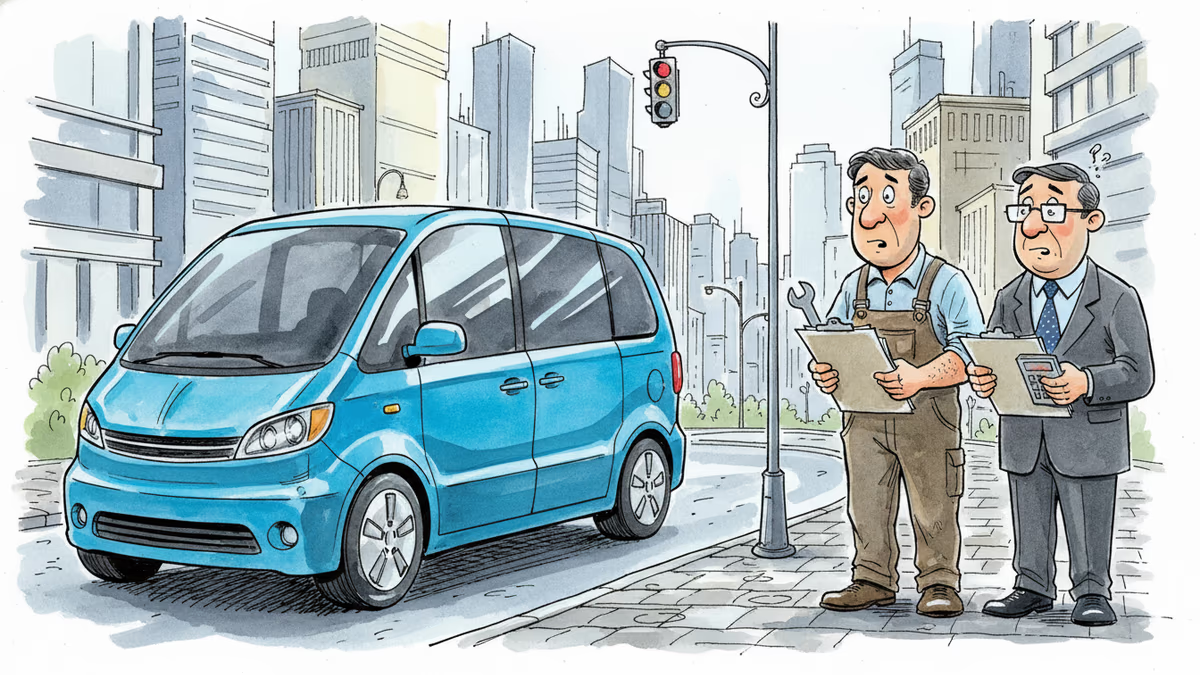
Waymo's new Ojai robotaxi isn't just a vehicle upgrade. It's the company's most serious attempt yet at cracking the cost problem that has kept autonomous vehicles from scaling. Here's what's really at stake.
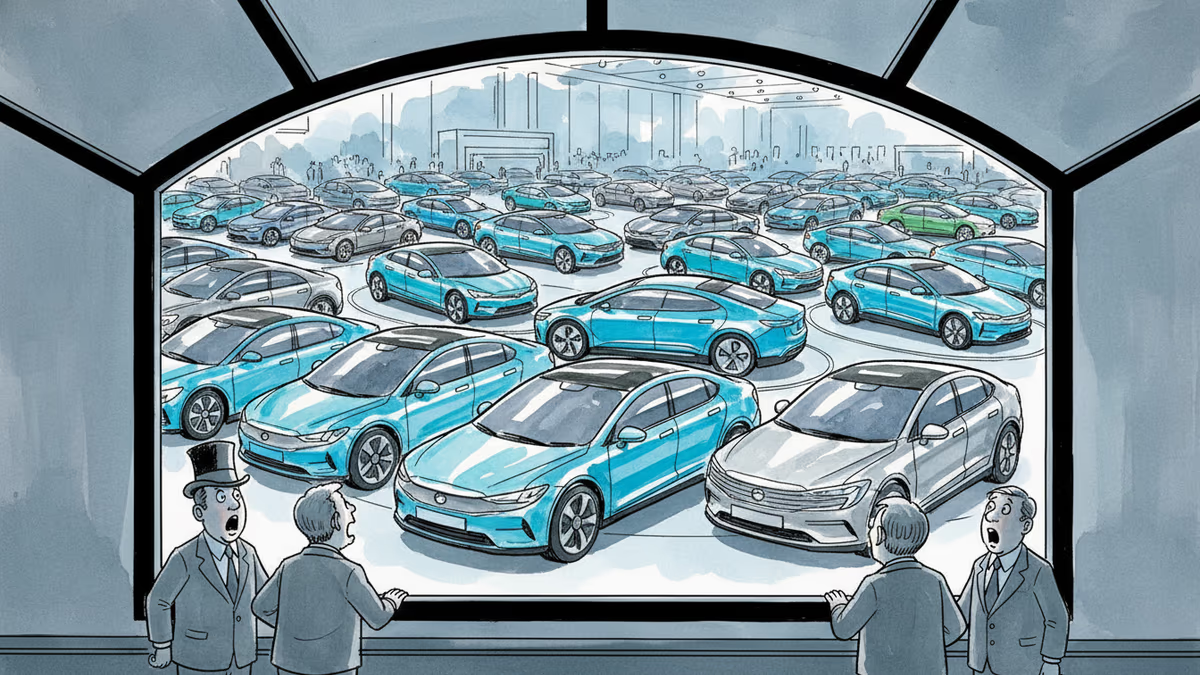
Auto China 2026 set records with 1,451 vehicles and 181 world premieres. But the real story isn't the size—it's how Chinese automakers stopped competing on price and started competing on brains.

Expiring leases will flood the US used car market with over a million electric vehicles by 2028. Could this do what subsidies couldn't — make EVs genuinely affordable?
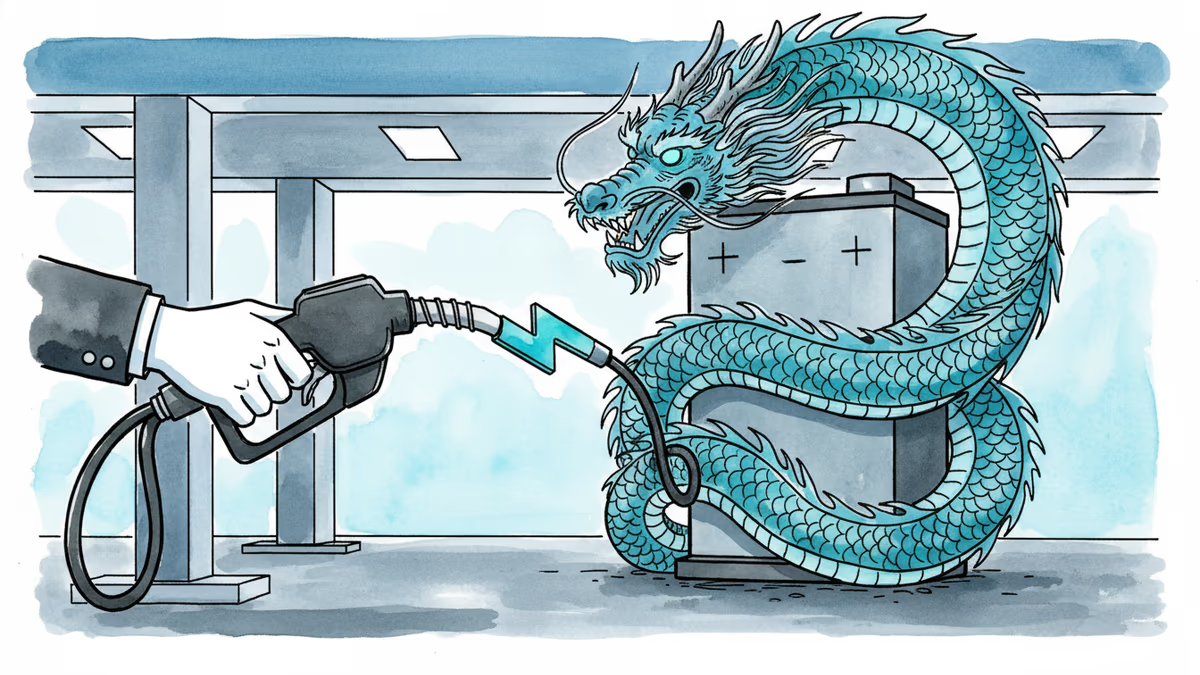
CATL's third-gen Shenxing LFP battery claims charging speeds nearly 5x faster than Hyundai or Porsche's best 800V systems. Here's what that really means.
Waymo's new Ojai robotaxi isn't just a vehicle upgrade. It's the company's most serious attempt yet at cracking the cost problem that has kept autonomous vehicles from scaling. Here's what's really at stake.
Auto China 2026 set records with 1,451 vehicles and 181 world premieres. But the real story isn't the size—it's how Chinese automakers stopped competing on price and started competing on brains.
Expiring leases will flood the US used car market with over a million electric vehicles by 2028. Could this do what subsidies couldn't — make EVs genuinely affordable?
CATL's third-gen Shenxing LFP battery claims charging speeds nearly 5x faster than Hyundai or Porsche's best 800V systems. Here's what that really means.
Thoughts
Share your thoughts on this article
Sign in to join the conversation