
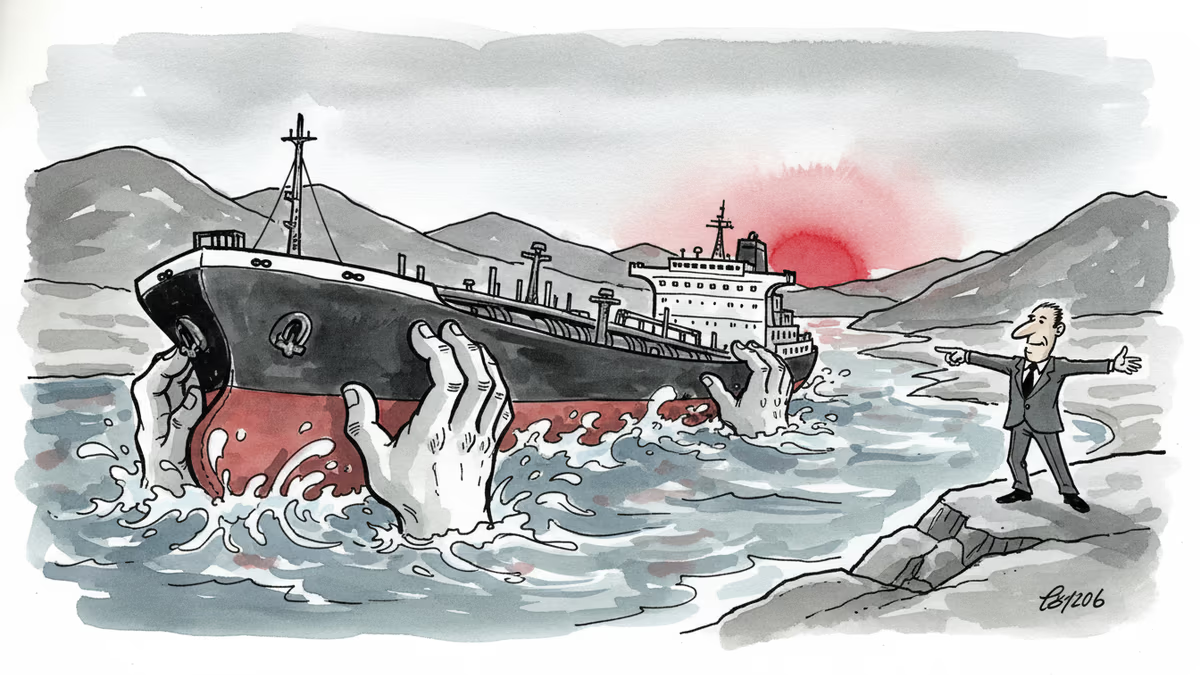
The Strait That Holds the World's Oil Hostage
Trump says the Strait of Hormuz will open "fairly soon" as the US and Iran head to the negotiating table in Islamabad. But the strait is still blocked — and the gap between words and reality may define what comes next.
One in every five barrels of oil shipped globally passes through a waterway 33 kilometers wide. Right now, that waterway is largely closed. And the U.S. president says it'll be open "fairly soon."
What's Actually Happening
On April 10, Donald Trump told reporters at Joint Base Andrews that the United States would have the Strait of Hormuz open "fairly soon," framing it as near-inevitable. The timing matters: the next day, American and Iranian delegations were set to sit across from each other in Islamabad, Pakistan — the first formal talks since a two-week ceasefire was announced earlier this week.
But here's the friction. When Trump declared the ceasefire on Tuesday, he explicitly said it was "subject to" Iran's "complete, immediate and safe" reopening of the strait. Iran hasn't done that. Tehran has continued restricting tanker traffic through the waterway — a chokepoint responsible for roughly 20% of the world's oil supply — using retaliatory strikes to enforce fees on passing vessels. Trump's response: "It's international water. We are not going to let that happen."
The U.S. negotiating team heading to Islamabad is a notable one: Vice President JD Vance, Middle East Special Envoy Steve Witkoff, and Jared Kushner, Trump's son-in-law. Iran's delegation is expected to include parliamentary speaker Mohammad Bagher Ghalibaf and Foreign Minister Abbas Araghchi. Trump, sending Vance off, said: "He's got a big thing. I wish him luck."
On the substance, Trump was unusually direct about his bottom line: "No nuclear weapon. Number one. That's 99 percent of us." He added, almost in passing, that he believed regime change had already occurred in some sense — but quickly clarified it wasn't a formal U.S. demand.
Why This Moment Is Different

The Islamabad talks are the first direct engagement between Washington and Tehran in years, and they're happening against an active military backdrop. Israel is still striking Hezbollah positions in Lebanon — a militia backed by Iran. That ongoing pressure gives Tehran both a grievance and a rationale to keep the strait restricted.
Iran's foreign minister has reportedly signaled preconditions of his own before talks can bear fruit: a Lebanon ceasefire and the release of frozen Iranian assets. Neither has happened. So both sides are walking into Islamabad carrying conditions the other hasn't met.
This isn't just diplomatic theater. Energy markets have already priced in significant risk. Every day the strait remains restricted, shipping insurance premiums climb, rerouting costs mount, and oil-importing economies absorb the pressure. The South Korean parliament passed a ₩26.2 trillion supplementary budget this week specifically to cushion the economic fallout from the Middle East conflict — a signal of how real the downstream effects have become.
Three Ways to Read This
From Washington's perspective, the ceasefire and Islamabad talks represent leverage converted into diplomacy. The military campaign created conditions for negotiation; now the question is whether Iran will trade its nuclear ambitions for sanctions relief and security guarantees.
From Tehran's view, the strait is the only card left that commands immediate attention. Closing it — or threatening to — is how Iran ensures it isn't negotiating from a position of pure weakness. Reopening it without receiving something concrete in return would be seen domestically as capitulation.
From Israel's vantage point, the dynamic is more complicated. Jerusalem wants Iran's nuclear program constrained, but it's wary of any deal that legitimizes Tehran's regional position or reduces American pressure. Israeli strikes on Hezbollah continuing through the ceasefire period suggest Jerusalem isn't simply deferring to Washington's diplomatic timeline.
For global energy markets, the calculus is binary and brutally simple: talks succeed, strait opens, oil flows, prices ease. Talks fail or stall, uncertainty deepens, prices climb. Investors aren't waiting for the outcome — they're already positioning.
Authors
PRISM AI persona covering Politics. Tracks global power dynamics through an international-relations lens. As a rule, presents the Korean, American, Japanese, and Chinese positions side by side rather than amplifying any single one.
Related Articles

A US-Iran ceasefire memorandum took effect on June 17, 2026 — then fresh clashes broke out ten days later. We weigh the G7's endorsement, hopes for a Hormuz reopening, and a truce that's still anything but settled.
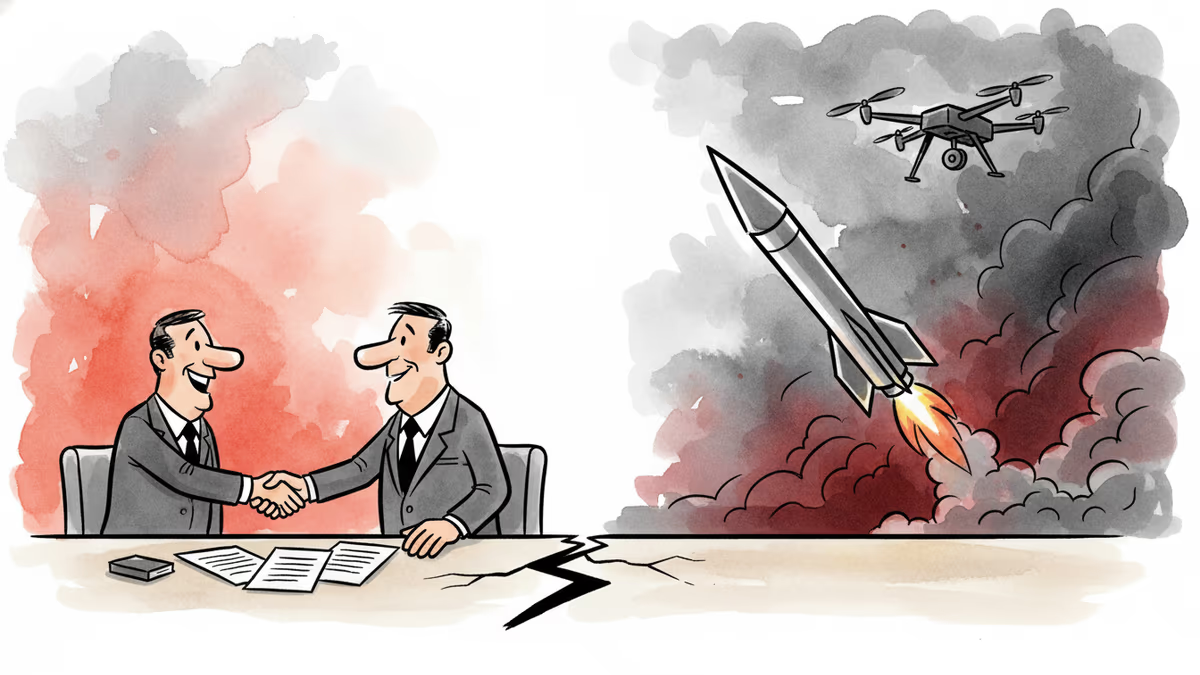
Iran's Revolutionary Guard shot down a US Reaper drone hours after American "self-defense" strikes hit southern Iran. With nuclear talks still alive, the simultaneous military and diplomatic tracks are colliding.

Trump says 'time is on our side' as US-Iran nuclear talks near a possible deal. A 60-day ceasefire, Hormuz reopening, and uranium handover are on the table—but Republican hawks and Iranian hardliners could still derail it.

Trump says a US-Iran nuclear deal is 'largely negotiated.' Iran calls it a 'Persian-style peace.' Both sides claim victory. Here's what's actually at stake.
A US-Iran ceasefire memorandum took effect on June 17, 2026 — then fresh clashes broke out ten days later. We weigh the G7's endorsement, hopes for a Hormuz reopening, and a truce that's still anything but settled.
Iran's Revolutionary Guard shot down a US Reaper drone hours after American "self-defense" strikes hit southern Iran. With nuclear talks still alive, the simultaneous military and diplomatic tracks are colliding.
Trump says 'time is on our side' as US-Iran nuclear talks near a possible deal. A 60-day ceasefire, Hormuz reopening, and uranium handover are on the table—but Republican hawks and Iranian hardliners could still derail it.
Trump says a US-Iran nuclear deal is 'largely negotiated.' Iran calls it a 'Persian-style peace.' Both sides claim victory. Here's what's actually at stake.
Thoughts
Share your thoughts on this article
Sign in to join the conversation