
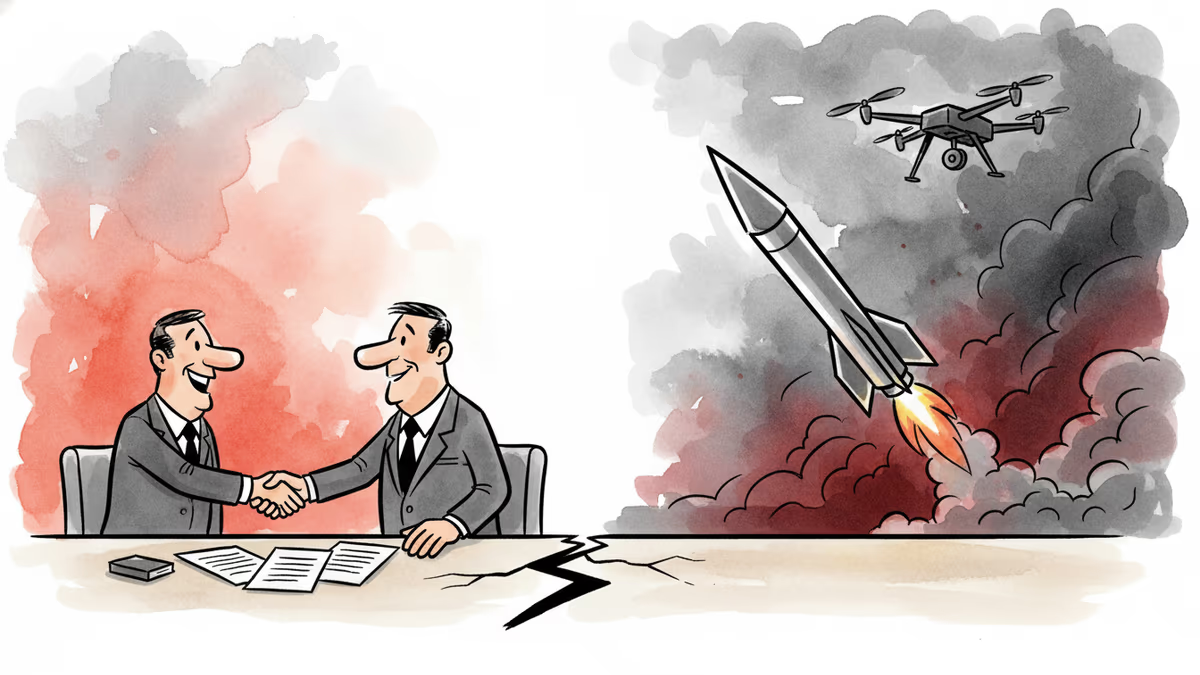
Drone Down, Talks on Edge: The Iran-US Double Game
Iran's Revolutionary Guard shot down a US Reaper drone hours after American "self-defense" strikes hit southern Iran. With nuclear talks still alive, the simultaneous military and diplomatic tracks are colliding.
You can't bomb someone into a deal—or can you?
Hours after the Trump administration launched what it called "self-defense strikes" against targets in southern Iran, the Islamic Revolutionary Guard Corps (IRGC) announced it had shot down a US MQ-9 Reaper drone. Iranian state media carried the IRGC's formal statement, framing the shootdown as a legitimate response to a sovereign violation. The sequence—American strikes, then Iranian retaliation in the skies—unfolded against a backdrop of ongoing, if fragile, indirect nuclear diplomacy. That combination is what makes this moment more complicated than a straightforward military exchange.
What Happened, and Why It Matters Now
The Trump administration has not released a full accounting of Tuesday's strikes—target locations, scale, or confirmed damage remain only partially disclosed. What is clear is that Washington characterized the action as self-defense, the standard legal framing used to justify military operations without a formal declaration of war. Iran's IRGC responded not only militarily but rhetorically, situating the drone shootdown within what Iranian officials describe as resistance to an "illegal US-Israeli war"—a reference to the ongoing conflict in Gaza and Washington's support for Israel.
The MQ-9 Reaper is one of the US military's primary tools for both surveillance and strike missions across the Middle East. Iran has downed American drones before: in 2019, it shot down an RQ-4 Global Hawk near the Strait of Hormuz, prompting Trump to order—and then abort—a retaliatory strike. That episode ended in a standoff. This one lands in a different strategic environment, with nuclear negotiations still nominally in play and regional tensions amplified by the Gaza war's duration.
Two Tracks, One Crisis
The core tension here is structural. The Trump administration is pursuing what it calls a "maximum pressure" strategy: squeeze Iran economically and militarily to extract concessions at the negotiating table. The logic is that Iran only bargains seriously when the cost of not bargaining is unbearably high.

Iran reads the same situation differently. From Tehran's perspective, agreeing to talks while absorbing strikes looks less like pragmatic diplomacy and more like capitulation under fire. Each military action the US takes gives Iran's hardliners domestic ammunition to argue that engagement with Washington is pointless—that the strikes will continue regardless of what Iran offers at the table.
Neither reading is irrational. Both are self-reinforcing. And that's precisely the problem.
The 2015Joint Comprehensive Plan of Action (JCPOA)—the nuclear deal that the first Trump administration withdrew from in 2018—was built on a period of sustained diplomatic engagement that required both sides to pause escalatory moves. The current situation inverts that model: escalatory moves and diplomatic engagement are happening simultaneously, each threatening to undermine the other.
How Different Stakeholders See It
Washington's hawks argue the strikes are necessary to maintain deterrence. Without demonstrated willingness to use force, Iran will push further—harassing shipping, arming proxies, accelerating its nuclear program. Letting a drone shootdown go unanswered, in this view, signals weakness.
Diplomacy-first voices in Washington and European capitals counter that military action narrows the negotiating space precisely when it needs to expand. Every strike, they argue, empowers Iranian hardliners and shrinks the political room for any Iranian leader to be seen making concessions to the US.
Iran's domestic calculus is often underweighted in Western analysis. The IRGC's public announcement of the drone shootdown wasn't just a military report—it was a message to Iranian citizens and regional allies that the Islamic Republic absorbs pressure without bending. Meanwhile, ordinary Iranians continue to live under the compounding weight of sanctions and military tension, a reality that shapes public sentiment in ways that neither Tehran's government nor Washington's strategists fully controls.
Global energy markets watch the Strait of Hormuz with particular attention. Roughly 20% of the world's oil supply transits those waters. Each escalation cycle raises the premium on that risk, with knock-on effects for oil-importing economies worldwide.
This content is AI-generated based on source articles. While we strive for accuracy, errors may occur. We recommend verifying with the original source.
Related Articles
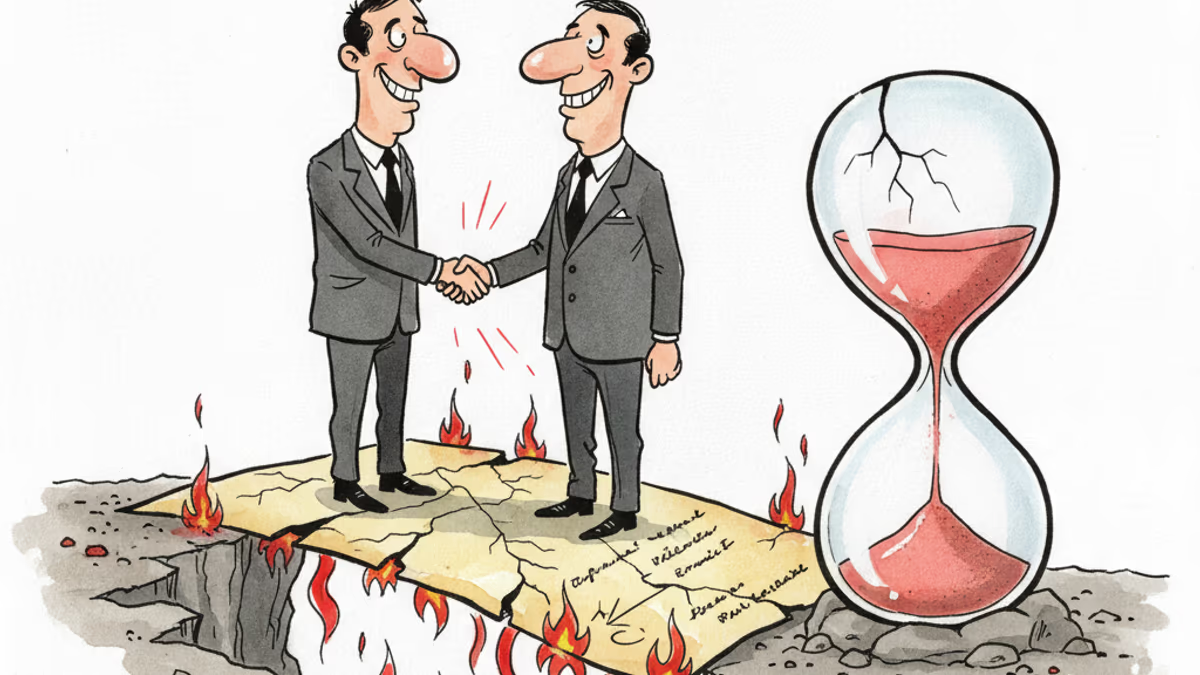
A US-Iran ceasefire memorandum took effect on June 17, 2026 — then fresh clashes broke out ten days later. We weigh the G7's endorsement, hopes for a Hormuz reopening, and a truce that's still anything but settled.

Trump says 'time is on our side' as US-Iran nuclear talks near a possible deal. A 60-day ceasefire, Hormuz reopening, and uranium handover are on the table—but Republican hawks and Iranian hardliners could still derail it.

Trump says a US-Iran nuclear deal is 'largely negotiated.' Iran calls it a 'Persian-style peace.' Both sides claim victory. Here's what's actually at stake.
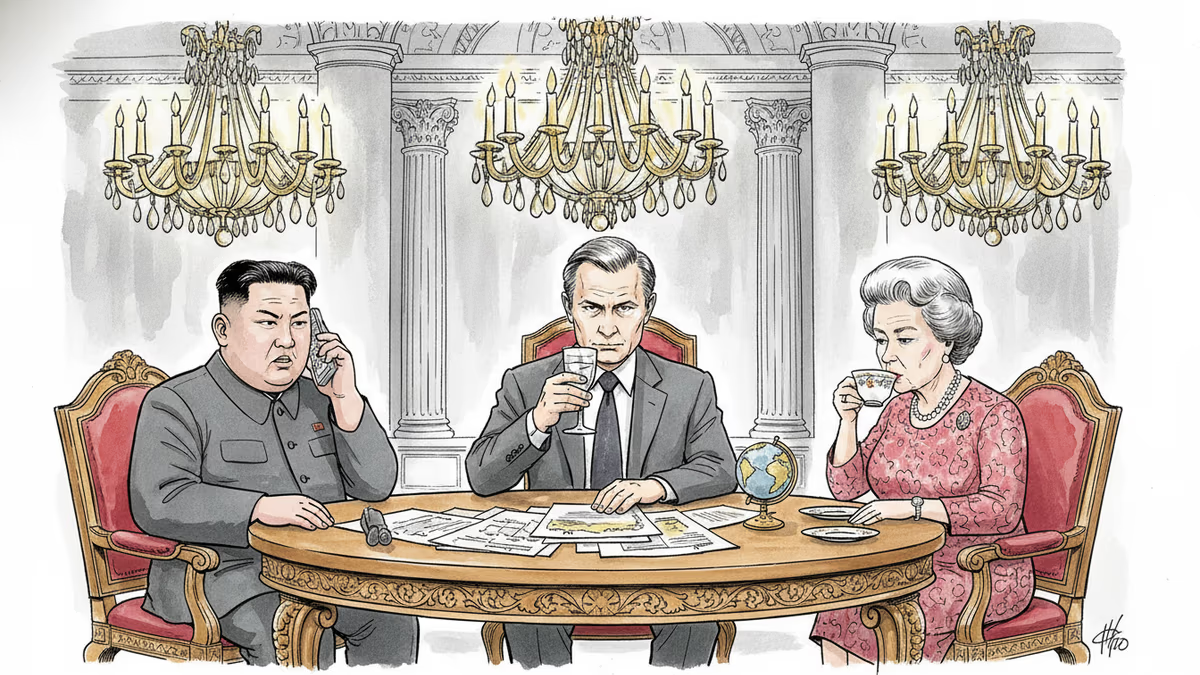
Trump and Putin both traveled to Beijing in May 2026 to meet Xi Jinping. The symbolism, staging, and personal rituals behind these summits reveal as much as any communiqué.
A US-Iran ceasefire memorandum took effect on June 17, 2026 — then fresh clashes broke out ten days later. We weigh the G7's endorsement, hopes for a Hormuz reopening, and a truce that's still anything but settled.
Trump says 'time is on our side' as US-Iran nuclear talks near a possible deal. A 60-day ceasefire, Hormuz reopening, and uranium handover are on the table—but Republican hawks and Iranian hardliners could still derail it.
Trump says a US-Iran nuclear deal is 'largely negotiated.' Iran calls it a 'Persian-style peace.' Both sides claim victory. Here's what's actually at stake.
Trump and Putin both traveled to Beijing in May 2026 to meet Xi Jinping. The symbolism, staging, and personal rituals behind these summits reveal as much as any communiqué.
Thoughts
Share your thoughts on this article
Sign in to join the conversation