
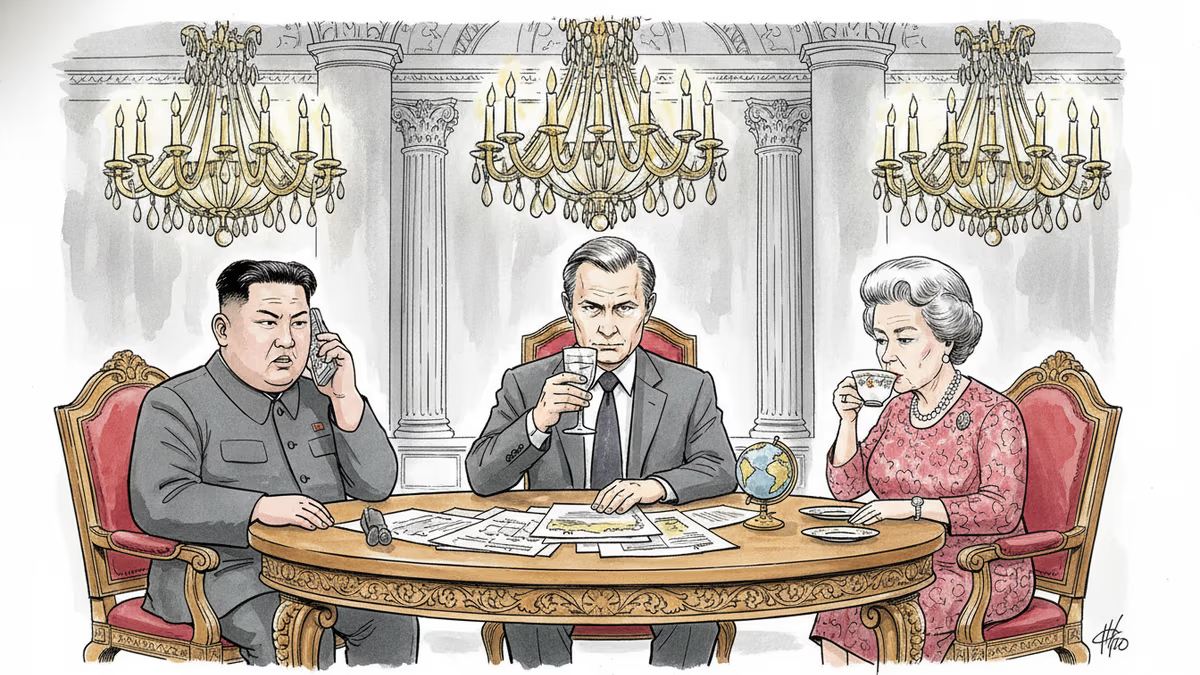
Who Flew to Whom: The Geometry of Beijing's May Summits
Trump and Putin both traveled to Beijing in May 2026 to meet Xi Jinping. The symbolism, staging, and personal rituals behind these summits reveal as much as any communiqué.
In diplomacy, who travels to whom is never a footnote. In May 2026, both Donald Trump and Vladimir Putin flew to Beijing. Xi Jinping stayed home.
The Stage and Its Signals
The Great Hall of the People's ornate ceilings, the choreographed handshakes, even a bag carried by Elon Musk's son catching a photographer's eye—none of it was accidental. Xi Jinping's summits are produced with the precision of a state broadcast, where every prop and every pause carries diplomatic weight.
Putin's visit drew on years of accumulated personal ritual. Vodka toasts, bullet train rides through the Chinese countryside, lakeside tea ceremonies—these aren't soft-power flourishes. They're the architecture of a relationship that Beijing and Moscow have deliberately built outside the formal channels of multilateral diplomacy. The message: this partnership doesn't need a treaty to feel binding.
Trump's visit had a different texture. The performative energy that defines his political brand—the impromptu moments, the camera-ready gestures—collided with Beijing's preference for controlled staging. That friction, visible in photographs and body language, was itself informative. Two leaders with strong instincts for spectacle, negotiating who controls the frame.
Why Both, Why Now

The timing of two high-profile visits within the same month was not coincidental. Xi has spent 2026 managing a still-unresolved trade dispute with Washington while simultaneously reinforcing a strategic alignment with Moscow. Hosting both leaders in Beijing—sequentially, on China's terms—projects a specific image: that China is the indispensable interlocutor, the capital where the world's most consequential conversations happen.
For European governments watching closely, Trump's Beijing trip raises uncomfortable questions about the coherence of Western policy toward China. For Indo-Pacific nations calculating their own positions, the emerging geometry of US-China-Russia interactions creates new uncertainties. A warmer Washington-Beijing atmosphere could ease some economic pressures; it could also complicate the calculus for US allies in the region.
Symbolism vs. Substance
Diplomacy's most elaborate productions sometimes correlate inversely with their concrete output. The stagecraft of these summits was rich. The publicly disclosed substance, so far, is thin. That gap is worth watching.
Historically, the pattern is familiar. Nixon's 1972 Beijing visit was photographed exhaustively and produced a communiqué deliberately vague enough for both sides to claim victory. The real negotiations came later, in quieter rooms. Whether the May 2026 summits follow a similar logic—spectacle first, substance to follow—or whether the spectacle is the point, remains an open question.
For ordinary citizens, the immediate impact is indirect but real. US-China trade conditions, the durability of Russia sanctions regimes, and the temperature around the Taiwan Strait all connect, however loosely, to the atmospherics generated in Beijing this month. Diplomatic weather affects economic forecasts.
This content is AI-generated based on source articles. While we strive for accuracy, errors may occur. We recommend verifying with the original source.
Related Articles
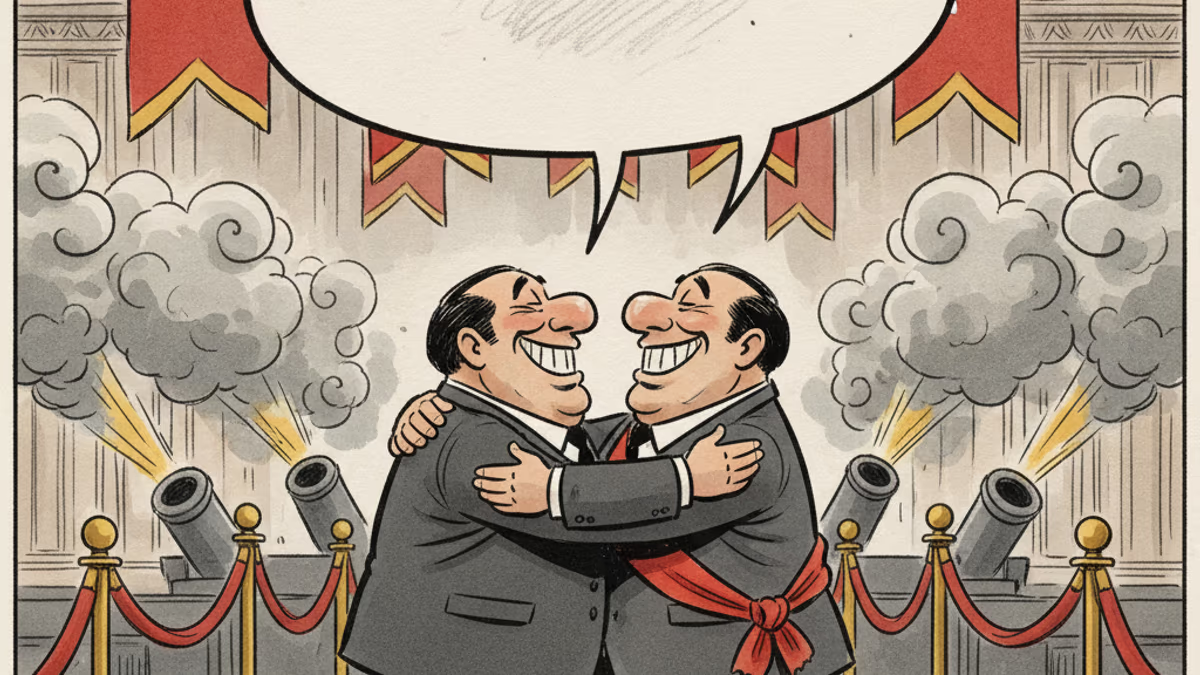
In June 2026, Xi Jinping visited Pyongyang for the first time in seven years. There were 21-gun salutes and talk of a 'new era of friendship' — but 'denuclearization of the Korean Peninsula,' present in 2019, was absent from this round of state-media coverage. A symbolic overreach, or a real upgrade?

Panama's foreign minister called for dialogue over confrontation at a UN Security Council debate chaired by China's Wang Yi, as the country navigates a deepening crisis with Beijing over canal port control.
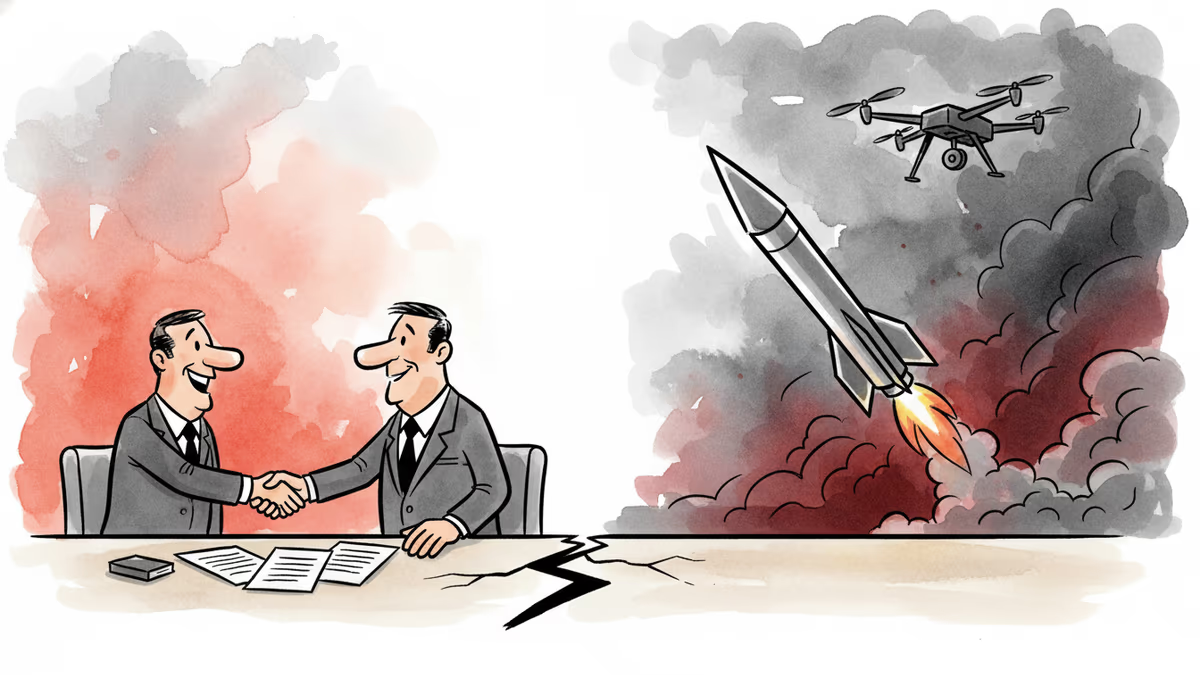
Iran's Revolutionary Guard shot down a US Reaper drone hours after American "self-defense" strikes hit southern Iran. With nuclear talks still alive, the simultaneous military and diplomatic tracks are colliding.

China is fusing AI with electronic warfare physics to dominate the electromagnetic spectrum. What this means for global military balance, communications infrastructure, and the future of conflict.
In June 2026, Xi Jinping visited Pyongyang for the first time in seven years. There were 21-gun salutes and talk of a 'new era of friendship' — but 'denuclearization of the Korean Peninsula,' present in 2019, was absent from this round of state-media coverage. A symbolic overreach, or a real upgrade?
Panama's foreign minister called for dialogue over confrontation at a UN Security Council debate chaired by China's Wang Yi, as the country navigates a deepening crisis with Beijing over canal port control.
Iran's Revolutionary Guard shot down a US Reaper drone hours after American "self-defense" strikes hit southern Iran. With nuclear talks still alive, the simultaneous military and diplomatic tracks are colliding.
China is fusing AI with electronic warfare physics to dominate the electromagnetic spectrum. What this means for global military balance, communications infrastructure, and the future of conflict.
Thoughts
Share your thoughts on this article
Sign in to join the conversation