
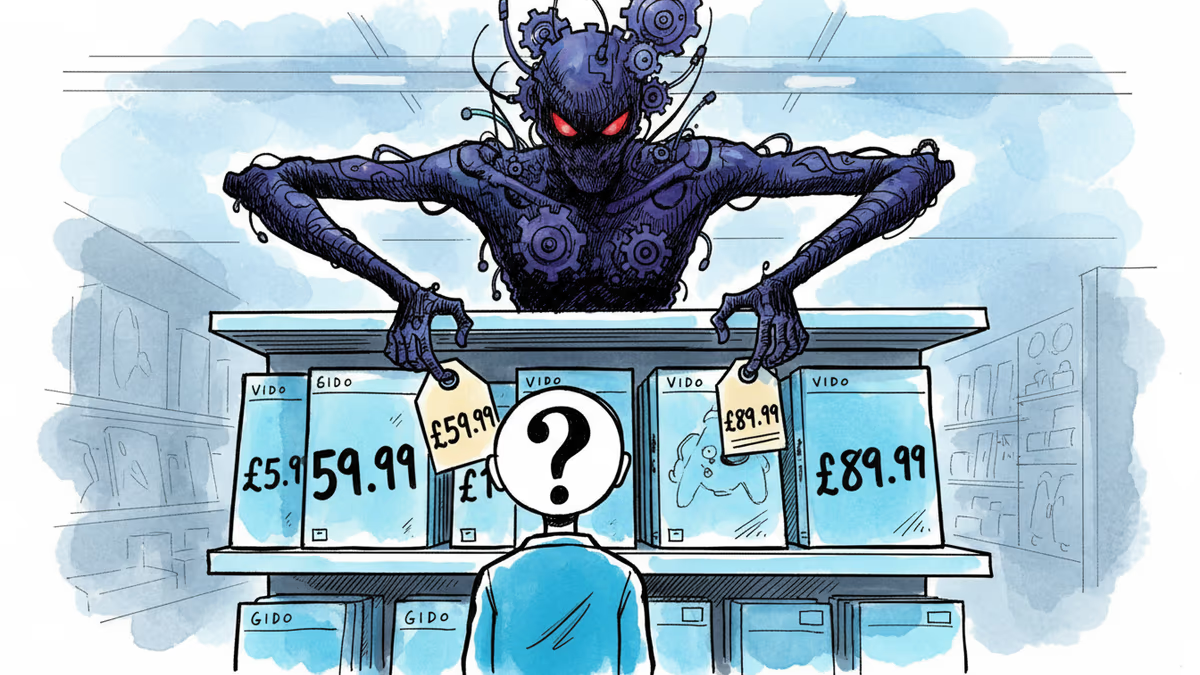
Sony Is Testing Different Prices for the Same Game
Sony's PlayStation Store has been quietly A/B testing personalized game prices across 150+ titles in 68 regions. Is dynamic pricing coming to gaming — and what does that mean for players?
You and your friend buy the same game from the same store on the same day — and pay different prices. That's not a glitch. That might be the plan.
Game price tracking site PSprices recently noticed something off about Sony's PlayStation digital storefront: identical games were showing up at different prices for different users. Digging into the PlayStation API, they found experiment identifiers tagged IPT_PILOT and IPT_OPR_TESTING — the unmistakable fingerprints of a deliberate A/B pricing test. Sony isn't denying it.
The scale is significant: over 150 games across 68 regions are currently part of the experiment. The US appears to be excluded for now, but the reach is global. This isn't a regional discount program or a sale. It's personalized pricing — and it's quietly been running under most players' radar.
Why Gaming Has Resisted This Until Now
Dynamic pricing is everywhere. Airlines have used it for decades. Ride-shares adjust fares by the minute. Even concert tickets now flex based on demand. The logic is simple: charge people closer to what they're actually willing to pay, and you capture more revenue without leaving money on the table.
But game stores have been a notable holdout. Digital games have no inventory constraints, prices are publicly visible, and gaming communities are fast, vocal, and deeply attuned to fairness. Steam, the Epic Games Store, Nintendo's eShop — none of them have introduced user-specific pricing. Discounts, yes. Regional pricing, yes. But the same game, at the same moment, costing different amounts for different people? That's a line the industry quietly agreed not to cross.
Sony may be testing whether that line still holds.
The Business Case Sony Is Making
From a pure revenue standpoint, the logic is hard to argue with. A player who would buy a game at $40 but not at $60 represents lost revenue under flat pricing. If an algorithm can identify that player and offer them $45, Sony wins and — arguably — so does the consumer. Scale that across millions of users and hundreds of titles, and the financial upside is substantial.

The 68-region scope also suggests Sony is looking beyond individual personalization toward macro-level optimization: matching prices to regional purchasing power, local market conditions, and behavioral data. That's a more defensible framing than pure profit extraction — and it's something the industry already does through regional pricing tiers.
The Consumer Case Against It
The problem isn't the price difference. It's the opacity.
When you buy a plane ticket and find out someone paid less, you're frustrated — but you knew the rules going in. Variable pricing is disclosed, expected, and often gameable. When you buy a game from what looks like a standard storefront and later discover your friend paid 30% less for the same title at the same time, the reaction isn't frustration. It's a sense of being manipulated.
Gaming communities are particularly sensitive to this dynamic. Reddit threads, Discord servers, and forums like ResetEra move fast. The moment users begin systematically comparing prices — and they will — the backlash could be severe. Sony has spent years building a loyal ecosystem around PlayStation Plus, exclusive titles, and hardware lock-in. Trust is a core component of that ecosystem. Personalized pricing, if perceived as exploitative, puts that trust at risk in a way that a PR statement can't easily walk back.
There's also a data question lurking beneath the surface. What signals is Sony using to set these prices? Purchase history? Device? Location? Time of day? The answers matter — both ethically and legally.
What Competitors and Regulators Are Watching
Microsoft and Nintendo haven't gone here publicly. If Sony's experiment produces clean revenue gains without a significant consumer revolt, expect quiet internal conversations at both companies. If it blows up, Sony absorbs the damage while its competitors gain a talking point: we don't do that.
The regulatory angle is equally worth watching. The EU's Digital Markets Act has teeth around platform pricing practices and transparency obligations. The UK's Competition and Markets Authority has been increasingly aggressive on digital consumer issues. A pricing model that uses behavioral data to set individualized prices — without disclosure — could attract scrutiny that extends well beyond gaming.
In the US, where the experiment currently isn't running, the FTC's interest in algorithmic pricing across industries has been growing. Sony may be stress-testing international markets precisely because the regulatory environment there is less immediately threatening.
Authors
Related Articles
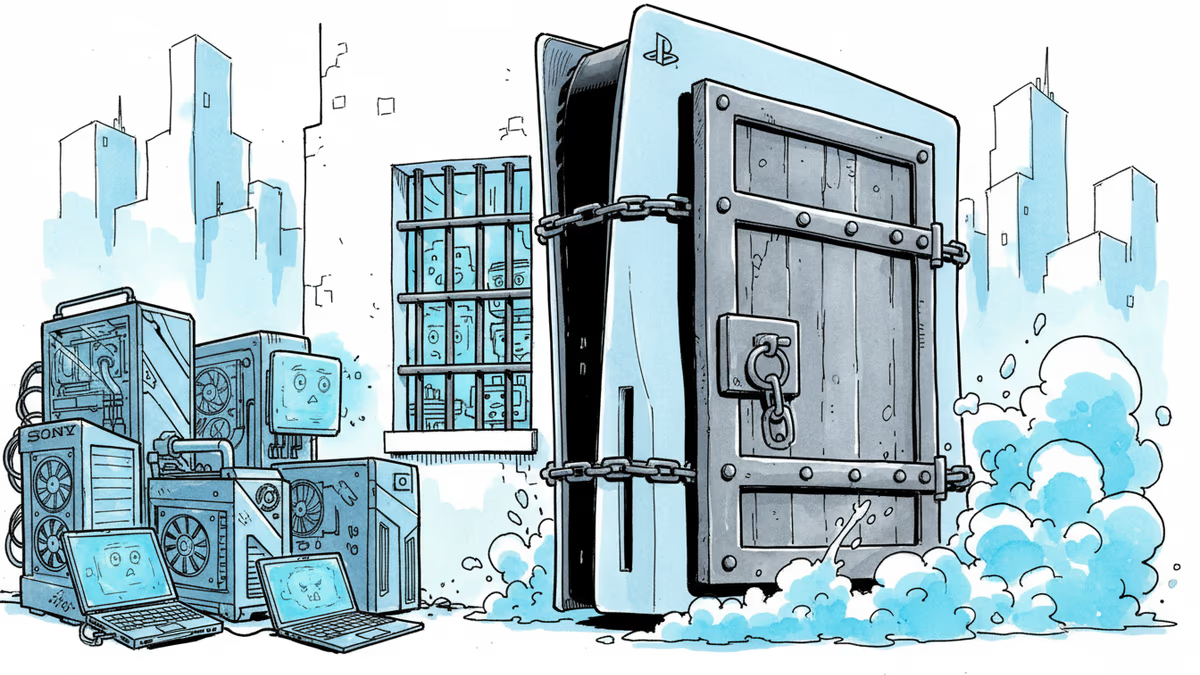
Sony is pulling its major single-player PlayStation games from PC. After six years of multiplatform expansion, the reversal raises hard questions about exclusivity, hardware sales, and who really controls gaming's future.
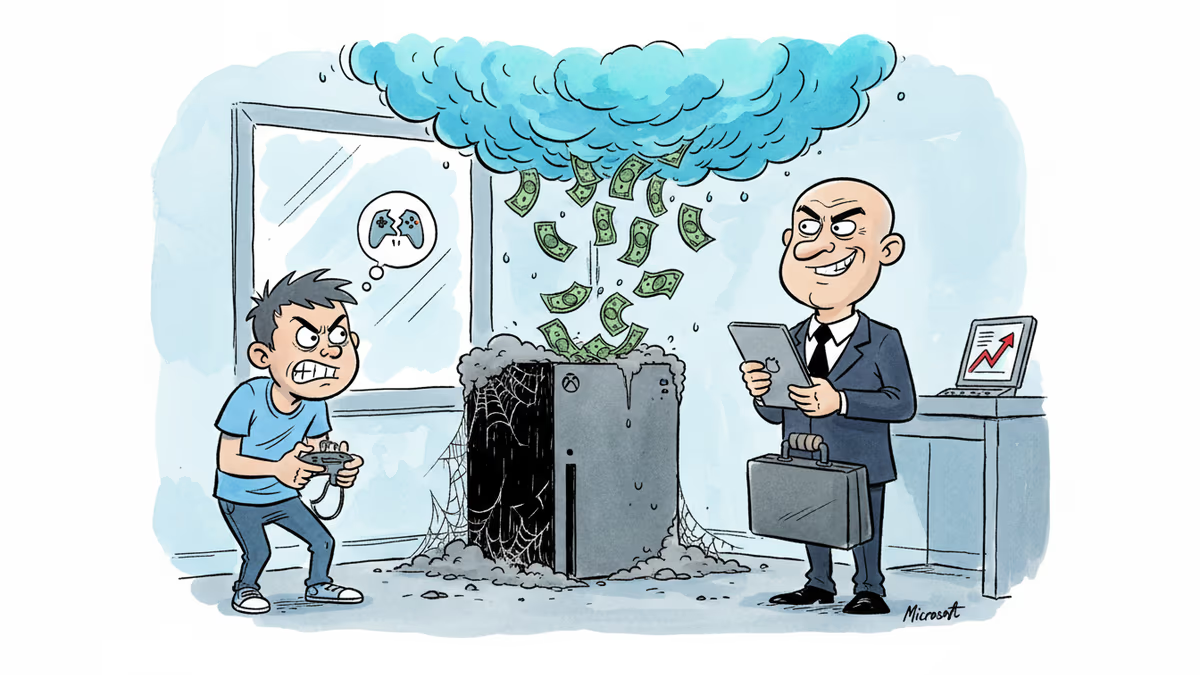
Xbox hardware revenue dropped 33% in Q1 2026, yet Microsoft posted $82.9B in total revenue. What this tells us about the future of gaming—and who actually loses.
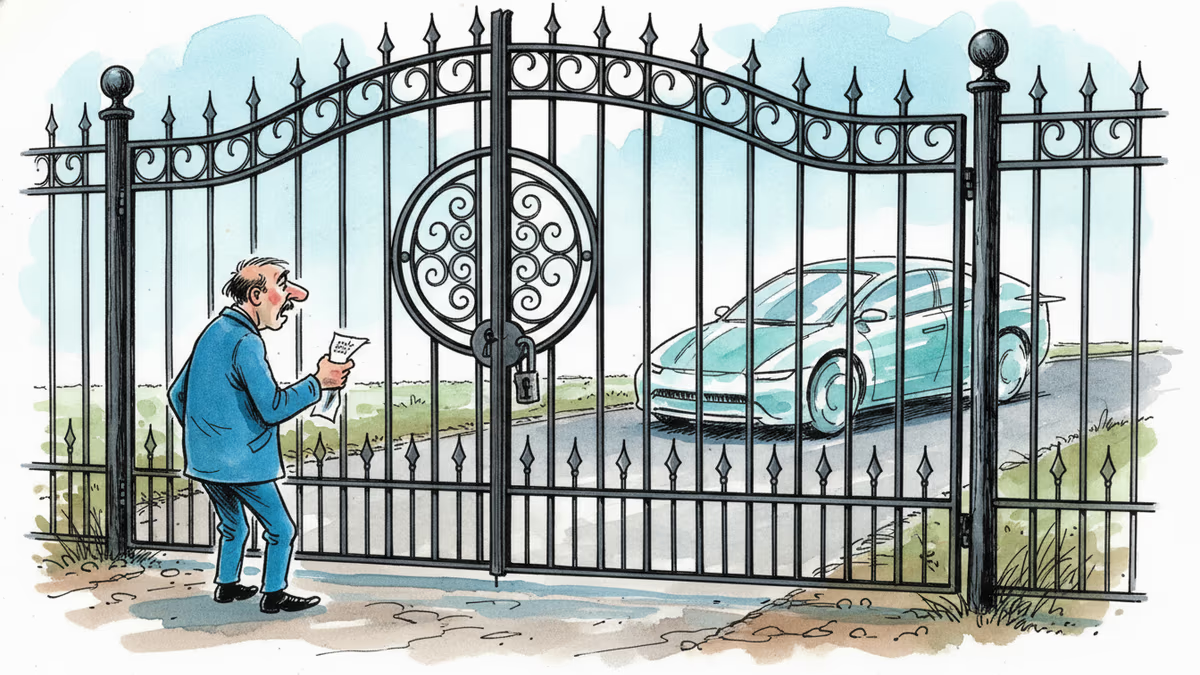
Elon Musk confirmed on Tesla's Q1 2026 earnings call that Hardware 3 vehicles will never receive unsupervised Full Self-Driving — locking out millions who paid for the feature.
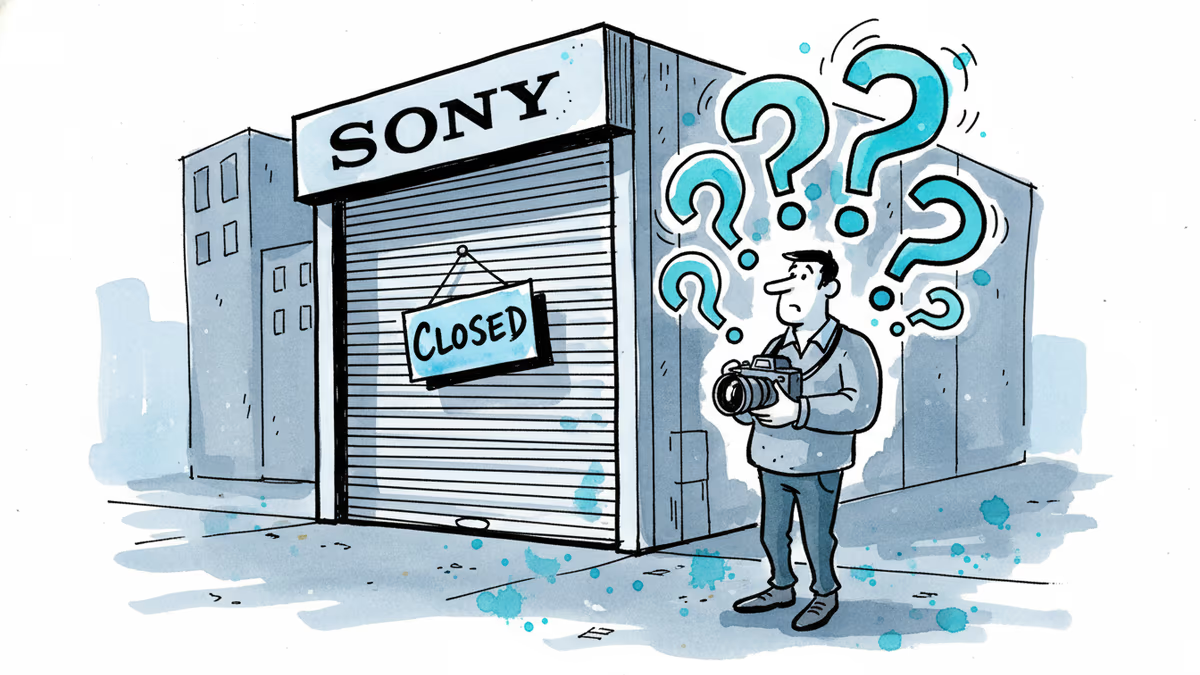
Sony halted orders for most of its CFexpress and SD card lineup on March 27, 2026 — the same day it raised PS5 prices. What does this mean for photographers, consumers, and Sony's broader strategy?
Sony is pulling its major single-player PlayStation games from PC. After six years of multiplatform expansion, the reversal raises hard questions about exclusivity, hardware sales, and who really controls gaming's future.
Xbox hardware revenue dropped 33% in Q1 2026, yet Microsoft posted $82.9B in total revenue. What this tells us about the future of gaming—and who actually loses.
Elon Musk confirmed on Tesla's Q1 2026 earnings call that Hardware 3 vehicles will never receive unsupervised Full Self-Driving — locking out millions who paid for the feature.
Sony halted orders for most of its CFexpress and SD card lineup on March 27, 2026 — the same day it raised PS5 prices. What does this mean for photographers, consumers, and Sony's broader strategy?
Thoughts
Share your thoughts on this article
Sign in to join the conversation