
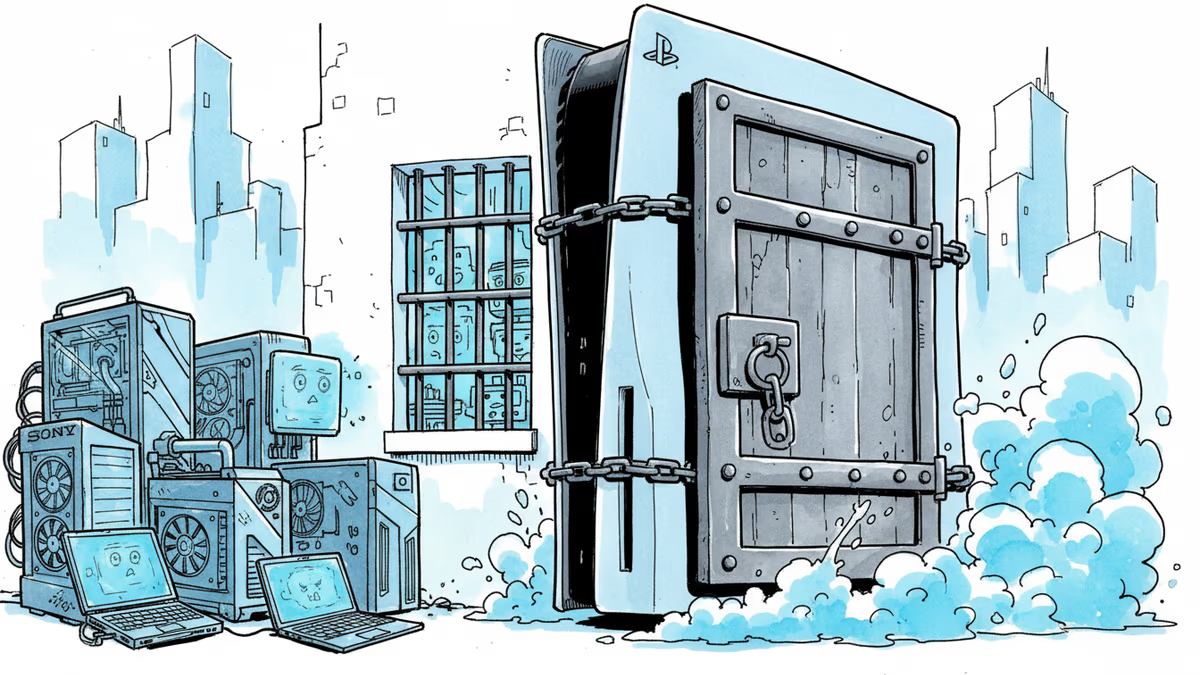
Sony Slams the PC Door Shut—Who Wins?
Sony is pulling its major single-player PlayStation games from PC. After six years of multiplatform expansion, the reversal raises hard questions about exclusivity, hardware sales, and who really controls gaming's future.
For six years, Sony opened the door to PC gamers. On Monday, someone slammed it shut.
What Happened
According to Bloomberg's Jason Schreier, Hermen Hulst—the executive who oversees PlayStation's studios business—told employees in a company town hall that Sony is changing course: major single-player games will no longer come to PC. Online multiplayer titles are exempt from the shift and will continue to launch across platforms.
This wasn't entirely out of nowhere. Schreier had reported the same direction back in March, noting that Sony had quietly scrapped PC versions of Ghost of Yōtei—one of last year's most anticipated titles—along with other internally developed games. Monday's town hall made it official.
How We Got Here
The multiplatform experiment made sense when it started. Porting Horizon Zero Dawn, God of War, and Spider-Man to PC earned Sony real money and introduced PlayStation franchises to an audience that had never touched a console. For a while, it looked like the future.

But the calculus has a flip side. Every PC gamer who plays Spider-Man 2 without buying a PS5 is a hardware sale that never happened. Sony appears to have decided that the long-term cost to its console ecosystem outweighs the short-term revenue from PC ports. The bet: exclusivity sells hardware.
A Tale of Two Strategies
The contrast with Microsoft is almost comically sharp. Xbox has spent the last several years doing the exact opposite—releasing its biggest titles on PC, Game Pass, and increasingly on rival platforms. Two of the largest players in the industry are running controlled experiments in opposite directions.
For PC gamers, the message is blunt: if you want Sony's next blockbuster single-player experience, buy the box. For consumers already sitting on a high-end gaming rig, that's a real ask—PS5 consoles still retail around $500.
For console fence-sitters, Sony is betting that the lure of exclusive titles will tip the decision. It's the Nintendo playbook. Nintendo has never released a first-party title on a competing platform, and the Switch has sold over 140 million units. The logic is proven—but Nintendo's franchises carry decades of brand loyalty that Sony is still building.
For investors, the near-term picture is a revenue dip. PC port sales disappear from the ledger. Whether rising hardware attach rates compensate depends on execution—and on whether gamers actually respond to exclusivity pressure the way Sony hopes.
This content is AI-generated based on source articles. While we strive for accuracy, errors may occur. We recommend verifying with the original source.
Related Articles
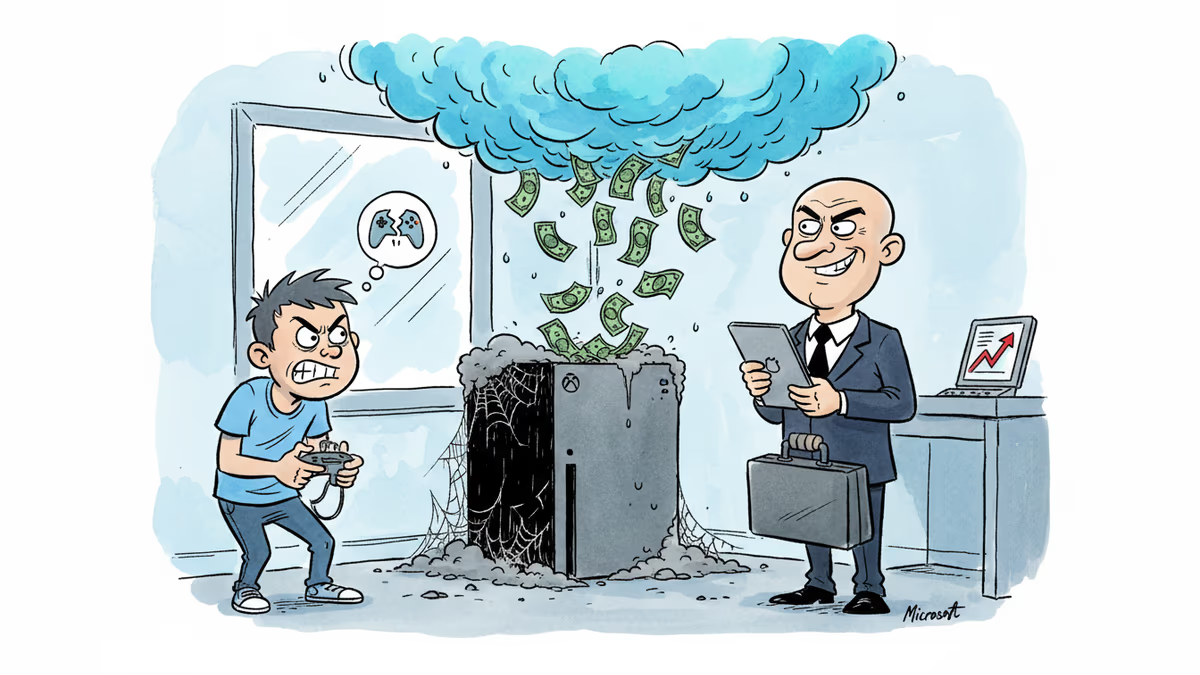
Xbox hardware revenue dropped 33% in Q1 2026, yet Microsoft posted $82.9B in total revenue. What this tells us about the future of gaming—and who actually loses.
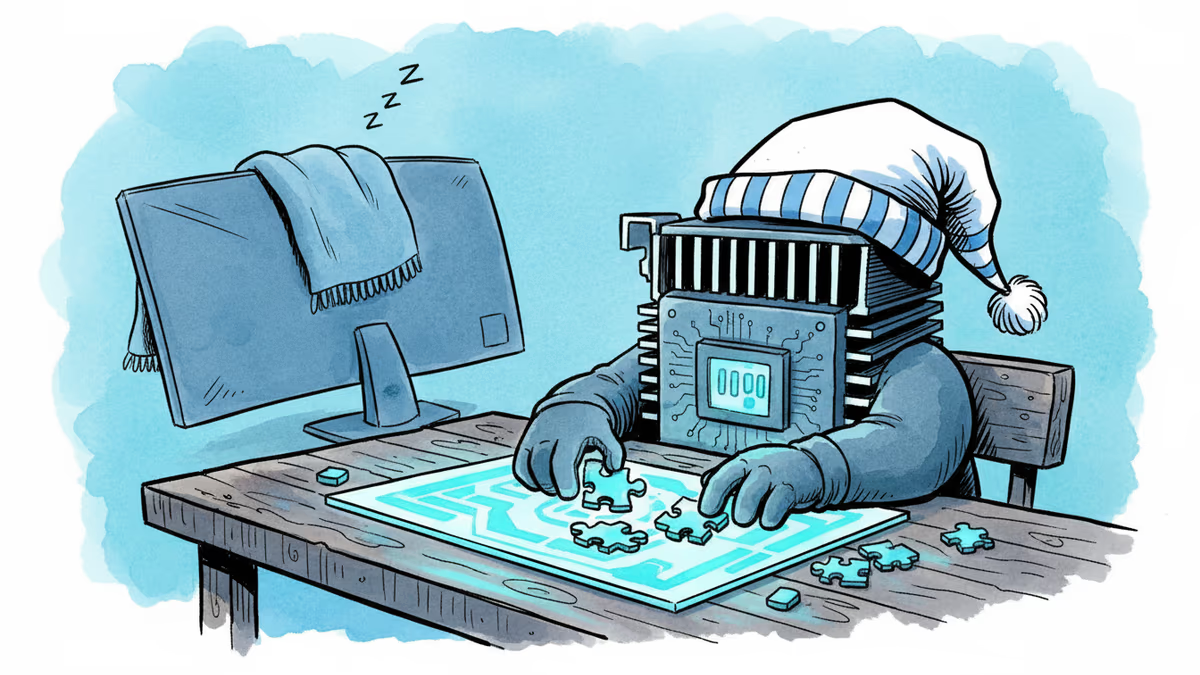
Nvidia's new Auto Shader Compilation feature pre-builds DirectX shaders during idle time, aiming to cut those frustrating load-screen waits after driver updates. Here's what it actually means.
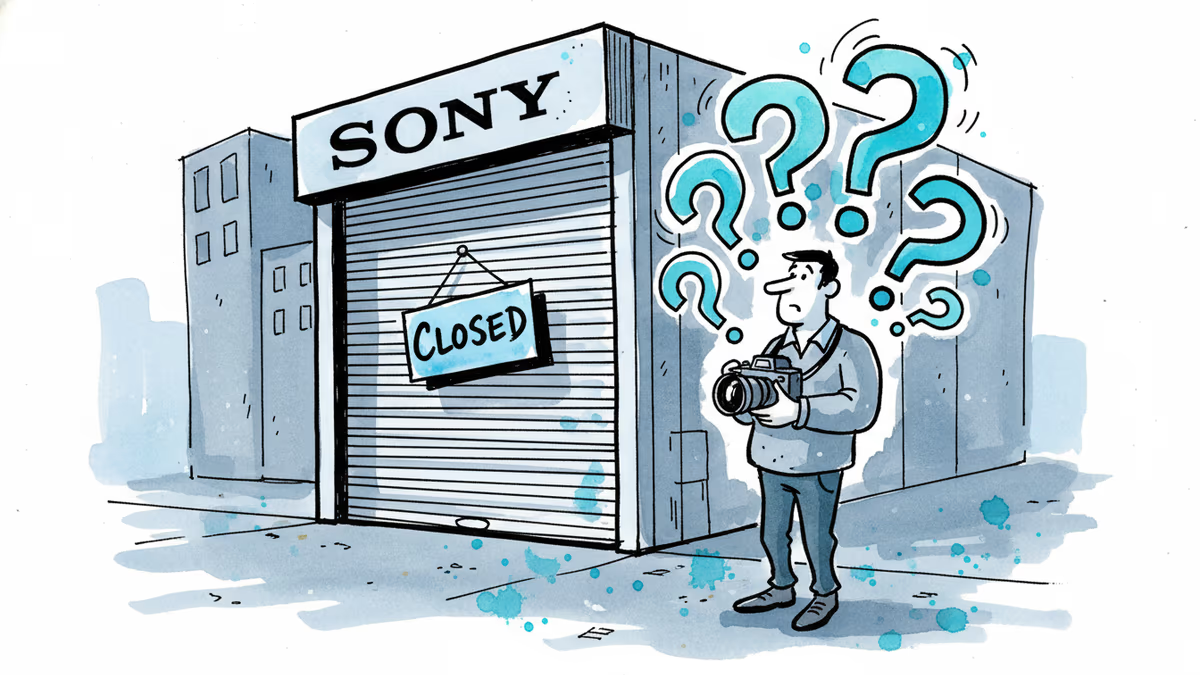
Sony halted orders for most of its CFexpress and SD card lineup on March 27, 2026 — the same day it raised PS5 prices. What does this mean for photographers, consumers, and Sony's broader strategy?
At GDC 2026, Google announced major updates to bring Google Play to Windows—new tabs, wishlists, premium titles, and game trials. But can it compete with Steam and Game Pass?
Xbox hardware revenue dropped 33% in Q1 2026, yet Microsoft posted $82.9B in total revenue. What this tells us about the future of gaming—and who actually loses.
Nvidia's new Auto Shader Compilation feature pre-builds DirectX shaders during idle time, aiming to cut those frustrating load-screen waits after driver updates. Here's what it actually means.
Sony halted orders for most of its CFexpress and SD card lineup on March 27, 2026 — the same day it raised PS5 prices. What does this mean for photographers, consumers, and Sony's broader strategy?
At GDC 2026, Google announced major updates to bring Google Play to Windows—new tabs, wishlists, premium titles, and game trials. But can it compete with Steam and Game Pass?
Thoughts
Share your thoughts on this article
Sign in to join the conversation