
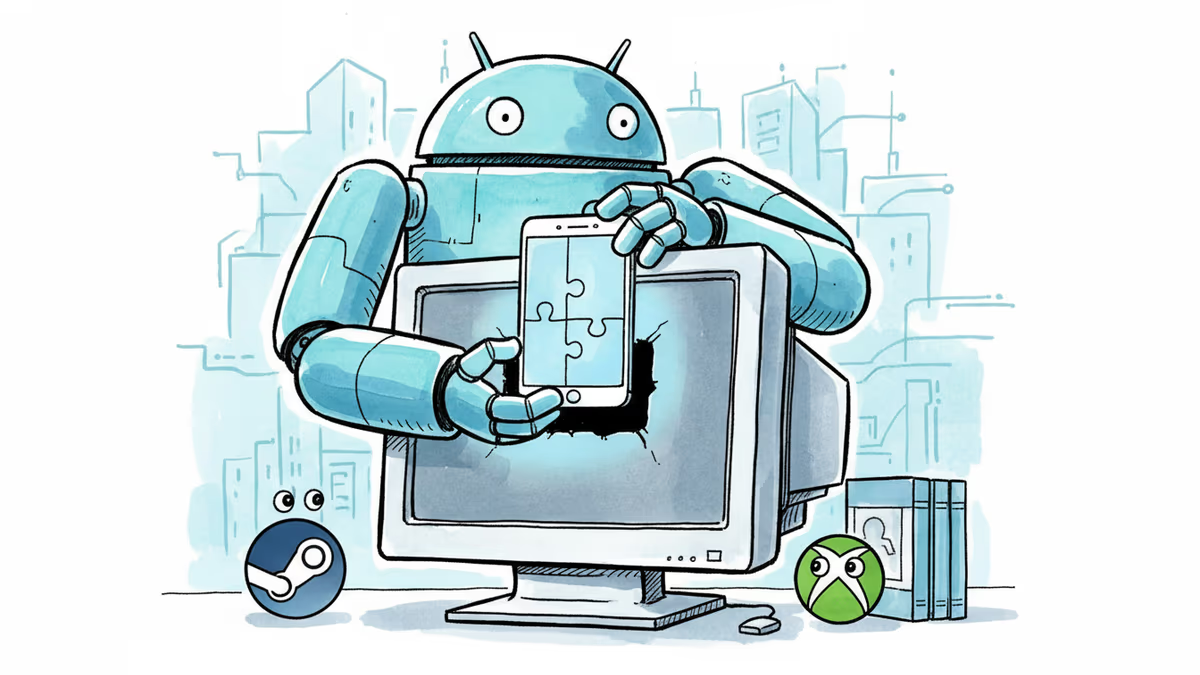
Google Wants a Seat at the PC Gaming Table
At GDC 2026, Google announced major updates to bring Google Play to Windows—new tabs, wishlists, premium titles, and game trials. But can it compete with Steam and Game Pass?
Somewhere between 3 billion Android users and a PC gaming market worth over $40 billion a year, there's a gap Google has been staring at for years. This week, it finally decided to do something serious about it.
What Google Actually Announced
At the 2026 Game Developers Conference, Google laid out its most concrete plan yet to make Google Play a real presence on Windows PCs. The updates aren't a single flashy product launch—they're a stack of smaller moves that, taken together, signal a strategic shift.
The most visible change: a dedicated Windows tab is coming to the mobile and web versions of the Google Play Store. Instead of burying PC-optimized titles inside an app store built for phones, Google will surface them separately. Tap on a Windows game, and the store will prompt you to install the Windows client to actually play it.
Alongside that, Google is rolling out cross-platform wishlists. See a Windows game on your phone? Save it, and developers can push sale notifications directly to you. That feature starts on mobile, with PC support to follow.
On the content side, Google named a handful of premium titles coming to the platform this year: Sledding Game, 9 Kings, Potion Craft, and Moonlight Peaks. Low Budget Repairs is slated for 2027. And for players hesitant to pay upfront, Google is testing game trials—starting with Dredge on Android only, with plans to expand to more developers and eventually Windows.
The Timing Makes Sense—And That's the Problem
Here's the honest context: Google is late.
Steam has dominated PC game distribution for over two decades and currently hosts more than 50,000 titles. Microsoft's Xbox Game Pass has reframed how people think about paying for PC games entirely. Apple Arcade, while smaller, has quietly built a curated cross-device library. Google, meanwhile, shut down Stadia in 2022 after failing to convince players or developers that its gaming vision was worth betting on.

That history matters. Developers deciding whether to bring their games to Google Play on Windows aren't just evaluating the platform today—they're evaluating whether Google will still care about it in three years.
And yet the underlying logic of what Google is attempting is hard to dismiss. A massive portion of the world's casual and mid-core gamers already live inside the Android ecosystem. Many of them have expressed, through the popularity of emulators like BlueStacks, that they'd like to play those games on a bigger screen. Google building an official, integrated bridge between mobile and PC is the obvious move. The question is whether it can execute.
Three Stakeholders, Three Very Different Reactions
For developers, the pitch is efficiency. Build once for Android, reach players on both mobile and PC without a full port. The wishlist and sale notification features are genuinely useful tools for conversion. Trials could reduce the friction that keeps players from buying premium games outright. But smaller studios will weigh all of this against the platform's track record—and Google's history of abandoning products doesn't inspire confidence.
For players, the value is convenience, if it works. Seamless continuity between phone and desktop, a unified library, one account. That's appealing. But the content library has to be there first. Announcing five titles for 2026 isn't a catalog—it's a proof of concept.
For competitors, Google's move is more nuisance than threat—for now. Valve and Microsoft aren't losing sleep over a Windows tab in the Google Play Store. But if Google successfully converts even a fraction of its Android user base into PC gaming customers, the math on market share starts to shift in ways that matter over a five-year horizon.
The Discoverability Bet
One detail in Google's announcement deserves more attention than it's getting: the explicit acknowledgment that finding good games on Google Play for PC has been a problem.
That's a significant admission. Discovery is the lifeblood of any app marketplace. If players can't find games worth playing, developers won't invest in the platform. If developers don't invest, there's nothing to find. Google has been caught in that loop on the PC side for years.
The Windows tab is a structural fix, but structure alone doesn't solve the problem. Curation, recommendation quality, and editorial investment are what actually drive discovery. Steam's success isn't just its size—it's the community review system, the curated sales, the developer pages. Whether Google is willing to invest in that layer of the experience remains to be seen.
Authors
Related Articles

In a post-Google I/O interview, Sundar Pichai acknowledged flawed search results, real AI anxiety, and an AGI timeline that makes the label irrelevant. Here's what he said — and what it means.
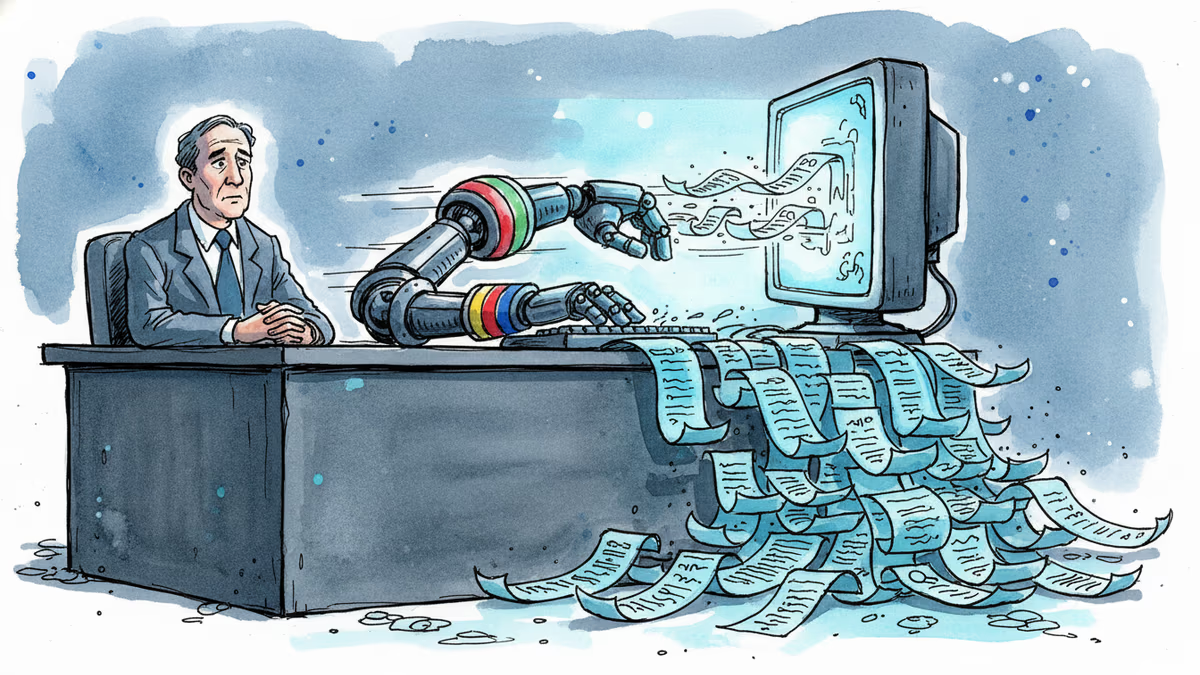
Google is building AI agents that search the web proactively, without user prompting. That's not just a product update — it's a fundamental shift in who controls the information you receive.
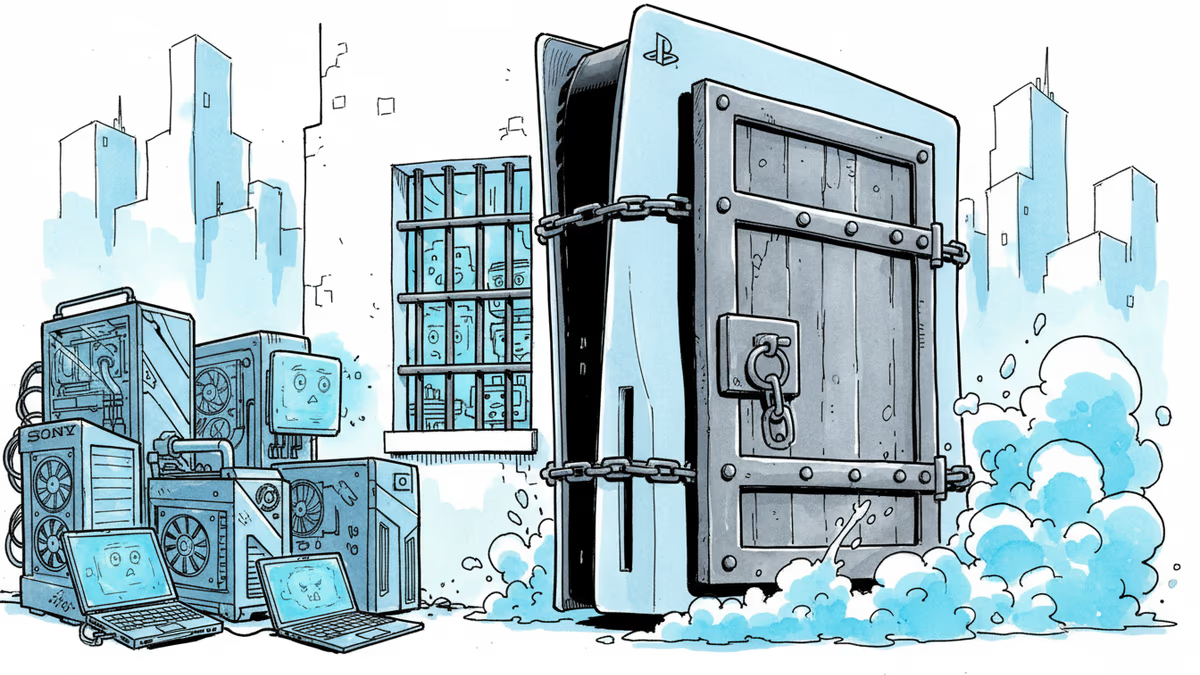
Sony is pulling its major single-player PlayStation games from PC. After six years of multiplatform expansion, the reversal raises hard questions about exclusivity, hardware sales, and who really controls gaming's future.
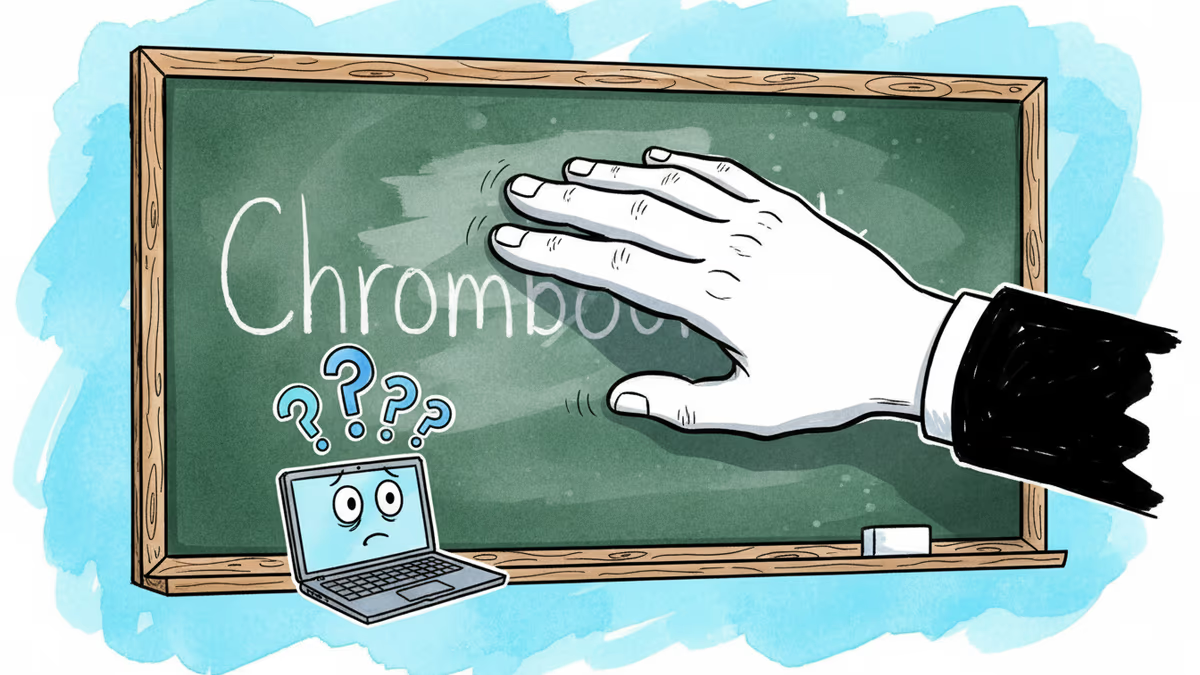
Google unveiled the 'Googlebook' platform to replace Chromebook and ChromeOS—but revealed zero hardware specs. What's the strategy, and what does it mean for users, manufacturers, and the education market?
In a post-Google I/O interview, Sundar Pichai acknowledged flawed search results, real AI anxiety, and an AGI timeline that makes the label irrelevant. Here's what he said — and what it means.
Google is building AI agents that search the web proactively, without user prompting. That's not just a product update — it's a fundamental shift in who controls the information you receive.
Sony is pulling its major single-player PlayStation games from PC. After six years of multiplatform expansion, the reversal raises hard questions about exclusivity, hardware sales, and who really controls gaming's future.
Google unveiled the 'Googlebook' platform to replace Chromebook and ChromeOS—but revealed zero hardware specs. What's the strategy, and what does it mean for users, manufacturers, and the education market?
Thoughts
Share your thoughts on this article
Sign in to join the conversation