
Xbox Is Selling Fewer Consoles Than Ever. Microsoft Doesn't Care.
Xbox hardware revenue dropped 33% in Q1 2026, yet Microsoft posted $82.9B in total revenue. What this tells us about the future of gaming—and who actually loses.
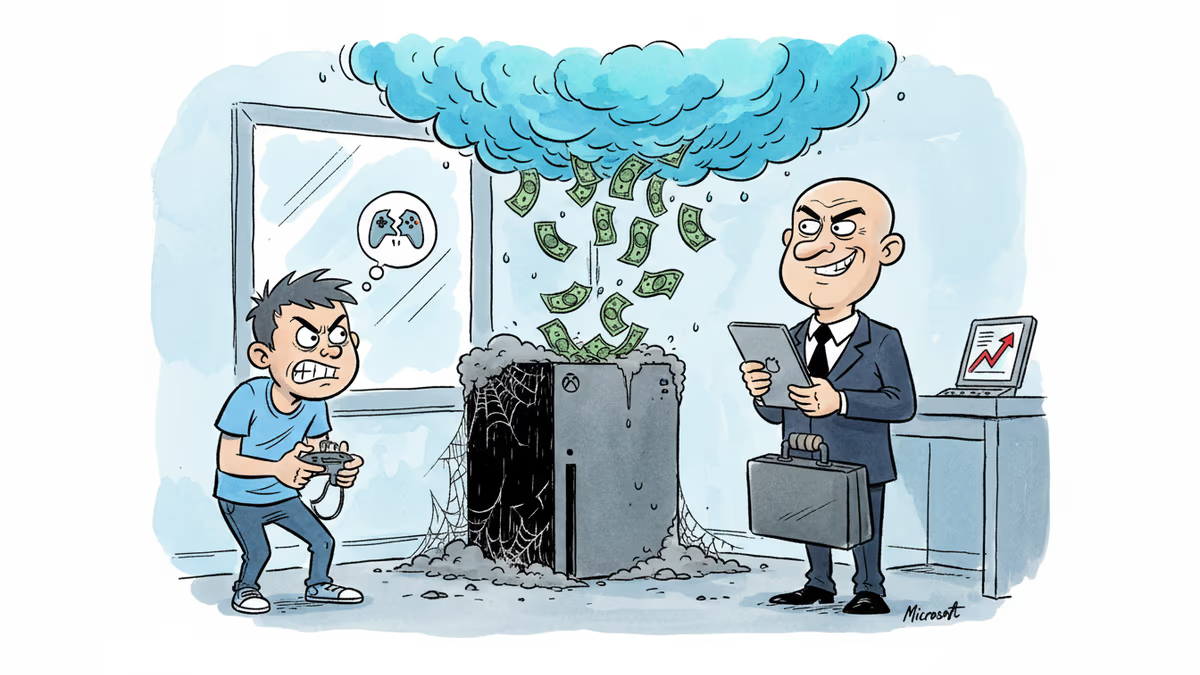
Xbox hardware revenue just fell 33%. Microsoft's stock barely flinched.
That gap tells you everything about where the gaming business is headed.
Microsoft dropped its Q1 2026 earnings on Wednesday, and the numbers look like two completely different companies sharing one balance sheet. The gaming division is bleeding—Xbox hardware down 33%, content and services off 5%. But zoom out, and total company revenue hit $82.9 billion, carried almost entirely by cloud and productivity software. The console is struggling. The company is thriving. And that contradiction isn't a bug—it's the strategy.
What the Numbers Actually Mean
First, some context. The Xbox Series X/S launched in late 2020. Five-plus years in, hardware sales naturally decline as the install base saturates and consumers wait for the next generation. Some of this drop is just the console cycle doing what it always does.
But there's more going on beneath the surface. Microsoft has seen notable leadership changes in its gaming unit over the past few months. Phil Spencer, the executive who shaped Xbox's identity for over a decade, retired. The former Xbox president also departed. On the surface, that looks like instability. Read differently, it looks like a company quietly pivoting away from the model those leaders built.

The model they built was the traditional console playbook: sell hardware at a loss or thin margin, lock users into your ecosystem, and profit from software and accessories. Microsoft is now betting on something different. Xbox Game Pass has surpassed 34 million subscribers. Xbox Cloud Gaming lets players stream titles on phones, tablets, and browsers—no console required. If subscriptions grow while hardware shrinks, that's not a failure. That's a deliberate trade.
Who Wins, Who Loses
The picture looks different depending on where you're standing.
For gamers, the shift is genuinely unsettling. Microsoft has already shuttered several studios and cut thousands of jobs across its gaming division over the past year. When hardware sales fall, the pressure to cut content investment rises. Subscription models promise breadth—hundreds of games for a monthly fee—but critics argue they quietly deprioritize depth. When every game needs to justify its slot in a rotating catalog, does that change what gets made?
For investors, Microsoft remains one of the more defensible large-cap tech plays precisely because gaming is a small piece of the pie. Azure and Microsoft 365 absorb the shock. A 33% drop in a segment that represents a fraction of total revenue is a footnote, not a crisis.
For Sony, this is a strategic stress test. PlayStation is still more dependent on hardware sales than Microsoft, and Sony doesn't have a cloud empire to fall back on. As Xbox leans into subscription and streaming, Sony is doubling down on exclusive titles and hardware loyalty. Two companies that once competed on the same terms are now playing fundamentally different games.
For independent game developers, the subscription economy creates a complicated dynamic. Getting a game onto Game Pass provides instant exposure to tens of millions of players. But negotiating fair revenue share with a platform that holds enormous leverage is a different conversation than selling a game outright.
This content is AI-generated based on source articles. While we strive for accuracy, errors may occur. We recommend verifying with the original source.
Related Articles

GitHub confirmed hackers stole data from 3,800 internal repositories via a poisoned VS Code extension. Here's why developer tools are now the most dangerous attack surface in tech.
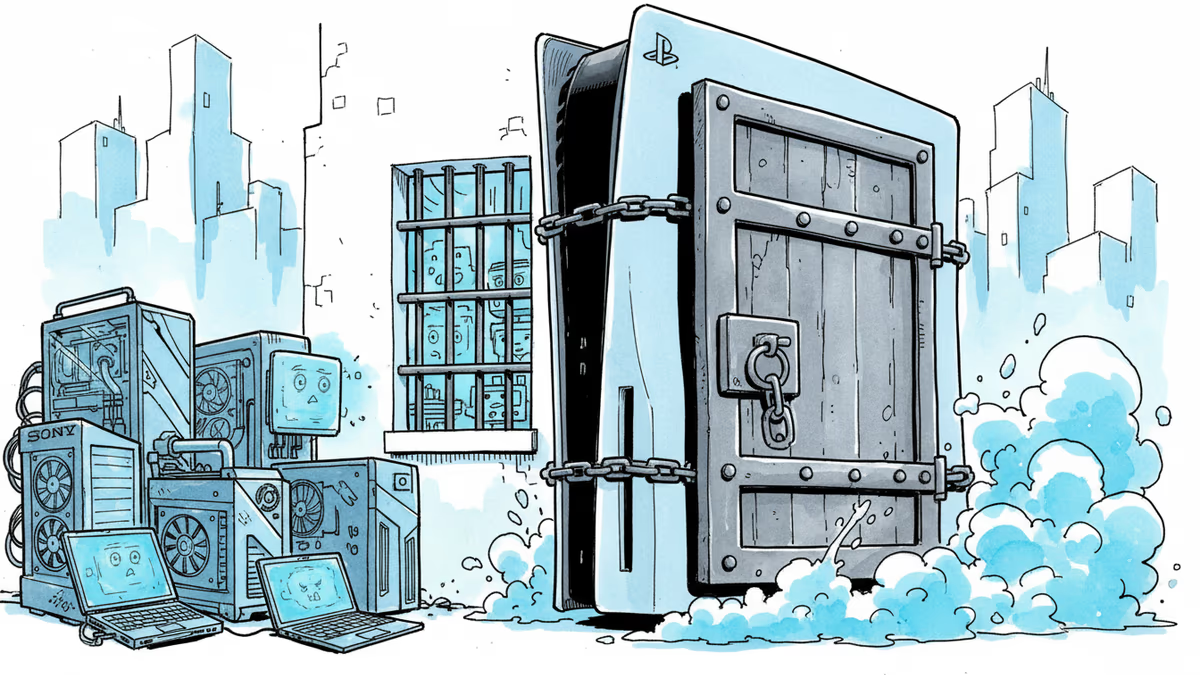
Sony is pulling its major single-player PlayStation games from PC. After six years of multiplatform expansion, the reversal raises hard questions about exclusivity, hardware sales, and who really controls gaming's future.
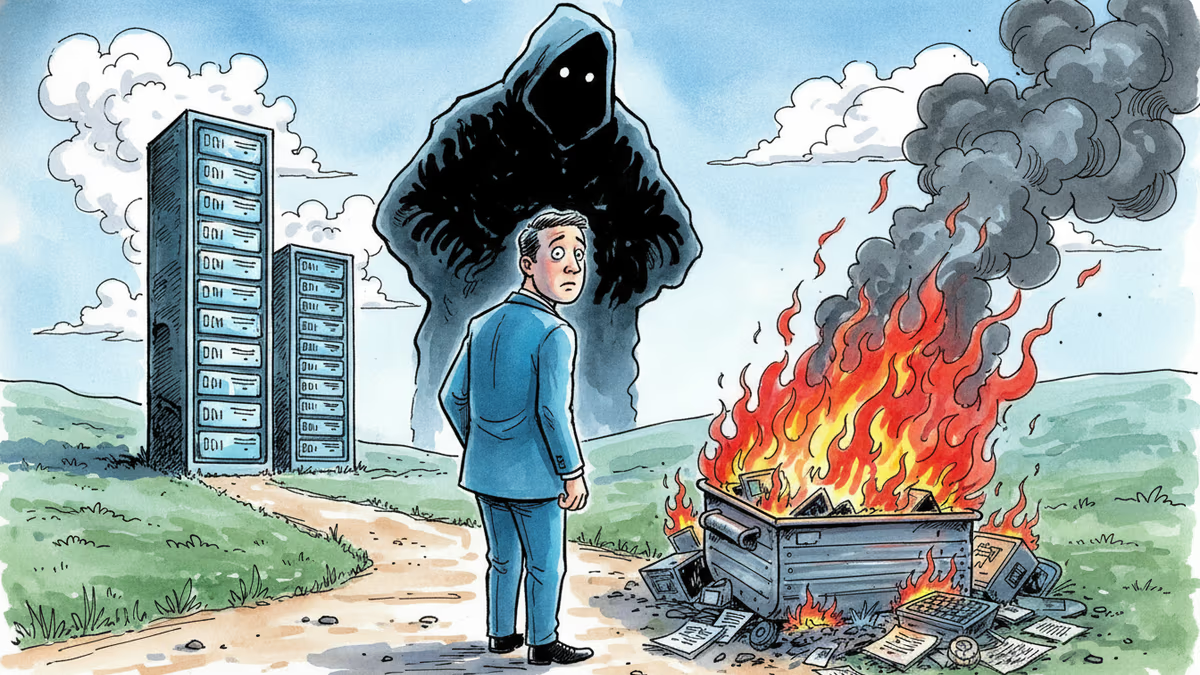
Emails revealed in the Musk v. Altman trial show Microsoft executives were deeply skeptical of OpenAI in 2017–2018. What actually changed their minds?
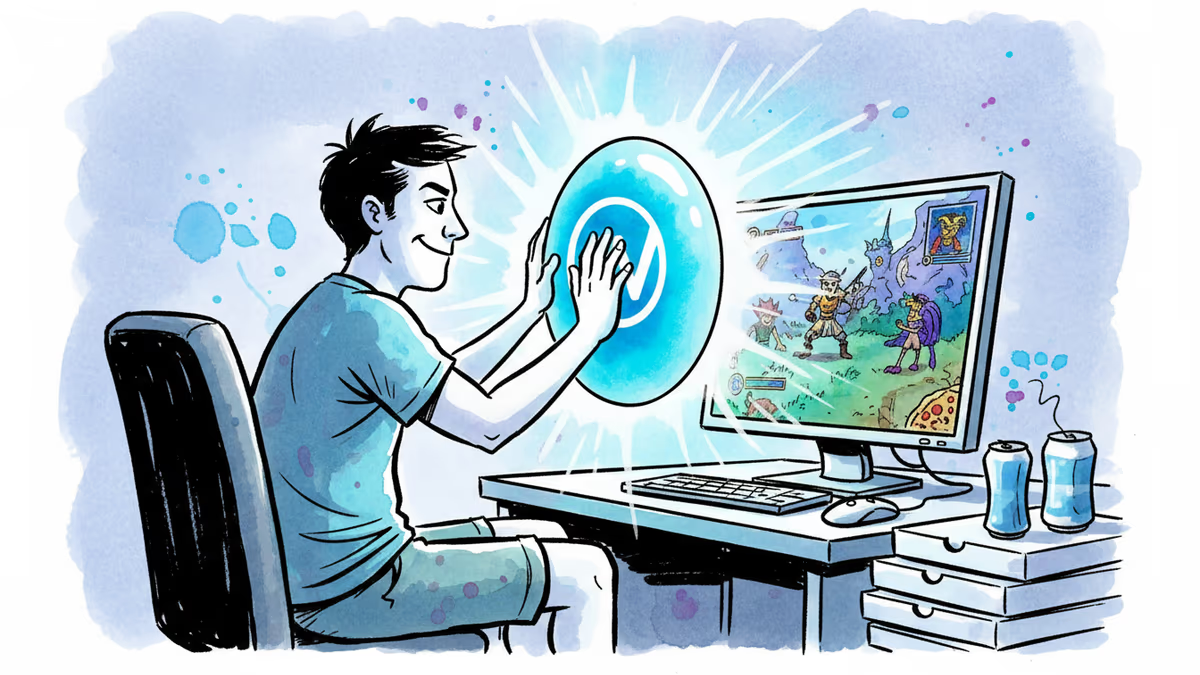
Microsoft is letting Windows users delay updates indefinitely — 35 days at a time, as many times as they want. A long-overdue fix, or a security risk hiding in plain sight?
GitHub confirmed hackers stole data from 3,800 internal repositories via a poisoned VS Code extension. Here's why developer tools are now the most dangerous attack surface in tech.
Sony is pulling its major single-player PlayStation games from PC. After six years of multiplatform expansion, the reversal raises hard questions about exclusivity, hardware sales, and who really controls gaming's future.
Emails revealed in the Musk v. Altman trial show Microsoft executives were deeply skeptical of OpenAI in 2017–2018. What actually changed their minds?
Microsoft is letting Windows users delay updates indefinitely — 35 days at a time, as many times as they want. A long-overdue fix, or a security risk hiding in plain sight?
Thoughts
Share your thoughts on this article
Sign in to join the conversation