
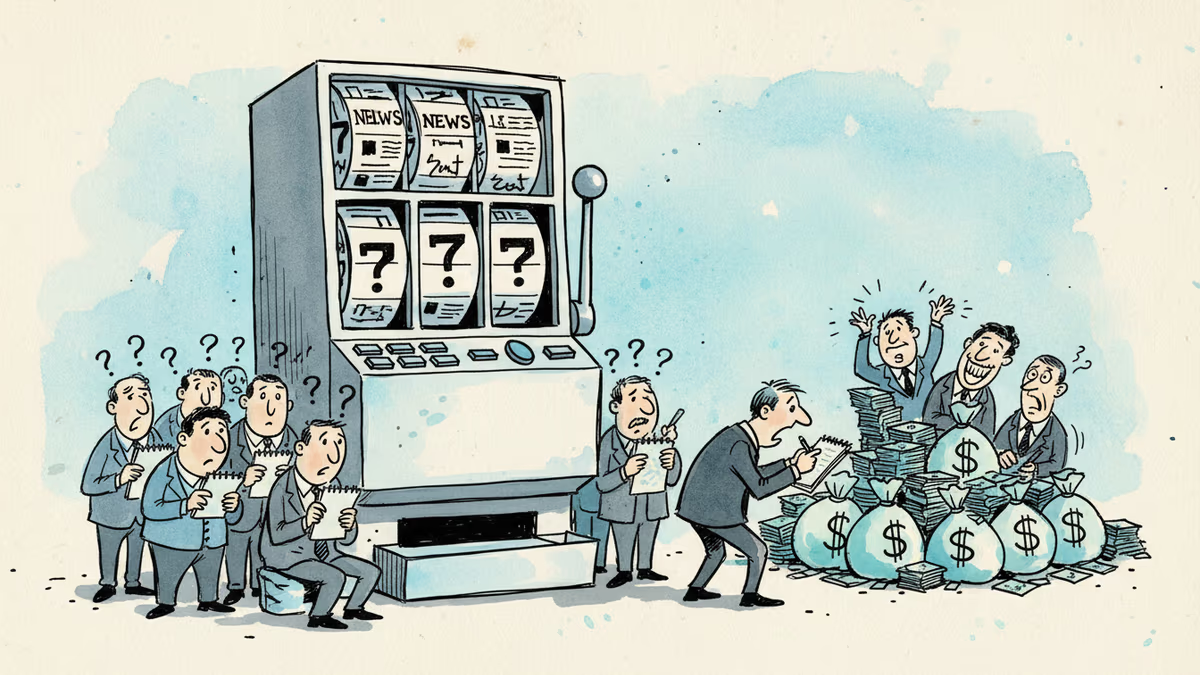
Prediction Markets Are Eating the News
As Polymarket and Kalshi expand news partnerships, insider trading concerns mount. The line between gambling and information is blurring dangerously.
Half a Million Dollars in 48 Hours
Last weekend, as tensions between Israel and Iran erupted into military action, an anonymous trader on Polymarket made over $500,000 by betting on the exact timing of Iran's offensive. Pure luck? Or did they know something the rest of us didn't?
This incident crystallizes the fundamental paradox facing prediction markets today. Platforms like Polymarket and Kalshi are aggressively positioning themselves as news sources, partnering with media organizations and claiming to deliver information "before it even happens." But their core value proposition depends entirely on insider information.
The News vs. Gambling Dilemma
Substack recently partnered with Polymarket under the tagline "Journalism is better when it's backed by live markets." Yet the bulk of trading volume on these platforms comes from sports betting. The companies are walking a tightrope between being "information providers" and operating as unregulated casinos.
The contradiction is stark. Polymarket CEO Shayne Coplan has called insider trading "cool," while Robinhood CEO Vlad Tenev told Decoder that prediction markets deliver "the news faster; in some cases before it even happens." As The Verge's Liz Lopatto points out, "You can't get there in any credible way without having insider information."
Kalshi's tagline "trade on what you know" becomes more ominous when you consider recent cases: a MrBeast editor betting on upcoming YouTube videos, or traders profiting from advance knowledge of US military operations in Venezuela.
Regulatory Whiplash Ahead
The political battle lines are surprisingly complex. The Trump administration strongly supports prediction markets — Donald Trump Jr. serves as an advisor to both companies. But Republican governors in Utah, New Jersey, and Nevada are pushing back hard.

Utah Governor Spencer Cox calls gambling "immoral" and promises state regulation. New Jersey and Nevada want to protect their sports betting tax revenue. Meanwhile, CFTC Commissioner Mike Selig threatens to block any state regulation of prediction markets.
This federal-state clash mirrors the early days of cryptocurrency regulation, but with higher stakes. Unlike crypto's abstract promises, prediction markets are actively monetizing real-world events — including wars, assassinations, and political outcomes.
The Corruption of Information
Here's the deeper problem: prediction markets create perverse incentives for information flow. Traditionally, whistleblowers and insiders shared information with journalists to serve the public good. Now they can profit directly by trading on that knowledge.
This threatens investigative journalism at its core. Why risk your career to expose corporate fraud when you can quietly bet against the company's stock? The Theranos scandal might never have been exposed if John Carreyrou's sources could have made millions betting against the company instead.
News organizations partnering with prediction markets are undermining their own newsrooms. They're legitimizing platforms that turn rumors into tradeable assets, creating feedback loops where betting odds become news, which affects more betting odds, which generates more news coverage.
The Sports Betting Parallel
We've been here before. Sports betting was largely banned in the US for decades after scandals showed how easily games could be fixed when players had financial incentives. Boxing, baseball, and basketball all suffered major corruption crises.
Now we're not just betting on sports again — we're betting on wars, elections, and corporate decisions. The potential for manipulation is exponentially higher when the "game" involves actual governance and military strategy.
FanDuel and DraftKings have left the American Gaming Association to pursue prediction market licenses. Major sports leagues that once fought gambling are now embracing it, with star athletes becoming spokespersons for betting platforms.
The real question isn't whether prediction markets are gambling — they obviously are. It's whether we're willing to let the pursuit of profit determine what we know about our world, and when we know it.
Authors
Related Articles
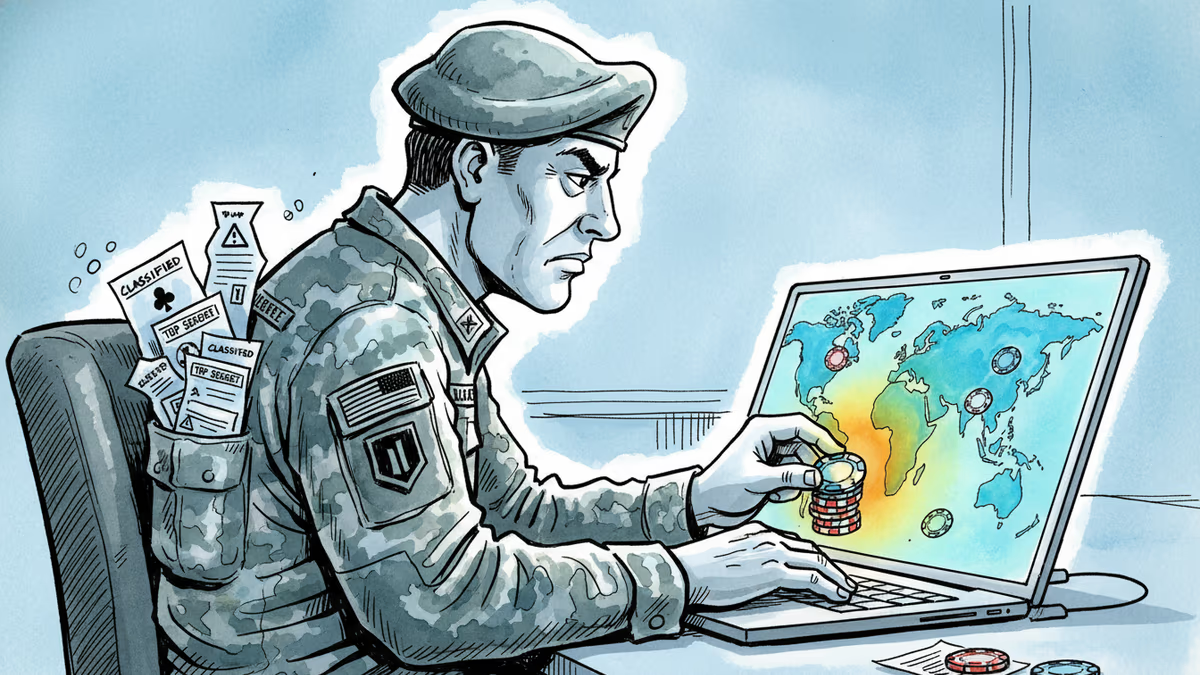
A US special forces soldier involved in the operation that captured Venezuela's Maduro allegedly used classified intel to bet on Polymarket, pocketing over $400,000. The case exposes a gaping hole in how prediction markets are regulated.
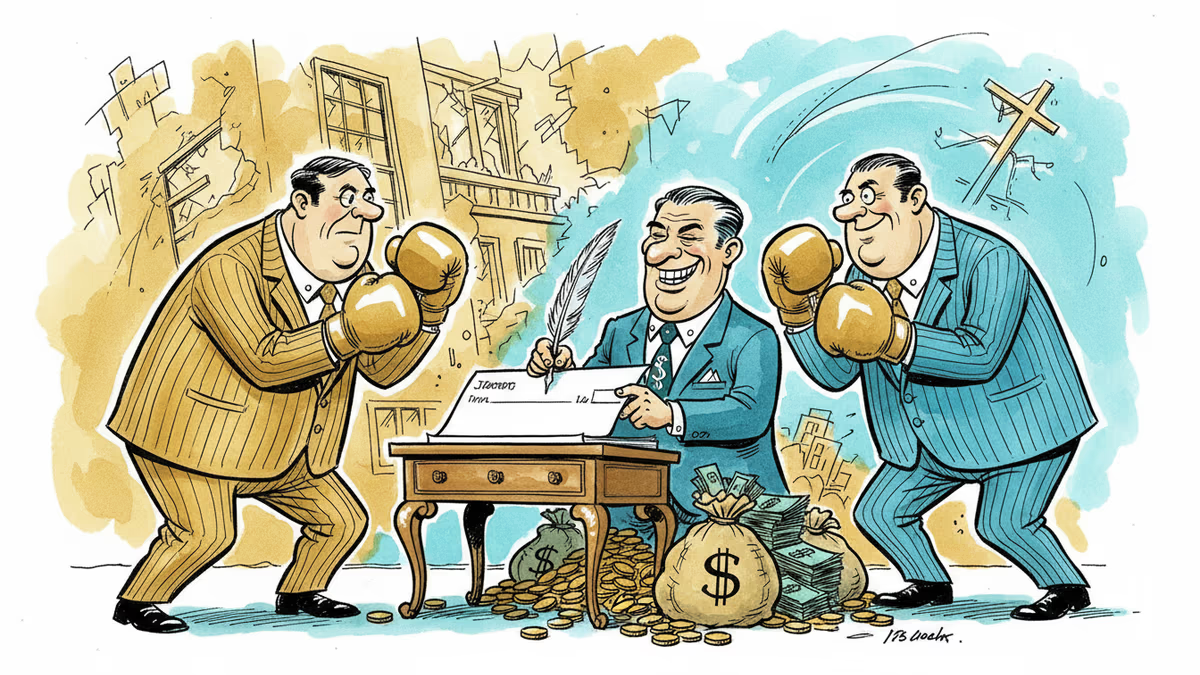
Despite fierce competition, the CEOs of Polymarket and Kalshi have co-invested in 5(c) Capital, a $35M VC fund targeting prediction market infrastructure. What this signals for the industry.
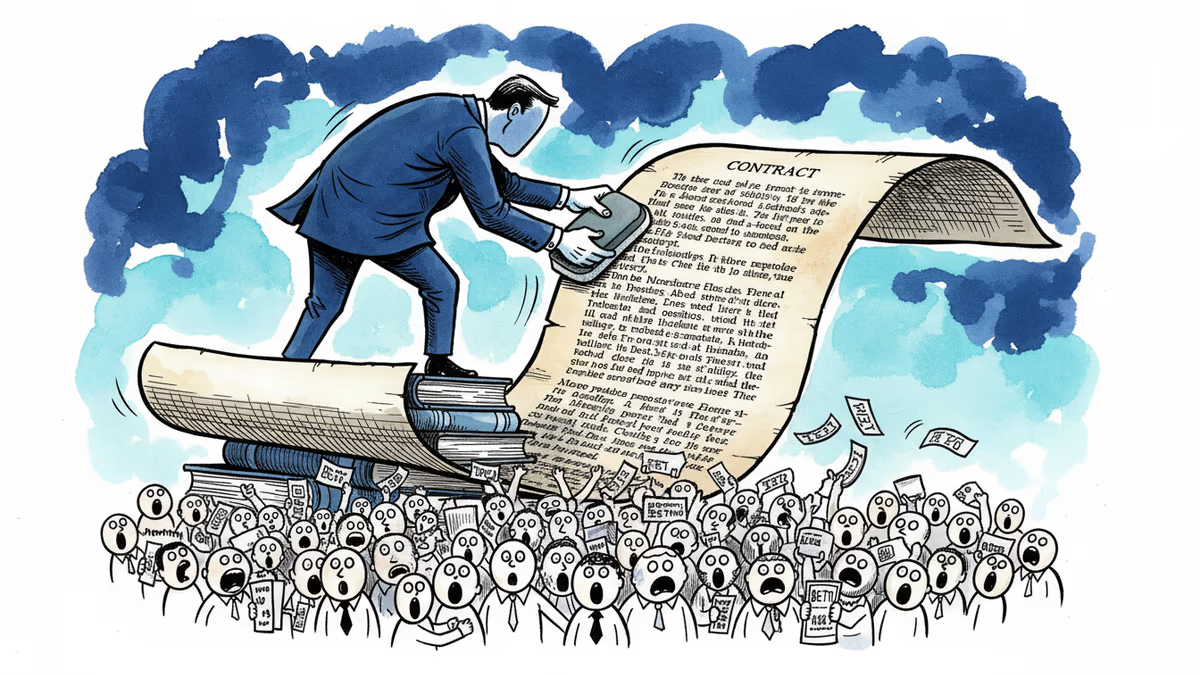
A class action lawsuit accuses Kalshi of changing payout rules after Iran's Supreme Leader Khamenei was killed. The case cuts to the heart of prediction market credibility.
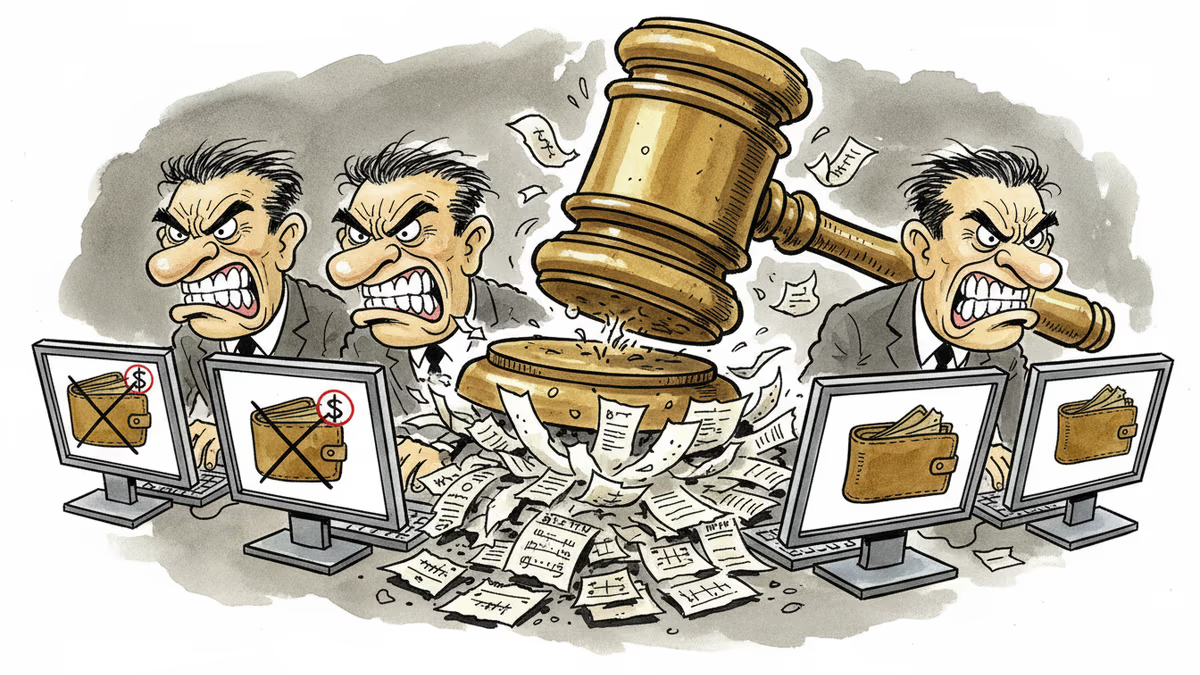
A massive dispute over Iran's supreme leader prediction market exposes the dark side of betting on world events. How Kalshi's rule interpretation sparked trader revolt.
A US special forces soldier involved in the operation that captured Venezuela's Maduro allegedly used classified intel to bet on Polymarket, pocketing over $400,000. The case exposes a gaping hole in how prediction markets are regulated.
Despite fierce competition, the CEOs of Polymarket and Kalshi have co-invested in 5(c) Capital, a $35M VC fund targeting prediction market infrastructure. What this signals for the industry.
A class action lawsuit accuses Kalshi of changing payout rules after Iran's Supreme Leader Khamenei was killed. The case cuts to the heart of prediction market credibility.
A massive dispute over Iran's supreme leader prediction market exposes the dark side of betting on world events. How Kalshi's rule interpretation sparked trader revolt.
Thoughts
Share your thoughts on this article
Sign in to join the conversation