
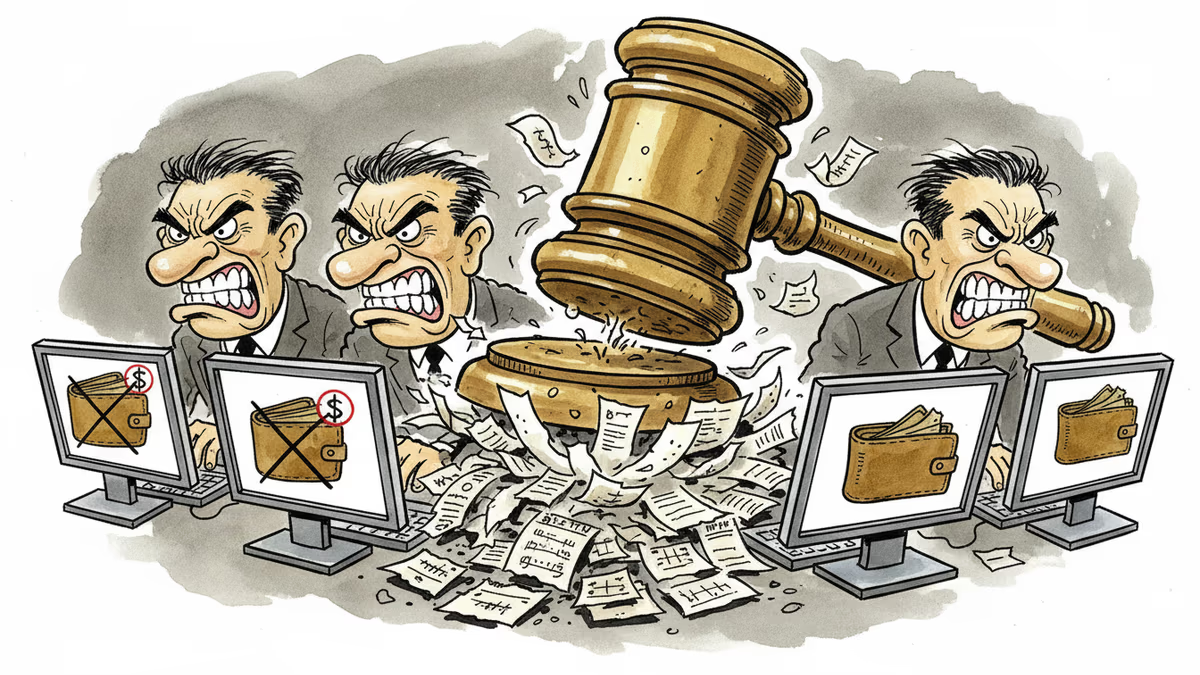
When $54 Million in Bets Vanished Overnight
A massive dispute over Iran's supreme leader prediction market exposes the dark side of betting on world events. How Kalshi's rule interpretation sparked trader revolt.
$54 Million Disappeared in a Day
When news broke Saturday that Iran's Supreme Leader Ali Khamenei had been assassinated, traders on prediction platform Kalshi thought they'd struck gold. They'd bet "yes" on whether Khamenei would be "out" as supreme leader, and with him demonstrably no longer in power, payouts seemed guaranteed.
Instead, they got a masterclass in how fine print can make fortunes vanish.
Kalshi paused the $54 million market for review, then resolved it at the last-traded position before the killing. Reason? A "death carve-out" buried in the rulebook. Traders who expected windfalls got nothing. Some lost everything.
The Rule That Wasn't There (Until It Was)
Here's where it gets messy. Kalshi insisted the death exception had "always" existed in their rules. But the platform only added a notice about it to the market webpage after the Iran attack began. Many traders never saw it.
"You literally ruined the entire credibility of your business," one trader posted online. Others threatened class-action lawsuits and filed complaints with the CFTC.
By Sunday, CEO Tarek Mansour was in full damage control mode, posting a lengthy apology and revealing Kalshi had absorbed approximately $2.2 million in losses to "make users whole." The gesture didn't satisfy everyone. "I defunded my account and deleted the app," trader Nicholas Mahoney told reporters.

The Uncomfortable Truth About Betting on Death
This controversy exposes prediction markets' central tension: the promise of market efficiency versus the ethics of commodifying tragedy.
US derivatives markets legally can't offer assassination contracts—that's clear. But "when will a leader leave office?" That's fair game. The problem? Real-world events don't respect these neat legal boundaries.
Competitor Polymarket faced similar backlash over Iran-related markets. Last year, traders protested how it resolved a bet on when Ukraine's Zelensky would wear a suit. These platforms are discovering that turning everything into a betting opportunity creates messy edge cases.
Regulators Circle Like Vultures
The timing couldn't be worse for prediction markets. They're already under intense regulatory scrutiny, with a growing bipartisan push for tighter oversight. Kalshi alone faces 19 separate lawsuits from state authorities.
This week, former Trump chief of staff Mick Mulvaney launched "Gambling Is Not Investing," an advocacy group pushing for more industry guardrails. The message is clear: regulators are watching, and incidents like this provide ammunition.
The Show Goes On
Despite the backlash, the betting continues. Kalshi has already launched a market on who will succeed Khamenei. Millions of dollars are already on the line.
This reveals something profound about prediction markets: they've created a new form of disaster capitalism, where global tragedies become profit opportunities within hours. The question isn't whether this will continue—it's whether society will accept it.
Authors
Related Articles
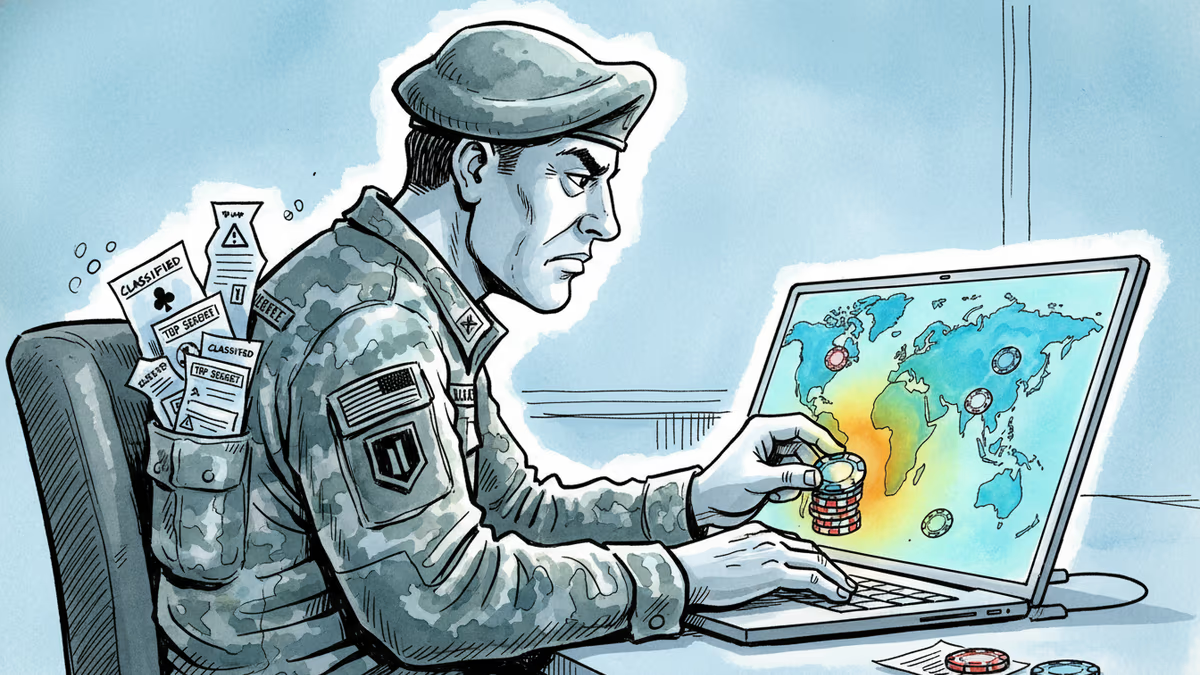
A US special forces soldier involved in the operation that captured Venezuela's Maduro allegedly used classified intel to bet on Polymarket, pocketing over $400,000. The case exposes a gaping hole in how prediction markets are regulated.
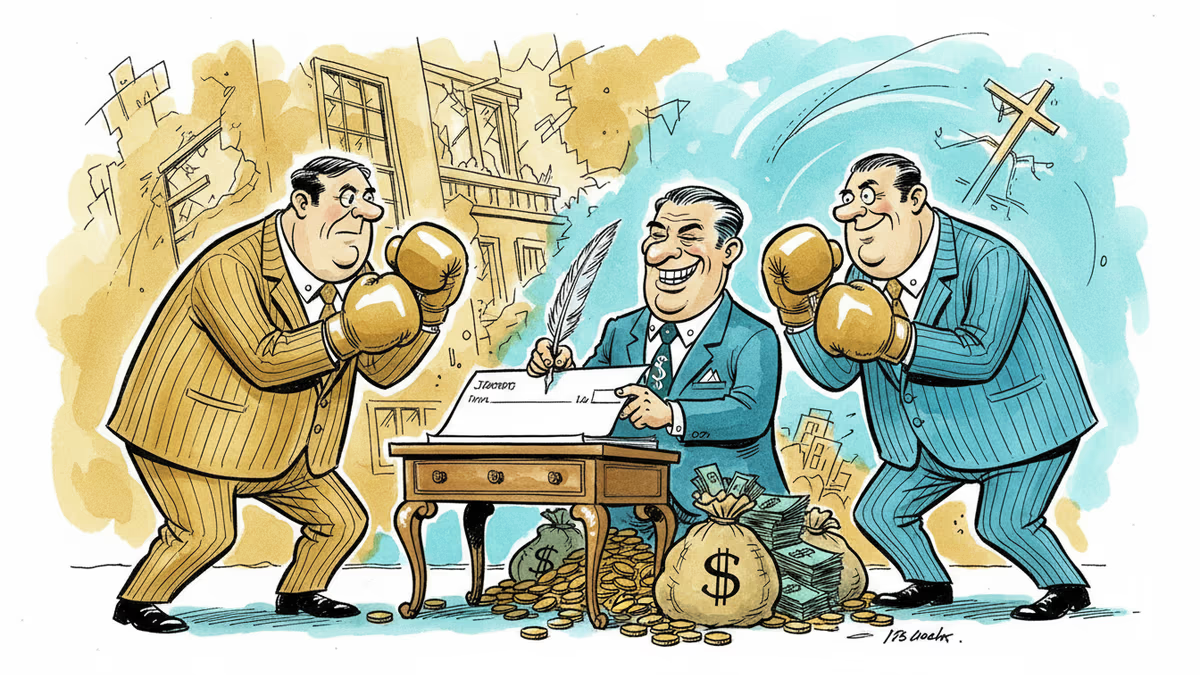
Despite fierce competition, the CEOs of Polymarket and Kalshi have co-invested in 5(c) Capital, a $35M VC fund targeting prediction market infrastructure. What this signals for the industry.
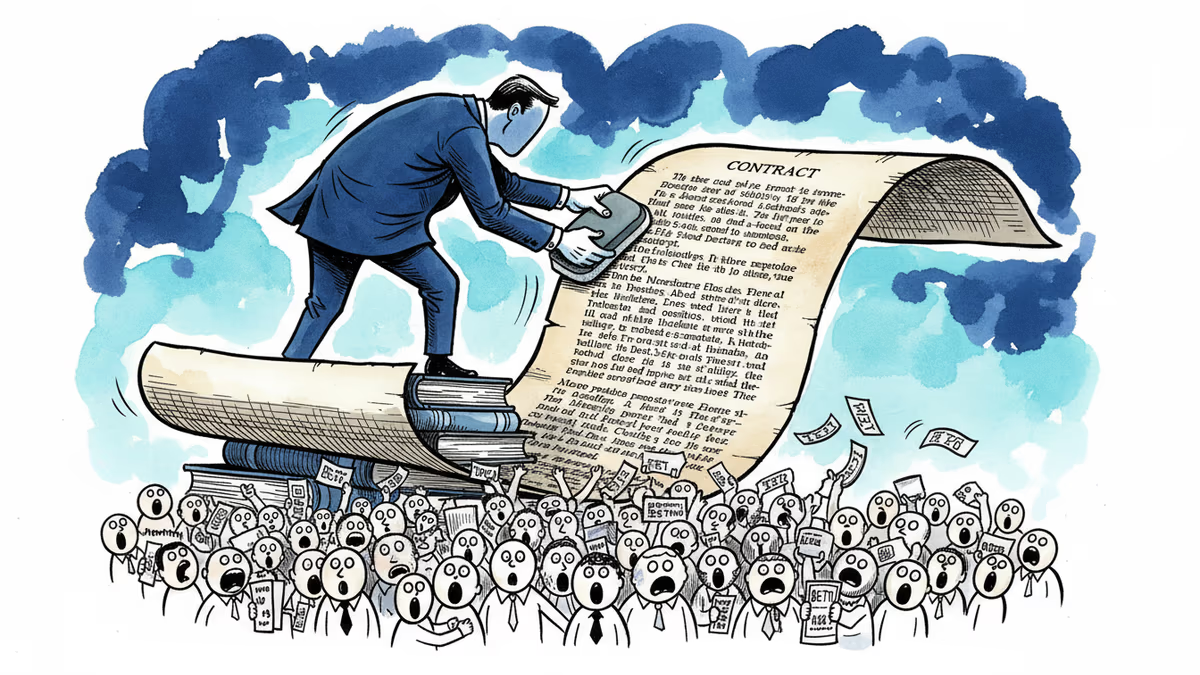
A class action lawsuit accuses Kalshi of changing payout rules after Iran's Supreme Leader Khamenei was killed. The case cuts to the heart of prediction market credibility.
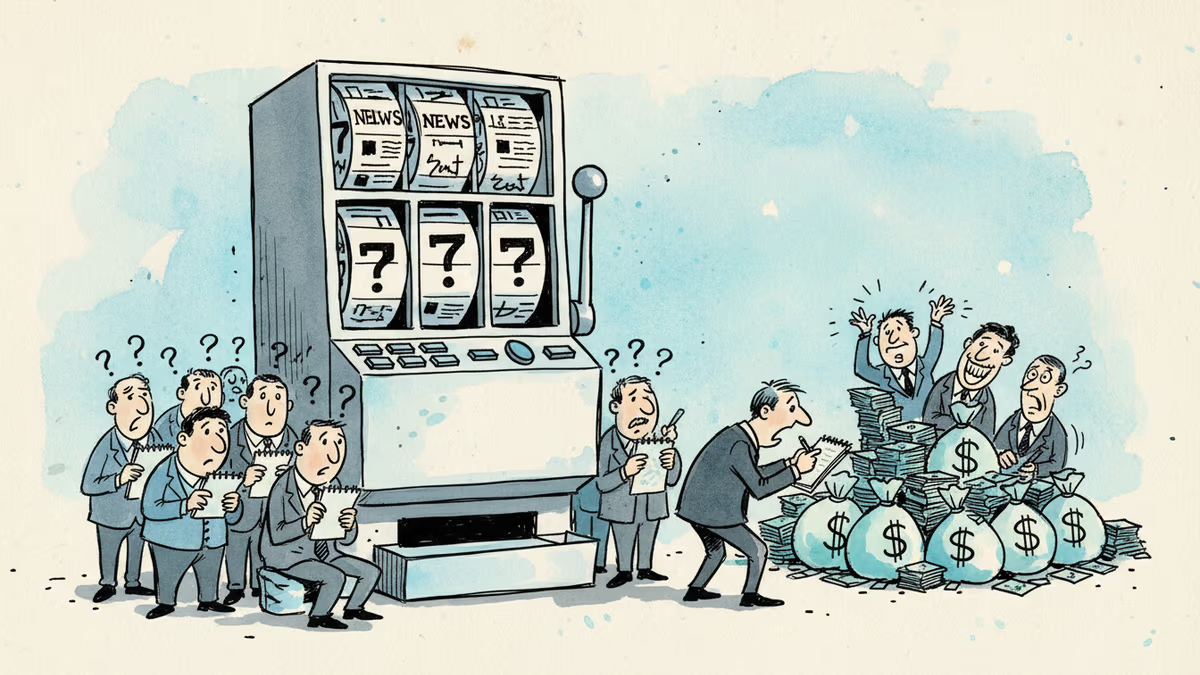
As Polymarket and Kalshi expand news partnerships, insider trading concerns mount. The line between gambling and information is blurring dangerously.
A US special forces soldier involved in the operation that captured Venezuela's Maduro allegedly used classified intel to bet on Polymarket, pocketing over $400,000. The case exposes a gaping hole in how prediction markets are regulated.
Despite fierce competition, the CEOs of Polymarket and Kalshi have co-invested in 5(c) Capital, a $35M VC fund targeting prediction market infrastructure. What this signals for the industry.
A class action lawsuit accuses Kalshi of changing payout rules after Iran's Supreme Leader Khamenei was killed. The case cuts to the heart of prediction market credibility.
As Polymarket and Kalshi expand news partnerships, insider trading concerns mount. The line between gambling and information is blurring dangerously.
Thoughts
Share your thoughts on this article
Sign in to join the conversation