
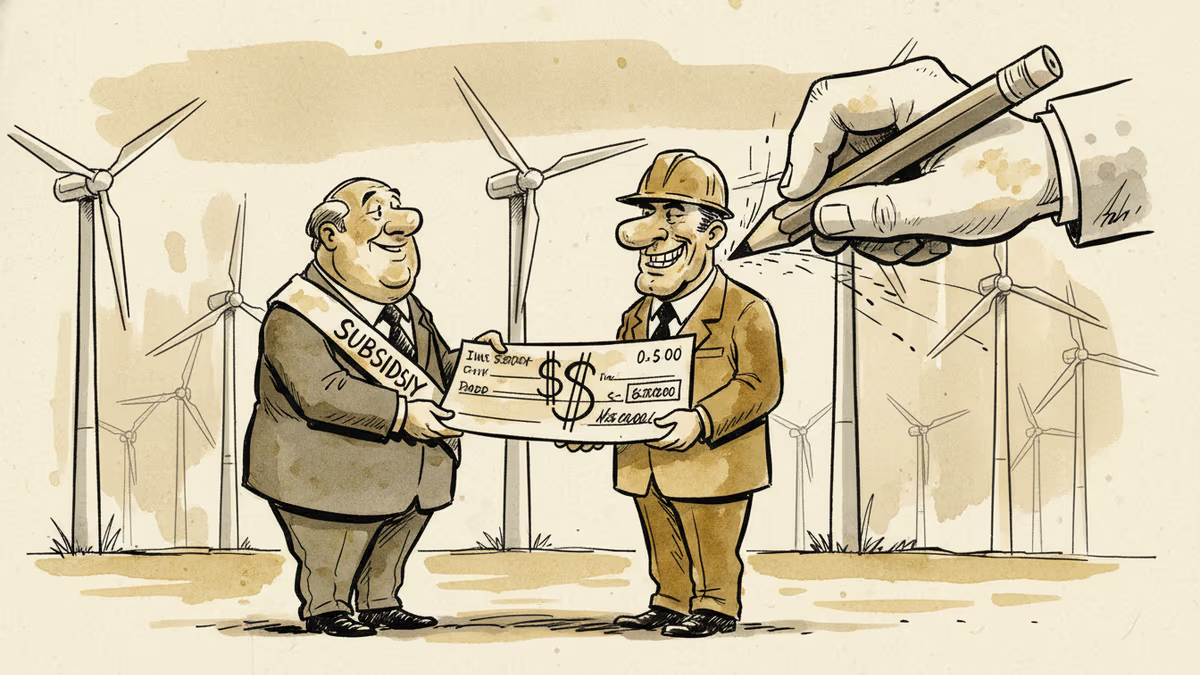
The U.S. Paid $1B to Make Wind Energy Disappear
The Trump administration struck a deal to buy back offshore wind leases from TotalEnergies for $1 billion, redirecting that money into fossil fuel projects. What this means for energy markets, grid reliability, and the future of U.S. climate policy.
The fastest way to kill a wind farm, it turns out, isn't a lawsuit. It's a check.
On Monday, the Trump administration unveiled a deal that cuts to the core of its energy agenda: pay TotalEnergies, a French energy giant, roughly $1 billion to walk away from two offshore wind lease sites it had purchased under the Biden administration. In return, TotalEnergies has pledged to reinvest that money into U.S. oil and natural gas projects—and to stay out of American offshore wind development entirely.
Why Buying Back Leases? Because Courts Said No.
This deal didn't emerge from a position of strength. Since taking office, the Trump administration has tried repeatedly to halt offshore wind projects through executive orders and regulatory pressure. But when construction had already begun, federal courts pushed back. You can't simply cancel a contract that's already being executed without triggering costly legal battles.
So the administration pivoted. Rather than fight in court, it decided to pay companies to leave voluntarily. It's a faster, cleaner exit—at least politically.
But the scale of what's being surrendered matters. One of the two sites being returned is Attentive Energy, a large development zone off the coast of New Jersey capable of generating up to 3 gigawatts of electricity. To put that in perspective, 3 GW can power roughly 1.5 million homes. The states that had counted on that capacity—New Jersey, New York—now have a significant gap in their clean energy plans with no obvious replacement.
Who Wins, Who Loses

For TotalEnergies, the math works. The company gets its lease money back, avoids the financial and regulatory risks of offshore wind development in an increasingly hostile policy environment, and redirects capital into fossil fuels—a sector with clearer near-term returns under the current administration. It's a rational business decision, even if critics call it opportunistic.
For coastal states, it's a different story. New Jersey and the Carolinas have legally binding renewable energy targets. They built their grid planning around capacity that no longer exists. Finding 3 GW of replacement power—whether through solar, nuclear, or other sources—takes years and billions of dollars. The federal government just created a problem that state governments will have to solve.
For American ratepayers, the long-term cost is harder to calculate but impossible to ignore. Energy analysts have consistently shown that offshore wind, once built, provides low-cost, stable electricity. Removing that capacity from the pipeline means greater dependence on natural gas, whose prices are volatile. The $1 billion paid today could translate into higher electricity bills for years.
The Bigger Pattern
This deal is part of a broader pattern that energy investors are watching closely. The Trump administration has already frozen offshore wind permitting, reversed Biden-era tax credits for renewables, and signaled that fossil fuel development is the priority. The TotalEnergies buyback is the most concrete—and expensive—expression of that agenda yet.
What's notable is the precedent it sets. If the U.S. government is willing to pay companies to abandon clean energy projects, other developers holding offshore wind leases may start doing the math. Is it worth pushing forward in a market where policy can reverse overnight, or is a government buyout a safer exit? The Trump administration may have just created a template that more companies will want to use.
For global investors in renewable energy, the U.S. is increasingly looking like a market where political risk has to be priced in at a premium—a calculation that could shift capital toward Europe, Southeast Asia, and other regions with more stable policy frameworks.
Authors
Related Articles
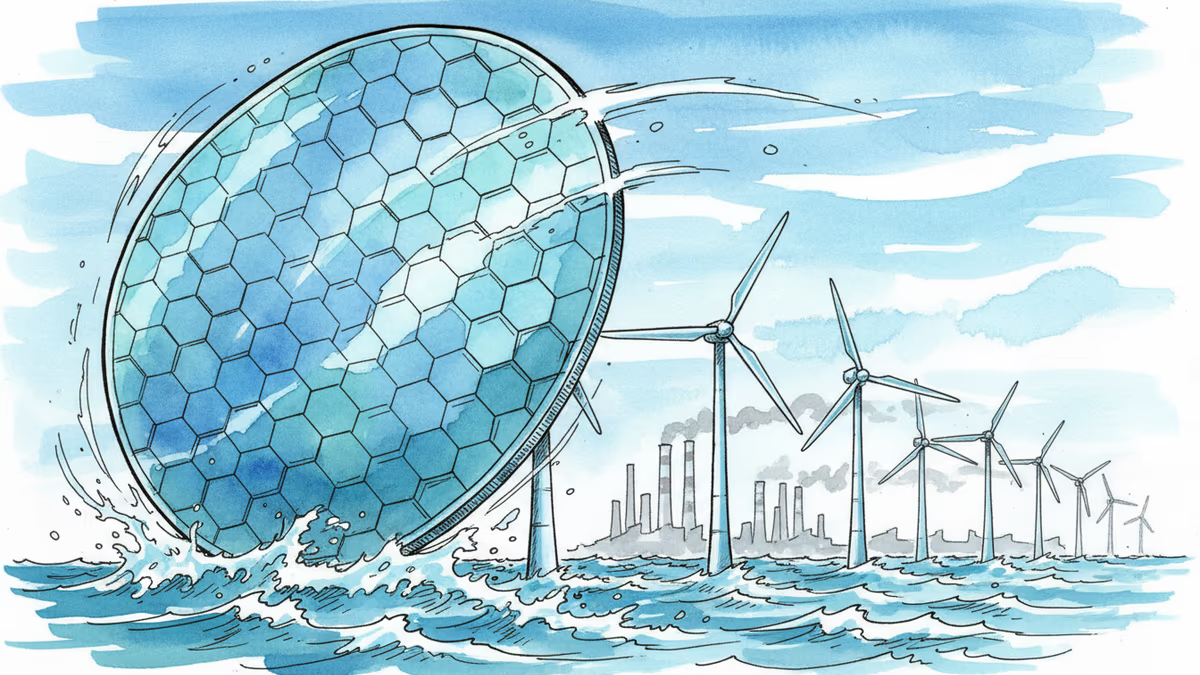
TSMC has signed a 30-year power purchase agreement for 100% of output from Taiwan's Hai Long offshore wind project. The 1GW deal reveals how chipmakers are quietly becoming energy companies.
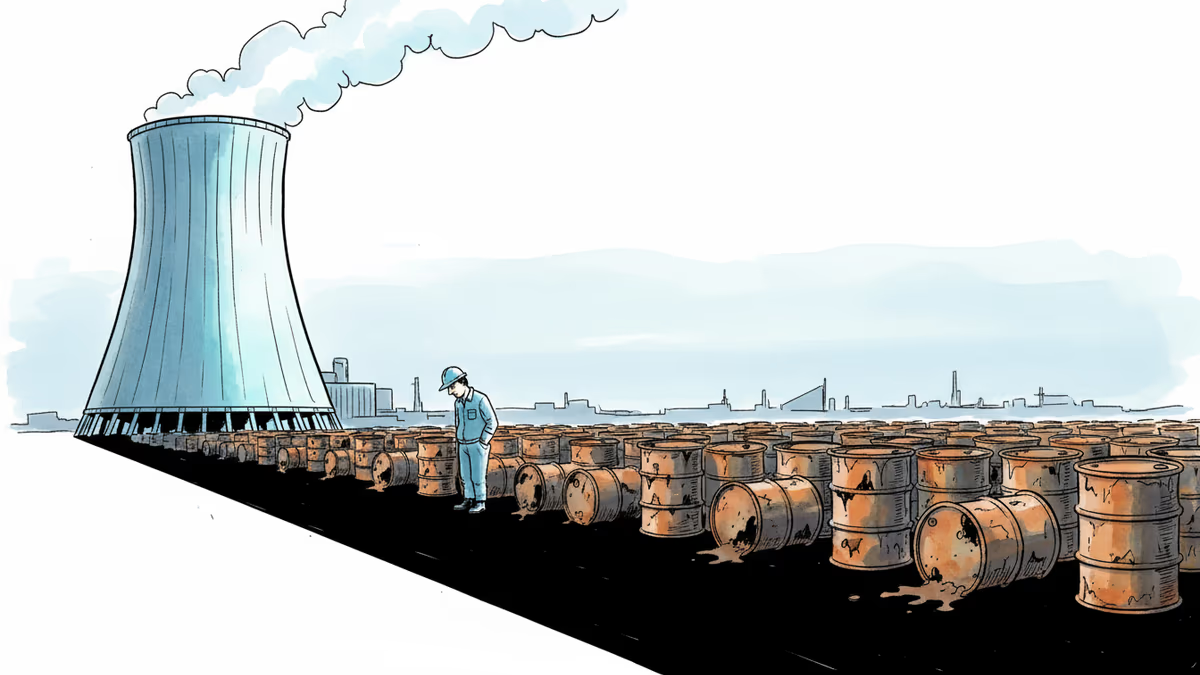
Nuclear power is winning fans across the political spectrum—and Big Tech is pouring billions in. But America still has no permanent home for the 2,000 metric tons of high-level waste its reactors produce every single year.

The Trump administration has gutted the DOJ's Voting Section, pushing out two dozen experienced lawyers and replacing them with loyalists. With 2026 midterms approaching, what does this mean for American democracy?
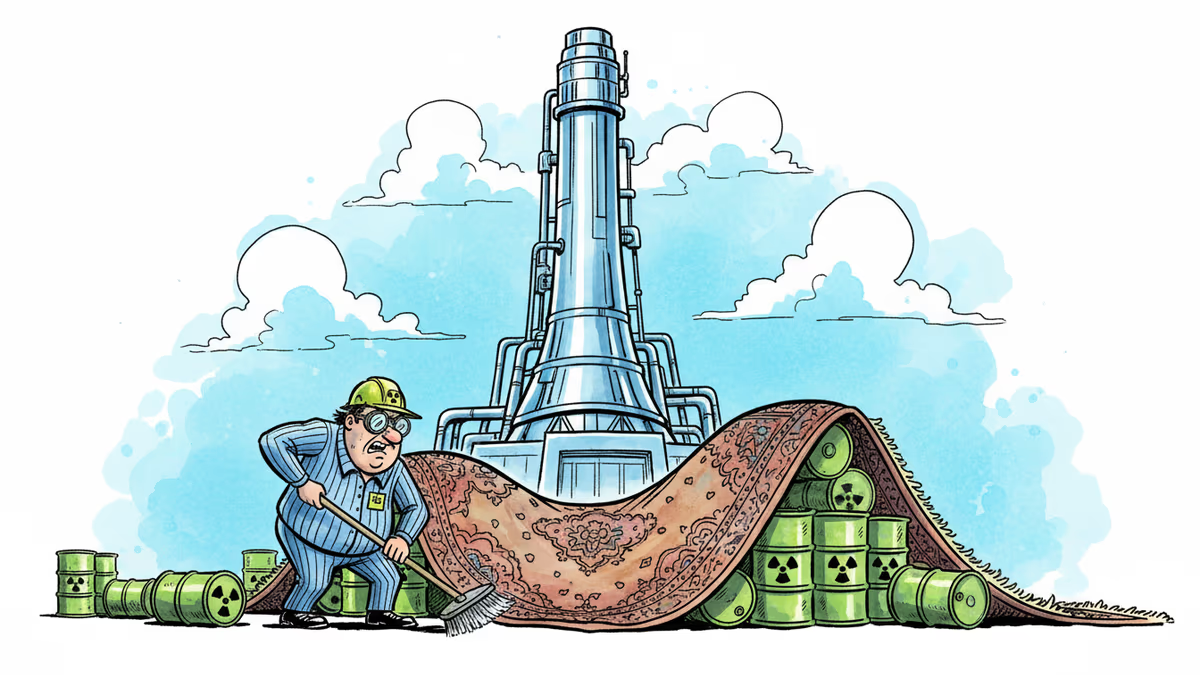
Nuclear energy is booming again, fueled by Big Tech's data center appetite. But 70 years of spent fuel still has nowhere permanent to go. Finland solved it. The US hasn't tried hard enough.
TSMC has signed a 30-year power purchase agreement for 100% of output from Taiwan's Hai Long offshore wind project. The 1GW deal reveals how chipmakers are quietly becoming energy companies.
Nuclear power is winning fans across the political spectrum—and Big Tech is pouring billions in. But America still has no permanent home for the 2,000 metric tons of high-level waste its reactors produce every single year.
The Trump administration has gutted the DOJ's Voting Section, pushing out two dozen experienced lawyers and replacing them with loyalists. With 2026 midterms approaching, what does this mean for American democracy?
Nuclear energy is booming again, fueled by Big Tech's data center appetite. But 70 years of spent fuel still has nowhere permanent to go. Finland solved it. The US hasn't tried hard enough.
Thoughts
Share your thoughts on this article
Sign in to join the conversation